
Border Collie Puppy Coat vs. Adult Coat: Key Differences

Quick Answer
A Border Collie puppy usually has a softer, fluffier coat with less-developed adult feathering and texture. As the puppy matures, this baby coat gradually gives way to a denser, more weather-resistant adult double coat. The timing varies, and the finished appearance depends on whether the dog develops a smooth or rough coat.
A young Border Collie can look surprisingly different from the same dog a year or two later. The fluffy puppy fur may become sleeker, coarser, longer, or more visibly feathered as the adult coat develops.
These changes are a normal part of maturation. However, not every Border Collie develops a long, flowing coat, and a change in appearance does not automatically mean the puppy is shedding abnormally.
What Is the Main Difference Between Puppy and Adult Border Collie Coats?
The biggest differences are usually texture, density, length, and the development of the protective outer coat. Puppy fur often feels soft and plush, while mature fur typically has a more established texture and structure.
Border Collies have a double coat consisting of a protective outer layer and a softer, insulating undercoat. The adult coat becomes more developed as the dog grows, although the exact appearance varies among individuals.
- Puppy coat: Often soft, fluffy, and relatively uniform in appearance, with less-developed feathering.
- Adult coat: Usually has a more defined outer coat, a developed undercoat, and a texture suited to weather protection.
- Rough-coated adult: Has medium-length hair with more noticeable feathering around the chest, legs, and tail.
- Smooth-coated adult: Has shorter hair that lies closer to the body, with less obvious feathering.
The American Kennel Club describes both rough and smooth Border Collies as dense, weather-resistant double-coated dogs. Neither variety is inherently more correct than the other.
How Do Puppy and Adult Coats Compare?
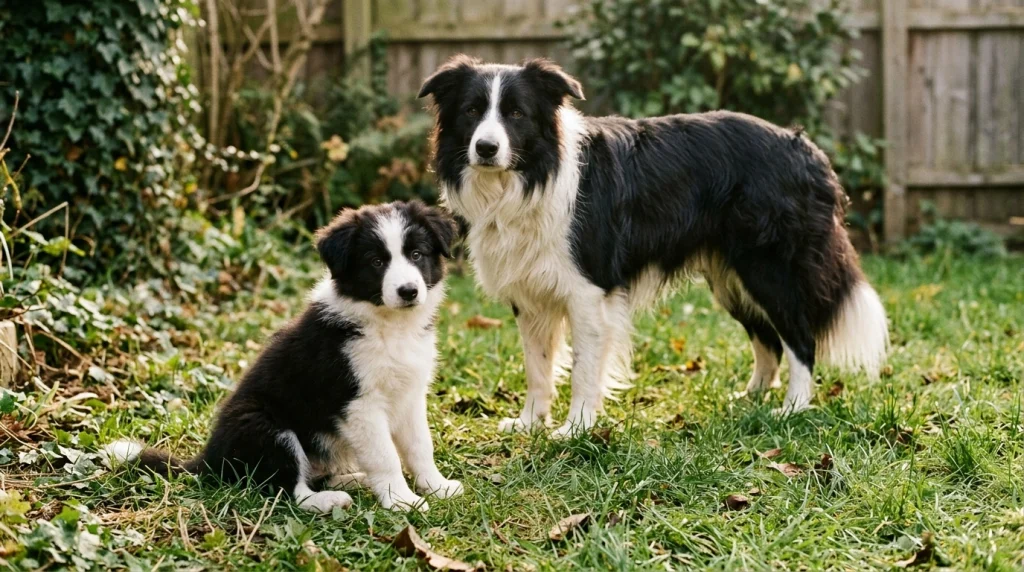
Looking at specific features makes it easier to understand what may change as your puppy matures. These are general patterns, not strict rules that every Border Collie must follow.
| Feature | Puppy Coat | Adult Coat |
|---|---|---|
| Texture | Often soft and fluffy | More defined; may feel coarser |
| Length | May appear short or evenly fluffy | Short or medium-length, depending on coat type |
| Feathering | Often less developed | More noticeable in rough coats |
| Undercoat | Still developing | Typically dense and insulating |
| Shedding | Can occur during coat transition | Continues, often with seasonal increases |
| Grooming focus | Gentle handling and brushing practice | Loose hair, tangles, and undercoat maintenance |
The practical takeaway is that a puppy can look fluffy without having the long adult coat you expect. Coat texture and feathering become clearer over time, so avoid judging the final coat from appearance alone.
When Does a Border Collie Puppy Lose Its Puppy Coat?
Many Border Collies begin changing from puppy fur to their developing adult coat at around four to six months, but the transition can begin earlier or later. Some dogs take considerably longer for their mature coat to become obvious.
A veterinarian answering a Border Collie coat question through Petco notes that some puppies begin shedding their baby coat around four to six months, while others may not develop their permanent coat until approximately 10 to 15 months.
These ages are useful reference points rather than deadlines. Coat development depends on the individual dog, inherited characteristics, and its stage of maturation.
What changes might you notice first?
- Uneven texture: Some areas feel softer while others develop firmer, longer hairs.
- More loose fur: Brushing may remove more hair than it did during early puppyhood.
- Changing feathering: Hair around the tail, chest, ears, and rear legs may become more noticeable.
- A different silhouette: The puppy may look less uniformly fluffy as its body and coat mature.
These changes do not necessarily happen in a neat sequence. A puppy may develop longer hair in one area before the rest of its coat changes.
For a more detailed look at coat development across the breed, see the existing guide to Border Collie coat types.
Will Your Border Collie Have a Rough or Smooth Adult Coat?
The puppy coat alone cannot always tell you which adult coat your Border Collie will develop. Genetics and the coats of the puppy’s parents can provide clues, but the mature appearance may not become clear until the adult hair has grown in.
Rough-coated Border Collies
A rough-coated Border Collie has medium-length hair, often with visible feathering around the chest, forelegs, hindquarters, and tail. The neck may develop a noticeable mane, while the hair on the face and front of the legs remains shorter.
A rough-coated puppy may initially look fluffy without having the full furnishings of an adult. As the dog matures, the longer areas can become more pronounced, making the coat appear fuller and more layered.
Smooth-coated Border Collies
A smooth-coated Border Collie has shorter hair that sits closer to the body. Its coat can feel firmer or coarser than soft puppy fur, and it usually has less visible feathering than a rough coat.
A smooth-coated puppy may look sleek early on, but its mature coat still develops with age. Short hair does not mean the dog lacks an insulating undercoat.
The American Kennel Club’s Border Collie breed profile explains these two coat varieties and their shared double-coat structure.
Can a Border Collie’s Coat Color Change as It Matures?
Yes, a Border Collie’s coat can appear different as it matures, although a puppy does not necessarily change to a completely different color. New hair growth, changing texture, and the contrast between different colored areas can affect how the coat looks.
For example, a black-and-white puppy may retain the same basic pattern while its black areas appear more defined as the adult coat develops. A merle or sable dog may also show a different visual impression as its hair length and texture change.
Lighting, wet fur, dirt, and seasonal sunlight can also influence how a coat appears. A photograph taken indoors may make the same coat look different from one taken in bright daylight.
Color changes alone are not a reliable way to determine whether a puppy has reached adulthood. Focus on the overall coat development rather than expecting a specific color transformation.
How Should You Groom a Border Collie During the Coat Transition?
Keep grooming gentle and consistent while the adult coat develops. Regular brushing removes loose hair, helps prevent tangles, and gives you opportunities to notice changes in the skin.
- Start with short sessions. Let your puppy become comfortable with a soft brush and gentle handling. Stop before the experience becomes stressful.
- Brush through the coat carefully. Use light strokes and avoid scraping or repeatedly brushing the same patch of skin.
- Check friction areas. Inspect behind the ears, under the legs, around the collar, and near the tail for small tangles.
- Increase brushing when shedding increases. Remove loose hair gradually rather than trying to strip out large amounts at once.
- Inspect the skin. Look for redness, persistent flakes, sores, bald patches, or signs of discomfort.
For general adult coat maintenance, the AKC recommends brushing Border Collies about once or twice a week, with more frequent brushing during shedding season. Your puppy’s needs may be lighter, depending on its coat and how much hair it is releasing.
Tip
Use the coat transition to build a calm grooming routine. Reward your puppy for standing still, touching its paws, and tolerating gentle brushing so adult coat care becomes easier.
Avoid shaving a healthy Border Collie’s double coat simply to manage shedding or make grooming easier. The coat provides protection from weather and the environment. If trimming is necessary for a specific problem, ask a veterinarian or experienced groomer what is appropriate.
For related care guidance, read the site’s Border Collie grooming frequency guide.
When Is Coat Shedding More Than a Normal Puppy Change?
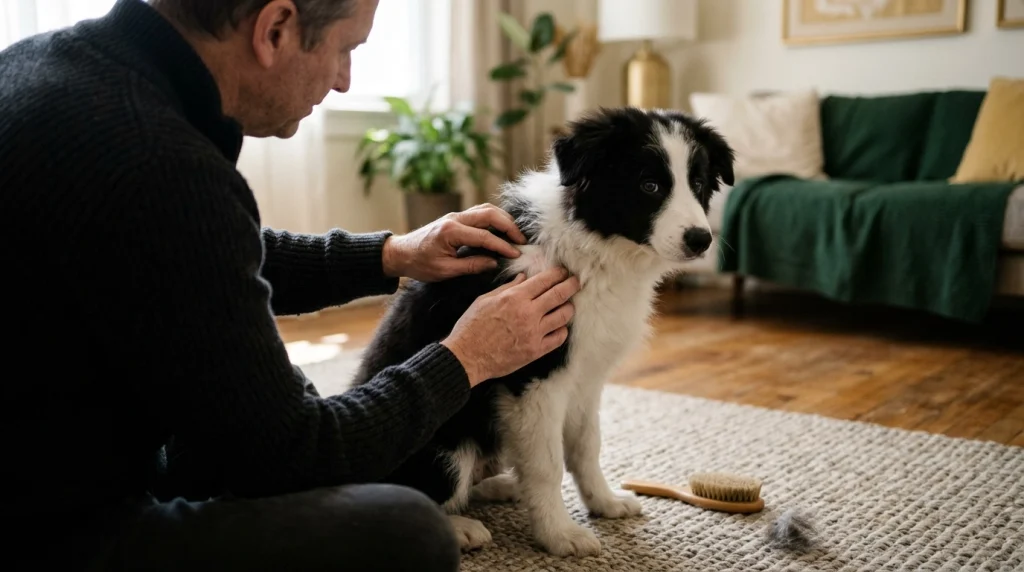
Gradual shedding with otherwise healthy-looking skin is often part of normal coat development. However, pronounced hair loss, irritated skin, or persistent itching should not automatically be blamed on the puppy-to-adult transition.
Pay attention to the pattern and condition of the skin, not just the amount of fur on your brush.
- Usually less concerning: Loose hairs, gradual texture changes, and an otherwise comfortable puppy with healthy-looking skin.
- Worth veterinary advice: Bald patches, broken hairs, persistent scratching, redness, crusting, sores, or sudden substantial hair loss.
- Act promptly: Seek veterinary guidance if skin changes are spreading, painful, accompanied by discharge, or associated with your puppy seeming unwell.
Skin parasites, infections, allergies, and other conditions can cause coat changes that resemble ordinary shedding. A veterinarian can assess the pattern and determine whether testing or treatment is needed.
Do not use aggressive de-shedding tools or medicated products to force the adult coat to develop faster. Coat maturation is a natural process, not something that needs to be accelerated.
Frequently Asked Questions
1. Do all Border Collie puppies have fluffy coats?
No. Many have soft, fluffy puppy fur, but the amount of fluff varies. Some puppies have shorter, closer-lying hair from an early age, and their appearance can provide clues about their eventual coat type without guaranteeing it.
2. At what age does a Border Collie get its full adult coat?
The transition often becomes noticeable between four and six months, but the adult coat may take until around 10 to 15 months or longer to become fully apparent in some dogs. There is no single age that applies to every Border Collie.
3. Will my Border Collie puppy become more fluffy as it grows?
It may, particularly if it develops a rough coat with longer feathering. A smooth-coated Border Collie generally keeps shorter hair, so puppy fluff does not guarantee a long adult coat.
4. Does a Border Collie’s adult coat become a different color?
Its appearance can change as new hair grows and the coat develops, but a completely different color is not inevitable. The underlying color and pattern are influenced by genetics, while lighting and coat condition also affect appearance.
5. Should I brush my Border Collie puppy every day during shedding?
Not necessarily. Brush according to the amount of loose hair and the coat’s condition. Gentle, regular sessions may be sufficient, with more frequent brushing during heavier shedding if the puppy tolerates it comfortably.
6. Should I shave my Border Collie to remove its puppy coat?
No. Shaving is not a normal or necessary way to remove a puppy coat. Allow the coat to change naturally, and seek veterinary or qualified grooming advice if matting or a medical problem makes special coat care necessary.
Conclusion
A Border Collie puppy’s soft coat gradually develops into the more defined double coat of an adult, but the timing and final appearance vary from dog to dog. Some develop medium-length feathering, while others retain a short, smooth coat. Shedding, texture changes, and a less uniformly fluffy appearance can all occur during normal maturation.
Brush gently, keep grooming sessions positive, and let the coat develop naturally. Most importantly, distinguish ordinary coat changes from persistent itching, bald patches, or irritated skin. Understanding these differences helps you care for your puppy confidently without trying to rush its development.