
What Is the Border Collie Ruff?

Quick Answer
A Border Collie ruff is the fuller area of coat around the neck, upper chest, and shoulders. It is usually most noticeable on rough-coated Border Collies, although smooth-coated dogs can have lighter feathering around this area. The Border Collie’s double coat helps protect the dog while working outdoors.
How to recognize a Border Collie ruff
- Neck fullness: Hair looks thicker and longer around the sides and front of the neck.
- Chest connection: The ruff often blends into longer hair across the upper chest.
- Rough-coat feature: It usually stands out more clearly on medium-length rough coats.
- Natural variation: Some Border Collies develop dramatic ruffs while others have modest ones.
- Seasonal change: The ruff may appear fuller when the undercoat becomes denser and lighter during heavy shedding.
Simple check
- Gently separate the neck hair with your fingers. A healthy ruff should feel layered rather than forming one solid, tangled mass.
If you’ve seen a fluffy Border Collie with an almost mane-like neck, you’ve already seen what owners usually call the ruff. On some of my rough-coated dogs, that area becomes one of the first places I notice seasonal coat changes.
The ruff isn’t a separate type of hair or an unusual growth. It’s simply part of the Border Collie’s natural double coat, and its appearance depends heavily on coat variety, genetics, age, and season.
In This Guide
- What exactly is a Border Collie ruff?
- Why do Border Collies have a ruff?
- Do rough and smooth Border Collies both have ruffs?
- When does a Border Collie’s ruff develop?
- How should you groom a Border Collie ruff?
- Why does the ruff change during shedding season?
- Should you trim or shave a Border Collie’s ruff?
- When can changes in the ruff signal a problem?
- Frequently asked questions
- Final takeaway
What Exactly Is a Border Collie Ruff?
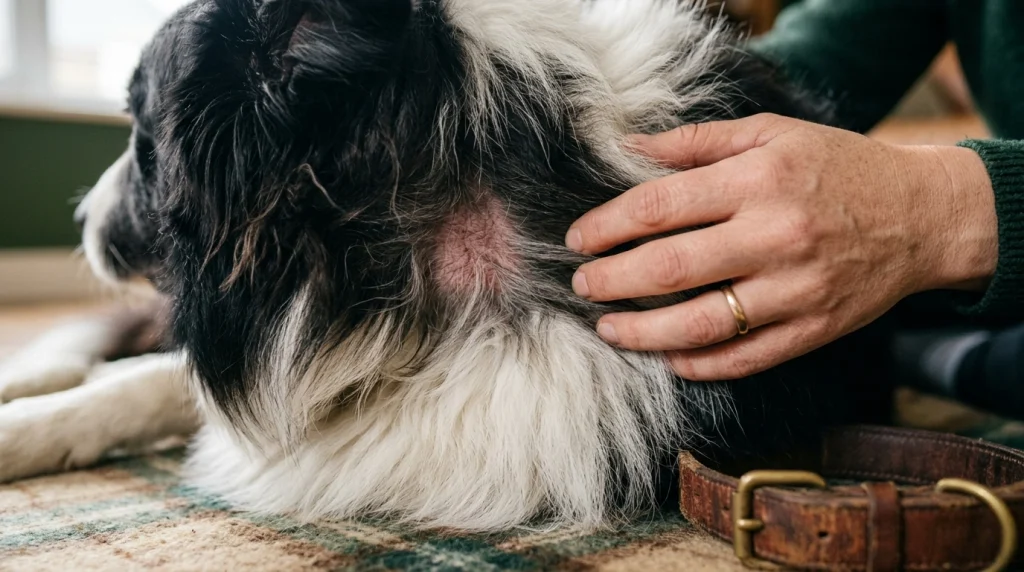
A Border Collie’s ruff is the fuller coat surrounding the neck and extending toward the chest and shoulders. It can give a rough-coated dog a mane-like appearance.
The term “ruff” describes a location and appearance rather than a separate anatomical structure. Underneath that longer-looking hair is the same basic double-coat system found across much of the dog.
What does the ruff look like?
On a classic rough Border Collie, the neck hair often projects farther from the body than the shorter facial hair. This creates a visible frame beneath the cheeks and around the chest.
- Front of the neck: Hair may form a noticeable bib-like area.
- Sides of the neck: Longer hair can create the “mane” effect.
- Upper chest: The ruff often blends into chest feathering.
- Shoulders: Coat gradually becomes flatter toward the body.
You may also hear owners casually call this area the mane, collar, neck feathering, or chest ruff. “Ruff” is the most useful general term.
Is the ruff the same as feathering?
Not exactly. Feathering means longer hair growing from areas such as the legs, chest, belly, and tail.
The ruff is specifically concentrated around the neck and upper chest. Both features can be prominent on a rough-coated Border Collie.
Why Do Border Collies Have a Ruff?
The ruff is part of the breed’s weather-resistant coat rather than a purely decorative feature. Border Collies developed as working sheepdogs in the often wet and cool border country of Britain.
The breed has an outer coat plus a softer, denser undercoat. Together, these layers help provide protection from outdoor conditions.
The ruff is part of a double coat
A double coat contains two main layers. Guard hairs form the outer coat, while softer undercoat grows beneath them.
- Outer coat: Coarser hairs help shield the body from moisture, dirt, and vegetation.
- Undercoat: Shorter, softer hair provides insulation and changes with seasonal shedding.
- Ruff area: Longer coat around the neck creates extra fullness without becoming a separate third layer.
The American Kennel Club describes both Border Collie coat varieties as dense, weather-resistant double coats. Its breed standard also notes feathering on the chest and underside of the rough variety.
Working heritage shaped the coat
Border Collies were selected primarily for working ability, stamina, and livestock control. Their coats needed to function while dogs crossed fields, hills, wet grass, and rough ground.
That history also explains why Border Collies don’t all look identical. Working lines can show substantial differences in coat length, ruff size, ear carriage, markings, and overall appearance.
Do Rough and Smooth Border Collies Both Have Ruffs?
Yes, but the ruff is usually much more obvious on a rough-coated Border Collie. Smooth-coated dogs have shorter hair and may show only slight feathering around the chest and neck.
Neither coat variety is considered superior simply because of coat length. Both are legitimate Border Collie coat types.
| Feature | Rough-Coat Border Collie | Smooth-Coat Border Collie |
|---|---|---|
| Overall coat | Medium length with noticeable feathering | Short and close-fitting |
| Ruff appearance | Often full and clearly defined | Usually subtle or lightly feathered |
| Chest hair | Often longer and fuller | Shorter, sometimes with slight feathering |
| Tangle risk | Higher around neck, ears, and chest | Usually lower, but loose undercoat still builds up |
| Seasonal shedding | Yes | Yes |
I’ve handled smooth Borders whose neck coat looked almost flat beside heavily coated rough dogs. Once I parted the hair, though, the dense undercoat was still obvious.
That’s why coat length shouldn’t determine whether you groom the area. Both varieties need regular coat care.
When Does a Border Collie’s Ruff Develop?
The adult ruff develops gradually as a Border Collie replaces its puppy coat with a mature coat. There isn’t one exact age when every dog’s ruff suddenly appears.
Genetics, coat variety, maturity, season, and the individual dog all influence how dramatic it becomes.
Puppy coat versus adult coat
Young puppies usually have softer, fluffier hair that doesn’t show the same mature structure. As adult guard hairs develop, the neck and chest can become more defined.
Don’t assume a lightly coated puppy will eventually grow a huge mane. Some adult Borders remain relatively moderate-coated throughout life.
Genetics matters most
Look at close relatives when possible. Parents and mature siblings often give you a better idea of potential coat appearance than puppy fluff does.
- Rough-coated family: A pronounced adult ruff may be more likely.
- Moderate working coat: The ruff may stay practical and less dramatic.
- Smooth genetics: Neck feathering may remain minimal.
- Season: Undercoat density can temporarily change the apparent volume.
As of 2026, breed authorities still recognize rough and smooth Border Collie coat varieties rather than dividing dogs into categories based on ruff size.
How Should You Groom a Border Collie Ruff?
Brush the ruff regularly and work through the coat in sections. The goal is to remove loose undercoat and small tangles without repeatedly scraping the skin.
The ASPCA dog-care resources include routine grooming as part of normal canine care. For Border Collies, the neck deserves extra attention because friction can encourage tangling.
My simple ruff-grooming routine
- Feel through the coat first. Use your fingers to locate knots, burrs, damp areas, or tender skin.
- Separate the hair. Work with small sections rather than dragging a brush through the entire ruff.
- Brush outward gently. Start where the hair moves freely and gradually work toward denser areas.
- Check beneath the collar. Friction and trapped moisture can make this area easier to overlook.
- Comb the longer hair. A comb can help confirm that hidden tangles remain removed.
- Stop if the skin hurts. Don’t force grooming through a tight mat.
How often should you brush it?
For many Border Collies, brushing once or twice weekly is a practical starting point. Dogs carrying a heavy seasonal coat may need attention more often.
AKC grooming guidance also recommends regular brushing, with increased brushing during shedding periods. What matters most is the condition of the individual coat.
Don’t forget the collar area
This is one of my first checks after wet walks. A thick ruff can hold moisture beneath a collar even when the surface already feels dry.
- Remove the collar during grooming.
- Check for small tangles beneath it.
- Make sure wet hair dries fully.
- Watch for redness, odor, or rubbing.
Why Does the Ruff Change During Shedding Season?
A Border Collie’s ruff can look thinner or fuller as the undercoat changes seasonally. Normal shedding can remove a surprising amount of soft hair from the neck and chest.
That doesn’t necessarily mean the dog is losing its permanent ruff. The visible outline changes as undercoat density changes.
What normal shedding looks like
Loose undercoat often comes away in soft clumps during brushing. You may notice more hair around the neck, trousers, chest, and tail.
The PetMD Border Collie guide describes the breed as having a double coat and recommends regular coat care. Dense coats need attention even when the outer surface looks tidy.
- Seasonal pattern: More loose undercoat appears during heavier shedding periods.
- Skin remains normal: Healthy skin shouldn’t become raw or inflamed simply from ordinary shedding.
- Coat remains distributed: Normal shedding should not create unexplained bare patches.
- Brushing helps: Removing already-loose undercoat prevents it from packing beneath longer hair.
I avoid trying to strip every loose-looking hair in one marathon session. Several calm grooming sessions are usually easier on both the coat and the dog.
Should You Trim or Shave a Border Collie’s Ruff?
Routine shaving of a healthy Border Collie ruff is generally unnecessary. The breed’s natural double coat usually needs brushing and sensible tidying rather than major sculpting.
The official breed standard emphasizes a natural working coat. Excess hair around limited areas such as the feet may be neatened, while excessive sculpting isn’t characteristic of correct presentation.
When light trimming can make sense
Small amounts of tidying may be useful when hair becomes messy around practical areas. That is different from removing the entire ruff.
- Neatening obvious stray hairs when appropriate
- Handling coat contamination that cannot be cleaned normally
- Following a veterinarian’s instructions before a medical procedure
- Allowing a skilled groomer to manage severe matting safely
Why I don’t shave the ruff for summer
A double coat isn’t simply a heavy winter jacket that becomes useless when temperatures rise. Both layers are part of the dog’s natural protective coat system.
Instead, I concentrate on removing loose undercoat, maintaining airflow through clean hair, providing shade, and managing activity in hot weather.
For broader animal-care questions, the American Veterinary Medical Association’s pet-care resources are a safer starting point than viral grooming claims.
When Can Changes in the Ruff Signal a Problem?
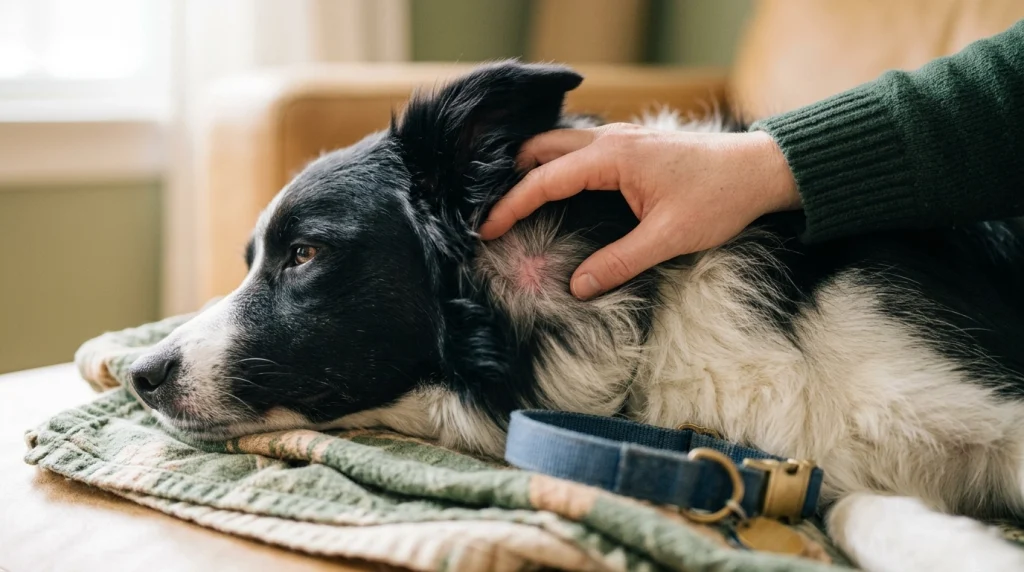
A suddenly thinning, irritated, smelly, or patchy ruff deserves closer attention. Ordinary coat variation should not automatically cause sores, severe itching, or bald areas.
The thick neck coat can hide skin problems. Part the hair and inspect the skin rather than judging only the surface.
Signs worth checking
- Bare patches: Clear areas of unexpected hair loss aren’t the same as ordinary undercoat shedding.
- Red skin: Persistent redness can indicate irritation or another skin problem.
- Strong odor: A sour or unusual smell may come from trapped moisture or unhealthy skin.
- Constant scratching: Repeated neck scratching deserves investigation.
- Scabs or sores: Don’t keep brushing directly over damaged skin.
- Sudden coat change: A major unexplained change is worth discussing with your veterinarian.
A collar can also cause mechanical problems if it stays wet, traps debris, or rubs one location repeatedly. Remove it during your coat check so you can see the skin underneath.
Vet note: Persistent itching, bald patches, sores, swelling, unusual odor, or sudden coat loss should be evaluated by your veterinarian rather than treated as a simple grooming issue.
Frequently Asked Questions About the Border Collie Ruff
Do all Border Collies have a ruff?
Border Collies can have hair around the neck and chest, but not every dog develops a dramatic mane-like ruff. Rough-coated dogs usually show it most clearly, while smooth Border Collies can have much shorter or subtler neck feathering.
Is a large ruff a sign of a purebred Border Collie?
No. Ruff size alone cannot prove whether a dog is purebred. Coat appearance varies considerably within the breed, and Border Collies are recognized in both rough and smooth coat varieties.
Why does my Border Collie’s ruff look smaller after shedding?
Heavy shedding can remove a large amount of soft undercoat, making the neck look temporarily flatter. If the skin looks healthy and hair loss is evenly distributed, this can simply reflect normal seasonal coat change.
Why is my Border Collie’s neck hair longer than its body hair?
Rough-coated Border Collies naturally develop feathering in several areas, including the neck and chest. The contrast with shorter facial hair and flatter body coat can make the ruff appear especially long.
Can I cut my Border Collie’s ruff shorter?
Minor tidying may sometimes be appropriate, but routine shortening of a healthy ruff usually isn’t necessary. Regular brushing and undercoat removal preserve the natural coat while reducing tangles and excess loose hair.
Does a smooth Border Collie have an undercoat?
Yes. Smooth Border Collies are still double-coated dogs. Their outer hair is shorter, so the neck ruff is less obvious, but they can still carry dense undercoat and shed seasonally.
Why does my Border Collie’s ruff keep getting tangled?
Longer hair, loose undercoat, moisture, collars, outdoor debris, and friction can all encourage tangles around the neck. Frequent gentle brushing and regular checks beneath the collar usually make small knots easier to manage before they tighten.
Final Takeaway: The Ruff Is a Normal Part of the Border Collie Coat
The Border Collie ruff is the fuller hair around the neck, upper chest, and shoulders. It’s most striking on rough-coated dogs but can appear more subtly on smooth-coated Border Collies.
Think of it as part of the breed’s functional double coat, not a separate feature that needs special styling. Genetics, maturity, coat type, and seasonal shedding determine how dramatic it looks.
- Brush the ruff regularly.
- Check beneath collars for tangles and moisture.
- Expect coat volume to change during shedding.
- Avoid unnecessary shaving or heavy sculpting.
- Investigate baldness, sores, persistent itching, or sudden coat changes.
After years around Border Collies, I’ve learned that the impressive-looking coats are often easiest to manage when I stay consistent. A few minutes of regular checking beats waiting until that beautiful ruff turns into a grooming project.
