
Border Collie Shedding Bath Routine: Complete Coat-Care Guide

Quick Answer
A good Border Collie shedding bath routine starts with thorough brushing before the bath, followed by gentle washing, complete rinsing, careful drying, and another light brushing after the coat dries. Because Border Collies have dense double coats, regular brushing matters more than frequent bathing, which matches AKC Border Collie grooming guidance.
Quick shedding-bath routine
- Brush first: Remove loose undercoat, dirt, small tangles, and dead hair before adding water.
- Use lukewarm water: Wet the coat gradually until water reaches through the dense undercoat.
- Wash gently: Use dog-specific shampoo and massage through the coat without aggressively scrubbing the skin.
- Rinse completely: Keep rinsing until the coat feels clean and no shampoo residue remains.
- Dry thoroughly: Towel-blot first, then finish drying the dense undercoat without excessive heat.
- Brush again: Once dry, remove the loose coat released during washing and drying.
During heavy shedding
- Increase brushing: Daily brushing may be useful when your Border Collie is dropping large amounts of undercoat.
If you’ve ever bathed a shedding Border Collie, you know the bath itself isn’t the hardest part. The real challenge is getting loose undercoat out without creating tangles or leaving a damp coat behind.
I’ve found that the best routine treats bathing as one part of a larger coat-care process. In this 2026 guide, I’ll show you how to build that routine around your dog’s coat, activity level, and shedding cycle.
In This Guide
- What Is a Border Collie Shedding Bath Routine?
- How Often Should You Brush and Bathe a Border Collie?
- What Should You Do Before the Bath?
- How Do You Bathe a Border Collie During Heavy Shedding?
- How Should You Dry and De-Shed After the Bath?
- Does the Routine Change for Rough and Smooth Coats?
- What Shedding and Bathing Mistakes Should You Avoid?
- Frequently Asked Questions
What Is a Border Collie Shedding Bath Routine?
A Border Collie shedding bath routine combines brushing, bathing, drying, and post-bath coat removal. Its goal is to remove loose hair while protecting the dog’s double coat and skin.
A Border Collie’s double coat has a softer, insulating undercoat beneath a coarser protective outer coat. Both rough-coated and smooth-coated Border Collies have this basic two-layer structure.
The AKC’s double-coat grooming guidance explains that the undercoat provides insulation while guard hairs help protect the skin and repel moisture.
That structure changes how you should approach shedding. Pulling loose undercoat through regular grooming works better than trying to solve shedding with repeated baths.
Why does bathing release so much hair?
Water, shampooing, rinsing, and drying can loosen dead hairs already sitting within the coat. That’s why the tub and drying area may suddenly look covered in fur.
This doesn’t mean the bath caused abnormal shedding. In many cases, it simply helped release hair your dog was already ready to lose.
- Normal shedding: Loose hairs come out throughout the coat without bald patches.
- Seasonal shedding: Larger amounts of soft undercoat may release over a shorter period.
- Concerning hair loss: Bald areas, inflamed skin, sores, or intense itching deserve veterinary attention.
Indoor living and climate can also make shedding patterns less predictable. Some double-coated dogs shed more continuously instead of following two perfectly defined seasons.
How Often Should You Brush and Bathe a Border Collie?
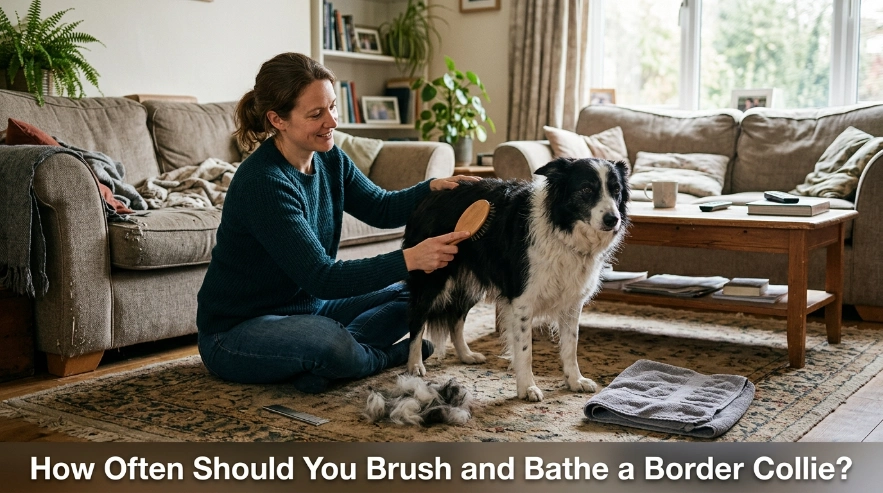
Most Border Collies benefit from brushing at least once or twice each week, with more frequent brushing during heavy shedding. Bathing should be based on coat condition, dirt, odor, lifestyle, and skin needs rather than shedding alone.
The AKC advises regular weekly grooming and notes that Border Collies may need daily brushing during shedding season. PetMD also describes the breed as a regular shedder that benefits from consistent coat care.
A practical routine to start with
| Situation | Brushing Routine | Bath Approach |
|---|---|---|
| Normal shedding | About 1–3 times weekly | Bathe when dirty, oily, or noticeably smelly |
| Heavy seasonal shedding | Increase toward daily brushing as needed | Use a well-timed bath to help release already-loose coat |
| Muddy outdoor dog | Brush after dirty adventures | Rinse or bathe sooner when genuinely dirty |
| Skin condition | Follow veterinarian guidance | Use the schedule and product your veterinarian recommends |
Don’t become tied to one calendar number. One Border Collie may stay clean for weeks, while another finds a muddy ditch every weekend.
Bathing simply because your dog is shedding can lead to unnecessary washing. Brushing is usually the first tool I reach for when the coat feels loose but isn’t dirty.
The PetMD Border Collie care guide also emphasizes routine brushing for removing loose hair and maintaining the coat.
Vet note: Dogs with allergies, chronic skin problems, medicated-shampoo plans, or unexplained hair loss may need a different bathing schedule. Ask your veterinarian before changing that routine.
What Should You Do Before the Bath?
Brush your Border Collie before getting the coat wet. This removes loose fur and gives you a chance to find tangles, mats, skin changes, and hidden debris.
This step saves time later. Wetting tangled double-coated fur can make problem areas harder to work through.
Gather your supplies first
- Pin or slicker brush: Useful for routine coat brushing and surface tangles.
- Metal comb: Helps check whether you’ve brushed through dense areas completely.
- Undercoat tool: Useful when dead undercoat is releasing heavily.
- Dog shampoo: Choose a formula made specifically for dogs.
- Absorbent towels: Have several available for a rough-coated dog.
- Non-slip mat: Gives an uncertain dog better footing.
- Dryer: Use suitable airflow without directing excessive heat at the skin.
- Treats: Helpful for creating a calmer grooming routine.
Where should you brush first?
Start in areas that collect loose undercoat and tangles. I pay special attention behind the ears, around the chest, under the collar, beneath the front legs, and around the rear feathering.
Work in small sections. Your goal isn’t to pull out every hair in one aggressive session.
- Brush in the direction the coat naturally lies.
- Use gentle, controlled strokes instead of scraping the skin.
- Separate thicker sections with your fingers when needed.
- Check your work with a comb before moving on.
- Stop if you find a tight mat you cannot remove comfortably.
Brushing before bathing is also recommended in the ASPCA’s dog grooming guidance. It helps remove dead hair and mats before washing.
How Do You Bathe a Border Collie During Heavy Shedding?
During heavy shedding, use the bath to clean the coat and loosen dead hair without aggressively stripping it. A slow, thorough wash works better than hard scrubbing.
Step 1: Wet the coat completely
Use lukewarm water and begin gradually. A dense Border Collie undercoat may look wet on top while remaining surprisingly dry underneath.
Move your fingers through the coat as you rinse. Make sure water reaches the undercoat without blasting sensitive areas.
Step 2: Apply dog-specific shampoo
Work shampoo through the coat using your fingertips. Massage gently rather than scratching with your nails.
Human shampoo isn’t designed around a dog’s skin and coat needs. Use a dog-specific product unless your veterinarian has told you otherwise.
Step 3: Protect the face and ears
Avoid spraying water directly into the eyes, nose, or ear canals. I prefer cleaning the face separately with a soft damp cloth.
Keep shampoo away from the eye area. Control the sprayer carefully whenever you’re working around the head.
Step 4: Rinse longer than you think necessary
A thick double coat can hold shampoo surprisingly well. Continue rinsing while separating the fur with your fingers.
Check the chest, belly, tail base, rear feathering, and other dense areas. Don’t finish while the coat still feels slippery from product.
Step 5: Let loosened hair release naturally
You’ll probably see fur collecting in your hands and around the drain. That’s normal during a shedding bath.
Don’t repeatedly rake soaking-wet fur with force. Save most de-shedding work for controlled drying and post-bath brushing.
Section Takeaway: Brush first, wash gently, and rinse completely. The bath should release dead coat without turning grooming into a tug-of-war.
How Should You Dry and De-Shed After the Bath?
Drying is one of the most important parts of a Border Collie bath. The outer coat can feel almost dry while moisture remains trapped closer to the skin.
Start with towels
Press an absorbent towel into the coat rather than rubbing rapidly. Hard rubbing can twist longer rough-coat hair together and create tangles.
Switch towels when the first becomes saturated. Pay attention to the belly, legs, chest, and rear coat.
Use airflow carefully
If your dog tolerates a dryer, keep the air comfortable and keep the nozzle moving. Avoid concentrating high heat on one patch of skin.
Airflow can separate the coat and release impressive amounts of loose undercoat. This is especially noticeable during seasonal shedding.
- Begin calmly: Introduce the dryer from a comfortable distance.
- Work by section: Dry the shoulders, sides, chest, legs, and rear methodically.
- Check the undercoat: Use your fingers to feel near the skin for lingering dampness.
- Watch your dog: Stop if the noise or airflow causes significant stress.
Brush after the coat is dry
Once the coat is dry, finish with a light brushing session. This catches hairs that bathing and drying loosened.
I usually keep this session shorter than the pre-bath brush. The goal is cleanup, not another intense de-shedding marathon.
Check the skin while you work. Redness, sores, unusual odor, or painful areas shouldn’t be hidden beneath continued grooming.
Vet note: Persistent dampness, strong skin odor, redness, sores, or painful skin should be evaluated by your veterinarian rather than treated with repeated bathing.
Does the Routine Change for Rough and Smooth Coats?

Rough and smooth Border Collies both have double coats, so the basic shedding bath routine stays similar. Rough coats usually require more attention to feathering and tangles.
| Feature | Rough Coat | Smooth Coat |
|---|---|---|
| Outer appearance | Longer coat with visible feathering | Shorter coat lying closer to the body |
| Double coat | Yes | Yes |
| Tangle risk | Higher around feathered areas | Usually easier to comb through |
| Shedding | Loose longer hairs can look especially noticeable | Shorter loose hairs may spread easily through fabrics |
| Bath priority | Prevent tangles and dry feathering completely | Reach and dry the dense undercoat thoroughly |
For a rough coat, check behind the ears and through the chest, tail, and rear feathering before bathing. Those areas deserve another check after drying.
A smooth coat may look easier, but don’t assume there’s little undercoat underneath. You can still get a substantial seasonal release.
Should you shave either coat?
Don’t shave a healthy Border Collie simply to control shedding. Cutting the coat short doesn’t stop the normal hair-growth and shedding cycle.
AKC guidance warns that shaving double-coated dogs can interfere with the protective coat and expose the skin. Medical situations or severe matting are different and should be handled with veterinary or professional grooming guidance.
What Shedding and Bathing Mistakes Should You Avoid?
The biggest mistake is trying to fight shedding by bathing more and more often. Healthy shedding is normal, so your routine should manage it rather than attempt to eliminate it.
1. Skipping the pre-bath brush
Loose hair and tangles become harder to manage once they’re soaked. Spend a few extra minutes brushing before turning on the water.
2. Scrubbing aggressively
A harder scrub doesn’t automatically produce a cleaner dog. Gentle massage can clean the coat without unnecessary friction against the skin.
3. Leaving shampoo behind
A thick coat makes incomplete rinsing easy. Separate the fur with your fingers and keep rinsing until you’re confident the product is gone.
4. Using excessive dryer heat
Hotter isn’t better. Comfortable moving airflow is safer than holding concentrated heat against one area.
5. Leaving the undercoat damp
Check below the surface before declaring the job finished. Dense sections can retain moisture after the outer hair feels dry.
6. Shaving to stop shedding
Shaving doesn’t switch off the shedding cycle. It removes the protective length of the coat while the hair continues growing and cycling underneath.
7. Assuming every hair-loss problem is normal
Normal shedding should not automatically explain bald spots, skin sores, swelling, or intense itching. Those symptoms deserve a closer look.
Vet note: Sudden or unusual hair loss can have causes beyond routine seasonal shedding. Contact your veterinarian when shedding is accompanied by skin changes or signs of illness.
Frequently Asked Questions
Does bathing a Border Collie reduce shedding?
A bath can help release loose hair already sitting in the coat, especially when followed by thorough drying and brushing. It won’t stop normal shedding, so regular brushing remains the main long-term management tool.
Should I brush my Border Collie before or after a bath?
Do both when needed. Brush thoroughly before bathing to remove loose coat and tangles, then use a lighter post-bath brush after the coat is fully dry.
How often should I bathe a shedding Border Collie?
Don’t bathe solely because hair is falling out. Base bathing on dirt, odor, activity, coat condition, and veterinary needs while controlling most routine shedding with brushing.
Why does my Border Collie shed more after a bath?
Bathing, rinsing, and drying can release dead hairs trapped within the coat. That can make shedding appear heavier immediately after bathing even though many hairs were already loose.
Can I use a de-shedding shampoo on my Border Collie?
A dog-specific de-shedding shampoo may be appropriate for some dogs, but it isn’t essential. Choose a gentle product suited to your dog’s skin and ask your veterinarian about persistent dryness, allergies, or irritation.
Should I shave my Border Collie during shedding season?
No, not simply to reduce shedding. Border Collies have protective double coats, and routine brushing, bathing, and drying are better approaches for managing loose hair.
When should Border Collie shedding worry me?
Contact your veterinarian if hair loss becomes sudden, patchy, or unusually severe. Also seek advice if you notice redness, sores, strong odor, persistent scratching, licking, or other changes in your dog’s health.
A Border Collie shedding bath routine doesn’t need to be complicated. Brush before the bath, wash gently, rinse thoroughly, dry the undercoat completely, and finish by removing the hair the bath loosened.
Stay consistent instead of trying to remove every loose hair in one session. Your Border Collie’s coat will be easier to maintain, and bath day should become much less messy for both of you.