
What Is a Border Collie Undercoat?

Quick Answer
A Border Collie undercoat is the soft, short, dense layer of fur beneath the coarser outer coat. Together, these layers form the breed’s weather-resistant double coat, which helps protect the skin and insulate the dog. The AKC’s double-coat guidance explains how the two layers work together.
What you should know
- Soft inner layer: The undercoat usually feels softer and fluffier than the visible guard hairs.
- Double-coated breed: Both rough and smooth Border Collies have an undercoat.
- Seasonal shedding: Loose undercoat often becomes much more noticeable during seasonal coat changes.
- Regular brushing: Gentle grooming removes loose hair before it packs into the coat.
- No routine shaving: Shaving is not a good shortcut for ordinary shedding.
Simple check
- Part the outer hairs gently. The softer, denser hair close to the skin is the undercoat.
If you’ve ever brushed a Border Collie and pulled out a cloud of soft fluff, you’ve probably met the undercoat. I’ve found that understanding this hidden layer makes shedding, bathing, and everyday grooming much easier.
This guide explains what the undercoat does, how it differs between coat types, and how to care for it without damaging the coat.
In This Guide
- What is a Border Collie undercoat?
- Why do Border Collies have an undercoat?
- What does a Border Collie undercoat look and feel like?
- Do rough and smooth Border Collies both have undercoats?
- When do Border Collies shed their undercoat?
- How should you groom a Border Collie undercoat?
- Should you shave a Border Collie’s undercoat?
- When can undercoat changes signal a problem?
- Frequently asked questions about the Border Collie undercoat
- Final takeaway
What Is a Border Collie Undercoat?
A Border Collie’s undercoat is the soft, short, dense fur growing beneath the outer guard hairs. It forms the inner half of the dog’s double coat.
Definition: A Border Collie undercoat is the dense inner layer of soft hair that sits close to the skin beneath the tougher outer coat.
The official AKC Border Collie breed standard describes both coat varieties as dense, weather-resistant double coats. It describes the undercoat as soft, short, and dense.
Undercoat vs. outer coat
- Undercoat: Soft, fine, dense, and close to the skin.
- Outer coat: Coarser hair that forms the visible surface of the coat.
- Guard hairs: The longer outer hairs that help shield the skin from weather and debris.
When I separate the coat with my fingers, the difference is easy to feel. The surface hairs feel firmer, while the inner layer feels more like soft fleece.
That fluffy inner hair is also what often fills the brush during a heavy shed.
Why Do Border Collies Have an Undercoat?
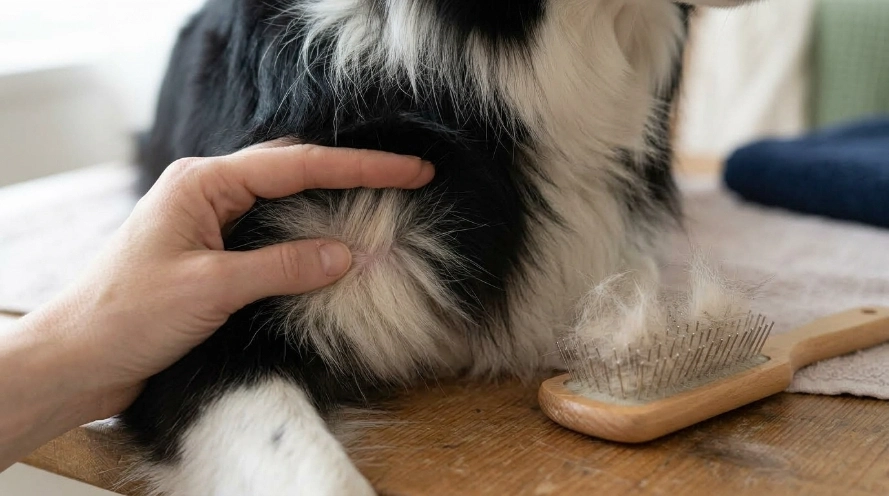
The undercoat is part of the Border Collie’s natural protection system. It works with the outer coat rather than functioning alone.
That makes sense for a breed developed to work outdoors in changing weather.
What the double coat does
- Insulates the body: Dense inner hair helps create an insulating layer around the skin.
- Supports temperature control: The complete double coat helps protect the dog during both cooler and warmer conditions.
- Protects the skin: The outer and inner layers together reduce direct exposure to sun, moisture, dirt, and vegetation.
- Handles changing seasons: Undercoat density can change as old hair sheds and new hair develops.
The undercoat shouldn’t be viewed as unwanted extra fur. It is a normal part of a healthy Border Collie’s coat.
Removing loose undercoat through grooming is useful. Removing the entire protective coat without a medical reason is different.
What Does a Border Collie Undercoat Look and Feel Like?
The easiest way to identify the undercoat is to part your Border Collie’s outer hairs. Look close to the skin rather than at the visible surface.
You should find shorter, softer, denser hair underneath.
Common undercoat characteristics
- Texture: Soft and fluffy compared with the outer coat.
- Length: Shorter than most visible guard hairs.
- Density: Closely packed, especially around heavily coated areas.
- Appearance: The color may look lighter or duller than the outer coat.
- Shedding: Loose hair may come out as soft tufts during seasonal changes.
On rough-coated dogs, I notice the undercoat most around the neck, shoulders, rear end, and longer feathering. These areas can hide surprising amounts of loose hair.
A smooth Border Collie can look much less fluffy. That doesn’t mean the undercoat is absent.
Do Rough and Smooth Border Collies Both Have Undercoats?
Yes. Both recognized Border Collie coat varieties have double coats, so both normally have an undercoat.
The biggest difference is the length and appearance of the outer coat.
| Feature | Rough Border Collie | Smooth Border Collie |
|---|---|---|
| Undercoat | Soft, short, and dense | Soft, short, and dense |
| Outer coat | Medium length, straight or wavy | Short over the body and usually coarser |
| Feathering | Noticeable on chest, legs, underside, and rear | Limited feathering may appear |
| Loose fur visibility | Often easy to notice in longer coat | May look less dramatic despite regular shedding |
Don’t judge undercoat density only by how long the dog looks. A short smooth coat can still contain plenty of dense inner hair.
Individual dogs also differ. Climate, season, age, and general health can affect how full the coat appears.
When Do Border Collies Shed Their Undercoat?
Border Collies can shed throughout the year, but undercoat loss may become much heavier during seasonal coat changes. Owners often call a heavy seasonal shed blowing the coat.
Spring and fall are common periods for increased undercoat shedding in double-coated dogs.
What heavy undercoat shedding looks like
- Soft tufts appear along the body.
- Your brush fills much faster than usual.
- Loose fluff collects on bedding and furniture.
- Hair releases when you gently run your hand through the coat.
- Dense areas may look uneven until loose hair is brushed away.
Season and environment can influence shedding patterns. Indoor lighting, temperature, and local climate may make the cycle less predictable.
The important distinction is between normal shedding and abnormal hair loss. PetMD’s guidance on excessive shedding in dogs notes that itching, skin lesions, bald areas, and other symptoms deserve closer attention.
As of 2026, my practical approach remains simple. I watch the dog’s skin and overall coat condition instead of worrying about every extra handful of seasonal fluff.
How Should You Groom a Border Collie Undercoat?
Regular, gentle brushing is the safest starting point. The goal is to remove dead hair without scraping the skin or repeatedly cutting healthy coat.
VCA’s coat-care guidance also recommends regular brushing to remove loose hair, debris, and tangles.
Useful tools for the undercoat
- Pin brush: Helpful for routine brushing, especially on rough coats.
- Metal comb: Useful for checking whether a section is brushed through.
- Slicker brush: Can lift loose hair and work through small tangles when used gently.
- Undercoat rake: Useful during heavier shedding when chosen for the dog’s coat length.
I prefer starting with the least aggressive tool that does the job. More blades and pressure don’t automatically mean better grooming.
A simple brushing routine
- Let your Border Collie settle somewhere comfortable.
- Check the coat for burrs, mats, damp areas, or sore skin.
- Brush in small sections rather than dragging through the full coat.
- Work in the direction of hair growth with light pressure.
- Pay extra attention behind the ears, chest, rear legs, and tail area.
- Finish with a comb to find loose hair or tangles you missed.
The ASPCA’s dog grooming guidance also emphasizes matching brushing methods to coat type. Regular grooming gives you a chance to inspect the skin at the same time.
During a heavy shed, short frequent sessions usually work better for me than one long battle with a packed coat. The dog stays more comfortable, and I can work more carefully.
Section Takeaway: Remove loose undercoat gradually and gently. A consistent routine is safer than waiting until dead hair becomes packed or tangled.
Should You Shave a Border Collie’s Undercoat?
Routine shaving is generally not recommended for a healthy Border Collie’s double coat. The outer coat and undercoat work together as a protective system.
Shaving also doesn’t stop the biological process that causes hair to shed.
Why shaving is a poor shedding shortcut
- It removes protective outer hair as well as undercoat.
- It exposes more skin directly to the environment.
- Coat regrowth can look or feel uneven.
- It doesn’t remove the cause of normal seasonal shedding.
Brushing out dead undercoat is different from shaving. Proper brushing targets loose hair while leaving healthy coat in place.
There are exceptions. A veterinarian may clip fur for medical treatment, and severe matting may require professional intervention.
Don’t try to cut tightly matted fur close to the skin with household scissors. Dog skin can be pulled into a mat and injured surprisingly easily.
When Can Undercoat Changes Signal a Problem?
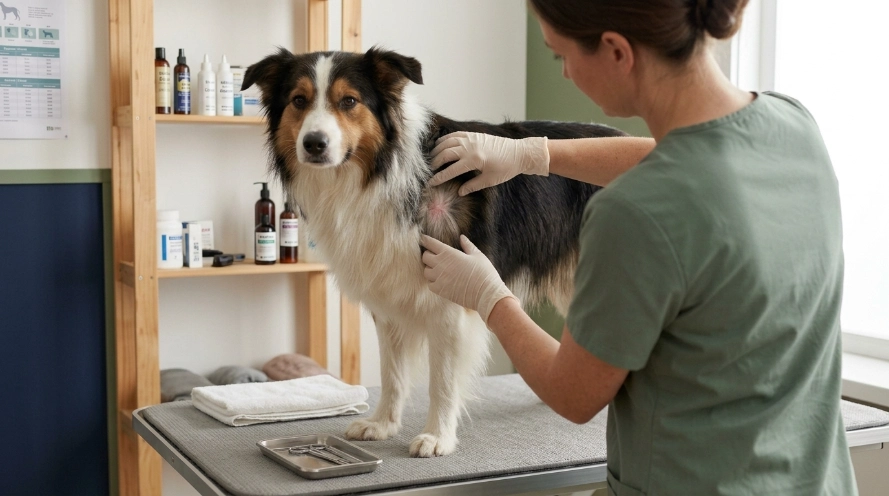
Heavy shedding alone can be normal, especially during a seasonal change. Sudden hair loss combined with skin or behavior changes deserves more attention.
Look at the skin beneath the coat instead of judging only the amount of hair on your floor.
Signs worth discussing with your veterinarian
- Clearly defined bald patches
- Persistent scratching or chewing
- Red, inflamed, or unusually dark skin
- Scabs, sores, or moist areas
- Strong or unusual skin odor
- Hair loss that looks different on one side of the body
- A major coat change accompanied by weight or behavior changes
A dull or thinning coat can have many possible causes. Parasites, allergies, skin disease, nutrition, hormones, and other health issues may affect hair and skin.
Vet note: If your Border Collie has sudden baldness, severe itching, painful skin, sores, or unexplained coat changes, contact your veterinarian rather than treating the problem as ordinary shedding.
Grooming is useful for prevention and observation. It isn’t a substitute for diagnosing a skin or medical condition.
Frequently Asked Questions About the Border Collie Undercoat
Do all Border Collies have an undercoat?
Border Collies are a double-coated breed, and both recognized rough and smooth coat varieties normally have a soft, dense undercoat. The amount you notice can vary with the individual dog, season, age, climate, and coat condition.
How can I tell if my Border Collie has an undercoat?
Part the visible outer hairs and look close to the skin. The undercoat should feel softer, shorter, and denser than the coarser hairs you see on the coat’s surface.
Do smooth Border Collies have less undercoat?
A smooth Border Collie may appear to have less fur because the outer coat is shorter. However, smooth-coated dogs still have the breed’s double-coat structure and can release plenty of undercoat during shedding periods.
How often should I brush the undercoat?
Many Border Collies benefit from brushing once or twice weekly during ordinary periods. During a heavy seasonal shed, more frequent gentle brushing can remove loose undercoat before it collects or becomes tangled.
Can I use an undercoat rake on a Border Collie?
Yes, an appropriately sized undercoat rake can help during heavy shedding. Use light pressure, follow hair growth, and stop if the tool pulls healthy hair, scratches the skin, or makes your dog uncomfortable.
Why is my Border Collie’s undercoat coming out in clumps?
Soft tufts can appear when a double-coated dog is shedding heavily. If the skin underneath looks normal and your dog isn’t itchy, sore, or developing bald patches, seasonal shedding may be the explanation.
Will bathing remove a Border Collie’s undercoat?
Bathing can loosen dead hair, especially when followed by complete drying and gentle brushing. It should remove loose coat rather than strip healthy undercoat, and the dense inner layer needs to dry fully after bathing.
Final Takeaway
A Border Collie undercoat is the soft, dense inner layer beneath the coarser outer coat. It is a normal and useful part of both rough and smooth Border Collie coats.
Expect some year-round shedding and periods of heavier undercoat loss. Regular gentle brushing is usually the best way to manage it.
Get familiar with what your own dog’s healthy coat and skin normally look like. That makes it easier to recognize the difference between ordinary shedding and a change that deserves veterinary attention.
