
Should Border Collies Sleep Inside or Outside?

Quick Answer
Most Border Collies should sleep inside, where they can stay close to their family and remain protected from heat, cold, rain, wind, and nighttime hazards. Their working heritage does not mean they need to live outdoors, and the AKC’s Border Collie guidance emphasizes their need for activity, training, mental stimulation, and interaction with people.
What matters most at bedtime
- Weather protection: Indoor sleeping avoids many risks from extreme temperatures, wind, rain, and damp bedding.
- Social contact: Border Collies are people-focused dogs and often settle well when they remain near their household.
- Secure rest: A quiet indoor bed reduces exposure to wildlife, escape opportunities, theft, and nighttime disturbances.
- Life stage: Puppies, seniors, sick dogs, and recovering dogs should generally sleep indoors.
- Outdoor exceptions: Some acclimated working dogs can sleep outside when they have secure, weatherproof shelter and appropriate supervision.
My practical rule
- If you are unsure whether the outdoor conditions are safe enough overnight, bring your Border Collie inside.
Border Collies may have been developed as hardworking sheepdogs, but that does not automatically make the backyard their best bedroom. Where they sleep affects comfort, safety, rest, and daily family interaction.
I prefer to treat nighttime as recovery time. After exercise, training, and mental work, a Border Collie benefits from a predictable place where switching off is easy.
In This Guide
- Should Border Collies Sleep Inside or Outside?
- Why Do Border Collies Usually Sleep Better Inside?
- Can a Border Collie Sleep Outside Safely?
- How Does Indoor Sleeping Compare With Outdoor Sleeping?
- Do Working Border Collies Need to Sleep Outside?
- How Should You Set Up an Indoor Sleeping Area?
- How Do You Make Outdoor Sleeping Safer?
- What Changes for Puppies, Seniors, or Anxious Dogs?
- Frequently Asked Questions
Should Border Collies Sleep Inside or Outside?
For most pet Border Collies, inside is the better default sleeping location. It provides controlled temperatures, security, and easy access to the people these alert herding dogs tend to monitor closely.
Sleeping inside does not mean your dog needs to sleep in your bed. A crate, dog bed, utility room, kitchen corner, or other quiet indoor space can work well.
Definition: A Border Collie’s sleeping area is the regular place where the dog can rest deeply without needing to remain alert to weather, animals, people, traffic, or other activity.
Think about recovery, not just shelter
Border Collies often spend their waking hours noticing movement and responding to tiny changes around them. A good sleeping environment should reduce that workload.
A yard can contain barking dogs, wildlife, passing vehicles, livestock, wind, and unfamiliar noises. Some Border Collies respond to every sound instead of settling.
- Choose calm: Put the sleeping area away from busy doors and windows.
- Stay predictable: Use roughly the same bedtime routine every night.
- Allow decompression: Avoid intense ball games immediately before bed.
- Provide comfort: Give your dog a clean, dry resting surface with enough room to change position.
Indoor sleep also makes changes easier to notice. Restlessness, repeated waking, unusual panting, stiffness, or suddenly needing nighttime toilet trips are easier to spot when the dog is nearby.
Why Do Border Collies Usually Sleep Better Inside?
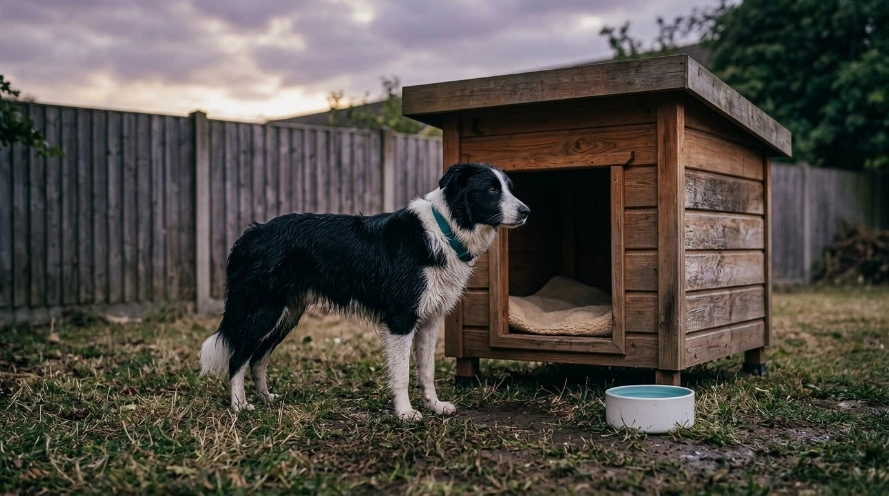
Indoor sleeping suits many Border Collies because it combines physical comfort with social security. These dogs were bred to cooperate closely with handlers rather than operate as isolated property guardians.
Their famous herding focus matters here. A Border Collie may keep scanning an outdoor environment when another dog would simply fall asleep.
They need genuine downtime
High energy does not mean a Border Collie should remain stimulated all day and night. Learning to settle is part of healthy daily management.
According to PetMD’s veterinarian-reviewed guidance on canine sleep, most dogs sleep about 12 to 16 hours across a day, depending on age, activity, breed, and lifestyle.
A Border Collie that has exercised and trained needs those quieter hours. Constant nighttime barking, fence patrol, or reacting to wildlife can interfere with useful rest.
Inside does not mean constant attention
Your dog does not need entertainment simply because they are indoors. In fact, I like bedtime to become deliberately boring.
- A final calm toilet trip can happen shortly before bed.
- Water should remain available as appropriate for the dog.
- The sleeping area should stay quiet and comfortably ventilated.
- Lights and household activity should gradually decrease.
- A familiar bed or crate can act as a clear rest cue.
That pattern teaches an important skill: active dogs can stop working. For some Border Collies, learning to relax is as valuable as learning another command.
Can a Border Collie Sleep Outside Safely?
A healthy adult Border Collie can sometimes sleep outside, but outdoor sleeping requires more than a fenced yard and a kennel. Weather, shelter, security, health, coat condition, and the dog’s previous acclimation all matter.
I would never use the breed’s double coat as the only reason to leave one outside overnight. Weather resistance is not the same thing as protection from every environmental condition.
Cold, rain, and wind can combine
Border Collies commonly have a double coat, with a denser undercoat below protective outer hairs. Both rough-coated and smooth-coated dogs still need protection from prolonged bad weather.
The ASPCA’s cold-weather safety guidance advises bringing companion animals inside during dangerous cold conditions. Wetness and exposure add to the problem.
A damp dog can lose comfort faster than a dry dog in the same air temperature. Wind can make an exposed sleeping site worse.
Hot nights create a different risk
Warm weather can also make outdoor sleeping unsafe. A kennel that blocks wind may become hot and poorly ventilated during summer.
Merck Veterinary Manual explains that dogs are generally less efficient at cooling themselves than people and primarily rely on panting.
- Watch airflow: A closed shelter can trap heat.
- Provide water: Clean drinking water must remain accessible.
- Check humidity: Warm, humid air can make cooling harder.
- Avoid direct sun: Daytime sun can heat a shelter long before bedtime.
- Bring them in: Use a temperature-controlled indoor space when conditions become unsafe.
Vet note: Heatstroke and hypothermia can become veterinary emergencies. Contact your veterinarian promptly if your dog shows collapse, confusion, breathing difficulty, loss of coordination, or other severe changes after weather exposure.
How Does Indoor Sleeping Compare With Outdoor Sleeping?
Indoor sleeping gives owners more control over the variables that affect rest. Outdoor sleeping can work in selected situations, but it requires much more environmental management.
| Factor | Sleeping Inside | Sleeping Outside |
|---|---|---|
| Temperature control | Usually easy to manage | Depends heavily on weather and shelter |
| Family contact | High | Usually reduced overnight |
| Wildlife exposure | Low | Varies by location |
| Escape risk | Usually low | Requires secure fencing and gates |
| Night monitoring | Easier | Harder |
| Best fit | Most companion Border Collies | Selected acclimated adults with proper facilities |
The important distinction is not whether an outdoor kennel looks comfortable at 7 p.m. Ask whether it will remain safe if rain begins, wind increases, wildlife appears, or the temperature changes before morning.
Do Working Border Collies Need to Sleep Outside?
No. Being a working Border Collie does not automatically mean sleeping outdoors is necessary or preferable.
The breed developed around livestock work, but a dog’s daytime job and nighttime housing are separate management decisions. Plenty of working dogs can spend their days outdoors and recover indoors.
Working heritage is often misunderstood
A sheepdog working hills or fields is actively moving, responding to a handler, and generating body heat. Sleeping still for several hours is a different situation.
Likewise, historical farm dogs lived under many different arrangements. History alone should not decide how a modern dog sleeps.
- Stock work: A working dog may spend long periods outside during active duties.
- Rest period: Recovery should happen somewhere dry, secure, and comfortable.
- Night duties: Border Collies should not be confused with livestock guardian breeds bred primarily to remain with stock.
- Individual habits: A dog accustomed to indoor sleep may become stressed by a sudden move to an isolated kennel.
I would make the decision around the individual dog and environment. A secure farm setup can be different from a suburban backyard beside a road.
How Should You Set Up an Indoor Sleeping Area?
The best indoor sleeping area is quiet, comfortable, and boring enough for deep rest. It does not need to be elaborate.
Start by choosing a location away from constant foot traffic. Your Border Collie should be able to see enough to feel secure without supervising the whole property.
Bed, crate, or open floor space?
Any of these can work when the dog is comfortable with them. The right choice depends on training, age, chewing habits, mobility, and personal preference.
- Dog bed: Choose enough space for stretching and changing position.
- Crate: Use it only when properly introduced as a safe resting area, not as punishment.
- Open area: Some dogs prefer a cool floor beside their bed during warmer weather.
- Multiple choices: Allowing a bed plus a cooler surface can help dogs choose their preferred resting spot.
Build a simple bedtime routine
I like short routines because dogs learn them quickly. Ten steps are unnecessary.
- Finish strenuous exercise well before bedtime.
- Use 5–10 minutes of calm training, sniffing, or low-key interaction if needed.
- Take your dog outside for a final toilet opportunity.
- Return indoors without restarting exciting play.
- Guide your dog toward the normal resting area and let the household settle.
Consistency matters more than perfection. A predictable pattern helps an alert Border Collie understand that nothing else is expected tonight.
How Do You Make Outdoor Sleeping Safer?
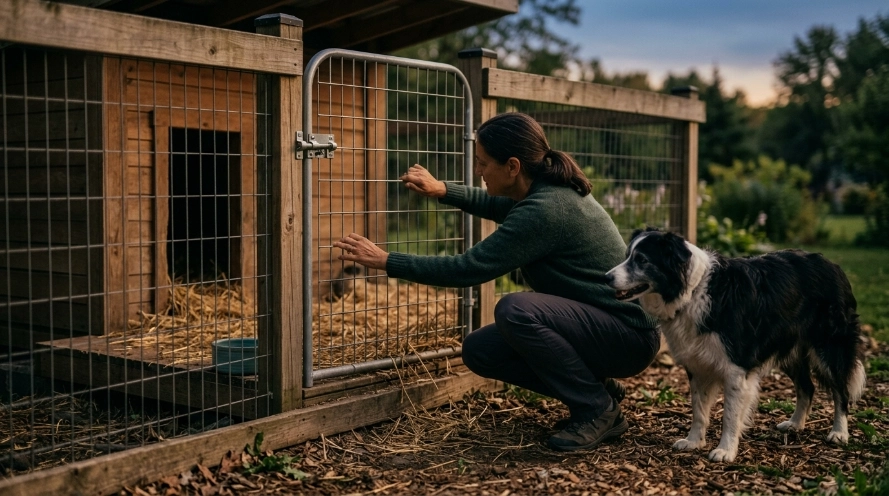
If an adult Border Collie must sleep outside, the setup should protect against weather, moisture, escape, and environmental threats. A roof over a kennel is only the beginning.
VCA Animal Hospitals’ winter guidance recommends an insulated, elevated shelter when a dog must live outside and emphasizes protection from wind and moisture.
The shelter needs to stay dry
A sleeping shelter should prevent rain from blowing onto the resting surface. Elevation also helps reduce ground moisture.
Position the entrance away from prevailing wind where possible. Check the bedding often because a dry-looking roof does not guarantee a dry sleeping area.
Security matters as much as temperature
Border Collies are athletic, observant, and capable problem-solvers. A bored dog may discover weaknesses in fencing that went unnoticed for months.
- Inspect fencing: Check the bottom, corners, gates, and weak attachment points.
- Remove hazards: Keep chemicals, tools, wire, sharp objects, and toxic substances inaccessible.
- Prevent entanglement: Avoid unattended tethering as a normal overnight solution.
- Control access: Wildlife and unfamiliar dogs should not be able to enter the enclosure.
- Check water: Make sure water remains clean and usable overnight.
- Reassess weather: Bring the dog indoors when conditions exceed what the setup can safely handle.
Do a bedtime inspection
Spend two minutes checking the shelter before leaving your dog there. Feel the bedding, inspect the water, confirm the gate, and notice the wind.
A setup that was suitable yesterday may not be suitable tonight. Outdoor housing requires an active decision, not a permanent assumption.
Section Takeaway: Outdoor sleeping can be appropriate for some acclimated adult Border Collies, but safe shelter must manage weather, moisture, security, water, and changing conditions every night.
Why Do Border Collies Usually Sleep Better Inside?
Puppies, older dogs, dogs with health problems, and dogs struggling with isolation need more cautious sleeping arrangements. For these groups, indoor sleep is usually the sensible choice.
Border Collie puppies
Puppies are still learning toilet habits, household routines, and how to settle alone. Keeping them indoors also makes nighttime supervision much easier.
A young puppy may need nighttime toilet trips. Their schedule should gradually change with age rather than forcing adult expectations too early.
Senior Border Collies
Older dogs may become less tolerant of temperature changes and hard sleeping surfaces. Stiffness can also make climbing into raised kennels or moving across slippery surfaces harder.
Look for a bed that supports comfortable movement without trapping excessive heat. Easy access to a nighttime toilet area also becomes more important.
Dogs that bark, pace, or refuse to settle
Do not assume an unsettled outdoor dog simply needs to “get used to it.” Barking and pacing can have environmental, behavioral, or medical causes.
- Check whether noises, wildlife, or neighboring dogs are keeping your Border Collie alert.
- Make sure daily exercise and mental enrichment are appropriate.
- Introduce sleeping changes gradually instead of suddenly isolating the dog.
- Seek veterinary advice when sleep behavior changes unexpectedly or accompanies physical symptoms.
Vet note: Sudden nighttime restlessness, unusual panting, pain, confusion, repeated waking, or major changes in sleep can have medical causes. Ask your veterinarian about new or persistent symptoms.
Frequently Asked Questions
Is it cruel to make a Border Collie sleep outside?
Outdoor sleeping is not automatically cruel, but conditions determine whether it is appropriate. A dog exposed to dangerous heat, cold, rain, wind, isolation, or an unsafe enclosure can suffer. Most companion Border Collies are easier to keep comfortable and monitor when they sleep indoors.
Can Border Collies sleep outside in winter?
Some acclimated healthy adults tolerate cool conditions better than others, but there is no single safe winter temperature for every Border Collie. Wind, dampness, coat condition, age, health, shelter quality, and exposure time all change the risk.
Can a Border Collie sleep outside in summer?
Hot nights can be dangerous when airflow is poor or humidity is high. Outdoor dogs need shade, ventilation, fresh water, and the ability to move somewhere cooler. Bring your Border Collie into a cooler indoor environment when heat becomes a concern.
Should my Border Collie sleep in my bedroom?
They can, but they do not have to. A bed or crate in your bedroom can suit dogs that relax well near people, while another quiet indoor room may work equally well. Choose the arrangement that provides safe, uninterrupted rest for both dog and household.
Should a Border Collie puppy sleep inside?
Yes, indoor sleeping is generally the practical choice for a puppy. It makes toilet training, supervision, temperature control, and nighttime routine building easier. Puppies also benefit from gradual training before being expected to settle independently for long periods.
Why does my Border Collie want to sleep outside?
Your dog may enjoy cooler air, outdoor smells, more space, or watching the property. Preference does not automatically mean every night is safe outside. You still need to evaluate weather, fencing, wildlife, health, and the quality of the sleeping shelter.
Is a kennel enough for a Border Collie to sleep outside?
Not by itself. An outdoor sleeping area also needs weather protection, ventilation, dry bedding, secure fencing, safe water, protection from hazards, and regular inspection. The kennel must remain suitable as temperatures, rain, wind, and other conditions change.
For most Border Collies living as family companions, I would choose indoor sleep and outdoor activity. That arrangement gives this active herding breed plenty of opportunities to work, play, and explore while protecting the quiet hours needed for recovery.
Watch your own dog rather than following a rule based only on breed history. Give them a safe resting place, build a predictable nighttime routine, and change the setup when weather, age, health, or behavior tells you it is time.
