
Should You Brush a Border Collie Before Bathing?

Quick Answer
Yes, you should brush your Border Collie before bathing. Brushing removes loose hair, surface debris, and manageable tangles before water makes existing knots harder to work through. Pay special attention to the feathering and areas behind the ears, and never force a brush through tight mats.
Brushing before a bath is one of the simplest ways to make Border Collie grooming easier. These dogs have a double coat, and loose undercoat, dried mud, grass, and small tangles can become more difficult to manage once the fur is wet.
The goal is not to remove every loose hair or make the coat look perfectly smooth. It is to prepare the coat for washing, identify problem areas, and avoid turning a routine bath into an uncomfortable detangling session.
Why Should You Brush Your Border Collie Before a Bath?
You should brush before bathing because loose hair and existing tangles are generally easier to identify and remove while the coat is dry. Washing a tangled coat can make knots more compact and difficult to work through, especially in longer feathering.
Pre-bath brushing provides four practical benefits:
- Removes loose hair: Brushing collects shedding undercoat before it becomes wet and clumps together.
- Finds hidden tangles: You can locate knots behind the ears, beneath the front legs, and around the tail before washing.
- Removes loose debris: Dried grass, small leaves, and surface dirt can often be lifted away without shampoo.
- Helps you inspect the skin: Separating the coat makes it easier to notice redness, scabs, unusual hair loss, or irritated areas.
These benefits apply to both smooth- and rough-coated Border Collies. A smooth coat is shorter and generally easier to work through, while a rough coat has longer hair that can conceal tangles in its feathering.
The VCA Animal Hospitals guide to grooming and coat care advises removing tangles before bathing because they can become much harder to remove afterward.
How Do You Brush a Border Collie Before Bathing?
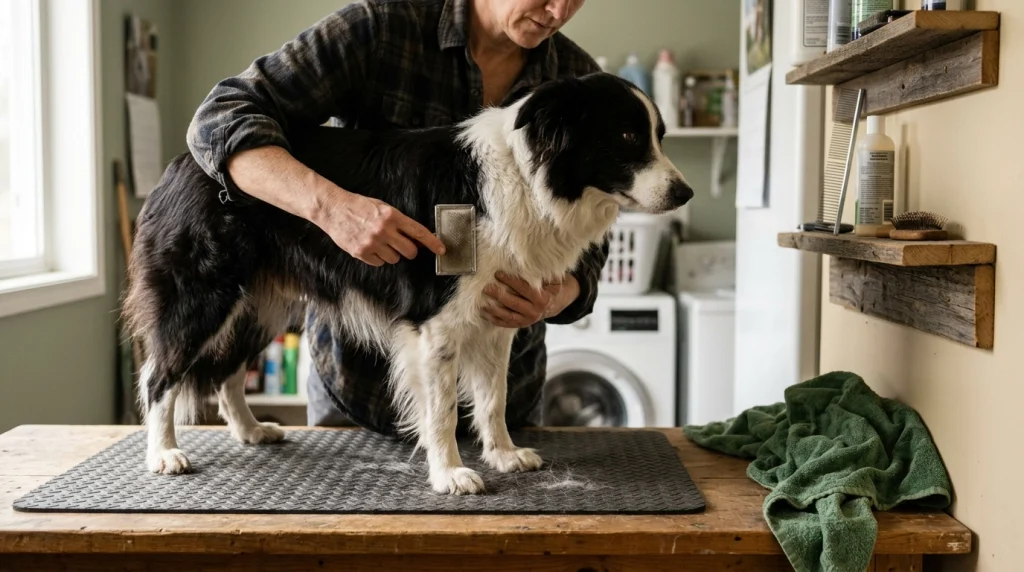
Start with a dry-coat inspection, work through the fur in small sections, and finish with a comb check. Gentle, methodical brushing is more useful than repeatedly dragging a brush over the same area.
- Prepare a calm grooming area. Choose a well-lit, nonslip surface. Have your brush, comb, towels, and dog shampoo ready so you do not need to leave your dog unattended during the bath.
- Inspect the coat with your hands. Feel for knots, burrs, dried mud, and compacted hair. Check behind both ears, under the collar, beneath the front legs, around the tail, and through the rear-leg feathering.
- Remove loose debris. Pick out easily removable leaves, twigs, and grass by hand. Avoid pulling on debris that is caught tightly in the coat.
- Brush in small sections. Follow the direction of hair growth and use short, controlled strokes. On a rough-coated Border Collie, gently lift the longer outer hair so you can reach loose undercoat without scraping the skin.
- Check with a grooming comb. Pass a suitable comb through the areas you have brushed. It should move without repeatedly catching on hidden knots.
- Address remaining tangles before adding water. Work through small, loose knots gently. If a mat is tight, extensive, or painful, stop instead of pulling harder.
There is no fixed brushing time for every dog. A coat that is already maintained may need only a brief preparation session, while heavy shedding or tangled feathering can require considerably more attention. Let the coat’s condition determine when you are finished.
Tip
Use a comb as a final check rather than relying on the coat’s appearance. A smooth-looking surface can still conceal knots beneath longer hair, particularly behind the ears and around the legs.
Which Brush Should You Use Before Bathing?
The best tool depends on your Border Collie’s coat length, shedding level, and the condition of its fur. You do not necessarily need several specialized tools for every bath.
- Slicker brush: Useful for collecting loose hair and addressing light tangles when used gently. Avoid repeated strokes in one place.
- Pin brush: Can help maintain longer rough-coat feathering and separate the hair without aggressive pulling.
- Undercoat rake: Useful when loose undercoat is building up, particularly during seasonal shedding. Use controlled passes and avoid scraping the skin.
- Wide-tooth or suitable metal comb: Helps locate remaining knots and check whether the coat is sufficiently detangled before bathing.
A practical approach is to use the simplest tool that works for your dog’s coat. A maintained smooth-coated Border Collie may need only a suitable brush and comb, while a heavily shedding rough-coated dog may benefit from an additional undercoat tool.
Do not confuse removing loose undercoat with cutting or stripping healthy hair. Avoid aggressive de-shedding tools or repeated forceful passes that can damage the outer coat or irritate the skin. The American Kennel Club’s guide to dog brushes explains how brush types differ in their intended uses.
What Should You Do If Your Border Collie Has Mats?
Small, loose tangles may be manageable at home, but tight mats should not be forced out with a brush. Matting can pull on the skin, cause discomfort, and conceal irritation underneath the fur.
Use the condition of the tangle to decide what to do next:
- A loose knot: Separate the surrounding hair with your fingers and gently work through the knot with an appropriate comb, stopping if your dog shows discomfort.
- A small burr: Remove it by hand if it comes away easily. Do not yank it out if it is tightly entangled.
- A compact mat: Leave it alone if gentle attempts do not loosen it. Arrange help from a qualified groomer who has suitable tools and can assess the skin.
- A mat close to the skin: Do not cut it out with household scissors. The skin can be pulled up inside the mat, making accidental cuts a serious risk.
- A mat with red, painful, or damaged skin: Seek veterinary advice rather than continuing routine grooming over the affected area.
Do not assume that a bath will loosen a stubborn mat. Water and washing can tighten existing tangles, leaving them harder to remove safely. Extensive matting is a reason to postpone the bath until the coat can be handled appropriately.
The ASPCA’s guidance on preventing coat matting explains why severe mats may need professional clipping instead of brushing. Never attempt to cut a tight mat away with scissors close to the skin.
Does Coat Type or Shedding Change the Pre-Bath Routine?
Yes. Both smooth- and rough-coated Border Collies benefit from pre-bath inspection, but the amount of brushing needed can vary with coat length, shedding, and tangles.
For smooth-coated Border Collies
The shorter coat is generally easier to inspect and maintain. Use a suitable brush to lift loose hair and debris, then check the neck, tail, and areas where the collar or harness rests. Do not assume a short coat cannot contain tangles or hide skin irritation.
For rough-coated Border Collies
Longer feathering around the legs, chest, and tail deserves extra attention. Separate the hair gently and check beneath the surface layer, particularly behind the ears and under the front legs. A comb can help identify knots that a quick surface brushing misses.
During seasonal shedding
When your dog is releasing more undercoat, spend additional time removing loose hair before bathing. An appropriate undercoat rake may help, but repeated or aggressive grooming is unnecessary and can irritate the skin.
The Border Collie Club of South Australia grooming guide identifies the areas behind the ears, under the arms, and near the tail as places where fine hair can mat. It also notes that grooming needs can increase during seasonal shedding.
How Do You Know Your Border Collie Is Ready for the Bath?
Your dog is generally ready when the coat has been inspected, loose debris has been removed, and manageable tangles have been worked through without causing discomfort. The coat does not need to be completely free of every loose hair.
Before turning on the water, check that:
- A comb can pass through the main problem areas without repeatedly snagging.
- No tight mats remain that would make washing uncomfortable or difficult.
- You have a shampoo formulated for dogs and all the supplies you need.
- The bathing area has a secure, nonslip surface.
- Your dog has no obvious skin problem that needs veterinary assessment before bathing.
Use lukewarm water and work gently through the coat. Avoid directing water into the ears or shampoo into the eyes. Rinse thoroughly, because shampoo residue can irritate the skin.
After bathing, towel-blot the coat rather than rubbing it vigorously. Dry the dense undercoat thoroughly using an appropriate, comfortable drying method, and avoid excessive heat. Once the coat is dry, a gentle second brushing can collect newly loosened hair and tidy the feathering.
Common Pre-Bath Brushing Mistakes to Avoid
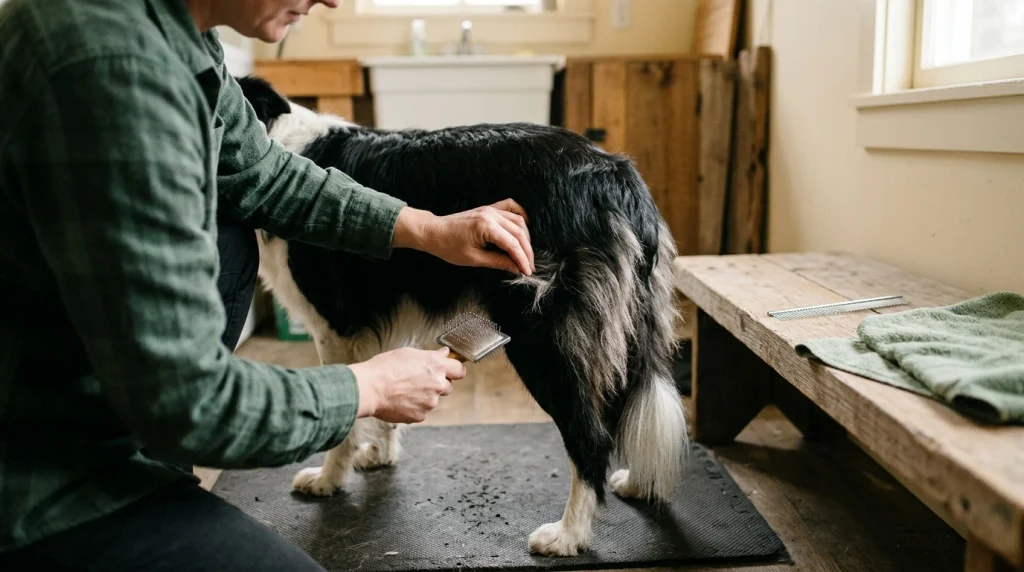
A few common mistakes can make grooming less comfortable without improving the result.
- Brushing too aggressively: Hard pressure and repeated strokes can irritate the skin. Reduce pressure and move on once the area is sufficiently groomed.
- Ignoring hidden areas: A quick pass over the back does not check the feathering, armpits, or hair behind the ears.
- Bathing over tight mats: Water does not reliably solve matting and may make the problem worse.
- Using scissors on mats: Never cut close to the skin to remove a knot. Seek professional help for compact matting.
- Over-grooming a healthy coat: More brushing is not automatically better. Stop if the skin becomes red, your dog is uncomfortable, or the tool begins catching on the hair.
- Bathing when a bath is unnecessary: Brushing and spot-cleaning may be enough to remove light dirt. The right bathing frequency depends on your dog’s condition, activity, and skin needs.
Make the experience comfortable by introducing tools gradually, rewarding calm behavior, and keeping sessions manageable. If your Border Collie becomes distressed or painful when a particular area is touched, do not force the session to completion.
Related Product
Dog Grooming Brush and Comb
A suitable brush and grooming comb can help remove loose undercoat and identify small tangles before bath time. Choose tools appropriate for your Border Collie’s coat and use them gently.
As an Amazon Associate, we earn from qualifying purchases.
Frequently Asked Questions
Should you brush a Border Collie before every bath?
Yes, a pre-bath coat check and appropriate brushing are good routine practices. The amount of brushing needed depends on how much loose hair, debris, and tangling the coat contains.
Can you bathe a Border Collie without brushing first?
It is better to brush first whenever practical. If the coat contains tight mats, do not simply wet them and hope they loosen; seek appropriate grooming help before bathing.
Should you brush a Border Collie when its coat is wet?
Wet-coat grooming may be appropriate with suitable tools and technique, but it does not replace pre-bath detangling. Avoid pulling on wet knots, which can tighten or cause breakage.
How do you remove loose undercoat before bathing?
Use a suitable brush and, when needed, an appropriate undercoat rake with gentle strokes. Concentrate on loose hair rather than trying to remove healthy coat or repeatedly scraping the skin.
What if my Border Collie hates being brushed before a bath?
Start with short sessions, gentle handling, and rewards in a calm area. Gradually introduce the brush and stop if your dog shows pain or severe distress. A qualified groomer or veterinarian can help if grooming remains difficult.
Should you brush your Border Collie again after bathing?
Yes, a gentle follow-up brushing after the coat is dry can remove loosened hair and tidy the feathering. Dry the dense undercoat thoroughly first, and avoid forceful brushing through damp tangles.
Conclusion
You should brush your Border Collie before bathing to remove loose hair, clear manageable tangles, and find hidden mats before the coat gets wet. Start with a gentle inspection, work through the fur in sections, and check the feathering and other areas where knots commonly develop.
The most important rule is to avoid force. Small tangles may respond to careful brushing, but tight mats need a safer approach from a qualified groomer. Once the coat is ready, bathe with dog-specific shampoo, rinse thoroughly, and dry the undercoat completely. A calm, coat-specific routine makes bath time more comfortable while helping you maintain your Border Collie’s double coat.