
Brush Border Collie Before Bath: Why and How to Do It Right

Quick Answer
Yes, you should brush a Border Collie before a bath. Brushing removes loose undercoat, dirt, burrs, and tangles before water can tighten them. This matters because the Border Collie coat can be rough or smooth, but both varieties have coat-maintenance needs.
Quick pre-bath routine
- Check the coat: Feel behind the ears, under the legs, around the tail, and through the feathering.
- Remove debris: Pick out grass, small twigs, and loose surface dirt before brushing.
- Brush gently: Work in small sections from the outer coat toward the undercoat.
- Untangle first: Work through small knots before getting the coat wet.
- Stop for tight mats: Don’t force a brush through painful or skin-tight matting.
- Then bathe: Once the coat separates easily, move on to lukewarm water and dog shampoo.
My simple rule
- If I can’t comfortably run a comb through an area while it’s dry, I deal with that area before bathing.
If you’re wondering whether to brush a Border Collie before a bath, the answer is a clear yes. Border Collies, sometimes called Borders or working sheepdogs, carry enough undercoat for bath-day tangles to become frustrating fast.
I treat brushing as part of the bath rather than a separate grooming job. A few careful minutes beforehand usually makes washing, rinsing, and drying much easier.
In This Guide
- Why Should You Brush a Border Collie Before a Bath?
- How Do You Brush a Border Collie Before Bathing?
- Which Brush Should You Use Before a Bath?
- Does a Rough-Coat Border Collie Need More Brushing?
- What Should You Do About Mats Before Bathing?
- What Pre-Bath Brushing Mistakes Should You Avoid?
- How Do You Know Your Border Collie Is Ready for the Bath?
- Frequently Asked Questions
- Final Takeaway
Why Should You Brush a Border Collie Before a Bath?
You should brush first because water can make existing tangles harder to work through. Pre-bath brushing also removes loose hair that would otherwise collect in your tub and towels.
Definition: Pre-bath brushing means thoroughly checking, detangling, and removing loose coat while your Border Collie’s fur is still dry.
Border Collies have a double coat
A double coat contains a softer undercoat beneath more protective outer hairs. The amount and length vary between rough-coated and smooth-coated Border Collies.
The American Kennel Club recognizes both rough and smooth coats. That difference changes how long grooming takes, but it doesn’t remove the need for regular coat care.
- Loose undercoat: Brushing lifts dead hair before it becomes soaked.
- Surface dirt: Dry mud and dust often brush away without shampoo.
- Tangles: Small knots are easier to locate before the coat becomes wet.
- Burrs and grass: Outdoor debris can hide inside longer feathering.
- Skin checks: Parting the dry coat makes unusual areas easier to notice.
The ASPCA’s dog grooming guidance also recommends giving dogs a good brushing before bathing. It specifically notes removing dead hair and mats first.
Brushing can shorten bath cleanup
A Border Collie can release an impressive amount of hair once water hits the coat. Removing much of that loose coat first keeps more hair out of the drain.
It also means fewer wet clumps stuck to your hands, towels, and bathroom floor. That’s a small detail you’ll appreciate quickly.
How Do You Brush a Border Collie Before Bathing?

Start with a quick inspection, then brush in manageable sections. Don’t attack the entire coat with fast, deep strokes.
For an average adult in normal coat condition, I usually plan around 10 to 15 minutes. Heavy seasonal shedding or feathering tangles can take longer.
1. Let your dog settle first
Choose a quiet area with good lighting and a nonslip surface. Let your Border Collie sniff the grooming tools before you begin.
Keep treats nearby if grooming is still new. Short, calm sessions are better than turning brushing into a wrestling match.
2. Check the problem areas with your fingers
Run your hands through the coat before using a brush. Your fingers often find hidden tangles faster than your eyes.
- Behind both ears
- Under the collar area
- Inside the front legs
- Armpits
- Back-leg feathering
- Under the tail
- Around the trousers or breeches
- Belly and groin feathering
3. Remove easy debris first
Pick out loose leaves, grass, or dry surface debris by hand. Don’t drag a brush through something you could remove gently first.
If mud has completely dried, loosen it with light brushing. Sometimes that removes enough dirt that the bath becomes much easier.
4. Brush in sections
Work from one area to the next so you don’t repeatedly brush the same patch. Use short strokes and follow the direction of hair growth.
For a rough coat, lift longer hair and brush the layer beneath it. This technique helps you reach loose undercoat instead of polishing only the surface.
5. Finish with a comb check
A wide-tooth or metal grooming comb makes a useful final check. It should move through the coat without repeatedly catching.
Don’t expect every hair to sit perfectly. You’re checking for hidden resistance, compacted fur, and knots that need more attention.
Section Takeaway: Brush methodically rather than aggressively. Your goal is a separated, debris-free coat that can be washed and rinsed without trapping existing tangles.
Which Brush Should You Use Before a Bath?
The best tool depends on coat length, shedding level, and tangles. Many Border Collies need more than one tool during a thorough grooming session.
| Tool | Best Use Before Bathing | Use With Care |
|---|---|---|
| Slicker brush | Loose fur and light tangles | Avoid repeated hard strokes on one spot |
| Pin brush | Longer rough-coat feathering | May not remove dense loose undercoat alone |
| Undercoat rake | Heavy seasonal shedding | Use gentle passes without scraping skin |
| Wide-tooth comb | Finding hidden knots and checking progress | Don’t yank when teeth meet resistance |
| Grooming comb | Final check around ears and feathering | Work slowly near thin or sensitive skin |
Do you need an undercoat rake every time?
No. I save an undercoat tool for times when loose undercoat is clearly building up.
During lighter shedding, a regular brush followed by a comb may be enough. Overworking a clean coat adds no benefit.
What about de-shedding blades?
Use strong de-shedding tools carefully and according to their instructions. Removing loose fur isn’t the same as repeatedly cutting or stripping healthy coat.
As of 2026, the safest general rule remains simple: choose tools for your dog’s coat and use gentle pressure. Stop if the skin becomes irritated.
Does a Rough-Coat Border Collie Need More Brushing?
Usually, a rough-coated Border Collie needs more pre-bath attention because the coat is longer and more feathered. Smooth-coated dogs can still carry a substantial undercoat.
| Coat Situation | Practical Pre-Bath Time | Main Focus |
|---|---|---|
| Smooth coat, light shedding | About 5–8 minutes | Loose hair and surface debris |
| Rough coat, normal condition | About 10–15 minutes | Undercoat and feathering |
| Heavy seasonal shedding | About 15–25 minutes | Loose undercoat throughout |
| Several small tangles | Variable | Detangling without pulling |
These times are practical estimates, not fixed grooming requirements. Coat density, age, outdoor activity, and shedding can change the session dramatically.
Where rough coats usually need extra attention
- Behind the ears: Fine hair here can knot quickly.
- Chest: Longer hair can collect dirt and moisture.
- Front-leg feathering: Grass and small tangles often hide here.
- Rear trousers: Dense feathering deserves a careful comb check.
- Tail: Brush gradually from manageable sections rather than pulling from the base outward.
Regardless of coat type, regular grooming makes bath day less dramatic. VCA’s coat-care guidance explains that brushing removes loose hair and debris while helping keep the coat free from tangles.
What Should You Do About Mats Before Bathing?
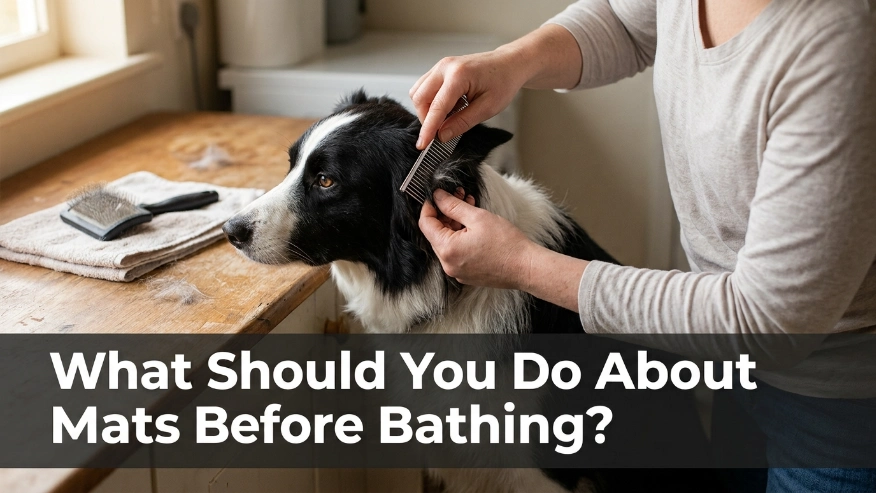
Deal with tangles before bathing whenever you can. Water won’t magically loosen a compact mat, and wet tangled hair can become harder to separate.
Start with small tangles
Hold the fur near the skin so your fingers absorb some pulling. Then work from the outer edge of the tangle toward its base.
Use your fingers first when possible. Follow with a wide-tooth comb or appropriate grooming tool.
Don’t repeatedly pull through resistance
A dog that suddenly turns, flinches, sits, or tries to leave may be telling you the area hurts. Stop and inspect instead of increasing force.
Border Collies learn patterns quickly. One painful grooming session can make the next bath-day preparation far harder.
Know when a mat needs professional help
Tight mats close to the skin are different from ordinary tangles. They can make the skin difficult to inspect and may cause discomfort.
Veterinary grooming guidance warns against blindly using scissors on mats because folded skin can be caught accidentally. A groomer or veterinarian is safer for severe or skin-tight matting.
Vet note: If you uncover redness, sores, persistent itching, unusual odor, parasites, swelling, or painful skin, ask your veterinarian before continuing routine bathing.
The Merck Veterinary Manual’s routine dog-care guidance also notes that matted hair can irritate skin and advises against using scissors to remove mats.
What Pre-Bath Brushing Mistakes Should You Avoid?
The biggest mistake is brushing harder when a tool stops moving easily. Resistance is a reason to inspect the coat, not increase pressure.
Brushing only the top layer
A rough Border Collie can look neat while loose undercoat remains underneath. Part longer hair gently and check deeper layers.
Starting the bath with existing knots
Don’t assume shampoo and conditioner will solve every tangle. Small knots can tighten and become more difficult once soaked.
Rushing through feathering
The ears, legs, trousers, and tail need slower work. Fine hair in these areas can pull against sensitive skin.
Using one tool for every problem
A brush designed for loose hair may not be your best detangling tool. A comb also provides a better final check than visual inspection alone.
Over-brushing one spot
Repeated strokes in the same area can irritate skin. Move methodically and use only enough pressure to work through the coat.
Ignoring your dog’s behavior
A Border Collie may tolerate grooming while still feeling uncomfortable. Watch for lip licking, repeated turning, avoidance, stiffness, or attempts to escape.
- Pause when your dog becomes uncomfortable.
- Check whether you’ve found a hidden knot.
- Reduce pressure.
- Reward calm behavior.
- Break a long session into shorter sessions if necessary.
Section Takeaway: Effective pre-bath brushing should feel controlled, not forceful. If you’re fighting the coat or the dog, stop and find out what’s causing the resistance.
How Do You Know Your Border Collie Is Ready for the Bath?
Your Border Collie is ready when the coat feels separated and your comb isn’t repeatedly catching on hidden knots. You don’t need to remove every loose hair before turning on the water.
Use this final 60-second check
- Run your hands over the coat. Look for forgotten knots or burrs.
- Comb behind the ears. This is one of the easiest places to miss tangles.
- Check the legs and trousers. Make sure feathering separates without painful pulling.
- Inspect the skin where possible. Stop if you notice a concerning problem.
- Clear loose hair from the grooming area. Then prepare the bath.
What comes next?
Use lukewarm water and shampoo formulated for dogs. Wet the dense coat thoroughly rather than applying shampoo only to the surface.
Rinse carefully until shampoo is gone. The PetMD dog-bathing guide, which is veterinarian-reviewed, also recommends brushing before water is turned on and thoroughly rinsing the coat.
After rinsing, press water from the coat with absorbent towels instead of aggressively rubbing it. Rough rubbing can create new tangles in longer feathering.
Dry the undercoat thoroughly using a safe method your dog tolerates. Continue checking areas behind the ears, under the legs, and around dense feathering.
Frequently Asked Questions
Should I always brush my Border Collie before bathing?
Yes, brushing before bathing is a good routine for both rough- and smooth-coated Border Collies. It removes loose hair and debris while finding tangles before water makes them harder to manage.
How long should I brush my Border Collie before a bath?
A coat in good condition may need roughly 5 to 15 minutes of preparation. Heavy shedding, a long rough coat, or several tangles can make the session longer.
Can I brush a Border Collie when the coat is wet?
You can perform gentle post-bath grooming when appropriate, but that doesn’t replace pre-bath detangling. Existing knots are better identified and addressed before soaking the coat.
Should I use an undercoat rake before every bath?
Not necessarily. An undercoat rake is most useful when your dog has noticeable loose undercoat, especially during heavier shedding periods. Use only as much grooming as the coat needs.
What if my Border Collie has a mat behind the ear?
Don’t yank a brush through it. Hold surrounding fur to reduce pulling and gently work on a small, loose tangle. Tight mats close to the skin are safer in professional hands.
Should I remove all loose hair before bathing?
No. Your goal is to remove a useful amount of loose coat and eliminate problematic tangles. More dead hair may release while washing, drying, and brushing afterward.
Can brushing mean my Border Collie doesn’t need a bath?
Sometimes brushing removes dry dirt and debris well enough that a scheduled bath isn’t necessary yet. Bathe according to coat condition, lifestyle, odor, and any veterinary instructions rather than following a rigid calendar.
Final Takeaway
Yes, brush your Border Collie before a bath. It’s one of the simplest ways to make bath day cleaner, more comfortable, and easier to manage.
Check the coat first, remove debris, work through ordinary tangles, and brush out loose undercoat. Give extra attention to the ears, legs, tail, and rear feathering.
Don’t force your way through tight mats or painful areas. When something looks wrong with the skin or coat, put the grooming tools down and get appropriate professional advice.
Make this short pre-bath check part of your normal routine. Your bathroom drain, your brushes, and your Border Collie will all be better for it.
