
Can Dogs Be Allergic to Other Dogs? What Owners Need to Know

If your dog starts scratching, sneezing, or breaking out after meeting another dog, the first question is usually the right one: is this really an allergy?
The short answer is that dogs are usually not allergic to “dogs” as a species. More often, they’re reacting to something on or from the other dog — such as dander, saliva, fleas, mites, or even environmental allergens carried in the coat. That distinction matters, because the fix depends on the real trigger.
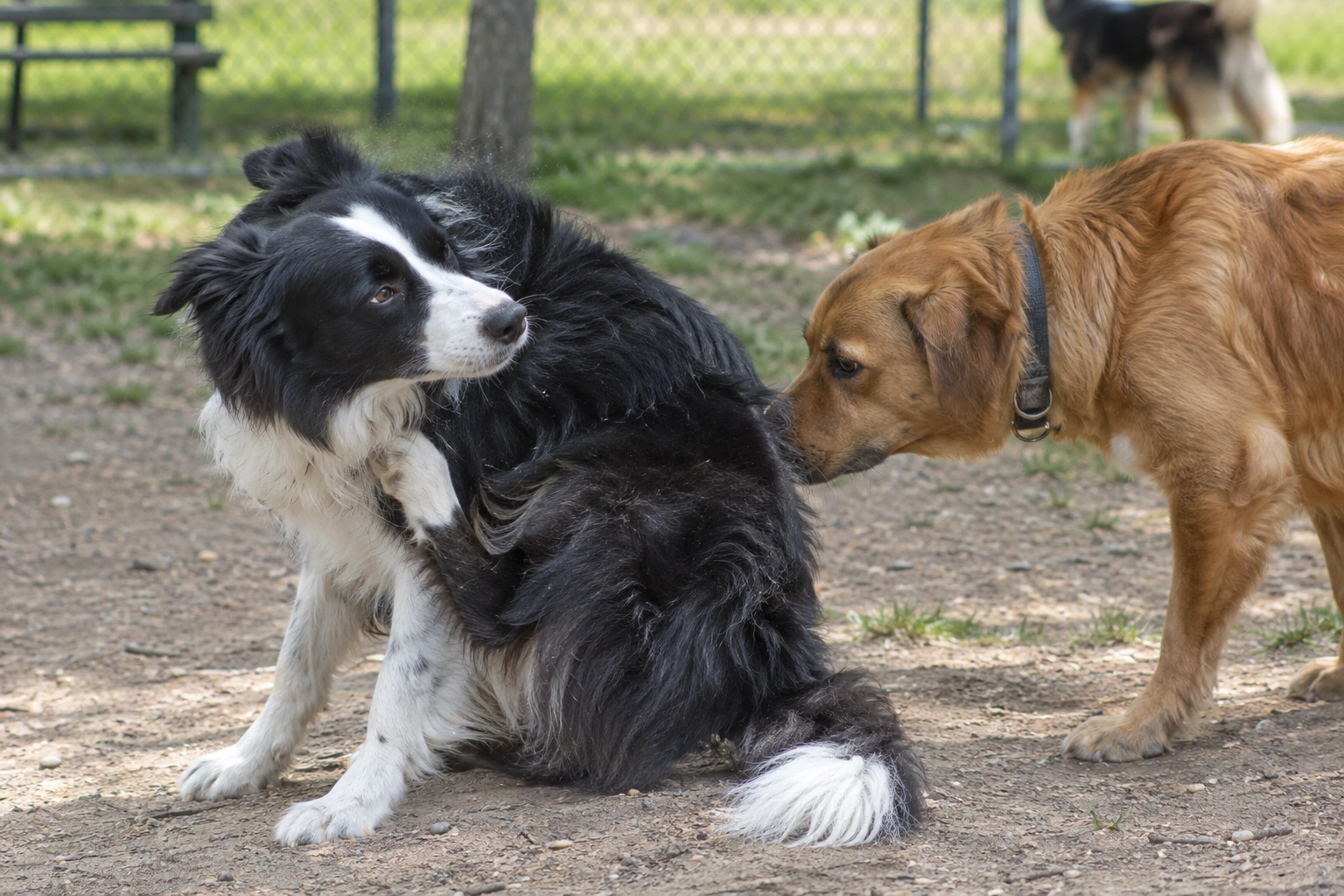
A Border Collie, in particular, can make this harder to read. Many are intense, alert, and quick to react socially, so stress and excitement can look dramatic. But true allergic signs tend to follow a different pattern: itching, redness, hives, licking, ear irritation, or breathing changes that show up after contact and repeat in a similar way.
Can a Dog Be Allergic to Another Dog?
Yes — but with an important correction.
A dog is usually not reacting to the other dog as a whole animal. The immune system is more likely responding to a specific protein or irritant associated with that dog. In practice, that means the “problem dog” may be carrying the trigger, not being the trigger in every sense.
That trigger might be:
- Dog dander
- Saliva
- Fleas
- Mites
- Pollens, grasses, or dust stuck in the coat
- Urine residue or other proteins on the fur
This is why two dogs can seem to have a “bad reaction” to each other when the real issue is something one of them is carrying. It also explains why the reaction may happen with one dog but not another, even if the social interaction looks similar.
If you want the simplest decision rule:
If the symptoms are skin, ear, nose, or breathing related and repeat after contact, think trigger exposure first — not behavior.
For a broader look at how allergies work in dogs, the Merck Veterinary Manual’s overview of allergies in dogs is a solid starting point.
What Dogs May Actually Be Reacting To
Dog dander and saliva
Dog allergens are often tied to saliva and skin cells, not hair itself. Saliva gets onto the coat when a dog licks, then dries and flakes off with dander. Those particles can become airborne or transfer during close contact.
That means a dog that leans in to sniff, wrestle, or share space with another dog may be exposed to more than just fur. The coat can act like a carrier.
The American Academy of Allergy, Asthma & Immunology notes that dog allergens come from specific proteins, and that all dogs produce allergenic proteins. Their article on dog allergy myths and facts is useful if you want a human-allergy comparison, because the underlying principle is the same: the immune system reacts to proteins, not to the idea of “dog” itself.
Fleas and flea allergy dermatitis
Sometimes the “allergic reaction to another dog” is really a reaction to fleas brought in by that dog. This is especially important if your dog comes home itchy after playdates or kennel exposure.
A single flea bite can cause intense itching in sensitive dogs. If your dog seems fine until after contact with certain dogs or environments, fleas should be on the list early.
Mites and contagious skin problems
Mites, ringworm, and bacterial skin infections can also travel through close contact. These don’t behave like a classic allergy, but they can produce similar signs: itching, patchy hair loss, redness, and discomfort.
This is one reason not to assume every post-playdate itch is “just allergies.” Sometimes the other dog is the vehicle, not the cause.
Environmental allergens carried on the coat
A dog that has been rolling in grass, lying in pollen, or walking through dusty areas can carry those particles home on the coat. Another dog that contacts them closely may react to what was picked up outdoors.
So when owners ask, “Is my dog allergic to that dog?” the more precise question is often:
What was that dog carrying, and what part of the contact triggered the reaction?
Symptoms That Can Appear After Contact With Other Dogs
The timing matters. Symptoms that show up soon after contact can be more suggestive of an allergy or irritation than a chronic skin issue that was already building in the background.
Watch for:
- Itching or scratching
- Licking or chewing paws
- Red skin
- Hives or raised bumps
- Facial rubbing
- Watery eyes
- Sneezing
- Ear scratching or head shaking
- Swelling around the face or muzzle
- Coughing
- Wheezing or breathing trouble
A useful pattern to note is where the symptoms show up. Contact reactions often affect the face, ears, paws, chest, and belly — places that touch the other dog or are exposed during close sniffing and play.
If your dog greets another dog at the park and then starts scratching the face, rubbing the muzzle, and developing small bumps soon afterward, that pattern is more suspicious for an allergic or contact reaction than for a training issue.
When the signs are more likely to be allergy-related
The pattern leans toward allergy or contact sensitivity when:
- symptoms repeat after exposure to the same dog or same setting
- the reaction starts fairly quickly
- there is visible itching, redness, hives, or ear irritation
- the symptoms improve when contact stops
If the dog is only acting “off,” but there is no itching, no skin change, and no respiratory sign, allergy becomes less likely.
Allergy vs Anxiety, Play, or Aggression: How to Tell the Difference
This is where many owners get pulled in the wrong direction.
A dog that is anxious, overexcited, or socially uncomfortable may pant, bark, freeze, lunge, avoid eye contact, or become mouthy. That can look dramatic, but it is not the same as an allergic reaction.
Signs that point more toward behavior than allergy
Think stress, fear, or arousal if you see:
- stiff body posture
- tucked tail
- whale eye
- barking or growling at approach
- avoidance or hiding
- frantic jumping or spinning
- no skin symptoms at all
Signs that point more toward allergy or irritation
Think allergy or contact reaction if you see:
- scratching
- hives
- redness
- paw licking
- muzzle rubbing
- ear irritation
- sneezing or watery eyes
- swelling
A simple decision framework
Ask three questions:
- Did the reaction happen after contact?
- Is there a physical symptom on the skin, face, ears, or breathing?
- Does it repeat in a similar way with the same exposure?
If the answer is yes to all three, an allergy or contact trigger becomes much more plausible.
If the answer is mostly no, and the dog is instead tense or reactive around greetings, you may be looking at social discomfort rather than a medical issue.
For owners who also need help reading their dog’s social tolerance and recovery time, our guide on how long you can leave a dog alone is useful in a different but related way: it helps you think about stress load, not just symptom load.
Allergy vs Infection, Parasites, or Contagious Skin Disease
A dog can come back from contact with another dog and seem “allergic” when the real issue is infection or parasites.
Fleas
Fleas are the first thing to rule out if itching is intense. Check the rump, belly, and base of the tail. Even if you do not see fleas, flea dirt or a history of exposure matters.
Mites
Mites can cause itching, hair loss, and irritated skin. Some mites are contagious, so close contact matters.
Skin infection
Bacterial or yeast infections often cause:
- odor
- greasy coat
- red ears
- recurring licking
- thickened skin
- scratching that does not match a single exposure
Contagious skin disease
Ringworm and some other contagious conditions can spread with direct contact or shared bedding. These may create circular hair loss, scaling, or broken hair rather than immediate hives.
Quick comparison table
| Pattern | More likely allergy/contact reaction | More likely anxiety/play/aggression | More likely infection/parasites |
|---|---|---|---|
| Timing | Minutes to hours after contact | During greeting or social pressure | Often ongoing, not just one contact |
| Main signs | Itch, hives, redness, sneezing, swelling | Barking, freezing, avoidance, lunging | Hair loss, odor, greasy skin, persistent scratching |
| Skin changes | Often visible and sudden | Usually none | Often present and progressive |
| Breathing signs | Possible in severe reactions | Usually no | Usually no, unless severe illness |
| Next step urgency | Vet visit if recurring; emergency if swelling/breathing trouble | Behavior assessment and management | Vet exam to rule out parasites/infection |
If you suspect a contagious skin issue or parasites, avoid close contact with other dogs until your vet has had a look.
What a Veterinarian Will Look For
A veterinarian usually does not diagnose this from one symptom alone. They build the picture from the history and exam.
Expect questions about:
- which dog or dogs were involved
- how quickly signs appeared
- exactly what the signs were
- whether the reaction happened more than once
- whether fleas, ear problems, or skin infections are already present
- whether the dog has a history of allergies
The exam may focus on the skin, ears, paws, and eyes, plus the dog’s breathing if respiratory signs were reported.
Allergy testing can help in some cases, but it is usually supportive, not a stand-alone answer. Intradermal or blood allergy tests are most useful when the vet is trying to identify environmental allergens that may be contributing to a recurring pattern. They do not definitively prove that another dog is the cause of a reaction.
The American Academy of Allergy, Asthma & Immunology notes that sensitization to dog proteins is typically confirmed with skin or blood tests in people; in dogs, the diagnostic process is different, but the same principle applies: testing helps most when it fits a clear clinical story.
What to Track Before the Vet Visit
A few notes from home can save a lot of time.
Write down:
- which dog(s) your dog met
- whether the contact was brief, rough, or prolonged
- how long it took for symptoms to appear
- whether the reaction was itching, sneezing, hives, swelling, coughing, or behavior change
- how long it lasted
- whether your dog had been bathed recently
- whether you saw fleas, bumps, ear debris, or skin redness
- whether symptoms happened indoors, outdoors, or both
If possible, take photos. Hives often fade before the appointment, and a picture is better than a vague memory.
This kind of log helps your vet separate a repeatable reaction from a one-off coincidence.
Treatment and Management Options
There are two jobs here: reduce the dog’s discomfort and reduce exposure to the trigger.
Avoidance and exposure control
If one specific dog seems to set off the reaction, a temporary break from close contact is sensible until the cause is clear.
That does not always mean no socialization at all. It may mean:
- shorter greetings
- more distance
- avoiding rough face-to-face play
- skipping dog parks for now
- washing bedding after contact
The trade-off is obvious: less exposure can mean fewer reactions, but it can also limit social outlets. That is why it helps to make the restriction temporary and evidence-based, not permanent by assumption.
Parasite control
If fleas or mites are possible, your vet may recommend parasite control first. That is often the most practical way to solve a “dog allergy” complaint that is really a parasite problem.
Symptom relief
Depending on the case, a vet may use:
- antihistamines
- corticosteroids
- other anti-itch or anti-inflammatory treatments
These can bring relief, but they do not tell you what caused the reaction. Used alone, they may blur the picture.
Longer-term allergy management
If a true allergy is identified, management may include:
- trigger avoidance where possible
- bathing or cleaning to remove allergens
- environmental control
- immunotherapy in selected cases
Immunotherapy is the long game. It is not a quick fix, but it can be useful when a dog has a confirmed, recurring allergic pattern and avoidance is not realistic.
For owners who want a general reference on dog allergy management, VCA’s overview of allergies in dogs explains the immune-overreaction model clearly.
When Symptoms Are an Emergency
Some reactions should not wait.
Seek urgent veterinary care if your dog has:
- facial swelling
- rapidly spreading hives
- vomiting after exposure
- collapse
- trouble breathing
- blue or pale gums
Those signs can point to a severe allergic reaction or another emergency problem. Home monitoring is not the right move.
When to See a Veterinarian or Certified Trainer
See a veterinarian promptly if:
- symptoms happen more than once after dog-to-dog contact
- your dog is itchy enough to scratch raw or lose hair
- the ears, eyes, or paws keep flaring
- you suspect fleas, mites, or a contagious skin issue
- you are not sure whether the problem is medical or behavioral
A certified trainer can help if the issue turns out to be social stress, arousal, or fear during greetings. That is a different problem from allergy, and it needs different handling. If the dog is not physically symptomatic, behavior support may be the more useful path.
A practical rule: if the body is reacting, see the vet; if the body is calm but the behavior is not, bring in training help.
FAQ
Can a dog really be allergic to another dog?
Not usually in the literal sense. Dogs are more often reacting to dander, saliva, fleas, mites, or environmental material carried by the other dog.
What are the most common symptoms?
Itching, redness, hives, sneezing, watery eyes, ear irritation, licking, swelling, coughing, and breathing trouble are the main signs to watch.
How do I know if it is anxiety instead?
Anxiety usually looks like stiff posture, avoidance, barking, freezing, or lunging without skin or respiratory signs.
Should I stop dog-to-dog contact until I know?
If the reaction is repeatable, yes, at least temporarily. That reduces risk and gives you a cleaner picture for the vet.
Can fleas from another dog cause this?
Absolutely. Fleas are one of the most important things to rule out when a dog gets itchy after contact.
Will allergy testing give me a clear answer?
Sometimes it helps, but it is rarely the only answer. History, exam, and ruling out other causes matter just as much.
Final Takeaway
If your dog seems “allergic to other dogs,” the real issue is usually a specific trigger associated with another dog — not dogs as a species. Dander, saliva, fleas, mites, and coat-borne allergens are the first things to consider. Track the timing, the exact symptoms, and whether the reaction repeats. That information is what turns a vague worry into a useful vet visit.