
Can Border Collies Eat Carrots? Safe Serving Tips for Owners

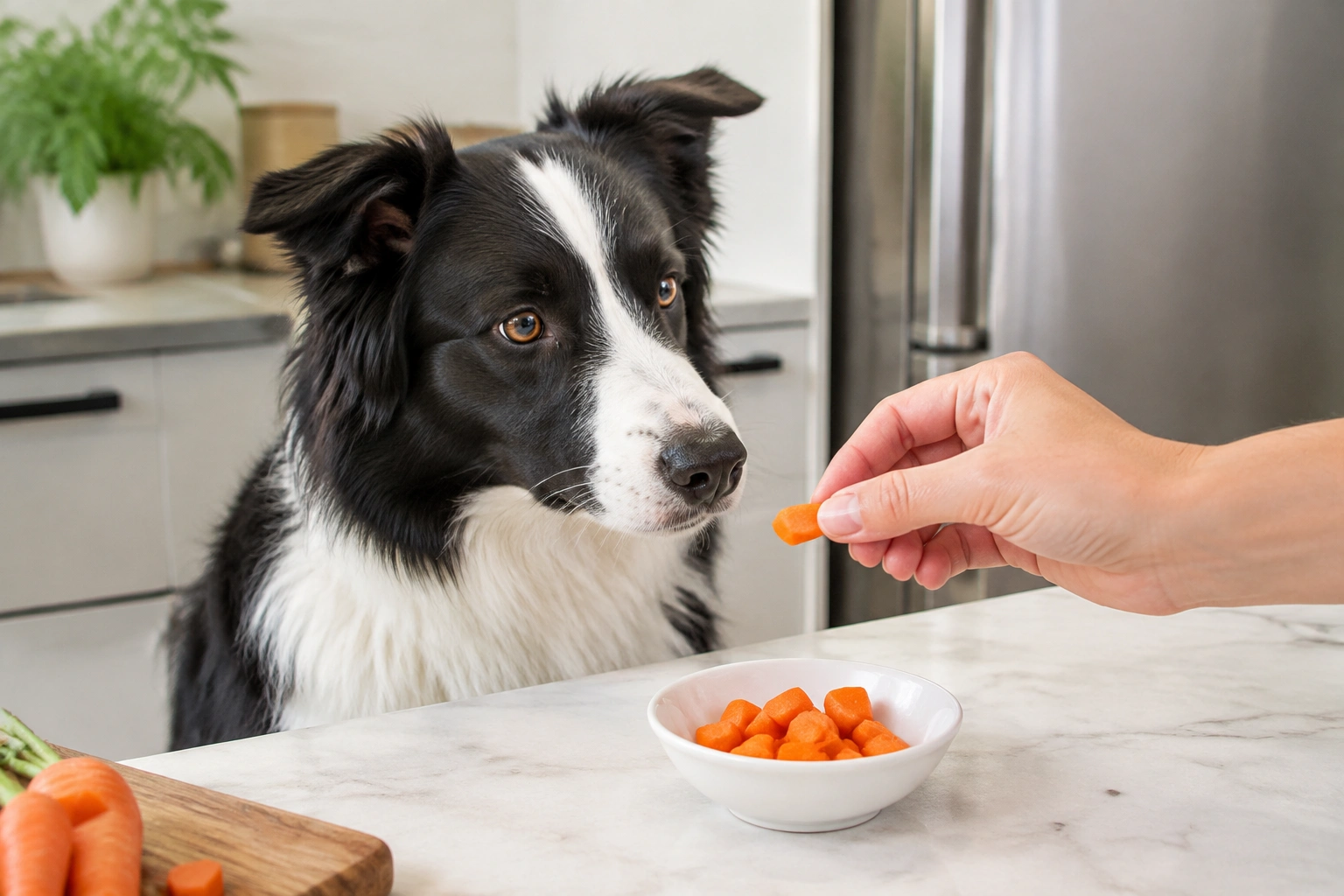
Yes, Border Collies can eat carrots. For most healthy dogs, carrots are a safe, low-calorie snack when served in sensible amounts and in a size that matches the dog’s chewing style. The main risks are not toxicity; they’re choking, digestive upset, and overdoing treats.
Can Border Collies eat carrots every day? Yes, but keep it to a small daily treat, not a meal replacement, and avoid giving them in large amounts every day.
For a breed as active and food-motivated as the Border Collie, carrots can be useful. They’re crunchy, easy to portion, and often appealing in training. But “safe” does not mean “unlimited,” and the way you cut and serve them matters more than many owners expect.
Are Carrots Good for Border Collies?
Carrots work well as an occasional treat because they’re simple, inexpensive, and generally easy to fit into a dog’s daily calorie budget. They contain fiber and naturally occurring nutrients, including beta-carotene, which the body can convert into vitamin A. That said, carrots are a treat, not a supplement plan.
That distinction matters. A Border Collie already eating a complete and balanced dog food does not need carrots for nutrition. The value is practical: a crunchy snack with fewer calories than many biscuits, useful for reward-based training or for dogs that like to chew.
Compared with a common low-calorie dog treat like green beans, carrots are usually a bit crunchier and more appealing for dogs that enjoy chewing, while green beans can be a softer option for dogs that prefer less bite resistance.
A Border Collie owner usually wants two things at once: a treat the dog will work for, and something that won’t crowd out the main diet. Carrots can do that job well if you keep the portions modest.
How Much Carrot Can a Border Collie Have?
There isn’t a single perfect amount for every Border Collie, because body size, age, activity level, and the rest of the day’s treats all matter. A useful rule is to treat carrots like any other snack: they should stay within the dog’s overall treat allowance, not become a major part of the diet.
For an average adult Border Collie, a practical daily amount is about 2 to 6 thin carrot coins, or roughly a few bite-sized pieces total. For training, that can mean several tiny pieces across a session rather than one larger serving.
If you want a simple rule of thumb: one small handful is too vague for everyday use, but a few pea-sized to coin-sized pieces is usually plenty for most dogs. If your dog already gets chews, training rewards, or table scraps, reduce the carrot amount rather than stacking treats on top of each other. Border Collies are active, but activity does not cancel out portion control.
A practical decision rule: if the carrot snack is starting to replace a meaningful part of the day’s food intake, it’s too much.
Best Ways to Serve Carrots Safely
The safest preparation depends on how your Border Collie eats. Some dogs chew carefully. Others inhale food with almost no pause. That difference changes the best format.
Raw carrots
Raw carrots are convenient and crunchy, which makes them popular for training and quick snacks. They’re also the hardest version to chew, so they’re not ideal for every dog. A dog that chews slowly and thoroughly can usually handle small raw pieces well.
The trade-off: raw carrots are satisfying, but larger pieces can be a choking risk for dogs that gulp.
Cooked carrots
Cooked carrots are softer and easier to chew. That makes them a better choice for puppies, seniors, or dogs with dental discomfort. They’re also a smart option if your dog tends to be picky about texture.
The trade-off: cooked carrots are less crunchy, so they’re usually less useful as a high-value training reward.
Frozen carrots
Cold carrots can be appealing, especially for teething puppies. Some owners use frozen carrot pieces for that reason. But frozen carrots are also very hard, which can be rough on teeth if your dog has dental issues or chews aggressively.
The trade-off: cooling and crunchy, but not the best choice for every mouth.
Chopped or grated carrots
If your Border Collie swallows treats quickly, chopped or grated carrots are the safest route. Smaller pieces reduce choking risk and are easier to manage during training.
This is the format I reach for first when a dog is enthusiastic, fast, and not especially careful.
Raw vs. Cooked vs. Frozen Carrots: Which Is Best?
Here’s the simplest way to compare the options.
| Format | Best for | Main advantage | Main downside |
|---|---|---|---|
| Raw, small pieces | Dogs that chew well | Convenient and crunchy | Harder to chew; choking risk if pieces are large |
| Cooked, plain pieces | Puppies, seniors, dental issues | Softer and easier to chew | Less crunch; less useful for some training reward work |
| Frozen pieces | Teething dogs with healthy teeth | Cooling and novel | Very hard; not ideal for sensitive teeth |
| Grated or chopped | Fast eaters and puppies | Lowest choking risk | Messier; less satisfying for some dogs |
If you want one default answer: chopped raw carrots can be a good general choice for healthy adult Border Collies that chew normally, but they are not ideal for every dog. If your dog gulps food, has sensitive teeth, or seems uncomfortable with hard foods, switch to smaller pieces or cooked carrots.
Choking Risk and How to Cut Carrots
The shape of the carrot matters more than many owners realize. Long sticks, thick coins, and round chunks are all more likely to be swallowed awkwardly than small, irregular pieces.
Use this rule:
- Avoid whole carrot sticks for dogs that eat fast.
- Cut into thin coins or small cubes for routine treats.
- Grate carrots for puppies or gulpers.
- Supervise any dog that is new to carrots.
A Border Collie that takes treats politely may be fine with a few small raw coins. A Border Collie that snaps treats out of your hand and disappears to chew later needs smaller pieces.
Hill’s Pet advises chopping carrots before giving them to a dog, and that’s a sensible everyday habit for most households. You don’t need fancy prep. You need a shape your dog can chew without rushing.
Can Border Collie Puppies Eat Carrots?
Yes, puppies can eat carrots in small amounts. Young dogs should get tiny pieces and only occasional servings at first, because their digestive systems can be more sensitive to new foods.
For puppies, the two priorities are size and pace:
- use tiny bits, not sticks
- introduce carrots slowly
- watch stool quality over the next day or so
A grated sprinkle or a few tiny chopped pieces is more appropriate than a large raw carrot chunk. If the puppy is teething, a chilled carrot may help with chewing comfort, but only if the piece is small enough and the puppy is chewing safely. Frozen carrots can be okay for some teething puppies, but only in very small pieces and with close supervision.
Puppies are also more likely to gulp treats without thinking. That alone is enough reason to keep the pieces small.
What About Senior Border Collies or Dogs With Dental Issues?
Older Border Collies, or dogs with worn teeth, gum sensitivity, or missing teeth, usually do better with softer carrot preparations. Lightly cooked carrots are often the most practical option.
Frozen carrots are the one format I’d be most cautious with in this group. They can be too hard for a painful mouth, even if the dog seems eager to chew them.
If your senior dog still enjoys crunch, you can offer very small raw pieces and see how they handle them. But if chewing seems hesitant, slow, or uncomfortable, switch to cooked.
Carrots may help with chewing and can leave some dogs with fresher breath, but they are not a substitute for brushing or other dental care.
Digestive Upset: Signs Your Dog Had Too Much Carrot
Carrots are usually well tolerated, but too much fiber can upset the stomach. The most common signs are mild and temporary:
- loose stool
- gas
- mild bloating
- reduced interest in food
- occasional vomiting, especially if the dog ate a lot at once
If the issue is only a small change in stool after a new treat, the fix is usually simple: reduce the amount or pause carrots for a few days.
If your Border Collie has a sensitive stomach, introduce carrots slowly rather than giving a full serving on day one. A dog that does fine with one or two pieces may not do well with a bigger serving, especially if they already have a history of digestive upset.
When Carrots Are Not a Good Choice
Carrots are not the best snack in every situation. Be more cautious if your dog:
- gulps food without chewing
- has dental pain or very worn teeth
- has a history of food-sensitive digestion
- is already getting several other treats that day
- tends to overeat any food offered as a reward
The biggest mistake is treating carrots as “free food” because they’re healthier than biscuits. They’re still treats, and treats still count.
One more note: the leafy green tops are not necessary for a dog snack, so it’s reasonable to skip them and keep the focus on the carrot itself.
Carrots as Training Treats for Border Collies
Border Collies are often highly trainable, which makes them great candidates for low-calorie rewards. Carrot pieces can work well when you want frequent reinforcement without loading the dog up with rich snacks.
For training, use tiny pieces that can be swallowed quickly. You want the dog to stay engaged, not stop to crunch for half a minute after every rep.
A practical setup:
- keep carrot pieces pea-sized or smaller
- use them for easy wins, not just the hardest behaviors
- mix carrots with other treats so the dog stays interested
- count carrot rewards as part of the day’s total treats
If the dog values carrots enough to work for them, that’s useful. If they don’t, don’t force it. Use carrots where they fit, and use a different reward when the task calls for something more motivating.
What to Do If Your Border Collie Eats Too Many Carrots
If your dog gets into a bag of carrots or eats much more than usual, the first step is observation, not panic. Most healthy dogs will not have a serious problem from carrots alone, but they may have temporary digestive upset.
Watch for:
- repeated vomiting
- diarrhea that doesn’t settle
- obvious abdominal discomfort
- gagging, coughing, or trouble swallowing
- lethargy or refusal to eat
If your dog is choking, struggling to breathe, or cannot swallow, treat that as an emergency and contact a veterinarian immediately.
If the issue is only mild loose stool after overeating carrots, hold off on more treats for a day and return to a smaller amount once things normalize. If vomiting or diarrhea is repeated, severe, or lasts more than about a day, call your veterinarian.
When to Ask Your Veterinarian
Ask your vet if your Border Collie has ongoing digestive sensitivity, dental pain, or trouble chewing any crunchy food. Also check in if carrot treats repeatedly cause vomiting, diarrhea, or refusal to eat.
That same advice applies if you’re unsure whether your puppy’s chewing style makes raw carrots a bad fit. A short conversation with your vet can save you from guessing.
Bottom Line
Border Collies can eat carrots safely in moderation. The best format depends on the dog: chopped raw carrots for many healthy adults, cooked carrots for softer chewing, and very small pieces for puppies or dogs that gulp food. Keep portions modest, supervise new treats, and treat carrots as a snack—not a supplement or a replacement for balanced food.
FAQ
Can Border Collies eat carrots every day?
Yes, but keep the amount small. A few bite-sized pieces a day is a reasonable limit for most adult Border Collies.
Are raw carrots or cooked carrots better for Border Collies?
Raw carrots are fine for many dogs that chew well, while cooked carrots are better for dogs with dental issues, puppies, or gulpers.
Can carrots help with Border Collie teeth and breath?
They may help a little through chewing and can freshen breath for some dogs, but they do not replace dental care.
What if my Border Collie has a sensitive stomach?
Start with a tiny amount and watch for loose stool, gas, or vomiting. If carrots repeatedly upset the stomach, skip them and ask your veterinarian.
Are carrots better than other low-calorie treats?
They’re one good option. Compared with green beans, carrots are usually crunchier and more appealing to dogs that like to chew.