
Can Border Collies Eat Raw Meat? A Practical, Safety-First Guide

Border Collies can eat raw meat in some situations, but that does not make raw feeding automatically safe, complete, or the best choice for every dog.
If you’re asking whether a Border Collie can have a small piece of raw meat now and then, the answer is usually yes for a healthy adult dog, provided the meat is fresh and handled carefully. If you’re asking whether raw meat should become the main diet, the question gets more complicated. Plain raw meat is not a complete diet, and raw feeding adds food-safety risks for both dogs and people.
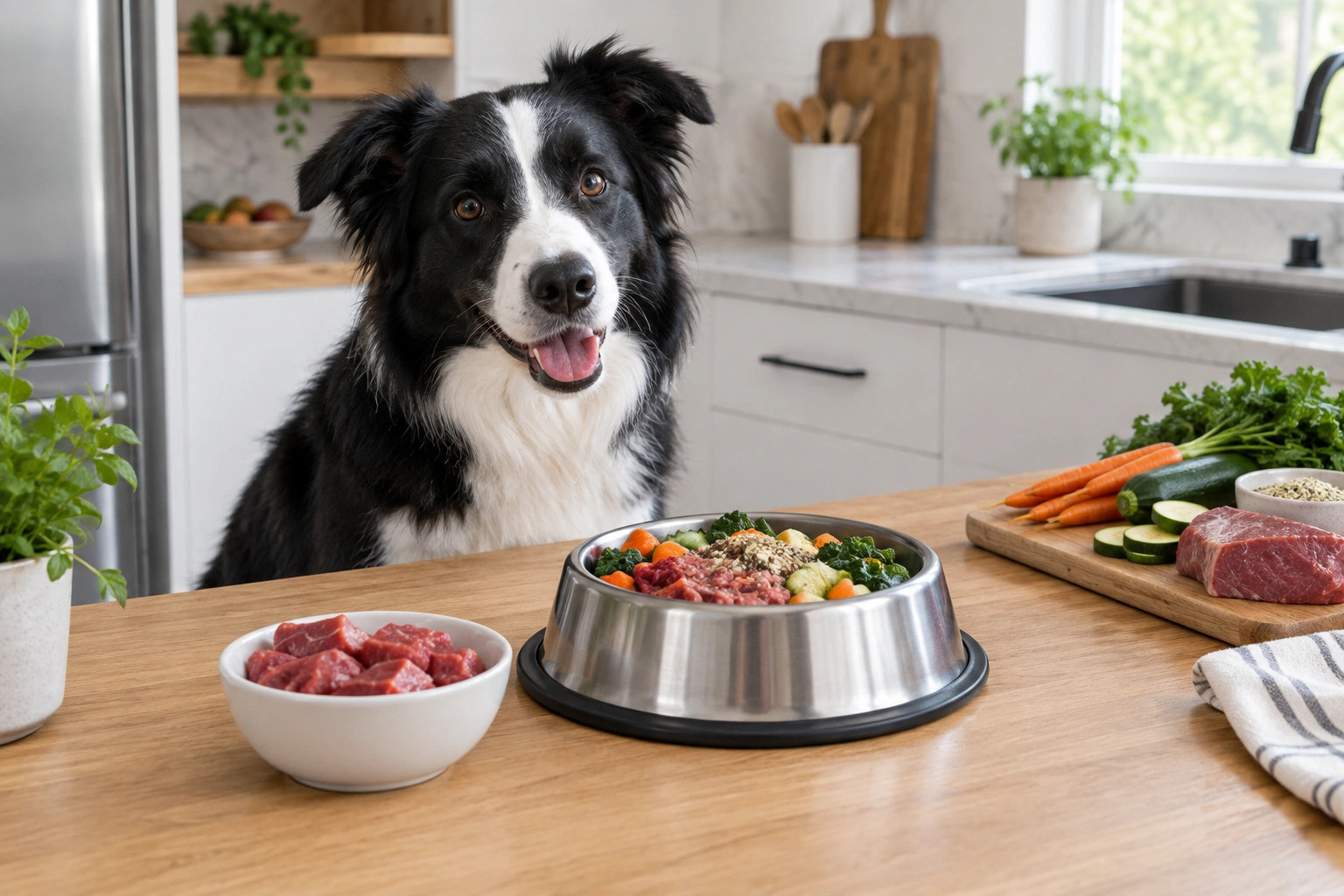
For Border Collies, that trade-off matters. This is an active breed with real calorie needs, but activity level does not cancel out the need for balanced nutrition or safe food handling.
What Raw Feeding Actually Means for a Border Collie
“Raw meat” can mean very different things.
A small raw treat might be a single piece of plain chicken, beef, or turkey given occasionally. That is a very different decision from a partial raw topper, where raw meat is added to an otherwise complete diet. It is also different from a complete raw diet, where the dog’s full daily food is built around raw ingredients, usually including meat, bone, and organ content in a planned ratio.
That distinction matters because the safety and nutrition questions change with the goal.
- If you’re offering a treat, your main concerns are freshness, hygiene, and tolerance.
- If you’re making raw a topper, you need to count it toward the dog’s total daily calories and make sure it does not unbalance the diet.
- If you’re feeding raw as the full diet, the recipe has to cover calcium, vitamins, minerals, fat, and calories—not just protein.
A lot of confusion comes from treating all three as the same thing. They are not.
Why Some Owners Choose Raw
People usually consider raw feeding for a few practical reasons: their dog likes it, they want a fresher-feeling diet, or they believe it is closer to what dogs “should” eat.
For Border Collies specifically, the appeal is often about performance and enthusiasm. A highly food-motivated dog may seem to thrive on richer, more interesting meals. But a dog enjoying the food is not the same thing as the diet being complete, balanced, or safer to handle.
The Main Risks: Bacteria, Parasites, and Cross-Contamination
The biggest issue with raw meat is not theory; it is contamination.
Raw meat can carry bacteria such as Salmonella and E. coli. In FDA sampling of raw pet food, raw products were found more often to contain disease-causing bacteria than many other pet foods, which is one reason raw feeding gets extra scrutiny. The concern is not only whether the dog gets sick. Dogs can also shed organisms in their stool, and that creates a household risk.
Cornell’s Riney Canine Health Center advises that people in high-risk groups—young children, older adults, pregnant people, and immunocompromised individuals—should not come into contact with raw food products or the dog if raw feeding is part of the routine. That’s a serious practical issue in real homes, not a minor footnote.
Raw food safety matters more than most owners think.
A healthy-looking dog can still shed pathogens without showing obvious illness. Cornell notes that in a large epidemiologic study, raw meat consumption was a significant risk factor for Salmonella shedding in dogs, and some infected dogs appeared healthy. That means you cannot rely on appearance alone.
Parasites are another concern, depending on the source and handling of the meat. Freezing may reduce some parasite risks, but it does not sterilize meat or eliminate bacterial risk.
Which Raw Meats Are Safer, and Which Need Extra Caution?
There is no magic list of “safe” raw meats. Safety depends on freshness, sourcing, storage, and handling as much as the species itself.
Common options
- Chicken or turkey: widely used, but also common sources of bacterial contamination if mishandled.
- Beef: often easier for some dogs to digest, but still carries contamination risk.
- Lamb or venison: sometimes used for dogs with food sensitivities, though “novel” does not mean safer.
- Pork: needs extra caution because of food-safety concerns and because it is a less forgiving choice if sourcing is poor.
- Fish: can be used in some raw diets, but it raises its own sourcing and parasite questions.
For a healthy adult Border Collie, the issue is less “which meat is raw?” and more “can I source, store, thaw, and serve this safely every time?” If the answer is no, raw feeding is a poor fit.
A practical rule: if you would hesitate to serve it to your family because it smells off, was left out too long, or came from an unreliable source, do not give it to your dog.
Are Raw Bones and Organ Meats Safe?
These are two of the most misunderstood parts of raw feeding.
Raw bones
Raw bones are often promoted as part of a raw diet, but they are not risk-free. They can cause choking, tooth fractures, mouth injuries, or gastrointestinal obstruction. Cooked bones are even more dangerous because they become brittle.
If you are using bones at all, they should be chosen with extreme care and matched to the dog’s size, chewing style, and supervision level. A Border Collie that gulps food or gets overexcited around meals is not a great candidate for loose bone feeding.
Organ meats
Organ meats are important in a complete diet because they provide nutrients that plain muscle meat does not. But “more organ meat” is not automatically better. Too much liver, for example, can create nutrient imbalance.
This is why homemade raw diets are difficult to balance well without veterinary nutrition guidance. Muscle meat alone is incomplete; organ meats are necessary, but they must be used in the right proportions.
Why Raw Meat Alone Is Not a Complete Diet
A Border Collie needs more than protein.
A complete diet has to supply the right mix of:
– protein
– fat
– calcium
– phosphorus
– essential fatty acids
– vitamins
– trace minerals
– enough calories for age and activity
Plain raw meat usually gives you protein and fat, but not the full nutrient profile in the right balance. The calcium-to-phosphorus balance is especially important. If a dog eats a meat-heavy diet without enough calcium, the diet can become unbalanced over time.
The Canadian Veterinary Medical Association notes that raw meat-based diets may or may not be balanced with all essential nutrients, and unbalanced diets can affect a dog’s well-being, growth, and development. That caution matters most for puppies, but it applies to adults too.
If you want raw feeding to be the main diet, it needs to be a complete raw diet, not just “raw meat.”
Border Collie-Specific Considerations: Puppies, Adults, Seniors, and Active Dogs
Border Collies are active, intelligent dogs, and many are lean by nature. That can tempt owners to think they need a high-meat diet no matter what. In reality, life stage matters more than breed hype.
Puppies
Border Collie puppies have stricter nutritional needs than adults. Their growth depends on getting the right balance of calcium, phosphorus, energy, and micronutrients. A homemade raw diet that is “close enough” is not a good gamble here.
If you have a Border Collie puppy, I would be cautious about raw feeding unless a veterinarian or veterinary nutritionist has helped design the plan.
Adults
Healthy adults are the most flexible group. A small amount of raw meat as an occasional treat is usually less risky than trying to build a whole diet from guesswork. Adults still need balance, but they are not growing, which gives you a little more room.
Seniors
Older Border Collies may have dental issues, weaker immunity, slower digestion, or chronic disease. Those factors can make raw feeding less forgiving. A senior dog that has done fine on one diet for years does not necessarily benefit from a raw switch.
Active dogs
A working or highly active Border Collie may need more calories, but not more risk. Higher energy needs can be met with a balanced cooked diet, a complete commercial raw food, or a well-formulated kibble. Activity level alone is not a reason to choose raw.
How Much Raw Meat to Feed and How Often
If you are feeding raw meat as an occasional treat, keep it small and simple. Think in terms of a few bites, not a meal replacement.
If you are considering a full raw diet, portion size should be based on body weight, life stage, and total daily calories—not just breed. There is no universal amount that fits every Border Collie. A lean, athletic adult will need more than a couch-potato dog of the same weight, and a growing puppy has different needs again.
A useful starting point is to treat raw meat as a tiny part of the day unless a complete diet plan is in place:
– Treat only: very small amounts, fed occasionally, not daily if the dog is prone to stomach upset.
– Topper: keep it modest so it does not crowd out the balanced base diet, and count it toward total daily calories.
– Full diet: use a complete and balanced formulation, not improvised muscle meat portions.
If you are guessing, you are not really portioning—you are experimenting on the dog.
How to Introduce Raw Meat If You Decide to Try It
A sudden switch is one of the easiest ways to end up with loose stools.
A calmer approach looks like this:
1. Offer a very small amount of one plain protein.
2. Watch for vomiting, diarrhea, itching, gassiness, or refusal to eat.
3. Keep the rest of the diet stable for several days.
4. If the dog tolerates it, increase slowly.
5. Add only one new item at a time.
That method helps you tell the difference between a true intolerance and a simple transition problem.
If the dog has a sensitive stomach, I would be even more conservative. Some dogs do not improve on raw food; some do worse.
Homemade Raw Diet vs Commercial Complete Raw Food
This is where many owners make the wrong assumption. Homemade raw and commercial complete raw are not the same thing.
Homemade raw
Pros
– full control over ingredients
– can suit dogs with specific preferences
Cons
– easy to make nutritionally incomplete
– harder to balance calcium, organ meats, and micronutrients
– requires more planning and hygiene discipline
Commercial complete raw food
Pros
– usually formulated to be nutritionally complete
– easier portioning
– more convenient for busy households
Cons
– still carries raw-food handling risks
– can be more expensive than kibble
– quality varies, so you still need to check the formulation
If you want the raw-feeding experience with less nutritional guesswork, a complete commercial raw food is usually the safer route than homemade improvisation.
Raw Meat vs Cooked Food vs Kibble for Border Collies
| Option | Nutritional management | Household risk | Convenience | Best fit |
|---|---|---|---|---|
| Raw meat only | Poor | Higher | Moderate | Occasional treat, not a diet |
| Homemade raw diet | Variable | Higher | Low | Owners working with a nutrition professional |
| Commercial complete raw food | Better | Higher than cooked/kibble | Moderate | Owners committed to raw and willing to manage hygiene |
| Cooked balanced diet | Good if formulated well | Lower | Moderate | Dogs needing safer handling and digestibility |
| Kibble | Good when complete and balanced | Lower | High | Busy households and predictable feeding |
The main trade-off is simple: raw feeding may feel appealing, but it asks more of the owner and carries more contamination risk. Cooked food and kibble are usually easier to keep balanced and safer to handle.
When Raw Feeding Is Not Recommended
Raw feeding is a poor idea, or at least a “talk to your vet first” idea, if:
– you have a Border Collie puppy
– your dog is pregnant or nursing
– your dog has an immune-mediated disease, cancer, or another serious illness
– your dog has chronic vomiting, diarrhea, or unexplained weight loss
– someone in the household is pregnant, elderly, very young, or immunocompromised
– you cannot keep raw food separate from human food prep
– your dog is a fast eater or prone to gulping bones
In these cases, a complete cooked diet or a high-quality commercial diet is often the more practical choice.
Signs Your Border Collie Is Not Tolerating Raw Meat
Stop the raw food and call your vet if you see:
– vomiting
– diarrhea
– lethargy
– refusal to eat
– abdominal pain
– fever
– blood in stool
– sudden behavior changes after eating
Mild stool changes can happen during any diet transition, but repeated vomiting, ongoing diarrhea, or a dog that seems “off” should not be brushed aside.
Safe Handling, Storage, and Thawing Practices
If you choose to feed raw, the handling routine matters as much as the ingredient list.
Use these basics:
– store raw meat in the refrigerator or freezer promptly
– thaw it in the fridge, not on the counter
– wash hands after handling raw food
– use separate bowls, utensils, and cutting boards
– clean counters and sinks thoroughly after prep
– do not leave raw meat out for long feeding sessions
– discard anything that smells spoiled or looks questionable
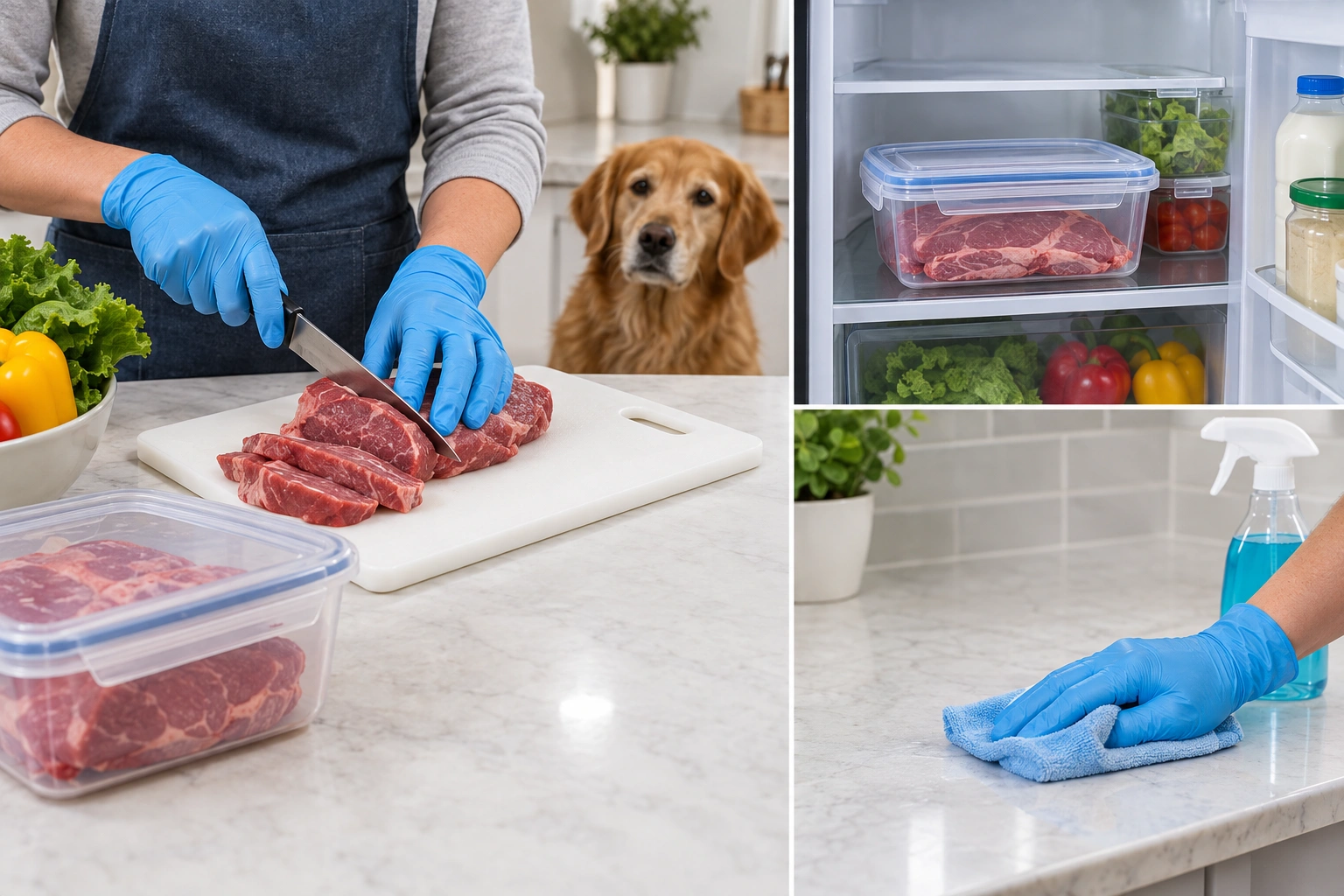
A clean kitchen will not eliminate risk, but it lowers it. That is especially important in homes with children or vulnerable adults.
When to Ask Your Veterinarian
Ask your veterinarian before feeding raw if your Border Collie is a puppy, senior, pregnant, has a medical condition, or has a history of digestive trouble. That conversation is also worth having if you are considering a homemade raw diet, because balance matters more than enthusiasm.
If you want a more general guide on safe dog foods, our posts on Border Collies and eggs and safe ways to feed scrambled eggs can help you compare cooked versus raw choices in a simpler context.
FAQ
Can Border Collies eat raw meat every day?
They can, but daily raw feeding only makes sense if the diet is complete, balanced, and handled safely. Plain raw meat every day is not enough.
Is raw chicken safe for Border Collies?
It can be fed, but chicken is one of the meats where hygiene really matters. Keep it cold, avoid cross-contamination, and do not assume freezing makes it safe.
Are raw bones good for Border Collies?
They can satisfy chewing, but they also carry choking and injury risks. They are not a casual add-on.
Can puppies eat raw meat?
Puppies have tighter nutritional needs and are a poor match for improvised raw diets. Get veterinary guidance first.
Is a commercial raw diet safer than homemade raw?
Usually safer from a nutrition standpoint, because it is formulated to be complete. It still needs careful handling.
Can a Border Collie with a sensitive stomach eat raw?
Sometimes, but not always. Some dogs do fine; others get worse. Watch the dog, not the trend.
Should I freeze raw meat before feeding it?
Freezing may reduce some parasite risk, but it does not sterilize the meat or remove bacterial risk.
What if my dog is healthy and active?
That helps, but it does not remove contamination risk or the need for balanced nutrition.
Can Border Collies eat raw meat as a treat?
Yes, a small amount can be fine for many healthy adults if the meat is fresh and handled safely.
What is the safest choice if I’m unsure?
A complete commercial diet—cooked or kibble—is usually the simpler, lower-risk option.