Can Food Cause Dog Seizures? What Border Collie Owners Need to Know

If your dog had a seizure after eating, the first question is usually the right one: was it the food?
The short answer is yes, food can be involved in dog seizures — but usually not in the way owners expect. Ordinary dog food is not a common cause of true seizures. The bigger concern is toxic foods, spoiled food, contaminated food, or an underlying medical problem that happened to show up after a meal. That distinction matters, because it changes what you do next.
Most seizures in dogs are not caused by ordinary food. When food is the issue, the main concern is toxic ingestion or contamination, not a normal meal or a routine brand of kibble. Food sensitivities and intolerances usually cause stomach or skin signs, not true seizure activity.
For Border Collie owners, this deserves extra attention. Border Collies can be quick to reach dropped treats, trash, compost, or other exposures before anyone notices. That makes vigilance important, but it does not mean the breed is proven to have a special tendency toward food-triggered seizures.
Can Food Actually Cause Seizures in Dogs?
Food can be part of the story in three different ways:
- A toxic food was eaten and triggered neurologic signs or a seizure.
- A spoiled or contaminated food caused poisoning-like symptoms that may include tremors, wobbliness, or collapse.
- The seizure was unrelated to food, and the timing was a coincidence.
That last point is the one owners often miss. A seizure that happens after a meal does not automatically mean the meal caused it. There are many non-food causes of seizures in dogs, so food is only one piece of the diagnosis, not the default explanation.
The practical takeaway: if your dog had one episode after eating, treat it as a possible toxin exposure first, then let your veterinarian sort out whether it was a seizure, a mimic, or a broader medical problem.
Foods and Ingredients Most Likely to Trigger Neurologic Signs
Some foods are dangerous because they contain substances dogs process poorly. Others become dangerous when they are spoiled or moldy.
Here are the most important ones to know.
High-risk foods and why they matter
| Food or ingredient | Typical problem | Possible neurologic signs | Usual urgency |
|---|---|---|---|
| Xylitol | Can cause a dangerous drop in blood sugar and other serious effects | Weakness, wobbliness, collapse, seizure | Emergency |
| Chocolate | Contains stimulants that can affect the nervous system | Restlessness, tremors, seizure in severe cases | Urgent to emergency |
| Grapes and raisins | Can be toxic even in small amounts for some dogs | Vomiting, lethargy, worsening illness; neurologic signs may follow if the dog becomes very sick | Urgent |
| Caffeine | Stimulant toxicity | Agitation, tremors, rapid heart rate, seizure | Emergency |
| Alcohol | Nervous system depression and toxicity | Staggering, disorientation, collapse, seizure | Emergency |
| Moldy or spoiled food | Toxins from spoilage can affect the brain and body | Tremors, disorientation, seizures, vomiting | Emergency |
This list is not about “bad dog food” in general. It is about specific hazards. A dog does not usually seize because the kibble brand is wrong. A dog may seize because the food contained a toxin, was contaminated, or included an ingredient that should never be given to dogs.
Moldy food is a particularly common trap. Trash, compost, old bread, stale leftovers, and discarded takeout can all become dangerous. A dog may first look nauseated or wobbly, then deteriorate quickly.
For a broader look at what to avoid, the ASPCA’s animal poison control resources are a useful reference point when you’re checking whether a food exposure is an emergency.
Food Allergy, Intolerance, Poisoning, or a True Seizure?
These are not the same thing, and mixing them up leads to bad decisions.
Food allergy
A food allergy is an immune response. In dogs, it more often shows up as itching, ear problems, skin irritation, or recurring digestive upset. It is not a common explanation for a true seizure.

Food intolerance
An intolerance is a digestive problem, not an immune one. Think vomiting, gas, loose stool, or discomfort after eating a specific food. Again, that is not the same as a seizure disorder.
Food poisoning or toxin ingestion
This is the category that can cause neurologic signs. A dog that ate xylitol, chocolate, alcohol, caffeine, or spoiled food may become weak, trembly, confused, or seizure-prone.
True seizure activity
A true seizure usually involves altered awareness, stiffening, paddling, rhythmic jerking, drooling, or loss of control over bladder or bowels. Some dogs appear dazed before or after the episode.
The practical rule is simple: skin and stomach signs point more toward allergy or intolerance; wobbliness, collapse, disorientation, or jerking point more toward toxin exposure or a neurologic event.
How Soon After Eating Would Symptoms Appear?
Timing helps, but it does not give you a diagnosis by itself.
Immediate to a few hours
This window raises concern for a toxin or fast-acting exposure. Xylitol, caffeine, alcohol, and some other toxins can cause signs quickly. If a dog eats something suspicious and then becomes unsteady, trembly, or collapses within a short time, treat it as urgent.
Several hours later
A delayed reaction can still be food-related. Some spoiled foods, certain toxins, or secondary effects like low blood sugar can take time to show up. A dog may seem fine after raiding the trash, then worsen later in the day.
More than a day later
The less direct the timing, the less likely the food itself is the immediate cause. That does not rule out a problem, but it makes coincidence or another medical cause more likely.
This is why I tell owners to write down the exact sequence: what was eaten, how much, and when the first odd sign appeared. That timeline is often more useful than memory, especially when the dog has only one event.
How to Tell a Seizure from Fainting, Collapse, or Other Mimics
This is one of the most important distinctions you can make at home.
Signs that point toward a seizure
- Loss of awareness or responsiveness
- Stiffening or paddling
- Rhythmic jerking
- Drooling or foaming
- Urination or defecation during the episode
- A confused, restless, or temporarily blind-looking recovery
Signs that point more toward fainting or collapse
- Sudden drop with little or no paddling
- Very brief episode
- Faster return to normal awareness
- Event linked to excitement, exertion, or stress
- Pale gums or obvious weakness before the fall
A dog can also have tremors, ataxia, or “wobbly” movement that looks alarming but is not a full seizure. That still matters, because it may mean toxin exposure is progressing.
If the dog is collapsing, unable to stand, unusually weak, or having repeated wobbliness after eating, do not wait for it to “walk off.” Those signs can still justify emergency care, especially if a toxic food is possible.
If you can safely record a video, do it. A 20-second clip can help a veterinarian distinguish seizure from collapse far better than a verbal description later.
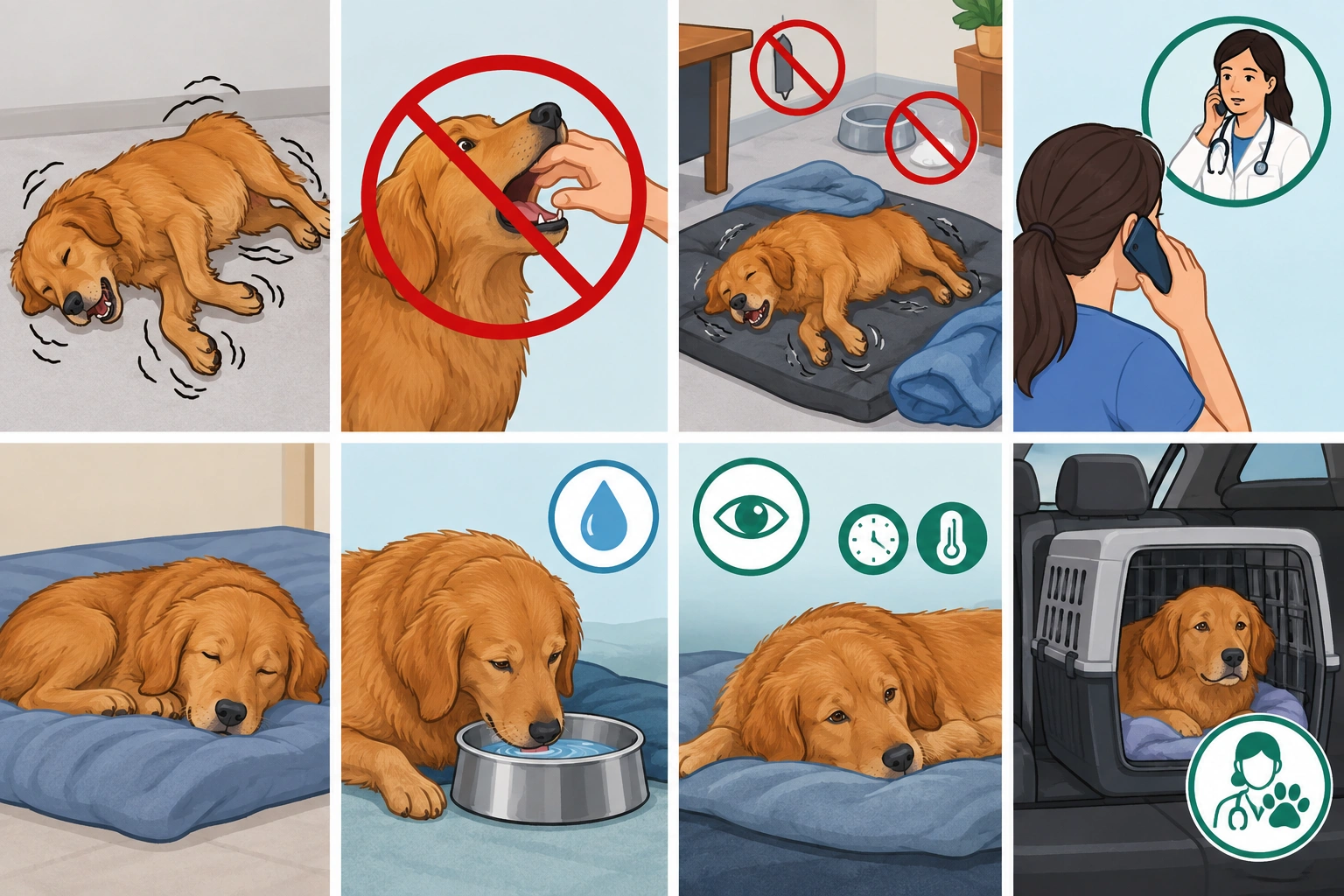
What to Do Right Away If Your Dog Seizes After Eating
Your job in the first minutes is safety, timing, and information.
During the episode
- Move furniture, stairs, cords, and sharp objects away if you can do it safely.
- Do not put your hands near the mouth.
- Do not try to hold the tongue.
- Keep the room quiet and dim.
- Time the episode.
Right after the episode
- Keep your dog calm and in a safe area.
- Note whether the dog is confused, blind-looking, weak, or able to walk normally.
- Check for any packaging, wrappers, trash, or leftover food.
- Save the label or take a photo of the ingredient list.
What not to do
Do not induce vomiting unless a veterinarian specifically tells you to. That advice matters because vomiting is not safe in every situation, especially if the dog is already neurologically affected, struggling to swallow, or at risk of aspiration.
If you suspect a toxin, call your vet or an emergency clinic immediately and describe exactly what was eaten.
Tell the vet or poison hotline these details
- What was eaten
- Estimated amount
- Time since ingestion
- Current symptoms
- Whether this is the first episode
For timing, observation, and hydration guidance that often comes up after an emergency, our practical guide on how long a dog can go without food or water can help you think through the next steps without guessing.
When This Is an Emergency
Treat it as urgent veterinary care if any of the following apply:
- The dog may have eaten xylitol, chocolate, grapes/raisins, caffeine, alcohol, or moldy food
- The dog has repeated seizures
- The seizure lasts more than a couple of minutes
- Breathing looks abnormal
- The dog cannot stand, keeps falling, or seems severely disoriented
- The dog does not return to normal between episodes
- You are unsure whether the dog is seizing or collapsing
A single brief episode can still be serious if toxin exposure is possible. The amount eaten matters, but so does the substance itself. With some toxins, even a small dose can be dangerous.
If you are unsure, err on the side of calling. Waiting to “see if it passes” is usually the wrong trade-off when a toxic food may be involved.
Why Border Collies and Other Herding Breeds Raise Extra Concern
Border Collies are not the only dogs that can seize, but they are a breed where owners often notice subtle changes quickly. That can be helpful. It also means people sometimes assume a dramatic event must be “just stress” or “just something he ate.”
That assumption is risky.
Border Collies are active, observant, and often fast around food. They can reach dropped treats, counter food, compost, or trash before a person realizes it. They are also the kind of dog where a small change in behavior is easier to spot — a glassy stare, a stumble, a brief freeze, or a strange recovery.
The key point is not that Border Collies are uniquely prone to food-triggered seizures. The point is that their lifestyle and alert owners can make exposure more likely to be noticed, and that should prompt quicker action.
Do not assume a Border Collie’s episode is food-related just because it happened near mealtime. And do not assume it is epilepsy just because the dog has had more than one odd spell. Both ideas can be wrong.
How Vets Evaluate a Suspected Food-Related Seizure
A veterinarian will usually want a very plain, very specific history:
- What was eaten?
- How much?
- How long before the episode?
- Was the dog vomiting, trembling, weak, or collapsing?
- Was it a true seizure or something that only looked like one?
- Has this happened before?
Bring the packaging if you have it. A photo of the ingredient list is even better than trying to remember the label later.
Common first checks may include a blood glucose test, basic bloodwork, and a review of possible toxin exposure. Depending on the case, the vet may also consider further neurologic evaluation. The point is not to guess from one symptom. The point is to separate toxin exposure, metabolic problems, epilepsy, and seizure mimics.
The AKC’s general seizure information is also helpful if you want a plain-language overview of seizure signs before your appointment.
How to Prevent Future Food-Triggered Episodes
Prevention is mostly about controlling access and reducing uncertainty.
Practical safeguards that actually help
- Keep chocolate, candy, sugar-free gum, and baked goods out of reach.
- Check labels for xylitol in treats and peanut butter.
- Secure trash, compost, and leftovers.
- Do not leave grapes, raisins, coffee, energy drinks, or alcohol where a dog can reach them.
- Throw out moldy food immediately.
- Keep a note in your phone of any suspicious exposure, even if the dog seems fine.
If your dog has a known seizure disorder, your vet may also want you to be extra cautious about diet changes and treats. The evidence around nutrition and seizures in dogs is still evolving, and no single ingredient has been established as a universal seizure trigger in every dog. That is why a careful history matters more than guessing from a trend or internet claim.
When to Reconsider the Cause and Pursue a Broader Workup
If the event keeps happening and no food exposure explains it, widen the lens.
Recurring seizures, episodes that happen without meals, or events that do not match toxin timing should prompt a veterinary workup for non-food causes. That may include epilepsy, blood sugar problems, organ disease, infection, or another neurologic issue.
This is where a simple exposure log becomes valuable. If you can show that episodes occur with no clear food link, the vet can stop chasing the wrong suspect and focus on the real cause.
FAQs
Can ordinary dog food cause seizures?
Ordinary dog food is not a common cause of true seizures. If food is involved, it is more often because of a toxin, contamination, spoiled food, or an underlying medical issue that happened around mealtime.
Can food allergies cause seizures in dogs?
Food allergies usually cause skin or digestive signs, not seizures. If your dog is having neurologic symptoms, think toxin exposure or another medical cause first.
How fast can food-related seizure signs appear?
Some toxins act within hours or even sooner. Others are delayed. The faster the symptoms begin after eating, the more suspicious the food exposure becomes.
Should I make my dog vomit if I think he ate something dangerous?
Not unless a veterinarian tells you to. Vomiting can be unsafe in some seizure or toxin situations.
What if my dog only looked wobbly, not like a full seizure?
That still matters. Wobbliness, tremors, disorientation, and collapse can be early toxin signs or seizure mimics and should be taken seriously.
Are Border Collies more likely to have seizures?
Any dog can have seizures. Border Collies are not exempt, and their activity level can make food theft and toxin exposure harder to notice quickly.
What information should I bring to the vet?
Bring the food package, ingredient list, estimated amount eaten, timing, and a video if you have one. That information can shorten the diagnosis process.
If your dog has had a suspicious episode after eating, your next move should be based on risk, not guesswork. A known toxin, repeated seizure, or worsening signs is an emergency. A single mild event still deserves a vet call if food exposure is possible. When in doubt, treat it like something you would rather overreact to than miss.