

Quick Answer
You can clean a Border Collie’s outer ears during a bath, but keep bath water and shampoo out of the ear canals. For deeper cleaning, I use a dog-safe ear solution and follow safe dog ear-cleaning guidance rather than flushing the ears with bath water.
Safe Steps During Bath Time
- Check first: Look for redness, swelling, discharge, bad odor, or obvious pain before cleaning.
- Keep ears dry: Do not spray water or shampoo directly into either ear canal.
- Wipe outside: Use soft gauze or a cotton ball to clean the visible ear flap and folds.
- Use proper cleaner: Choose a veterinarian-approved dog ear cleaner if the canal needs cleaning.
- Never dig: Do not push cotton swabs or other objects down the ear canal.
- Dry afterward: Gently dry the outside of each ear before your Border Collie leaves the bathing area.
When to Stop
- Stop home cleaning and contact your veterinarian if the ear looks painful, swollen, inflamed, smelly, or unusually dirty.
Cleaning my Border Collie’s ears is one part of bath day that I never rush. Those upright or semi-erect ears are easy to inspect, but water can still end up where it should not.
The goal is simple. I clean what I can safely see while protecting the ear canal from shampoo, excess water, and rough handling.
In This Guide
- Should You Clean a Border Collie’s Ears During a Bath?
- What Do You Need to Clean Border Collie Ears Safely?
- How Do You Clean Border Collie Ears During a Bath?
- How Do You Keep Bath Water Out of a Border Collie’s Ears?
- How Often Should You Clean a Border Collie’s Ears?
- When Should You Stop Cleaning and Call a Vet?
- Common Ear-Cleaning Mistakes I Avoid
- How I Handle Puppies and Dogs That Dislike Ear Cleaning
- Frequently Asked Questions
Should You Clean a Border Collie’s Ears During a Bath?
Yes, but I separate outer-ear cleaning from deep ear-canal cleaning. During the bath itself, I mainly wipe the visible areas and prevent water from entering the canal.
A Border Collie’s ear cleaning means removing visible dirt and debris from the ear flap and accessible folds without pushing material deeper. Cleaning inside the canal is a separate job that may require a veterinarian-approved liquid ear cleaner.
Bath cleaning versus canal cleaning
I find this distinction prevents most bath-time mistakes. A shower sprayer is useful for the coat, but it is not an ear-cleaning tool.
| Method | Best Use | Liquid in Canal? | Main Tool |
|---|---|---|---|
| Outer-ear wipe | Light surface dirt | No | Soft gauze or cotton ball |
| Dog ear cleaner | Vet-approved routine cleaning | Yes, as directed | Dog-specific ear solution |
| Veterinary examination | Pain, odor, discharge, swelling | Only as advised | Veterinary examination |
If the ears look healthy, I do not assume every bath requires a full canal cleaning. I inspect first and clean only as needed.
What Do You Need to Clean Border Collie Ears Safely?
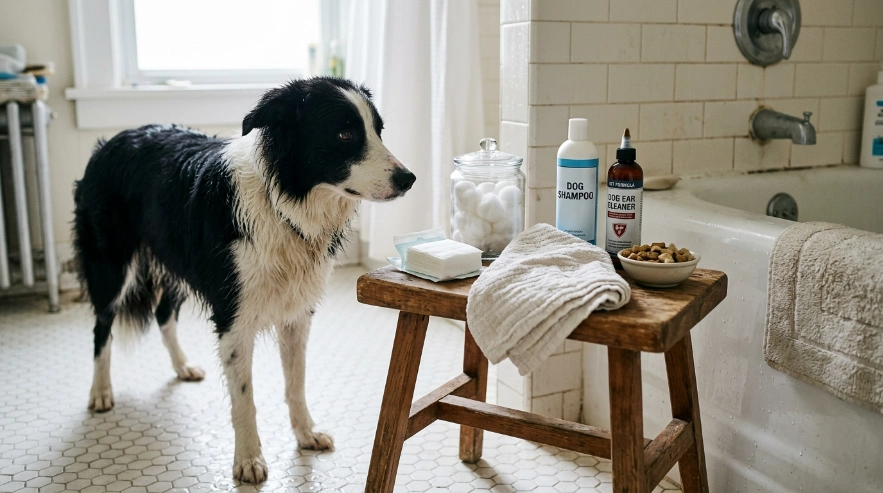
I prepare everything before my Border Collie gets wet. Once a wet dog decides bath time is finished, searching a cabinet for gauze becomes difficult.
My basic setup is small. I avoid complicated tools because gentle handling matters more than having a large grooming kit.
- Soft cotton balls or gauze: Useful for wiping visible dirt and moisture.
- Dog-specific ear cleaner: Use one your veterinarian recommends when canal cleaning is needed.
- Clean towel: Keep it within reach for drying the head and outer ears.
- Dog shampoo: Use shampoo intended for dogs rather than household soap.
- Small treats: I use these to reward calm ear handling.
I avoid pouring alcohol, hydrogen peroxide, vinegar mixtures, essential oils, or random household liquids into the ears. PetMD’s dog ear-cleaning guidance also advises using a vet-approved cleaner rather than irritating household products.
What about cotton swabs?
I do not put cotton swabs into the ear canal. They can push wax and debris deeper instead of removing it.
If I cannot reach something with soft gauze around the visible opening, I leave it alone. That is safer than trying to dig it out.
How Do You Clean Border Collie Ears During a Bath?
The safest approach is to inspect first, protect the canals during washing, and clean only the areas that need attention. I keep the process calm and simple.
- Inspect both ears before the bath. I lift each ear flap and look for unusual redness, swelling, discharge, crusting, or a strong odor.
- Brush the coat before adding water. This keeps loose hair and dirt from collecting around the ears while I wash the head.
- Wet the body first. I keep the sprayer pointed away from the ear openings and use lower water pressure near the neck.
- Wash around the head carefully. I use my hand or a damp cloth around the ears instead of spraying directly toward them.
- Wipe the visible ear flap. If I see light dirt, I use soft damp gauze and wipe outward.
- Rinse the coat without flooding the ears. I position the head so water runs away from the ear openings.
- Dry the outer ears. I gently blot them with a clean towel instead of rubbing hard.
- Use ear cleaner separately if needed. I follow the product or veterinarian’s directions rather than mixing the cleaner with bath water.
If a full ear cleaning is needed
When I use liquid ear cleaner, I treat it as its own grooming step. VCA’s ear-cleaning instructions describe using proper ear solution, massaging the base of the ear, and allowing debris to move outward.
I never force a bottle tip deep into the canal. I also avoid letting the applicator touch a dirty ear surface.
After applying a recommended cleaner, I massage the base gently. Then I let the dog shake before wiping away material that reaches the visible outer area.
How Do You Keep Bath Water Out of a Border Collie’s Ears?
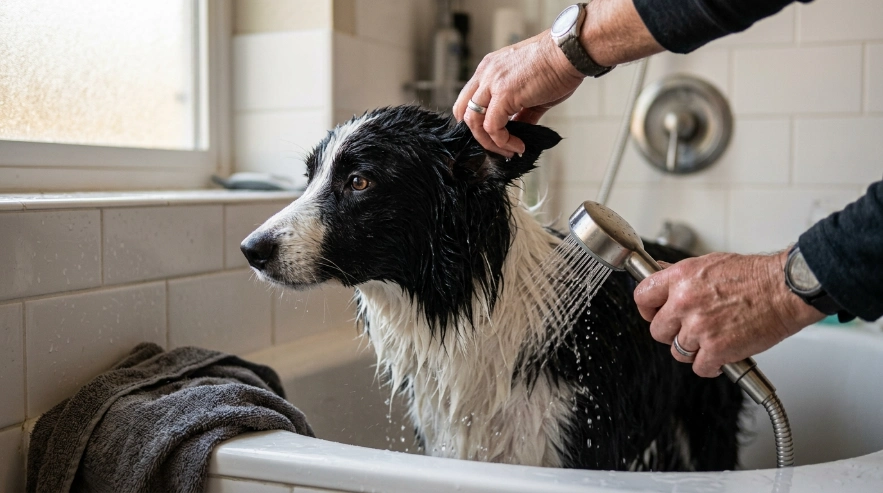
The easiest method is controlling the direction of the water. I never aim a showerhead or hose toward the opening of the ear.
Border Collies often move their heads at exactly the wrong moment. I therefore keep one hand near the head when rinsing the neck and shoulders.
- Lower the pressure: Strong spray is unnecessary around the head.
- Aim backward: Direct water down the neck rather than toward the face.
- Shield the opening: I gently fold or cover the ear flap with my hand while rinsing nearby fur.
- Use a damp cloth: This gives better control around the face and ear edges.
- Blot after washing: Dry visible moisture from the outer ear with a towel or gauze.
Water trapped around an already irritated ear can create trouble. AKC guidance notes that moisture may contribute to an environment where yeast or bacteria can overgrow in susceptible dogs.
That does not mean every splash causes an infection. It does mean I make keeping the canals dry part of my normal bath routine.
How Often Should You Clean a Border Collie’s Ears?
I check the ears more often than I clean them. Healthy-looking ears do not automatically need liquid cleaner every time I bathe my dog.
As of 2026, current veterinary guidance still supports tailoring ear cleaning to the individual dog. Dogs with allergies, recurrent ear trouble, or another medical condition may need a veterinarian-designed routine.
My simple inspection routine
- Before bathing: I check color, smell, wax, and sensitivity.
- During grooming: I wipe only visible dirt when needed.
- After swimming: I check for trapped external moisture.
- Between baths: I inspect the ears when brushing or handling the head.
- After any ear problem: I follow the veterinarian’s cleaning schedule instead of making my own.
A little normal earwax does not always mean the ear needs cleaning. Over-cleaning can also irritate sensitive tissue.
This is why I use appearance, smell, comfort, and veterinary advice rather than a rigid calendar. The ears tell me more than the date does.
When Should You Stop Cleaning and Call a Vet?
Stop home cleaning when the ear looks painful or abnormal. Cleaning an inflamed ear without knowing the cause can make a bad situation more uncomfortable.
The Merck Veterinary Manual’s guidance on canine ear infections lists signs such as head shaking, odor, redness, swelling, scratching, and discharge.
- Repeated head shaking
- Frequent scratching at one or both ears
- Strong or unusual odor
- Red or swollen ear tissue
- Dark, yellow, bloody, or heavy discharge
- Crusting or damaged skin
- Pain when you touch the ear
- A sudden head tilt or balance problem
I also stop if my dog suddenly reacts much more strongly than usual. A dog that normally accepts ear handling may pull away because the ear hurts.
Vet note: Ear pain, discharge, strong odor, swelling, balance changes, or repeated head shaking deserve veterinary attention. Your veterinarian can examine the canal and eardrum before recommending treatment or cleaning.
Why diagnosis matters
Ear trouble can have several causes, including inflammation, infection, parasites, allergies, or foreign material. These problems do not all need the same treatment.
I do not try to identify yeast, bacteria, or mites just by looking at the wax. That is where a veterinary examination becomes valuable.
Common Ear-Cleaning Mistakes I Avoid
Most bath-time ear mistakes come from trying to clean too aggressively. Gentler usually works better.
- Spraying water into the canal: Bath water is not an ear-cleaning solution.
- Using shampoo inside the ear: Shampoo belongs on the coat, not down the canal.
- Pushing cotton swabs inward: This can push debris deeper and may injure sensitive structures.
- Cleaning an obviously painful ear: I stop and arrange a veterinary check instead.
- Using homemade harsh solutions: Alcohol and peroxide may irritate delicate ear tissue.
- Scrubbing hard: Ear skin is sensitive and does not need forceful rubbing.
- Ignoring damp fur: I dry around the ears and underneath the ear flap after bathing.
My biggest early mistake
I used to think bath day was the perfect time to do every grooming job at once. That made the process longer and made ear handling harder once the dog became restless.
Now I inspect before the bath and decide whether a separate ear cleaning is even necessary. The routine is faster and calmer.
How I Handle Puppies and Dogs That Dislike Ear Cleaning
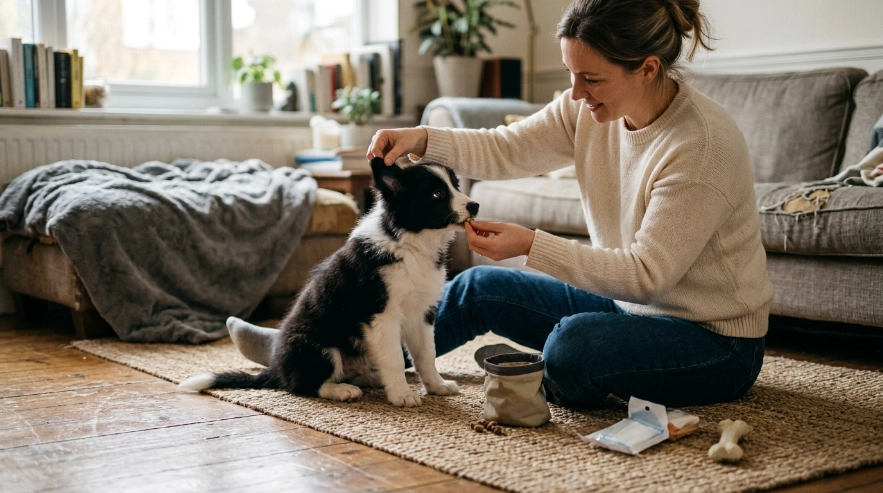
I do not hold a nervous Border Collie down and force the process. These dogs learn patterns quickly, including unpleasant ones.
I want ear handling to predict calm attention and a reward. That makes future grooming and veterinary examinations much easier.
- Touch the shoulder first. I begin away from the sensitive area.
- Move toward the ear. I briefly touch the outside and reward calm behavior.
- Lift the flap. At first, this may last only one or two seconds.
- Add a soft wipe. I introduce gauze only after the dog accepts normal handling.
- End before frustration. Short successful sessions beat one long struggle.
For a puppy, I often practice ear checks outside bath time. Five calm seconds while the puppy is relaxed can teach more than wrestling with wet ears in a slippery tub.
ASPCA general dog-care guidance also emphasizes routine grooming and sensible bathing rather than unnecessary over-bathing. I apply the same measured approach to ear care.
Use rewards strategically
I give the reward after a small cooperative action. That may be allowing me to lift an ear, wipe one fold, or towel the ear after bathing.
If the dog repeatedly reacts with pain rather than simple nervousness, I stop training around the issue. Pain needs investigation first.
Frequently Asked Questions
Can I wash inside my Border Collie’s ears with bath water?
No. Keep regular bath water out of the ear canal and use it only on the coat and visible outer ear area. If the canal needs cleaning, use a veterinarian-approved dog ear solution according to its directions rather than spraying bath water inside.
Should I put cotton balls inside my Border Collie’s ears before a bath?
You may use cotton carefully around the outer opening if your veterinarian or groomer recommends it, but never push it deep into the canal. I rely mainly on controlled water direction and gently shielding the ear flap while rinsing nearby fur.
Can I use hydrogen peroxide to clean my Border Collie’s ears?
I would not use hydrogen peroxide unless a veterinarian specifically instructed me to do so. Peroxide and other harsh household liquids can irritate sensitive ear tissue, especially when the ear is already inflamed or damaged.
Why does my Border Collie shake after I clean the ears?
A brief shake can happen after liquid ear cleaner is applied because the dog wants to remove the fluid. Persistent shaking, scratching, pain, odor, or discharge is different and should prompt a closer veterinary assessment.
Can I use baby wipes on my Border Collie’s ears?
I prefer plain soft gauze, a damp cloth, or products made specifically for dogs. Human wipes may contain fragrances or other ingredients that are unnecessary around sensitive ear tissue, and they should never be pushed into the ear canal.
What should a healthy Border Collie’s ear look like?
A healthy ear should not be obviously swollen, painful, strongly smelly, or full of unusual discharge. Small amounts of wax can be normal, so I judge the whole ear rather than assuming every bit of wax requires cleaning.
Should I clean my Border Collie’s ears before or after the bath?
I inspect the ears before bathing and wipe the visible outer areas as needed. If a full liquid cleaning is necessary, I prefer treating it as a separate step so I can control the solution and keep bath water out of the canal.
The Safe Bath-Time Ear Routine I Recommend
To clean Border Collie ears during a bath, focus on the visible outer ear and keep water, shampoo, and tools out of the canal. Inspect before washing, rinse away from the ears, wipe gently, and dry the area afterward.
If the ear needs deeper cleaning, use a dog-specific product recommended for your dog. When you see pain, odor, swelling, heavy discharge, or repeated head shaking, skip the home cleaning and call your veterinarian.
For me, that simple routine makes bath day easier. Clean what is safe to reach, keep the canals dry, and never turn routine grooming into a deep-ear procedure.
