
Coconut Oil After Border Collie Bath: Is It Safe and Useful?

Quick Answer
You can use a tiny amount of coconut oil after a Border Collie bath on a small dry area, but you generally should not coat the entire double coat with it. Coconut oil may moisturize some dry skin, yet it can also leave the coat greasy, encourage licking, and isn’t a substitute for treating an underlying skin problem; the AKC’s guidance on coconut oil for dogs also recommends thoughtful use.
The safest approach after bathing
- Rinse first: Remove every trace of shampoo before adding another product.
- Dry thoroughly: Towel-blot the dense coat and finish drying before judging whether the skin is truly dry.
- Use very little: If your vet approves coconut oil, start with a thin film on one small dry area.
- Avoid greasy coating: Don’t massage spoonfuls through the entire Border Collie coat.
- Watch the skin: Stop if you notice redness, increased itching, bumps, odor, or excessive licking.
When to skip it
- Avoid home oil treatments on infected, oozing, painful, unusually smelly, or persistently itchy skin until your veterinarian identifies the cause.
Using coconut oil after a Border Collie bath sounds like a simple way to make a dry coat softer. With a Border Collie, or working sheepdog, the answer is more complicated because that beautiful coat has a dense underlayer as well as longer protective hairs.
I’ve found that post-bath coat care works best when I keep it simple. A complete rinse, gentle drying, and the right dog-specific grooming product usually matter more than adding household oils.
In This Guide
- Can You Put Coconut Oil on a Border Collie After a Bath?
- What Does Coconut Oil Do to a Border Collie’s Double Coat?
- How Do You Use Coconut Oil Safely After a Bath?
- Is Coconut Oil Better Than Dog Conditioner?
- When Should You Avoid Coconut Oil?
- What Is the Best Post-Bath Routine for a Border Collie?
- How Often Can You Use Coconut Oil, and When Should You Call a Vet?
- Frequently Asked Questions
- Final Takeaway
Can You Put Coconut Oil on a Border Collie After a Bath?
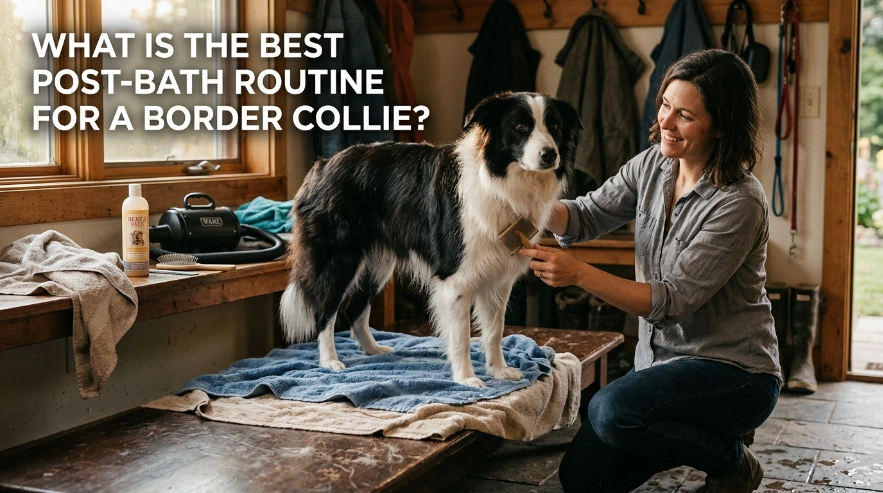
Yes, a small amount may be reasonable on limited dry areas for some healthy dogs. However, coconut oil isn’t an essential finishing treatment after every Border Collie bath.
A post-bath coconut oil treatment means applying a small amount of coconut oil to the coat or skin after washing and drying. It shouldn’t mean saturating the dog’s entire double coat.
The distinction matters because Border Collies carry a weather-resistant double coat. Depending on the individual dog, it may be rough or smooth, but both varieties can hold moisture close to the skin when not dried well.
Why owners try coconut oil
Most owners reach for coconut oil because the coat feels dry, dull, or rough after bathing. Others hope it will calm flaky or mildly itchy skin.
- Dry-feeling skin: Oil can temporarily reduce the dry sensation on the surface.
- Rough coat: A thin film may make individual hairs feel smoother.
- Dull appearance: Oil can create temporary shine.
- Dry paw pads: Small amounts are sometimes used as part of moisturizing paw care.
Those cosmetic effects don’t tell you why the skin became dry. Shampoo residue, frequent bathing, allergies, parasites, infection, diet, and environmental conditions can all play a role.
Vet note: Persistent flaking, itching, redness, sores, hair loss, or odor deserves veterinary attention instead of repeated home moisturizing treatments.
What Does Coconut Oil Do to a Border Collie’s Double Coat?
Coconut oil coats the hair with an oily film rather than behaving like a normal rinse-out conditioner. Too much can make a Border Collie’s coat heavy, sticky, and harder to keep clean.
A Border Collie’s outer coat helps protect the softer undercoat underneath. That layered structure is useful outdoors but changes how oils behave after bathing.
A little and a lot are very different
When owners run oily hands through the whole coat, the oil can spread farther than expected. Dense feathering around the chest, rear legs, and tail can become particularly greasy.
- Light application: May soften one small dry patch without noticeably changing the coat.
- Heavy application: Can make fur clump together and attract dust or debris.
- Wet undercoat: Applying oil before complete drying can make it harder to judge whether moisture remains near the skin.
- Frequent licking: A dog may repeatedly lick areas that smell or taste interesting.
I prefer to dry the coat first and assess it later. A freshly washed coat can feel different while it’s still damp, so adding oil immediately may solve a problem that wasn’t there.
Coconut oil won’t repair coat damage
Oil can change how damaged hair feels, but it doesn’t repair a broken hair shaft. Regular brushing, gentle shampooing, good nutrition, and reducing coat friction matter more long term.
It also won’t fix matting. Mats should be carefully brushed, separated, clipped, or professionally groomed depending on their severity.
How Do You Use Coconut Oil Safely After a Bath?
If your veterinarian is comfortable with topical coconut oil and your Border Collie has healthy skin, use the smallest practical amount. Treat it as an occasional spot moisturizer rather than an all-over coat treatment.
Step 1: Finish the bath completely
Use a dog-specific shampoo and rinse much longer than you think is necessary. The ASPCA’s dog grooming guidance recommends products formulated specifically for pets because some human products can irritate canine skin.
Run your fingers through thick areas while rinsing. The chest, belly, armpits, tail base, and rear feathering are easy places to miss residue.
Step 2: Dry the double coat
Press towels into the coat instead of rubbing aggressively. Rubbing can encourage tangles, especially in longer feathering.
If you use a dryer, choose a comfortable setting and keep it moving. Check the undercoat with your fingers rather than judging dryness from the surface alone.
Step 3: Check the skin
Part the hair and look directly at the area you plan to treat. Healthy-looking skin shouldn’t have discharge, open sores, strong odor, significant redness, or crusting.
If those signs are present, skip the oil. A greasy layer can make an already complicated skin problem harder to evaluate.
Step 4: Start with a tiny amount
Warm a trace of plain coconut oil between clean fingertips. Apply only a thin film to the specific dry area rather than spreading it over the entire dog.
The fur shouldn’t look wet or heavily slick afterward. If it does, you’ve probably used more than necessary.
Step 5: Watch your Border Collie
Observe the area for increased licking, scratching, redness, or bumps. Wash the product away and contact your veterinarian if your dog develops a concerning reaction.
Keep coconut oil away from the eyes and inside the ears. Ear problems need products intended for canine ear care.
Section Takeaway: The safest method is rinse, dry, inspect, and then use only a trace amount on a limited area if there is a genuine reason to do so.
Is Coconut Oil Better Than Dog Conditioner?
Usually, no. A properly chosen dog conditioner is easier to control across a Border Collie’s coat because it was formulated specifically for canine grooming.
VCA notes that dog-formulated conditioning products can help replace moisture after bathing. Their skin and coat guidance for dogs also advises against using human shampoos because canine skin differs from ours.
| Post-Bath Option | Best Use | Main Advantage | Main Concern |
|---|---|---|---|
| Dog conditioner | Routine coat conditioning | Designed for canine skin and coat | Must follow label directions and rinse if required |
| Dog leave-in spray | Detangling and light conditioning | Easy to distribute lightly | Fragrances may bother sensitive dogs |
| Coconut oil | Occasional small dry areas | Simple single-ingredient option | Can become greasy and encourage licking |
| Veterinary topical product | Diagnosed skin conditions | Targets the diagnosed problem | Should be used as directed |
For routine grooming, I would choose a fragrance-free dog conditioner before straight coconut oil. It gives you more predictable coverage without intentionally greasing the double coat.
When Should You Avoid Coconut Oil?
Skip coconut oil when your Border Collie’s skin looks diseased rather than simply dry. Moisturizing an unexplained skin problem can delay proper diagnosis.
PetMD’s current veterinary overview of coconut oil for dogs notes that evidence supporting topical benefits in dogs is limited. That’s a good reason to avoid treating coconut oil as a cure.
Don’t apply it over these problems
- Hot or painful skin: Heat and tenderness can indicate active inflammation.
- Open sores: Broken skin needs appropriate veterinary care.
- Oozing areas: Moist discharge can accompany infection or significant irritation.
- Strong odor: Unusual skin odor may accompany yeast or bacterial problems.
- Rapid hair loss: Patchy loss deserves investigation.
- Constant scratching: Allergies, parasites, infection, or other conditions may be responsible.
Coconut oil should also stay out of the ear canal. An itchy or smelly ear needs examination instead of household oil.
Be careful with dogs that lick everything
Some Border Collies will immediately investigate anything applied to their fur. Repeated licking can remove the product and irritate the skin through friction.
Swallowing an oily product may also upset some dogs’ stomachs. This is another reason to use the smallest amount possible instead of soaking the coat.
Vet note: If itching continues after a bath or repeatedly returns, ask your veterinarian to investigate the cause rather than cycling through home remedies.
What Is the Best Post-Bath Routine for a Border Collie?
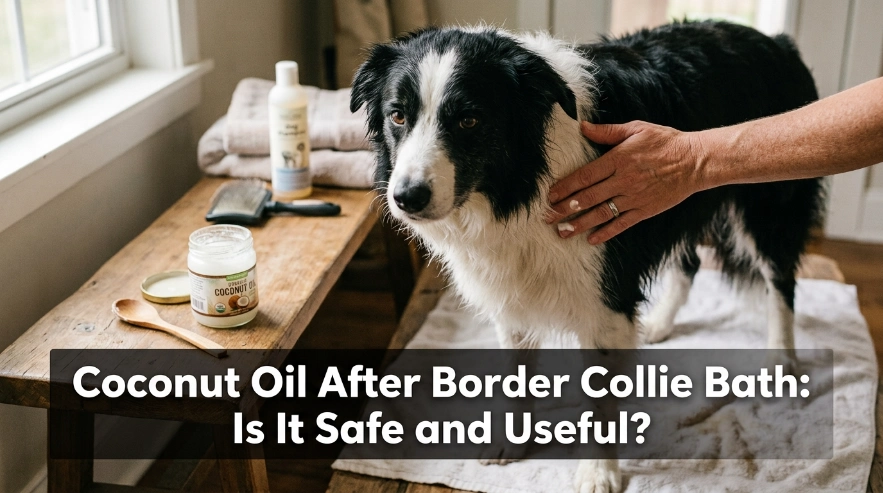
A good post-bath routine focuses on complete rinsing, controlled drying, brushing, and observation. Coconut oil is optional, not the foundation of coat care.
- Rinse thoroughly. Continue until the water runs clear and the coat no longer feels slippery from shampoo.
- Squeeze excess water gently. Don’t twist long feathering.
- Towel-blot the coat. Press moisture out instead of vigorously rubbing the hair.
- Dry the undercoat. Keep your Border Collie warm until the coat is fully dry.
- Brush when appropriate. Use a tool suitable for your dog’s coat and work through tangles carefully.
- Inspect the skin. Look for redness, flakes, bumps, parasites, or sore areas.
- Add conditioner only when needed. Follow the product label or your veterinarian’s directions.
Don’t over-bathe a healthy coat
Bathing removes dirt and allergens, but unnecessarily frequent washing can strip oils from the skin and coat. VCA specifically warns that excessive bathing can contribute to irritation and itchiness.
Your Border Collie’s lifestyle should guide the schedule. A working dog that rolls in mud will need different care from a mostly indoor companion.
Brushing often solves the problem owners blame on dryness
A coat can look dull because loose undercoat remains trapped between healthy hairs. Thorough brushing can restore movement and appearance without adding oil.
Work in small sections instead of dragging a brush across the surface. Border Collies often hide surprising amounts of loose undercoat around the hindquarters and neck.
Section Takeaway: Focus on rinsing, drying, brushing, and skin checks first. Add topical products only when they solve a specific problem.
How Often Can You Use Coconut Oil, and When Should You Call a Vet?
There isn’t a universal schedule for applying coconut oil to a Border Collie. If the skin is healthy, there may be no reason to use it after most baths.
I wouldn’t make whole-coat coconut oil application a weekly or monthly habit. Use a dog-formulated conditioner when routine moisture support is needed.
Call your veterinarian when dry skin keeps returning
Dryness is sometimes environmental, but repeated symptoms can point to a bigger issue. The pattern matters as much as the flakes themselves.
- Itching that interrupts sleep or normal activity
- Red, inflamed, or painful skin
- Hair loss or thinning patches
- Scabs, sores, crusts, or discharge
- A strong or unusual odor
- Frequent paw chewing or face rubbing
- Recurring ear irritation
- Symptoms that repeatedly return after bathing
As of 2026, veterinary guidance still favors identifying the cause of persistent skin problems instead of relying on coconut oil as a treatment. That approach is especially important with recurring itching or suspected allergies.
Vet note: Your veterinarian can decide whether your Border Collie needs a moisturizing product, parasite control, allergy management, medicated shampoo, or another treatment.
Frequently Asked Questions
Can I rub coconut oil all over my Border Collie after a bath?
I wouldn’t recommend routine whole-body application. A Border Collie’s dense double coat can become greasy, attract dirt, and encourage licking when too much oil is used.
Should I put coconut oil on my Border Collie while the coat is wet?
It’s better to finish drying the coat before deciding whether a moisturizer is needed. Drying also lets you examine the skin and makes it easier to avoid trapping unnoticed moisture within the dense undercoat.
Can coconut oil help a Border Collie’s dry skin?
It may temporarily moisturize a small dry area, but evidence supporting topical coconut oil in dogs is limited. Persistent dry skin should be evaluated because allergies, parasites, infection, excessive bathing, and other problems can cause similar symptoms.
Can coconut oil stop my Border Collie from itching?
Don’t depend on coconut oil to stop ongoing itching. It may provide temporary surface moisture, but it won’t reliably correct an underlying allergy, parasite problem, infection, or other medical cause.
Is coconut oil safe if my Border Collie licks it?
A small incidental lick is different from intentionally feeding large quantities. Because oily foods can upset some dogs’ digestion, prevent excessive licking and contact your veterinarian if your dog consumes a concerning amount or becomes ill.
What should I use instead of coconut oil after a bath?
For routine coat conditioning, choose a dog-specific rinse-out conditioner or leave-in product suited to your Border Collie’s skin. Fragrance-free products can be a sensible starting point for dogs with sensitive skin.
Why is my Border Collie’s skin flaky after bathing?
Possible reasons include shampoo residue, frequent bathing, dry air, inappropriate grooming products, or an underlying skin condition. Rinse thoroughly and speak with your veterinarian if flaking is persistent, itchy, red, painful, or accompanied by hair loss.
Final Takeaway
Coconut oil after a Border Collie bath is best treated as an optional spot moisturizer, not a required grooming step. A tiny amount may suit an occasional dry patch, but coating the entire double coat can create more mess than benefit.
Start with the basics: use dog-specific shampoo, rinse thoroughly, dry the undercoat, brush gently, and watch the skin. If dryness or itching keeps returning, let your veterinarian find the cause instead of repeatedly covering the symptoms with oil.
For most healthy Border Collies, a clean, completely dry, well-brushed coat needs surprisingly little added to it. Simple grooming usually wins.
