
Do Border Collies Feel the Cold at Night?

Quick Answer
Yes, Border Collies can feel the cold at night despite having dense, weather-resistant double coats. Healthy adults usually tolerate cool conditions better than many thin-coated dogs, but age, health, wind, rain, coat condition, and exposure time matter; the Border Collie’s double coat does not make the breed immune to cold.
Signs your Border Collie may be too cold
- Shivering: Repeated trembling is one of the clearest early warnings that your dog needs warmth.
- Tucked posture: A tightly tucked tail, hunched body, or repeatedly curling into a ball can signal discomfort.
- Seeking warmth: Your dog may move toward doors, blankets, heaters, or warmer parts of the house.
- Cold paws: Lifting paws, slowing down, or refusing to keep walking deserves attention.
- Behavior changes: Unusual lethargy, weakness, confusion, or poor coordination can signal a more serious problem.
A simple nighttime rule
- Give your Border Collie a dry, draft-free sleeping area and bring them into a warmer environment whenever their behavior suggests discomfort.
Border Collies were developed as hardworking herding dogs, so cool weather usually doesn’t stop them from wanting to move. Nighttime is different because activity drops, temperatures fall, and a wet coat can lose much of its practical advantage.
This guide explains what a Border Collie’s coat can handle, which warning signs matter, and how to create a safer sleeping setup in 2026.
In This Guide
- Do Border Collies actually feel cold at night?
- How cold is too cold for a Border Collie?
- How can I tell if my Border Collie is cold?
- Can Border Collies sleep outside at night?
- Which Border Collies get cold more easily?
- Does a Border Collie’s coat protect them from cold?
- How do you keep a Border Collie warm at night?
- Frequently asked questions
- Final takeaway
Do Border Collies Actually Feel Cold at Night?
Yes. A Border Collie can become uncomfortable or dangerously chilled when nighttime conditions exceed what that individual dog can tolerate.
The breed’s double coat gives useful insulation, but it isn’t a temperature-proof shell. Dogs still lose body heat when they remain inactive in cold conditions for long periods.
Why Border Collies handle cool weather fairly well
A Border Collie’s double coat consists of a protective outer layer and a softer insulating undercoat. Together, these layers help protect the skin and reduce heat loss in cool weather.
Both rough-coated and smooth-coated Border Collies have double coats. The smooth variety may look less fluffy, but appearance alone doesn’t tell you exactly how comfortable an individual dog will be overnight.
- Undercoat: Traps insulating air close to the body.
- Outer coat: Helps protect against weather, dirt, and some moisture.
- Working build: A healthy adult Border Collie produces considerable body heat while exercising.
- Seasonal coat: Coat density can change as seasons and climate change.
Why nighttime can change the situation
A dog running around a field generates heat. A dog lying still for several hours doesn’t.
Temperatures can also fall sharply after sunset. Wind, damp bedding, rain, and cold surfaces can make the same air temperature feel far harder on a resting dog.
If I were judging whether conditions were suitable, I wouldn’t look at temperature alone. I’d look at the dog’s behavior, coat dryness, wind exposure, age, health, bedding, and available shelter.
Section Takeaway: A Border Collie’s double coat improves cold tolerance, but a resting dog can still become cold overnight. Conditions and the individual dog matter more than the breed name alone.
How Cold Is Too Cold for a Border Collie?
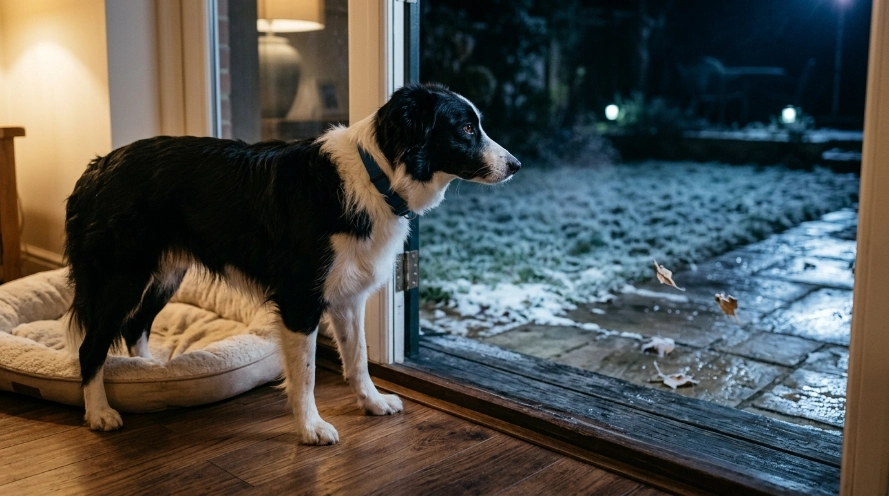
There isn’t one scientifically established outdoor temperature that is safe for every Border Collie. General veterinary guidance uses temperature ranges as warning points rather than breed-specific guarantees.
PetMD notes that some dogs can begin experiencing discomfort below about 45°F (7°C). Risk becomes more important around freezing, while prolonged exposure below 20°F (-7°C) deserves caution for every dog.
| Outdoor temperature | General risk level | What it means for a Border Collie |
|---|---|---|
| Above 45°F / 7°C | Usually lower risk | Many healthy adults are comfortable when dry, although individual dogs can still feel chilly. |
| 32–45°F / 0–7°C | Increasing caution | Watch behavior closely, especially during long, inactive periods or wet and windy weather. |
| 20–32°F / -7–0°C | Cold exposure matters | Limit unnecessary exposure and provide reliable warmth, dry shelter, and supervision. |
| Below 20°F / -7°C | Higher cold-injury risk | Prolonged outdoor sleeping is not something to assume is safe simply because the dog has a double coat. |
These are general dog-care reference points, not a Border Collie temperature chart. PetMD’s cold-weather guidance for dogs also stresses differences in coat, age, health, and exposure.
Temperature isn’t the only number that matters
A dry 40°F (4°C) evening can present a different challenge from a windy, rainy night at the same temperature. Moisture and wind can increase heat loss.
- Wind: Reduces the protective pocket of warm air near the coat.
- Rain: A soaked coat becomes a much less reassuring barrier.
- Cold flooring: Concrete, tile, and bare ground can draw heat from a resting body.
- Exposure time: A five-minute toilet break isn’t comparable with sleeping outside for eight hours.
- Activity: Running dogs stay warmer than sleeping dogs.
Use the thermometer as one clue. Your Border Collie’s behavior is the more immediate feedback.
How Can I Tell If My Border Collie Is Cold?
Shivering, seeking warmth, lifting the paws, tucking the tail, slowing down, and adopting a hunched posture can all indicate cold discomfort. Don’t wait for severe symptoms before changing the environment.
Early signs to watch for
- Shivering or trembling that isn’t explained by excitement or anxiety
- Curling tightly and repeatedly trying to conserve body heat
- Whining or restlessness near a door or warmer room
- Lifting paws or becoming reluctant to stand on cold ground
- Slowing down despite normally having plenty of energy
- Seeking blankets or pressing against people for warmth
Signs that need urgent attention
Cold exposure can progress to hypothermia. PetMD lists weakness, muscle stiffness, poor coordination, lethargy, confusion, collapse, and changes in breathing or heart rate among concerning signs.
Severe hypothermia can become life-threatening. Their veterinary overview of hypothermia in dogs advises prompt veterinary attention when hypothermia is suspected.
Vet note: If your Border Collie becomes weak, confused, unresponsive, unusually stiff, or has trouble walking after cold exposure, contact a veterinarian or emergency veterinary clinic promptly.
Can Border Collies Sleep Outside at Night?
A Border Collie shouldn’t be expected to sleep outdoors safely just because the breed has a weather-resistant coat. Indoor sleeping in a dry, temperature-controlled area is the simpler option during cold, wet, windy, or unpredictable weather.
Outdoor shelter must do more than block rain
An outdoor dog house that feels chilly and damp inside isn’t effective winter protection. Good shelter needs to reduce wind exposure and separate the dog from cold ground.
- Keep it dry: Moist bedding should be replaced rather than left to chill overnight.
- Block drafts: Position the sleeping area away from prevailing wind.
- Raise the bed: Avoid direct contact with frozen, damp, or cold flooring.
- Use dry bedding: Provide enough clean insulation for the dog to settle comfortably.
- Maintain water access: Fresh water must remain available and usable.
- Check the dog: Outdoor housing should never become an excuse for leaving a dog unmonitored in severe weather.
The ASPCA’s cold-weather safety guidance recommends keeping pets indoors during dangerous cold and giving them a warm sleeping place away from drafts.
Working Border Collies are still domestic dogs
The breed’s sheep-herding heritage sometimes creates the impression that every Border Collie can sleep comfortably in winter weather. Working ability doesn’t remove normal biological limits.
A farm dog acclimated to a cool climate may cope differently from an indoor companion accustomed to central heating. Treat those dogs as individuals rather than assuming the same setup suits both.
Which Border Collies Get Cold More Easily?
Puppies, seniors, underweight dogs, sick dogs, and dogs with compromised coats generally deserve more protection. A healthy adult’s tolerance shouldn’t become the standard for every Border Collie.
Puppies
Young puppies have smaller bodies and aren’t simply miniature adult working dogs. Give them a warm, dry sleeping area rather than testing how much cold they can tolerate.
Senior Border Collies
Older dogs may move less, lose muscle, or develop health problems that affect comfort. Stiff joints can also make cold sleeping surfaces unpleasant.
Underweight or unwell dogs
Body condition matters because body tissue contributes to insulation and energy reserves. Sudden sensitivity to temperatures that previously caused no trouble deserves attention.
- Recent illness or surgery
- Unexplained weight loss
- Reduced appetite
- Low activity or weakness
- Chronic medical problems
- Medication that changes normal behavior or activity
Vet note: A new change in cold tolerance can accompany illness, pain, weight loss, or age-related changes. Ask your veterinarian about unexplained changes rather than assuming they’re normal.
Does a Border Collie’s Coat Protect Them From Cold?
Yes, the double coat provides meaningful insulation and weather protection. It reduces cold exposure; it doesn’t eliminate it.
The AKC describes Border Collies as having dense, weather-resistant double coats. Both rough and smooth coat varieties share this basic structure.
Keep the double coat healthy
A neglected coat can mat and hold unwanted moisture near the skin. Regular brushing helps remove loose fur, debris, and tangles.
The AKC’s guidance on grooming double-coated dogs explains that the soft undercoat contributes insulation while the outer guard hairs help protect the skin and repel moisture.
- Brush regularly: Prevent packed undercoat and mats.
- Dry the coat: Don’t send a soaked dog back outside to sleep.
- Check paws: Remove packed snow, mud, and debris after outdoor activity.
- Avoid unnecessary shaving: Removing the insulating coat changes the protection nature provides.
Rough coat versus smooth coat
A rough-coated Border Collie has more obvious feathering and length. A smooth-coated Border Collie has shorter hair, but both are double-coated according to the breed standard.
Don’t decide nighttime safety purely by how fluffy your dog looks. Undercoat density, grooming, health, acclimation, wind, moisture, and shelter matter too.
How Do You Keep a Border Collie Warm at Night?
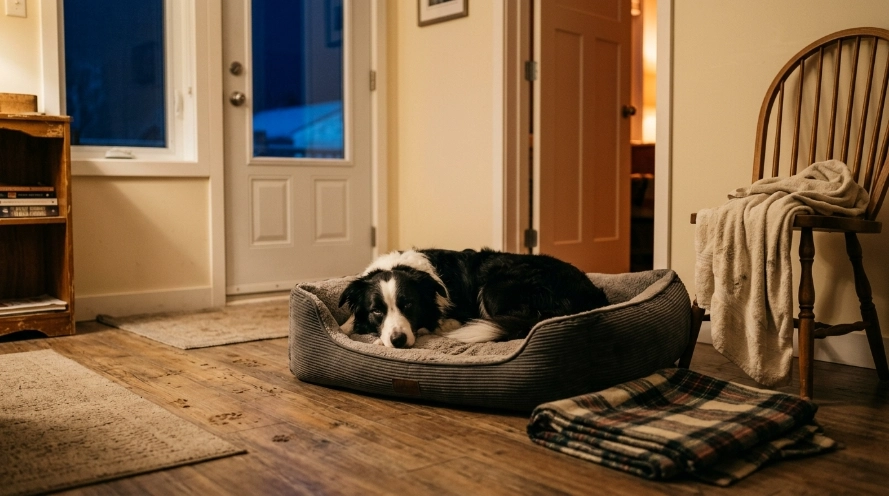
Start with a dry sleeping space away from drafts and cold flooring. Most healthy indoor Border Collies don’t need elaborate winter equipment when the room itself is comfortable.
Build a simple warm sleeping setup
- Choose a draft-free location. Avoid exterior doors, open windows, and unheated entryways during cold nights.
- Insulate from the floor. Use a proper dog bed rather than asking the dog to sleep directly on concrete or cold tile.
- Keep bedding dry. Replace wet blankets instead of layering dry material over damp fabric.
- Dry your dog after rain. Pay attention to the belly, legs, feet, and dense coat.
- Watch behavior. Give your dog access to a warmer location if they repeatedly seek one.
- Adjust for the individual. Puppies, seniors, clipped dogs, and dogs recovering from illness may need more protection.
Does a Border Collie need a sweater?
A healthy adult with an intact double coat often doesn’t require clothing for ordinary brief outings in cool weather. A coat can still be useful for vulnerable dogs or harsh conditions.
Clothing should stay dry, fit correctly, and allow normal movement. Never use a sweater as a substitute for appropriate shelter or supervision.
What I would check before bedtime
I would use a short practical check instead of relying on one temperature number. It takes less than a minute.
- Is the dog’s coat completely dry?
- Is the bed dry and insulated from the floor?
- Is cold air blowing across the sleeping area?
- Can the dog move somewhere warmer?
- Is the dog relaxed rather than shivering or tightly hunched?
- Are tonight’s conditions colder, wetter, or windier than usual?
If several answers concern me, I’d change the sleeping arrangement rather than wait for obvious distress. Prevention is easier than trying to warm a dog that has already become dangerously chilled.
Section Takeaway: Keep nighttime comfort simple—dry coat, dry bedding, protection from drafts, and access to warmth. Your dog’s behavior should override assumptions about what Border Collies are “supposed” to tolerate.
Frequently Asked Questions
Do Border Collies get cold easily?
Healthy adult Border Collies often tolerate cool weather reasonably well because they have double coats. They can still become cold, especially when wet, inactive, exposed to wind, outside for long periods, underweight, very young, elderly, or affected by illness.
What temperature is too cold for a Border Collie to sleep outside?
There is no universal Border Collie cutoff. General veterinary guidance becomes more cautious below 45°F (7°C), with greater concern around freezing and below 20°F (-7°C), but wind, moisture, health, shelter, and exposure time can change risk substantially.
Can a Border Collie sleep outside in winter?
Cold tolerance does not automatically make outdoor winter sleeping appropriate. Severe cold, wind, wet weather, and inadequate shelter raise risk, so bringing the dog indoors is generally the safer choice when nighttime weather becomes harsh or unpredictable.
Should I cover my Border Collie with a blanket at night?
You can provide a clean, dry blanket or warm dog bed and allow your dog to choose how to use it. Avoid forcing heavy covers over a dog, and make sure the dog can move away if they become uncomfortable.
Why is my Border Collie suddenly shivering at night?
Cold is one possibility, but dogs can shiver because of fear, pain, illness, or other causes. Move your dog to a comfortable environment and observe them; persistent shivering or shivering accompanied by weakness, confusion, pain, or other symptoms warrants veterinary advice.
Are smooth-coated Border Collies colder than rough-coated Border Collies?
Both recognized coat varieties have double coats, so hair length alone doesn’t determine cold tolerance. Undercoat density, health, body condition, age, acclimation, moisture, wind, and the quality of the sleeping environment can matter more for an individual dog.
Can Border Collies get hypothermia?
Yes. Border Collies can develop hypothermia if their body temperature falls dangerously low. Prolonged cold exposure, wet conditions, illness, and age can increase risk, and severe symptoms such as weakness, confusion, collapse, or abnormal breathing require urgent veterinary care.
Final Takeaway
Border Collies are well equipped for cool weather, but their double coats don’t make them immune to cold nights. A healthy adult may seem completely comfortable while another Border Collie in the same temperature starts looking for warmth.
Focus on the whole situation: temperature, wind, moisture, exposure time, age, health, coat condition, bedding, and your dog’s behavior. If your Border Collie is shivering, hunched, restless, unusually quiet, or repeatedly seeking warmth, give them a warmer place to sleep.
The safest goal isn’t discovering the lowest temperature your Border Collie can endure. It’s creating a sleeping environment where they can relax comfortably without having to fight the cold.
