
Do Border Collies Get Scared Easily?

Quick Answer
Border Collies can be sensitive and quick to startle, but being easily frightened isn’t a normal requirement of the breed. Some Border Collies become fearful of loud noises, unfamiliar places, sudden movements, or stressful experiences, while others remain extremely confident. Learning the signs of fear and anxiety in dogs helps you tell temporary nervousness from a problem that needs attention.
Signs your Border Collie may be scared
- Tucked tail: Your dog holds the tail low or tightly beneath the body.
- Ears pulled back: The ears flatten while your dog watches or avoids a trigger.
- Freezing or hiding: Your Border Collie stops moving, retreats, or searches for cover.
- Panting or trembling: These can appear when stress becomes more intense.
- Refusing treats: A normally food-motivated dog may stop eating when overwhelmed.
A useful check
- Watch how quickly your dog recovers after the trigger disappears. Repeated fear, prolonged distress, or worsening reactions deserve closer attention.
Border Collies are alert working dogs, so they notice details that many other dogs ignore. A Border Collie, often shortened to BC, may react instantly to a strange sound, movement, person, or change in routine.
I’ve also learned that a quick startle doesn’t automatically mean a fearful dog. In this guide, I’ll show you how to recognize the difference and help your Border Collie build confidence.
In This Guide
- Are Border Collies naturally easily scared?
- Why can Border Collies seem so sensitive?
- What are Border Collies commonly scared of?
- How can you tell when a Border Collie is scared?
- Is your Border Collie startled, fearful, or anxious?
- How do you calm a scared Border Collie?
- Can training prevent fear in Border Collies?
- When does fear need professional help?
- Frequently asked questions
Are Border Collies Naturally Easily Scared?
No. Border Collies shouldn’t automatically be considered timid or fearful dogs, although individual dogs can be highly sensitive.
The American Kennel Club’s Border Collie profile describes the breed as alert, energetic, highly trainable, and sometimes reserved around strangers. Current breed temperament guidance also says fearfulness shouldn’t be a defining trait.
Sensitivity and fear are different
A sensitive Border Collie notices subtle changes quickly. That trait helped working collies respond to distant livestock, a shepherd’s signals, and changing conditions in a field.
Fear happens when the dog perceives something as threatening. The reaction may include avoidance, freezing, trembling, barking, escape attempts, or defensive behavior.
- Sensitive dog: Notices a noise immediately but settles when nothing happens.
- Startled dog: Jumps at a sudden sound, checks the environment, then recovers.
- Fearful dog: Tries to escape or continues showing distress after the event.
- Anxious dog: May anticipate the frightening event before it even occurs.
This distinction matters. I’ve seen confident Border Collies jump when a metal gate slammed, then return to work within moments.
That dog was startled. A dog refusing to approach the same gate the next day is giving you a different message.
Why Can Border Collies Seem So Sensitive?
Border Collies were developed as responsive herding dogs. Their work rewarded awareness, fast reactions, problem-solving, and close attention to both livestock and handlers.
A Border Collie’s herding instinct is the inherited tendency to control livestock movement. Their famous eye refers to the intense visual focus many Border Collies use while working stock.
They pay close attention to their surroundings
A working Border Collie must notice motion at a distance. That awareness can also make household sounds and unfamiliar movement difficult to ignore.
- Doors slamming
- Furniture moving
- Construction sounds
- Children running
- Unfamiliar equipment
- Sudden changes in familiar places
They also pay close attention to you
Border Collies often learn tiny patterns in human behavior. They may predict a walk from your shoes or a car trip from the keys in your hand.
This intelligence makes training rewarding, but repeated unpleasant patterns can also become powerful associations. A frightening event may start influencing how the dog responds before the event happens again.
Temperament still varies by individual
Genetics, early experiences, socialization, health, training, and environment all influence behavior. Two Border Collies raised in the same household can respond differently to the same thunderstorm.
Rough-coated and smooth-coated Border Collies are coat varieties, not separate fear personalities. Coat color also doesn’t tell you whether an individual dog will be confident or nervous.
What Are Border Collies Commonly Scared Of?
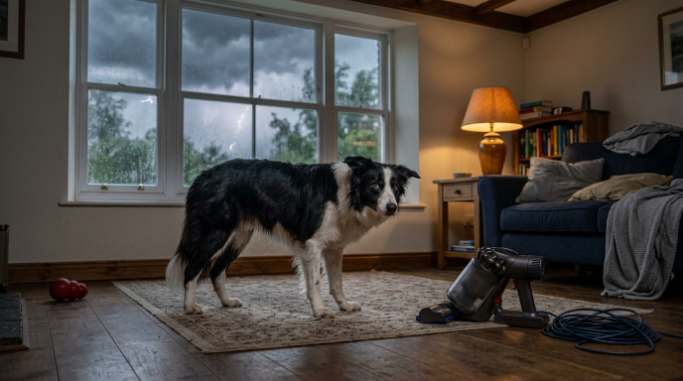
A Border Collie can become frightened by almost anything associated with discomfort or uncertainty. Loud noises and unfamiliar situations are especially common canine triggers.
Loud and unpredictable noises
- Thunderstorms: Thunder, wind, pressure changes, and flashes can create a difficult combination.
- Fireworks: Sudden explosions arrive without a predictable rhythm.
- Vacuum cleaners: They combine noise, motion, and an object moving toward the dog.
- Construction: Drilling, hammering, machinery, and vibration may keep changing throughout the day.
People, animals, and unfamiliar environments
Some Border Collies are naturally more reserved when meeting strangers. Caution becomes a concern when your dog repeatedly hides, panics, growls from fear, or cannot recover.
- Unfamiliar adults or children
- Excitable dogs
- Crowded streets
- Veterinary clinics
- Grooming environments
- Slippery or unfamiliar flooring
- Car travel
Bad experiences can create specific fears
A single frightening event can sometimes create an association. For example, slipping in a bathtub may make the bathroom more concerning during the next bath.
Don’t force the dog through the situation to prove it’s safe. Rebuild comfort using easier versions of the experience.
How Can You Tell When a Border Collie Is Scared?
Watch the whole dog rather than one body part. A wagging tail alone doesn’t prove that a Border Collie feels relaxed.
Early stress signals
Subtle signals are useful because they appear before a dog reaches panic. Catching them early gives you more room to reduce pressure.
- Lip licking when no food is present
- Repeated yawning
- Looking or turning away
- Lowering the head
- Holding the ears back
- Suddenly sniffing the ground
- Lifting one paw
- Moving slowly or freezing
Stronger fear signals
- Trembling
- Tail tucked tightly
- Trying to hide
- Frantic escape attempts
- Heavy panting without exercise or heat
- Refusing favorite treats
- Growling, lunging, or snapping when cornered
The American Veterinary Medical Association encourages owners to learn canine body language and prevent situations from escalating when a dog appears threatened or anxious.
Never punish growling. A growl gives you important information that the dog needs more distance.
Is Your Border Collie Startled, Fearful, or Anxious?
The biggest clue is what happens after the trigger. A normal startle response resolves much faster than persistent fear.
| Reaction | What you may see | What happens afterward | Best response |
|---|---|---|---|
| Startle | Jumping, turning quickly, brief barking | Dog settles and resumes normal behavior | Stay calm and allow recovery |
| Fear | Hiding, trembling, retreating, refusing food | Dog remains concerned about the trigger | Increase distance and reduce intensity |
| Anticipatory anxiety | Pacing, scanning, panting before an expected event | Distress can begin before the trigger appears | Discuss a behavior plan with a qualified professional |
Keep a simple trigger journal if the pattern isn’t obvious. Record what happened immediately before the reaction, the dog’s behavior, and how long recovery took.
After several events, patterns often become easier to see. You may discover that the problem isn’t “everything” but one sound, location, surface, or situation.
How Do You Calm a Scared Border Collie?
First, reduce the intensity of whatever is frightening your dog. Training works better when a Border Collie can still think, eat, and respond to you.
1. Create distance from the trigger
If your dog backs away from a person, don’t pull the dog closer. Move far enough away that the body begins to soften.
Distance is useful training equipment. It gives your dog a chance to observe without feeling trapped.
2. Give your dog a safe retreat
- Choose a quiet room or covered resting area.
- Keep water available.
- Use familiar bedding.
- Reduce outside noise when possible.
- Prevent children or visitors from disturbing the dog there.
A safe place should never become punishment. Your Border Collie needs to know retreating there makes pressure disappear.
3. Pair mild exposure with something positive
Start with a version of the trigger that doesn’t cause a strong reaction. Reward calm observation with food, play, or another reward your dog enjoys.
For a dog concerned about the vacuum, that might begin with the vacuum sitting motionless across the room. You don’t need to switch it on during the first lesson.
4. Keep sessions short
Two to five focused minutes can accomplish more than a long session that ends in panic. Stop while the dog can still succeed.
- Present the mild trigger.
- Reward calm behavior.
- Remove or move away from the trigger.
- Give the dog a break.
- Increase difficulty only after repeated comfortable responses.
If your Border Collie suddenly stops taking treats, that’s useful information. Make the situation easier rather than demanding obedience.
Section Takeaway: Calm a fearful Border Collie by reducing pressure first. Confidence grows through manageable experiences, not forced exposure.
Can Training Prevent Fear in Border Collies?
Good socialization and positive training can reduce the risk of some fear problems. They can’t guarantee that a dog will never become frightened.
Start positive exposure early
Young puppies benefit from safe, positive introductions to people, sounds, surfaces, handling, transportation, and everyday environments. Quality matters more than collecting as many experiences as possible.
- Let the puppy approach at a comfortable pace.
- Pair new experiences with food or play.
- Keep early outings short.
- Avoid overwhelming crowds.
- Give the puppy an easy way to retreat.
Adult Border Collies can learn new emotional responses too. The process may simply require smaller steps and more repetition.
Use desensitization and counterconditioning carefully
Desensitization means introducing a frightening trigger at an intensity the dog can handle. Counterconditioning pairs that trigger with something the dog values.
The ASPCA’s behavior guidance emphasizes keeping desensitization below the level that produces full-blown fear. Overwhelming exposure can work against the training goal.
Don’t confuse exhaustion with confidence
Border Collies need meaningful physical activity and mental work, but running a nervous dog until exhausted doesn’t teach safety. Use exercise alongside confidence-building, not instead of it.
I prefer short scent games, relaxed walks, basic cue practice, and controlled problem-solving on stressful days. They engage the brain without constantly increasing arousal.
When Does Fear Need Professional Help?
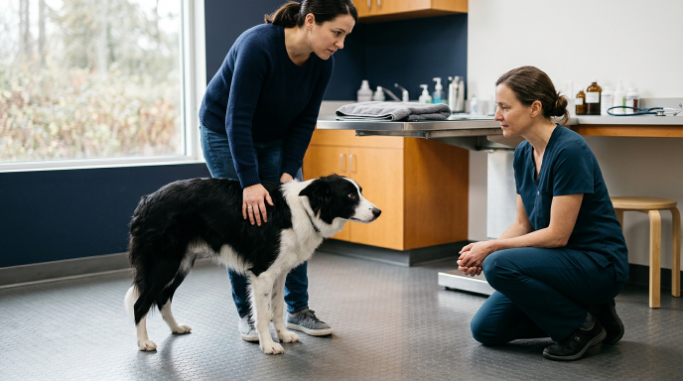
Get professional help when fear disrupts normal life, becomes dangerous, or suddenly appears without an obvious explanation. A veterinarian is a sensible first stop for a new or worsening behavior change.
Contact your veterinarian if you notice:
- Sudden fear in a previously confident dog
- New sensitivity to handling
- Major appetite or sleep changes
- Disorientation or unusual behavior
- Fear that continues worsening
- Repeated panic or escape attempts
- Growling, snapping, or biting associated with fear
Pain, illness, sensory changes, and other medical problems can affect behavior. This is especially important when an adult or senior Border Collie changes suddenly.
Vet note: New, severe, or unexplained fear should be discussed with your veterinarian so medical causes can be considered before assuming the problem is purely behavioral.
Choose qualified behavior help
Severe cases may need a veterinary behaviorist or a trainer experienced with fear and anxiety. Look for professionals who use reward-based methods and understand gradual behavior modification.
Avoid anyone promising to “dominate” fear out of your dog. Punishing frightened behavior may suppress warnings without changing the emotion causing them.
Frequently Asked Questions
Are Border Collies more nervous than other dogs?
Not every Border Collie is nervous. The breed is highly alert and responsive, which can make some individuals appear more sensitive, but confident Border Collies are common. Genetics, socialization, experiences, health, and environment influence each dog’s temperament.
Why is my Border Collie suddenly scared of everything?
A sudden behavior change deserves attention. Look for recent frightening experiences or environmental changes, but also talk with your veterinarian about pain, illness, sensory changes, or other medical causes if the change is unexplained or persistent.
Why is my Border Collie scared of loud noises?
Loud, unpredictable sounds such as fireworks, thunder, machinery, and construction can frighten dogs. Increase distance, provide a safe retreat, and introduce controlled versions of the sound gradually instead of forcing your Border Collie to endure full intensity.
Should I comfort my Border Collie when they’re scared?
You can calmly support a frightened Border Collie. Give them space, allow retreat, and keep your behavior predictable. The goal isn’t frantic reassurance; it’s creating enough safety for your dog to recover without forcing interaction with the trigger.
Do Border Collies grow out of fearfulness?
Some puppy fears become easier as confidence and experience grow, but persistent fear shouldn’t simply be ignored. Positive socialization and gradual training can help. Severe or worsening reactions deserve professional guidance rather than waiting for age alone to solve them.
Can punishment stop a Border Collie from acting scared?
Punishment doesn’t make the frightening thing feel safer. It can increase stress and may discourage useful warning signals such as growling. Reward calm behavior, reduce trigger intensity, and teach your dog that manageable encounters lead to predictable outcomes.
Can a scared Border Collie become confident?
Yes, many fearful Border Collies can make meaningful progress. Work below the dog’s panic threshold, reward calm choices, keep sessions short, and increase difficulty gradually. More serious fear may require a veterinarian or qualified behavior professional.
The Bottom Line
Border Collies can startle quickly because they’re observant, responsive dogs, but that doesn’t mean the breed should be chronically fearful. A confident Border Collie can notice something unusual, assess it, and recover.
Pay attention when fear lasts, spreads to new situations, or interferes with daily life. With patient exposure, positive training, sensible management, and veterinary help when needed, many Border Collies can become much more comfortable around the things that once worried them.