

Quick Answer
Yes, many Border Collies like to lick their people. Licking may express affection, seek attention, investigate an interesting taste, or help the dog manage excitement. The meaning depends on the dog’s body language and the situation, as explained in this veterinarian-reviewed guide to dog licking.
What Your Border Collie May Be Communicating
- Affection: Relaxed licking during quiet contact often accompanies social bonding.
- Attention: Your reaction may teach your dog that licking starts an interaction.
- Exploration: Sweat, food smells, and unfamiliar scents make human skin interesting.
- Appeasement: Quick licking with lowered posture may communicate uncertainty.
- Self-soothing: Repetitive licking can help an excited or worried dog settle temporarily.
When to Check Further
- Contact your veterinarian if licking suddenly increases, becomes difficult to interrupt, or accompanies pain, skin irritation, digestive trouble, or anxiety.
Border Collies often use licking as part of their broad communication toolkit. These alert herding dogs notice small changes in our voices, movements, routines, and reactions.
I’ve found that the best way to understand licking is to study what happens immediately before and after it. This guide explains the common meanings, warning signs, and kind training methods you can use.
In This Guide
- Why Do Border Collies Lick People?
- Does Licking Mean Your Border Collie Loves You?
- How Can You Read the Body Language Around Licking?
- What Do Different Types of Licking Mean?
- When Is Border Collie Licking a Problem?
- How Do You Teach a Border Collie Not to Lick You?
- Is It Safe to Let Your Border Collie Lick You?
- Frequently Asked Questions
- Final Takeaway
Why Do Border Collies Lick People?
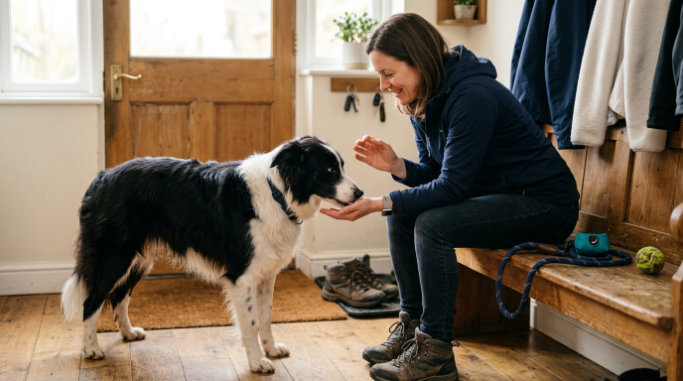
Border Collies lick people for affection, attention, exploration, appeasement, and self-soothing. No single explanation fits every dog or every moment.
A Border Collie’s social licking is deliberate tongue contact used during interaction with a person or animal. It differs from licking caused by an itchy paw, painful joint, or skin condition.
Licking can be social communication
Dogs begin experiencing licking shortly after birth. Their mother uses it while cleaning and caring for them.
Puppies later lick littermates and adult dogs during social interactions. Some carry this behavior into their relationships with people.
- Loose, gentle licking: Often occurs during friendly contact or grooming-like behavior.
- Fast face licking: May signal excitement, appeasement, or an attempt to reduce tension.
- Persistent licking: Can become an effective way to request attention.
Your skin contains interesting information
Human hands collect scents from food, animals, soap, soil, and household objects. Sweat also leaves a salty taste that attracts some dogs.
A Border Collie may therefore lick your hand after you cook, exercise, or return home. This behavior can be investigation rather than a canine kiss.
Border Collies learn from reactions quickly
The American Kennel Club’s Border Collie profile describes the breed as bright, energetic, and work-oriented. That learning ability affects everyday habits.
If licking makes you laugh, talk, or pet your dog, you reward it with attention. Even pushing the dog away can feel interactive.
I once worked with a young Border Collie who licked every visitor’s wrist. Each visitor immediately spoke to him, so the habit became his homemade doorbell.
We changed the greeting routine to a sit and hand target. Within two weeks, he offered those behaviors before trying to lick.
Section Takeaway: Border Collies lick for several reasons, but human reactions often determine whether occasional licking becomes a strong habit.
Does Licking Mean Your Border Collie Loves You?
Licking can accompany affection, but it doesn’t prove affection by itself. Look for relaxed body language and voluntary closeness.
A comfortable Border Collie may lick once or twice while resting beside you. The dog may then lean against you or settle calmly.
Stronger signs of a secure bond
Licking makes more sense when viewed alongside other behavior. Affection and trust often appear through several signals:
- Relaxed proximity: Your dog chooses to rest near you without demanding interaction.
- Soft expression: The eyes, mouth, ears, and facial muscles appear loose.
- Voluntary check-ins: Your dog looks toward you during walks or play.
- Comfort with touch: The dog approaches or remains relaxed during gentle handling.
- Play invitations: Your dog brings a toy or uses a loose play bow.
- Easy disengagement: The dog can end contact and settle elsewhere.
A dog that never licks can still feel deeply attached to its owner. Individual Border Collies express social comfort differently.
Licking can also request something
Your Collie may lick before dinner, a walk, or a ball game. In that context, licking functions more like a learned request.
Watch the dog’s next movement. Looking toward a leash, bowl, door, or toy often reveals the goal.
Appeasement licking looks different
An uncertain dog may lick quickly while turning its head away. You might also notice lowered posture, pinned ears, or a tucked tail.
Give the dog space instead of forcing contact. The ASPCA’s dog behavior resources emphasize identifying the reason behind behavior before addressing it.
How Can You Read the Body Language Around Licking?
Read the whole dog, not only the tongue. Posture, facial tension, movement, and context make the message clearer.
Signs the licking is probably friendly
- The dog’s body looks loose and balanced.
- The eyes appear soft rather than fixed or wide.
- The mouth relaxes between licks.
- The tail moves loosely at a natural height.
- The dog can stop and move away freely.
- The interaction follows play, petting, or a calm greeting.
Signs your Border Collie may feel uncomfortable
- The licking is rapid, frantic, or repeatedly directed toward your face.
- The dog turns away while continuing to lick.
- The ears flatten and the body becomes low or stiff.
- You see yawning, panting, trembling, pacing, or repeated lip licking.
- The dog tries to retreat after the interaction.
- The behavior starts during hugging, restraint, grooming, or confrontation.
Border Collies can be sensitive to pressure and sudden movement. Some lick when they feel conflicted about close handling.
Respect a retreat or head turn. Consent during handling builds more trust than holding the dog still.
Record the pattern for one week
A simple behavior log can expose triggers that memory misses. Record the time, setting, target, body language, and immediate consequence.
- Before: What happened during the previous 30 seconds?
- Behavior: Where and how intensely did the dog lick?
- After: Did the dog receive attention, food, space, or activity?
This is often called an antecedent-behavior-consequence record. It helps you see what starts and maintains a habit.
What Do Different Types of Licking Mean?
The target and context can narrow the possibilities. However, no licking location has one guaranteed meaning.
| Licking Pattern | Common Explanation | Clues to Watch | Helpful Response |
|---|---|---|---|
| Hands | Scents, salt, affection, or attention | Often follows cooking, exercise, or arriving home | Allow brief contact or cue an alternative |
| Face | Greeting, excitement, appeasement, or food smells | Check whether the body is loose or lowered | Turn aside calmly if face licking is unwanted |
| Feet or legs | Sweat, lotions, water, or learned attention | Often happens after exercise or showering | Check skin products and redirect gently |
| Air or lips | Food anticipation, stress, nausea, or oral discomfort | Watch for drooling, swallowing, or appetite changes | Seek veterinary advice if persistent |
| Own body | Normal grooming, itch, pain, or irritation | Look for redness, hair loss, odor, or tenderness | Arrange a veterinary examination if repeated |
| Floors or furniture | Food residue, boredom, anxiety, or possible illness | Note frequency and digestive symptoms | Clean the surface and consult a vet if persistent |
A single lick after dinner rarely means the same thing as ten minutes of frantic floor licking. Frequency and interruptibility matter.
Also consider what touches your skin. Some lotions, pain creams, and topical medicines may be unsafe if ingested.
When Is Border Collie Licking a Problem?
Licking becomes concerning when it is sudden, persistent, difficult to interrupt, or harmful. Changes in appetite, comfort, sleep, or behavior add urgency.
High-energy herding breeds need suitable physical activity and mental work. Yet owners shouldn’t assume every repetitive behavior comes from boredom.
Possible behavioral causes
- Under-stimulation: The dog has few appropriate outlets for sniffing, problem-solving, or movement.
- Over-arousal: Intense fetch, visitors, or household activity leaves the dog unable to settle.
- Attention history: Licking reliably produces eye contact, speech, touching, or play.
- Anxiety: The dog licks during separation, conflict, noise, or unfamiliar situations.
- Compulsive repetition: The behavior appears rigid and continues despite interruption.
Possible medical causes
Persistent licking can accompany allergies, infection, pain, digestive discomfort, nausea, or oral disease. A dog may lick people, objects, or its own body.
- Red, moist, damaged, or thinning skin
- Repeated focus on one paw, joint, or body area
- Drooling, lip smacking, swallowing, or bad breath
- Vomiting, diarrhea, reduced appetite, or abdominal discomfort
- Restlessness, poor sleep, hiding, or unusual irritability
- A sudden behavior change without an obvious environmental cause
PetMD notes that excessive licking may relate to anxiety, allergies, pain, skin problems, or gastrointestinal disease. A veterinarian should evaluate persistent changes.
Vet note: Contact your veterinarian when licking is sudden, damaging, compulsive, or accompanied by physical symptoms. Behavior training cannot replace medical diagnosis.
When should you seek urgent help?
Call a veterinarian promptly if licking follows possible contact with toxins or human medicine. Bring the product container when possible.
Urgent signs include breathing difficulty, collapse, repeated vomiting, severe drooling, tremors, facial swelling, or profound weakness. Don’t wait for the behavior to resolve alone.
Section Takeaway: Excessive licking deserves investigation, especially when it appears suddenly or occurs with pain, skin damage, digestive symptoms, or distress.
How Do You Teach a Border Collie Not to Lick You?

Teach a clear alternative and reward it consistently. Punishment can add anxiety without showing your dog what to do instead.
Use this simple training plan
- Identify the trigger. Notice whether licking happens during greetings, petting, meals, or excitement.
- Choose an alternative. Ask for a sit, chin rest, hand target, or mat settle.
- Practice before the trigger. Use three-to-five-minute sessions in a calm room.
- Reward the alternative. Deliver a treat, praise, or gentle contact before licking begins.
- Pause unwanted contact. Turn your face or hands away without scolding.
- Resume when calm. Reward four paws on the floor and a relaxed mouth.
- Stay consistent. Ask family members and regular visitors to follow the same routine.
Timing makes the lesson clear. Reward the desired behavior within one or two seconds whenever possible.
Manage excited greetings
Keep greetings quiet and predictable. Tossing treats onto a mat can move the dog away from faces and hands.
Ask visitors to wait before touching the dog. They can greet once the Border Collie offers a calm sit or stand.
Meet breed-specific needs
Border Collies need more than endless ball throwing. Repetitive, high-speed games can produce a fitter dog who still struggles to relax.
Build a balanced routine using suitable activities:
- Sniff-focused walks at the dog’s pace
- Short reward-based training sessions
- Food puzzles and supervised scent searches
- Age-appropriate running or hiking
- Structured herding, agility, obedience, or trick training
- Planned rest in a quiet area
Exercise needs vary with age, health, fitness, and temperament. Puppies and older dogs need different plans from healthy adults.
For humane training guidance, consult the American Veterinary Medical Association’s pet-owner resources or a qualified reward-based trainer.
Section Takeaway: Replace licking with a specific behavior, reward calm choices early, and support training with balanced activity and genuine rest.
Is It Safe to Let Your Border Collie Lick You?
Occasional licking of healthy, intact skin is usually a personal-boundary issue. Avoid allowing dogs to lick open wounds, surgical sites, eyes, or mouths.
Dogs carry microorganisms in their mouths. Risk matters more for young children and people with weakened immune systems.
Use practical hygiene
- Wash your hands before preparing food or touching your face.
- Clean skin after prolonged licking.
- Don’t encourage licking around cuts, rashes, or medical devices.
- Supervise interactions between dogs and children.
- Keep veterinary care, parasite prevention, and dental care current.
- Ask a physician about precautions if someone is immunocompromised.
Never let your Border Collie lick skin covered with an unknown product. Sunscreen, medicated cream, essential oils, and pain-relief gels can pose risks.
If ingestion occurs, contact your veterinarian or an animal poison service. Don’t induce vomiting unless a veterinary professional instructs you.
Frequently Asked Questions
Why does my Border Collie lick me more than other people?
Your dog may feel safest with you or may have learned that you respond reliably. Your scent, skin products, and daily routines can also make you more interesting than other people.
Why does my Border Collie lick my hands?
Hands carry food smells, sweat, and information from places you’ve visited. Hand licking may also be a greeting or an attention-seeking behavior reinforced by petting and conversation.
Why does my Border Collie lick my face?
Face licking may express excitement, social interest, appeasement, or curiosity about food and skin scents. Check whether the dog looks relaxed, overexcited, or uncomfortable before interpreting it as affection.
Why does my Border Collie lick me after exercise?
Sweat leaves salt and strong scents on your skin. Your dog may investigate those tastes, seek attention, or join your post-exercise routine rather than trying to communicate one specific emotion.
Why does my Border Collie lick me when I pet them?
Gentle licking may continue a friendly interaction. Rapid licking, head turning, stiffness, pinned ears, or attempts to leave can instead mean the dog wants less pressure or space.
Do Border Collie puppies lick more than adults?
Many puppies lick frequently because they explore with their mouths and are learning which behaviors gain attention. Consistent redirection can prevent enthusiastic puppy licking from becoming a lasting greeting habit.
Should I let my Border Collie lick my face?
That choice depends on your boundaries and health. Avoid contact with your eyes, mouth, broken skin, or topical medication, and teach an alternative greeting if face licking feels uncomfortable.
Final Takeaway
Yes, many Border Collies enjoy licking their people. The behavior can reflect affection, curiosity, attention-seeking, appeasement, or temporary self-soothing.
Context gives the lick meaning. Observe your dog’s complete body language, what happened beforehand, and what response followed.
Calm, occasional licking is usually harmless. Sudden or compulsive licking deserves veterinary attention, especially when physical symptoms appear.
Set the boundaries that work for your household. A bright Border Collie can learn an equally social alternative, such as sitting, touching your hand, or resting its chin on your knee.
