
Do Dogs Get Pink Eye? What Border Collie Owners Need to Know

Yes, dogs can get pink eye. In dogs, the condition is called conjunctivitis, which means inflammation of the conjunctiva — the thin tissue that lines the inside of the eyelids and covers the white part of the eye. When that tissue gets irritated or inflamed, the eye may look red, watery, swollen, or sticky.

That said, “pink eye” is a symptom pattern, not a diagnosis by itself. A red, runny eye can come from infection, allergies, a scratch, a foreign body, dry eye, a corneal ulcer, glaucoma, or another eye problem. That matters because the treatment changes depending on the cause.
For Border Collie owners, that distinction is especially useful. This breed is active and often outdoors, which can increase the chance of exposure to grass, dust, wind, and brush that may irritate the eyes or hide a small injury until the dog starts squinting.
If you want a quick rule: redness plus discharge is worth watching; redness plus pain is worth acting on.
Can Dogs Get Pink Eye?
They can. Veterinary sources describe conjunctivitis in dogs as inflammation of the conjunctiva, and it can happen at any stage of life. Some cases are mild and straightforward. Others are a sign that something else is going on underneath.
The practical takeaway is simple: if your dog’s eye looks red and runny, pink eye is one possibility — but not the only one. That is why guessing based on appearance alone is risky.
A dog with conjunctivitis may have one eye affected or both. One-sided symptoms often make me think harder about a scratch, foreign body, or local irritation. Two red eyes can fit allergies or environmental irritation, though infection is still possible.
What Dog Pink Eye Looks Like: Symptoms to Watch For
The signs usually show up in a few predictable ways:
- Red or pink tissue around the eye
- Watery tearing
- Clear, yellow, or green discharge
- Swollen eyelids or puffy tissue
- Squinting
- Rubbing or pawing at the eye
- Holding the eye partly or fully closed
The most important detail is pain. A mildly irritated eye may look red and watery, but a painful eye often changes how the dog behaves, even if the signs are subtle. Squinting, blinking hard, or refusing to open the eye normally usually means the surface is more than just mildly irritated.
Discharge also gives clues, though it does not give a full answer. Clear discharge can happen with irritation or allergies. Thick yellow or green discharge may suggest infection, but it can also appear when the eye is inflamed and not draining well.
A Border Collie that comes in from tall grass with one eye half-closed and repeated pawing is not a “wait and see” case in my book. That pattern makes me think about a foreign body or scratch first, not simple pink eye.
What Causes Conjunctivitis in Dogs?
Conjunctivitis is a result, not a root cause. That is why treatment depends on figuring out why the eye is inflamed.
Common causes include:
- Infection: bacterial or viral
- Allergies: seasonal pollen, dust, mold, or other environmental triggers
- Irritants: smoke, shampoo, wind, grass, or chemical exposure
- Foreign bodies: dirt, seeds, plant material, or debris
- Trauma: a bump, scratch, or rough play injury
- Dry eye: also called keratoconjunctivitis sicca
- Eyelid problems: abnormalities that let the eye surface get irritated
- Underlying illness: less common, but important when symptoms recur or do not respond as expected
This is where owners can get tripped up. Two dogs can look similar on day one and need completely different treatment. A dog with allergies may need vet-directed anti-inflammatory or allergy treatment. A dog with a scratch or ulcer may need urgent eye care. A dog with dry eye may need long-term management, not just a short course of drops.
Recurrence is another clue. If the eye gets better, then keeps flaring up again, I start thinking about dry eye, allergies, eyelid shape, or another chronic issue rather than a one-time irritation.
Is Dog Pink Eye Contagious to Other Dogs or People?
The honest answer is: sometimes the underlying cause can be contagious, but not every case is.
Some conjunctivitis cases are tied to infectious causes, and those may spread between dogs depending on what is causing the problem. Other cases are caused by allergies, irritation, dry eye, or injury, which are not contagious at all.
A simple rule of thumb: if your dog has a red eye with thick discharge, the eye is being rubbed a lot, or you suspect an infection, keep the dog away from other pets until the vet visit. If the eye is mildly red and watery but your dog otherwise seems normal and the cause looks more like irritation, temporary isolation is usually less important — though basic hygiene still matters.
As for people, dog conjunctivitis is not the same thing as human pink eye. You should not assume it spreads to humans, and you should not assume it cannot spread without knowing the cause. The safest move is basic hygiene: wash your hands after touching the eye area and avoid sharing towels.
For a broader look at eye-related health risks in the breed, this guide on Border Collie health concerns is a useful starting point.
Pink Eye or Something More Serious? How to Tell the Difference
This is the section that matters most when you are deciding whether to wait or call the vet.
| Condition | Common clues | Pain level | Contagious? | Urgency |
|---|---|---|---|---|
| Conjunctivitis | Redness, tearing, discharge, mild swelling | Mild to moderate | Depends on cause | Vet visit soon |
| Allergic irritation | Both eyes, watery discharge, seasonal pattern, itching | Usually mild | No | Vet visit soon |
| Corneal scratch or ulcer | Squinting, one eye closed, pain, tearing, possible cloudiness | Often high | No | Prompt/urgent |
| Foreign body | Sudden one-eye redness, pawing, blinking, discomfort after outdoor activity | Often high | No | Prompt/urgent |
| Glaucoma | Cloudy eye, severe pain, enlarged or hard-looking eye, sudden vision change | Often severe | No | Emergency |
The biggest red flags are cloudiness, strong pain, and vision changes. Those signs are not typical “simple pink eye” clues. They can point to a corneal ulcer, glaucoma, or another problem that needs faster treatment.
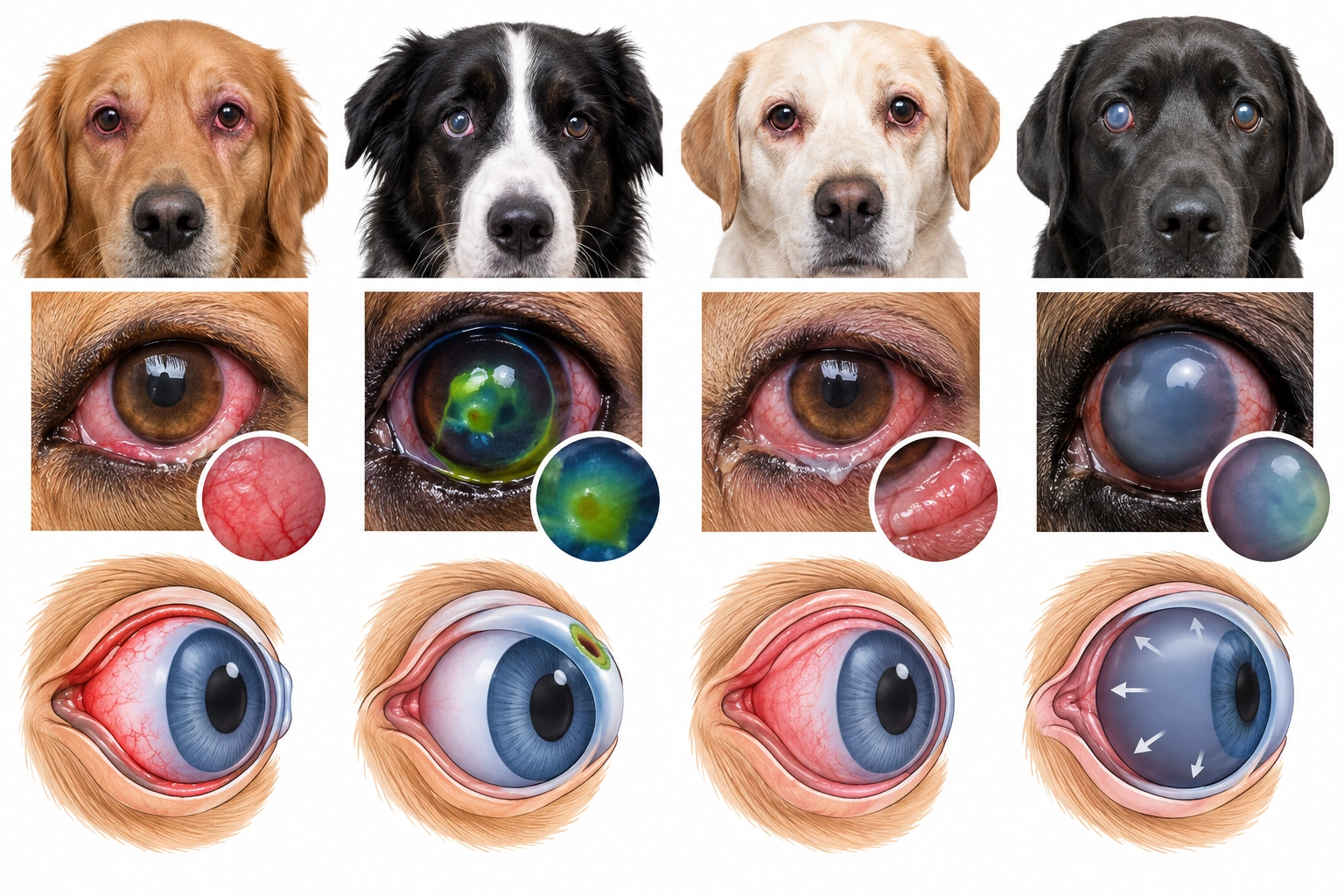
One eye versus both eyes helps, but it is not definitive. One red eye after rough play or a run through brush makes a scratch or foreign body more likely. Both eyes during pollen season makes allergies more likely. But there are exceptions, so use that clue as a guide, not a diagnosis.
A good practical rule: if your dog is squinting hard, keeping the eye closed, or acting as though the eye hurts, treat it as more serious until a vet says otherwise.
When Dog Eye Symptoms Need a Vet Right Away
Some eye problems can wait a day. Others should not.
Seek veterinary care promptly if you notice:
- The eye is held closed or your dog cannot open it normally
- The eye looks cloudy or blue-white
- There is obvious swelling
- Your dog is pawing at the eye repeatedly
- The discharge is heavy or worsening
- The eye looks injured or something is stuck in it
- Your dog seems to have sudden vision changes
- The eye is very painful
If the eye looks injured after rough play, a fall, or a brush with plants, do not assume it is just irritation. Corneal injuries can worsen quickly.
This is also why I do not recommend “waiting to see if it clears up” when the dog is clearly uncomfortable. Mild redness without pain is one thing. Pain changes the equation.
What You Can Safely Do at Home Before the Vet Visit
There are a few safe steps you can take while arranging care:
- Prevent rubbing with an e-collar if you already have one
- Keep the dog from scratching the eye with a paw
- Gently prevent more dirt, grass, or dust exposure
- Use a clean, damp cloth to wipe away discharge from the fur around the eye, not from the eyeball itself
- Note which eye is affected, what the discharge looks like, and whether symptoms started suddenly
What not to do matters just as much:
- Do not use human eye drops unless your veterinarian specifically says they are safe
- Do not use leftover prescription drops from another pet
- Do not use any non-vet-recommended eye rinse or human medicated drops
- Do not flush the eye with anything except sterile saline recommended by your veterinarian
- Do not rub the eye
- Do not try to remove a suspected foreign body if it is embedded or the eye is painful
Human eye products can be inappropriate or even harmful for dogs, especially if the eye problem is actually a scratch or ulcer. Some human drops contain ingredients that can worsen certain eye conditions or mask symptoms, which can delay proper treatment in a dog.
What Vets Look For and How Dog Pink Eye Is Treated
Veterinary treatment depends on the cause, not just the redness.
A vet may look for:
- Corneal scratches or ulcers
- Foreign material under the eyelids
- Signs of infection
- Dry eye
- Eyelid abnormalities
- Allergic inflammation
- Other underlying disease
The exam may include checking the surface of the eye and evaluating tear production or corneal damage. In a painful red eye, vets may also use a fluorescein stain to help rule out a corneal ulcer. That is important because a red eye can look simple on the outside while hiding a deeper problem.
Treatment may include:
- Antibiotic eye drops if infection is suspected
- Anti-inflammatory or allergy-related treatment when allergies are involved
- Lubricating therapy for dry eye
- Treatment of the underlying cause, such as removing a foreign body or addressing eyelid problems
If the eye problem is not improving, the vet may reassess the diagnosis. That is not a failure — it is how eye care works. The first visible symptom is redness, but the real problem may be underneath.
How Fast Should a Dog Improve?
That depends on the cause and the treatment.
A mild irritation or allergy-related problem may improve within a day or two once the trigger is removed or the right medication is started. But if the dog is not improving, or if symptoms are getting worse, the original assumption may be wrong.
A practical checkpoint is this: if the eye is still painful, more red, or more swollen after treatment begins, the dog needs a recheck. Lack of improvement can mean the diagnosis was incomplete, the treatment does not match the cause, or the eye problem is more serious than it first appeared.
Do not keep repeating the same home approach for days if the dog is clearly uncomfortable. Eyes are one of those places where delay can cost vision.
How to Prevent Recurrence
Prevention depends on the trigger.
If your dog is prone to irritation, reduce exposure to dust, tall grass, smoke, and harsh cleaning chemicals. If allergies are the pattern, your vet may help you manage the recurring trigger rather than treating each flare as a separate event. If dry eye is the issue, long-term management matters more than short-term relief.
For active Border Collies, outdoor habits matter too. After runs through brush or long grass, a quick eye check can catch debris early. That is especially useful when the dog starts blinking, rubbing, or blinking more on one side.
Breed shape and facial anatomy can also affect eye comfort in some dogs. Dogs with more exposed eyes, eyelid conformation issues, or hair that can rub against the eye surface may be more prone to irritation from wind, dust, or debris. If your dog has recurring eye trouble, that is worth discussing with your vet instead of treating each episode as random.
For general breed health context, you may also find this overview of common Border Collie health risks helpful when you are thinking about recurring eye issues in the bigger picture.
Dog Pink Eye vs Human Pink Eye
The basic similarity is simple: both involve inflammation of the conjunctiva. After that, the comparison starts to break down.
Do not assume a dog’s eye problem is contagious in the same way human pink eye is. Do not assume human eye drops are safe for dogs. And do not assume the treatment should be the same just because the eye looks red.
What matters more is the cause. In dogs, a red eye can be allergy-related, infectious, traumatic, or tied to dry eye or another condition. That is why a veterinary exam is more useful than trying to match the symptom to what people call pink eye.
When to See a Veterinarian or Certified Trainer
For eye problems, this is a veterinarian issue, not a training issue. See a vet promptly if the dog is squinting, keeping the eye closed, has cloudiness, visible injury, swelling, heavy discharge, or any sign of pain or vision change.
If your Border Collie is repeatedly rubbing one eye during walks or play, that pattern is worth a vet check even if the redness seems minor. Repeated irritation can turn into a bigger problem if you miss a scratch, foreign body, or dry eye issue.
FAQ
Can dogs get pink eye?
Yes. Dogs can get conjunctivitis, which is commonly called pink eye.
Is dog pink eye contagious?
Sometimes the underlying cause can be contagious between dogs, but not every case is. Allergies, irritation, and dry eye are not contagious.
Can I use human eye drops on my dog?
Not unless your veterinarian tells you to. Some human products are not safe for dogs.
What does dog pink eye look like?
Redness, tearing, discharge, swelling, squinting, and pawing at the eye are common signs.
When is a red eye an emergency?
If the eye is cloudy, very painful, closed, swollen, or the dog seems to have vision changes, get veterinary help right away.
How do vets treat conjunctivitis in dogs?
Treatment depends on the cause and may include antibiotic eye drops, allergy management, lubricants for dry eye, or treatment for a foreign body or injury.
Why does my dog keep getting pink eye?
Recurring symptoms can point to allergies, dry eye, eyelid problems, or another underlying issue that needs a vet exam.
How can I tell pink eye from a scratch?
A scratch or ulcer is more likely if the dog is very painful, squinting hard, keeping the eye closed, or the eye looks cloudy.
