
Do Dogs Understand Affection From Humans? What Border Collie Owners Should Know

Dogs do not experience human affection in exactly the same way people do, but most can absolutely recognize when a person is warm, safe, and predictable. They read the pieces that matter to them: tone of voice, body posture, facial tension, routine, touch pressure, and what usually happens next.
That distinction matters. A dog may not think, “My person loves me,” in a human sentence-by-sentence way. But a dog can learn, very quickly, that your presence predicts comfort, play, food, calm handling, and safety. In practical terms, that is the version of affection most dogs understand best.
For Border Collie owners, this gets even more important. Many Border Collies are observant, sensitive to arousal, and quick to notice small changes in your energy. A big, noisy display of love can feel exciting to one dog and intrusive to another. The goal is not to be less affectionate. The goal is to be affectionate in a way your dog can actually enjoy.
Do Dogs Understand Human Affection?
The short answer is yes, but not in a human-centered way.
Dogs do not need to understand the idea of affection to understand its pattern. If your voice softens, your body loosens, your hands move gently, and good things usually follow, your dog can learn that you are being friendly and safe. That is why many dogs respond differently to a calm greeting than to a tense one, even before you touch them.
What dogs are better at than people often assume is reading context. A kiss on the head, for example, is not naturally a dog behavior. Some dogs learn that it means something pleasant because it often comes with petting, praise, or a relaxed interaction. Others simply tolerate it. Some dislike it.
That difference is the key practical point: a dog’s reaction tells you more than your intention does.
How Dogs Read Affection: Tone, Body Language, Face, and Routine
Dogs pick up on several signals at once, and they combine them into a picture of what is happening.
Tone of voice
A soft, steady voice usually tells a dog the interaction is low threat. Sharp, high-pitched, or overly animated speech can mean excitement rather than comfort. A Border Collie may respond well to upbeat praise during play but prefer a calmer tone when you are trying to settle them.
Body language
Dogs watch posture closely. A loose, sideways approach feels different from a direct, looming movement. If you bend over a dog, reach quickly, or crowd their space, many dogs will read that as pressure even if your intention is loving.
Facial expression
Relaxed eyes, a soft mouth, and slow movement are easier for dogs to trust. Dogs are very good at noticing tension in the face. If your face is tight, your dog may respond to that even when your voice sounds cheerful.
Routine and predictability
Routine is one of the most underrated sources of security. A dog that knows when meals happen, when walks happen, and what usually comes after training sessions feels safer. To a dog, consistency often communicates care better than dramatic displays.
For a useful deeper look at how dogs interpret human signals, the ASPCA’s dog behavior resources are a solid starting point.
What Science Says About Bonding and Oxytocin
The science here is encouraging, but it needs careful wording.
Research on the human-dog bond suggests dogs can be especially responsive to people because of domestication and a long shared history. In some studies, calm positive interaction has been associated with changes in oxytocin in both dogs and humans. For example, mutual gaze, gentle touch, or relaxed interaction can be linked with higher oxytocin levels, which is one reason these moments are often discussed in bonding research.
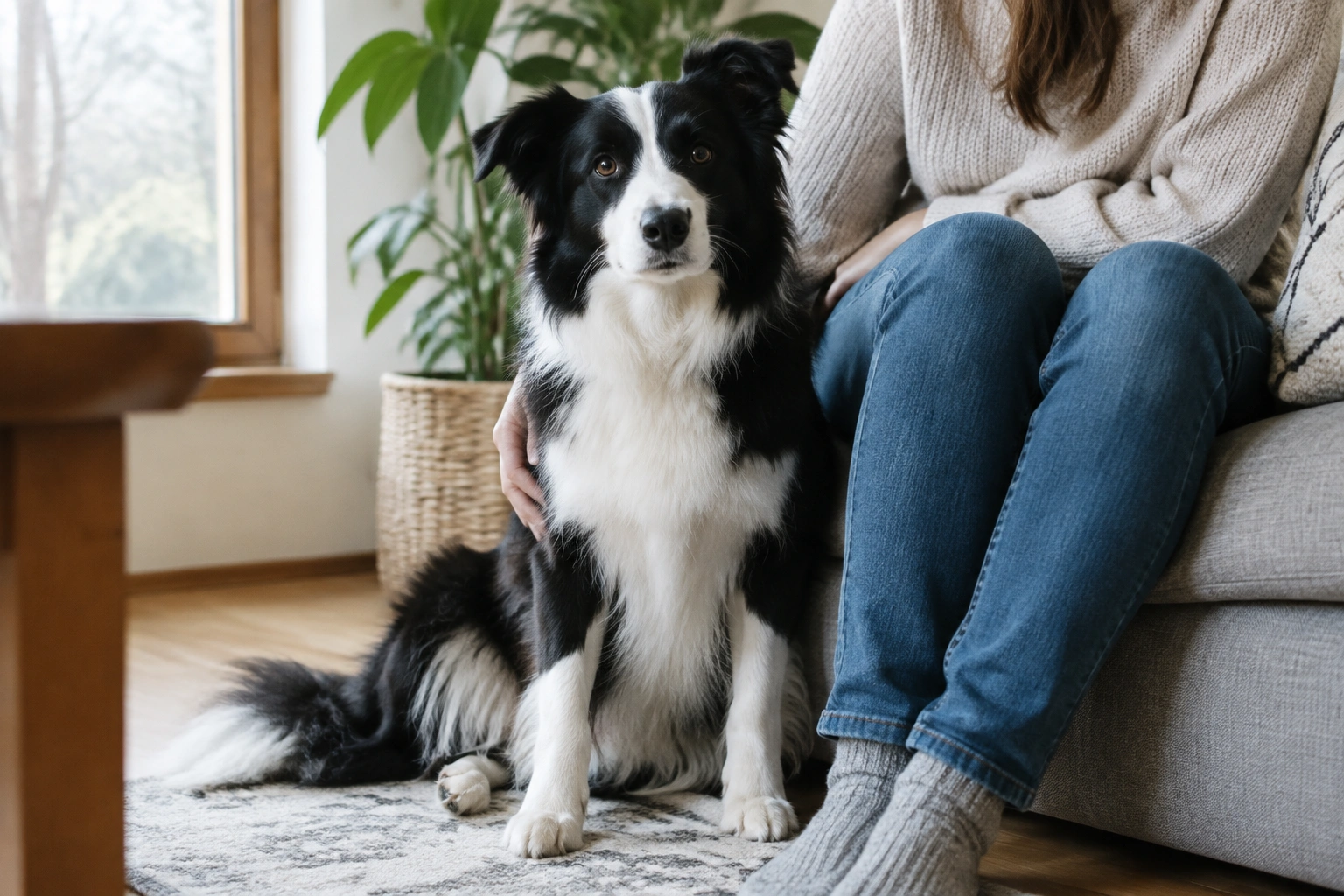
That does not mean every affectionate moment triggers a dramatic hormonal event you can feel in real time. It does mean that calm, positive contact can support the bond between dog and owner in a biological way, not just an emotional one.
This is why simple, repeated interactions matter so much:
– calm greeting at the door
– gentle petting if the dog enjoys it
– play that ends before the dog gets overaroused
– training sessions that feel fair and rewarding
The VCA Hospitals behavior guide on how pets know we love them explains this well: kisses are not a natural dog behavior, but many dogs learn to associate them with affection when they are paired with petting, praise, or treats.
Signs Your Dog Feels Loved, Safe, and Attached
If you want the clearest answer to whether your dog understands affection, watch what they choose to do around you.
Signs that usually point to trust and attachment
- They seek proximity without being forced.
- They relax near you instead of staying tense.
- They re-approach after a pause.
- They lean into gentle touch.
- They choose to rest in the same room.
- They bring a toy, look to you for interaction, or check in during new situations.
- Their body stays loose during contact.
These are more meaningful than excitement alone. A dog that is wildly animated every time you come home may be happy, but that is not the same thing as calm attachment. Real bonding often looks quieter.
A Border Collie that settles beside you after exercise, checks your face, and stays nearby while you move around the house is showing a kind of social confidence that matters more than dramatic displays.
Affection Versus Tolerance: How to Tell the Difference
This is where many owners misread their dogs.
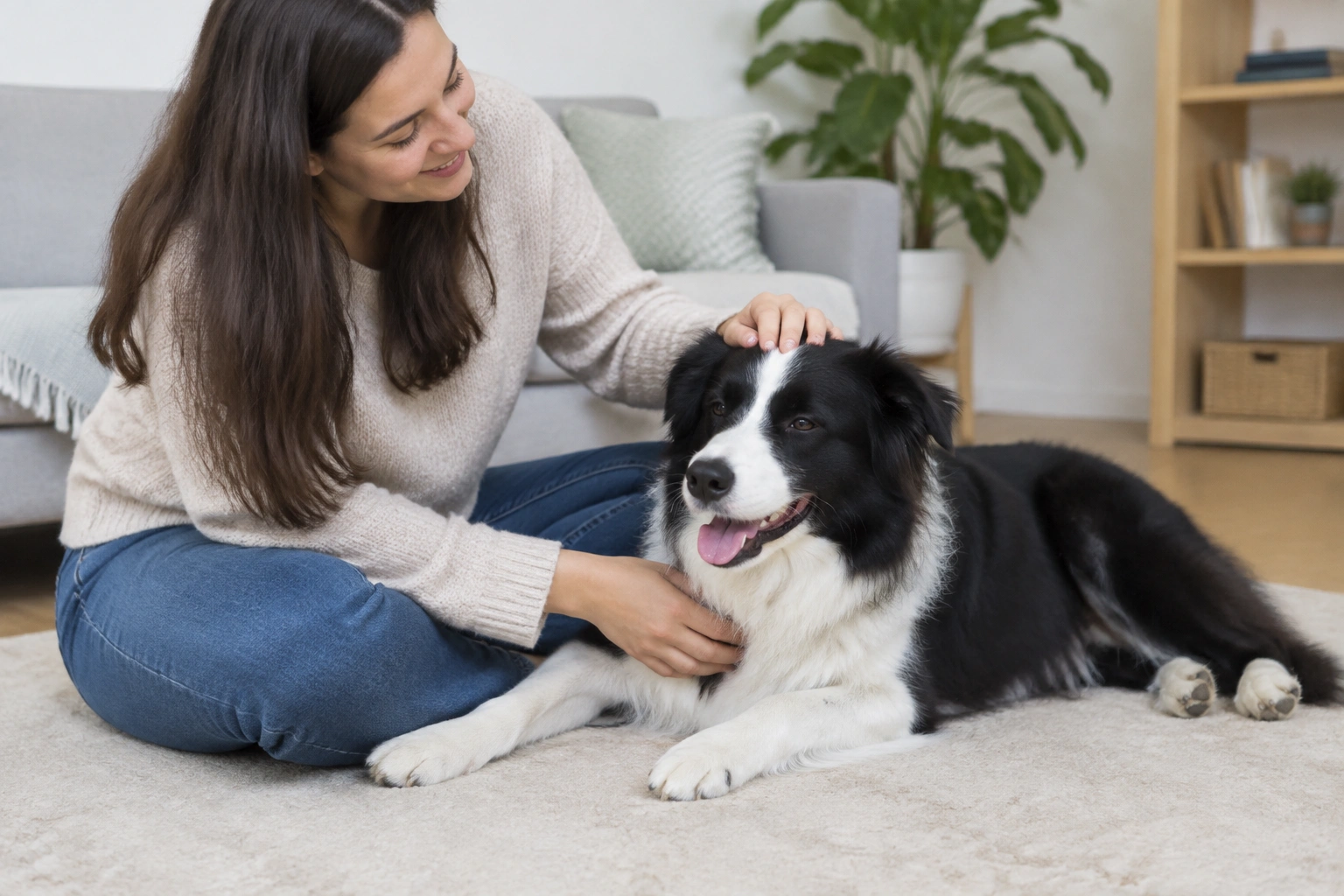
A dog can remain still while not enjoying the interaction. Stillness is not the same as consent. Some dogs freeze because they are uncertain, not because they are relaxed.
Here is a practical comparison:
| Behavior | Enjoyment more likely | Tolerance or discomfort more likely |
|---|---|---|
| Body posture | Loose, soft, leaning in | Stiff, held, or frozen |
| Contact response | Seeks more or stays close | Moves away after a brief moment |
| Face and eyes | Soft expression, normal blinking | Whale eye, hard stare, tension |
| Mouth | Relaxed, open, neutral | Tight mouth, lip licking, panting when not hot |
| Recovery after touch | Returns voluntarily | Avoids, leaves, or looks away |
| Overall pattern | Chooses the interaction | Endures it or waits for it to stop |
A useful rule: if your dog consistently approaches the affection, stays loose during it, and comes back for more, you are probably on the right track. If they accept it but do not initiate it, they may be tolerating it.
Which Human Affection Behaviors Dogs Usually Like—and Which They Often Don’t
Dogs are individuals, but some patterns are common.
Usually better received
- calm petting on the chest, shoulders, or side
- gentle praise in a steady voice
- brief scratches in favorite spots
- play that matches the dog’s energy level
- treats paired with calm handling
- grooming, if the dog has learned to enjoy it
Often less comfortable
- hugging, especially tightly
- face-to-face closeness
- sudden reaching over the head
- prolonged petting when the dog is already excited
- loud praise that pushes the dog into overarousal
- repeated kissing when the dog is trying to move away
The trade-off is simple: the more physically intense the affection, the more likely it is to cross a dog’s comfort threshold. A hug may feel emotionally meaningful to you, but to many dogs it creates restraint. That is why some dogs tolerate hugging from one trusted person but not from others.
If you want a general safety-and-comfort baseline, The Kennel Club’s guidance on dog body language is worth using as a reference point.
How Border Collies May Experience Affection Differently
Border Collies often notice everything. That can be a gift, but it also means they may be more sensitive to pressure, movement, and emotional intensity.
Many Border Collies prefer:
– purposeful interaction
– clear routines
– calm physical contact
– games with structure
– praise that matches the moment
They may not enjoy constant handling the way a more physically tolerant dog might. That does not mean they are less bonded. It often means they bond through shared activity and responsiveness, not through endless cuddling.
A common Border Collie scenario: the dog happily accepts a quick chest scratch after training, then steps away to lie nearby. That is not rejection. It is a dog choosing the level of contact that feels right.
With a sensitive breed, respect for space often deepens trust faster than repeated attempts at closeness.
The Best Ways to Show Affection in a Way Dogs Actually Enjoy
If you want your dog to understand your affection, make the message easy to read.
Use consent-based handling
Offer touch, then watch what the dog does. If they lean in, stay loose, or return for more, continue. If they turn away, step off, or stiffen, stop. That is the clearest way to avoid turning affection into pressure.
Use calm touch in low-pressure areas
Many dogs prefer the chest, shoulder, or side over the top of the head or face. Short sessions work better than long ones, especially for sensitive dogs.
Pair praise with something the dog values
Praise becomes more meaningful when it predicts something the dog enjoys: a toy, a walk, a training break, or a treat. That helps your dog connect your voice with positive outcomes.
Use play as bonding
For many Border Collies, play is affection. A short fetch session, tug game with rules, or training game can feel more meaningful than sitting still and petting.
Keep grooming optional and gradual
If your dog likes brushing, it can become a quiet bonding ritual. If they do not, do not force it and call it affection.
Stress Signals That Mean Affection Is Too Much
Watch for the small signs before the dog escalates to avoidance.
Common stress or overload signals include:
– turning the head away
– lip licking when food is not present
– yawning in a non-sleepy context
– freezing
– stiff body posture
– ears pulled back
– trying to move off
– showing the whites of the eyes
– sudden scratching or sniffing to break contact
These signals matter because they often show up before a dog snaps, leaves, or shuts down. If you catch them early, you can adjust before the dog learns that your affection predicts discomfort.
This is especially relevant for face-to-face affection. A dog that tolerates a kiss one day may reject it the next if they are tired, sore, overstimulated, or just not in the mood.
Common Mistakes Owners Make When Interpreting Affection
The biggest mistake is assuming that human intent equals dog experience.
A few other common errors:
– treating obedience as proof of affection
– assuming a dog likes something because they do not resist
– confusing excitement with comfort
– using more touch when the dog is already overstimulated
– reading clinginess as the same thing as trust
A dog can follow cues beautifully and still dislike being hugged. A dog can be highly affectionate and still want personal space. Those are not contradictions.
Another mistake is thinking affection must be physical. For many dogs, especially Border Collies, calm structure, fair training, and predictable routines are deeply reassuring. That reassurance is a form of care they understand very well.
How to Adjust Your Affection Style for Your Dog’s Personality
Use the dog in front of you, not the dog you imagined.
Choose more physical affection when:
- your dog approaches voluntarily
- they lean into touch
- they stay loose and relaxed
- they seek more contact after you pause
Choose less physical affection when:
- your dog is sensitive or reserved
- they move away from touch
- they stiffen under your hand
- they are excited, tired, or already overstimulated
Choose non-touch affection when:
- your dog dislikes handling
- you are building trust with a shy dog
- the dog is recovering from a stressful experience
- your dog is a Border Collie who prefers activity over cuddling
Non-touch affection can be very effective: a predictable routine, a cheerful voice, a short training game, or a walk done at the dog’s pace.
When Touch Tolerance Changes Suddenly
If a dog that used to enjoy affection suddenly avoids being touched, do not assume it is a training issue.
A sudden change can point to pain, soreness, skin irritation, ear trouble, dental discomfort, or another medical issue. That is especially important if the dog flinches, guards one area, or reacts only when touched in a specific spot.
If the change is new, persistent, or paired with other behavior changes, a veterinary check is the right next step.
When to See a Veterinarian or Certified Trainer
See a veterinarian if:
– touch sensitivity appears suddenly
– your dog seems painful, stiff, or guarded
– the dog reacts more strongly to handling than before
– the behavior change is broad, not just about affection
See a certified trainer or behavior professional if:
– your dog consistently dislikes handling
– you want help reading body language more accurately
– affection attempts are creating avoidance or stress
– your Border Collie is becoming overaroused during interaction
The goal is not to force more closeness. It is to build a relationship your dog can relax inside.
FAQ
Do dogs understand when humans are being affectionate?
Yes, in a dog-specific way. They may not understand the human concept of love, but they can learn that certain voices, movements, and routines predict comfort, safety, and positive interaction.
Do dogs know we love them?
Many dogs seem to understand the pattern of being cared for. Repeated calm contact, feeding, play, and predictable routines help them associate you with safety and good experiences.
Do dogs like hugs and kisses?
Some tolerate them, some learn to accept them, and some dislike them. Watch the dog’s body language rather than assuming the behavior means the same thing to them that it means to you.
What is the most dog-friendly way to show affection?
For many dogs, the best options are calm praise, predictable routines, play, and gentle touch only when the dog clearly enjoys it.
Can Border Collies be sensitive to affection?
Yes. Many Border Collies are highly aware of pressure, movement, and arousal. They often do best with calm, purposeful interaction rather than constant handling.
How do I know if my dog is just tolerating affection?
Look for stiffness, turning away, freezing, lip licking, or moving off after a brief moment. A dog that truly enjoys the contact usually stays loose and comes back for more.
Should I stop hugging my dog?
If your dog shows any discomfort, yes. Replace hugs with lower-pressure affection such as chest rubs, praise, play, or simply spending quiet time together.
Final Takeaway
Dogs do understand affection from humans, but they understand it through their own language. The strongest signs are not dramatic gestures. They are calm voices, predictable routines, gentle touch, and the dog’s choice to stay close.
A practical next step: try one week of “consent check” affection. Offer brief touch, pause, and watch whether your dog leans in, stays loose, or asks for more. If they do, continue. If they turn away or stiffen, switch to praise, play, or simply being nearby.
If you learn to read the response instead of assuming the meaning, you will usually get the answer right. And for a Border Collie, that kind of observation is often the difference between a relationship that merely functions and one that truly feels secure.
