
How to Dry a Border Collie After a Bath: Safe, Easy Steps

Quick Answer
To dry a Border Collie after a bath, first let excess water drain from the coat, then press it out with absorbent towels. Finish a dense coat with gentle, cool airflow from a dog dryer until the undercoat feels dry near the skin, following safe dog-drying guidance from the AKC.
Quick drying steps
- Let them shake: Give your Border Collie a moment to shake off loose water before using a towel.
- Press, don’t rub: Gently squeeze and blot the coat to reduce tangles and pull out water.
- Change towels: Switch to a dry towel once the first one becomes saturated.
- Use cool airflow: A dog dryer can help move moisture out of the dense undercoat without relying on heat.
- Check the skin: Feel the chest, belly, legs, tail base, and behind the ears before declaring the coat dry.
- Keep them warm: Let your dog finish drying indoors in a comfortable, draft-free area.
The easiest rule to remember
- A coat that feels dry on top can still be damp underneath, so always check close to the skin.
Drying a Border Collie properly takes more care than drying many short-haired dogs. Their double coat can hide surprising amounts of moisture near the skin.
I’ve found that a calm towel-first routine works best. This guide covers the full process, including dryers, puppies, drying times, common mistakes, and signs that need veterinary attention.
In This Guide
- Why Does a Border Collie Take So Long to Dry?
- How Do You Dry a Border Collie After a Bath?
- Can You Use a Blow Dryer on a Border Collie?
- How Long Does a Border Collie Take to Dry?
- Can You Let a Border Collie Air Dry?
- How Do You Dry a Puppy or Nervous Border Collie?
- What Border Collie Drying Mistakes Should You Avoid?
- When Does a Damp Coat or Skin Problem Need a Vet?
- Frequently Asked Questions
Why Does a Border Collie Take So Long to Dry?
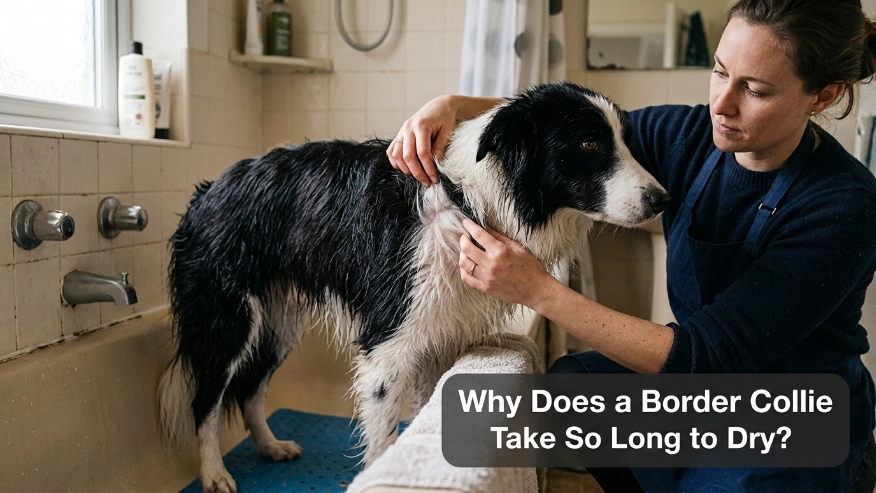
A Border Collie can take longer to dry because both recognized coat types have a dense double coat. Water can remain in the softer undercoat after the outer hairs appear dry.
Definition: A Border Collie’s double coat is made of an outer protective layer plus a softer insulating undercoat. The AKC Border Collie breed profile describes both rough and smooth coats as dense and weather-resistant.
Rough coat vs. smooth coat
Rough-coated Border Collies have medium-length, feathered hair. Smooth-coated dogs have shorter, coarser outer hair, but they still have an undercoat.
| Feature | Rough Coat | Smooth Coat |
|---|---|---|
| Outer coat | Medium-length and feathered | Shorter and coarser |
| Undercoat | Dense | Dense |
| Towel drying | Usually needs several thorough passes | Usually easier to blot thoroughly |
| Area most often missed | Feathering, chest, tail, and undercoat | Dense hair close to the skin |
Don’t judge dryness by appearance alone. Push your fingers through the coat and feel the hair where it meets the skin.
Season also matters. A Border Collie carrying a heavy seasonal undercoat may need more drying work than the same dog at another time of year.
How Do You Dry a Border Collie After a Bath?
The best method is a two-stage process: remove most water with towels, then finish the undercoat with cool airflow if needed. Stay calm and work systematically.
1. Finish the rinse completely
Before drying starts, make sure shampoo has been rinsed from the coat. Pay extra attention to the chest, belly, armpits, and thick feathering.
Residual product can make the coat feel strange or sticky. A clean rinse also makes drying and brushing easier.
2. Let your Border Collie shake
Move your dog onto a secure, non-slip surface first. Then give them a few seconds to shake naturally.
This simple step can remove a surprising amount of loose water. I usually stand back and let the first big shake happen before reaching for a towel.
3. Press water out with a towel
Wrap an absorbent towel around the body and press it gently into the coat. Avoid fast, rough rubbing.
PetMD’s home dog-bathing guidance also recommends gentle patting and warns that excessive rubbing can tangle the coat.
- Back and sides: Press the towel firmly against the coat, then lift it away.
- Chest: Squeeze sections gently between layers of towel.
- Legs: Wrap each leg loosely and press downward without twisting.
- Belly: Blot rather than scrub.
- Tail: Hold the towel around the tail and squeeze lightly from base toward tip.
- Head: Use a separate dry section and stay gentle around the eyes and ears.
4. Switch towels when they become wet
A saturated towel stops doing much useful work. Have at least one clean replacement nearby before the bath starts.
For a soaked rough-coated Border Collie, I often get better results from several short towel passes than one long rubbing session.
5. Finish the undercoat with cool airflow
If the coat remains damp near the skin, a dog-specific dryer can make the job easier. Start with low airflow if your dog is inexperienced.
- Keep the nozzle moving instead of concentrating air on one spot.
- Direct airflow along the body rather than into the face.
- Avoid blowing directly into the ears.
- Part the hair with your free hand so you can check the undercoat.
- Stop if your dog shows clear fear or discomfort.
6. Check for hidden damp areas
Run your fingers down to the skin instead of touching only the topcoat. The surface can feel dry while deeper hair remains cool and damp.
- Behind and below the ears
- Under the collar area
- Chest and armpits
- Lower belly
- Inside the legs
- Tail base and feathering
Section Takeaway: The safest routine is shake, press with towels, use gentle airflow when needed, then check the coat at skin level. Don’t stop just because the outer hair looks fluffy.
Can You Use a Blow Dryer on a Border Collie?
Yes, but a dog-specific dryer is the better choice for a dense Border Collie coat. Avoid using strong heat to speed up the process.
Dog dryers rely mainly on airflow to move water from the coat. That is useful when moisture is trapped beneath the surface.
What setting should you use?
Start low and cool, especially with a puppy or inexperienced dog. Increase airflow only when your Border Collie remains relaxed.
The AKC advises using a dryer made for dogs rather than a human blow dryer. It also recommends keeping airflow away from the face and ears.
What if my Border Collie hates the dryer?
Don’t turn drying into a wrestling match. Introduce the sound separately and reward calm behavior before blowing air directly onto the coat.
You can follow a gradual approach similar to PetMD’s dog-dryer conditioning guidance.
- Let your dog investigate the dryer while it is turned off.
- Turn it on across the room for a short period.
- Reward relaxed behavior around the sound.
- Begin airflow from a distance on a low setting.
- Keep early sessions short and successful.
For some Border Collies, training the dryer response takes longer than the bath training. That’s fine.
How Long Does a Border Collie Take to Dry?
There is no reliable drying time that fits every Border Collie. Coat length, undercoat density, room conditions, towel quality, and dryer use all change the answer.
As a practical planning range from my own grooming routine, I allow about 20–40 minutes for many smooth coats. A thick rough coat can take 30–60 minutes or longer after a full soak.
Those numbers are working estimates, not veterinary standards. A shedding-season coat or heavily feathered dog may need more time.
| Situation | My Planning Range | What Changes It |
|---|---|---|
| Smooth coat, towel + dryer | About 20–40 minutes | Undercoat density and airflow |
| Rough coat, towel + dryer | About 30–60+ minutes | Feathering and seasonal coat |
| Towel drying only | Longer and less predictable | Room warmth and remaining undercoat moisture |
Your fingers are a better guide than a timer. Check several areas at skin level before ending the drying session.
Can You Let a Border Collie Air Dry?
A little final air drying is usually easier after you’ve already removed most moisture. I wouldn’t rely on air drying alone after thoroughly soaking a dense Border Collie coat.
The problem is the undercoat. It can stay damp much longer than the visible outer coat.
When is partial air drying reasonable?
- The coat has already been thoroughly towel dried.
- Your Border Collie is indoors in a comfortable room.
- The dog is not lying on cold or wet flooring.
- You have checked that the undercoat is only slightly damp.
- You can check the coat again later.
Keep your dog’s resting area clean and dry while the final moisture disappears. The ASPCA’s general dog-care guidance also emphasizes regular grooming and a warm, dry resting area.
If the coat stays damp, develops an unusual odor, or the skin looks irritated, don’t keep repeating baths to solve it. Look for the underlying cause.
Vet note: Persistent skin redness, odor, soreness, or itching deserves advice from your own veterinarian rather than more home grooming.
How Do You Dry a Puppy or Nervous Border Collie?
With puppies and nervous dogs, your first goal is comfort rather than speed. A slower successful session is more useful than forcing the dog through a frightening one.
Start with the towel
Let the puppy sniff the towel first. Touch the shoulders briefly, reward calm behavior, then build toward longer contact.
Border Collies learn patterns quickly. That can work in your favor when bath time predicts treats, calm handling, and short drying sessions.
Introduce dryer noise separately
Don’t switch a loud dryer on beside a puppy’s head without preparation. Start farther away and pair the sound with something pleasant.
- Use short sessions.
- Start with low airflow.
- Reward relaxed standing or sitting.
- Keep air away from the face and ears.
- End before the puppy becomes overwhelmed.
I also avoid chasing a wet Border Collie around the house with a towel. Teaching a simple stand or settle makes future grooming much easier.
Older dogs may need the same gradual approach. Joint stiffness, hearing changes, or previous grooming experiences can affect how they respond.
What Border Collie Drying Mistakes Should You Avoid?
The biggest mistakes usually come from rushing. You want to remove moisture without creating fear, tangles, or excessive heat.
- Rubbing aggressively: Fast towel rubbing can twist longer hair together and encourage tangles.
- Using strong heat: Hot airflow can become uncomfortable quickly and may injure sensitive skin.
- Drying only the topcoat: A fluffy surface doesn’t prove the dense undercoat is dry.
- Blowing into the face: Keep direct airflow away from the eyes, nose, and ears.
- Ignoring the chest: Thick hair around the chest and armpits often hides moisture.
- Forcing a frightened dog: Fear can make every future bath harder.
- Brushing hard through wet tangles: Work gently instead of pulling at damp knots.
- Letting a soaked dog lie on bedding: Dry the coat first and keep the resting area clean.
Should you brush while drying?
You can gently separate and lift the coat while using airflow. This helps you see whether moisture remains near the skin.
Don’t drag a brush through a tight tangle. Deal with mats carefully rather than forcing the teeth through them.
When Does a Damp Coat or Skin Problem Need a Vet?
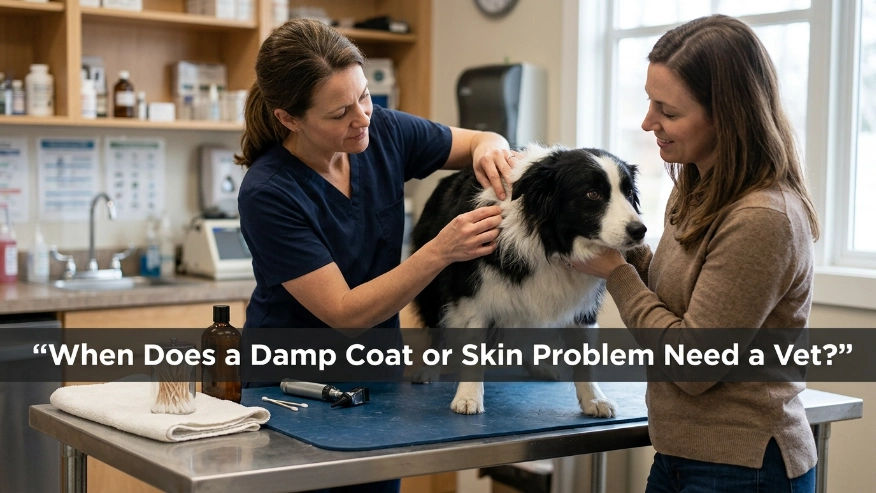
A normally wet coat after a bath isn’t an emergency. The concern starts when skin changes, discomfort, or persistent odor appear.
Check the skin closely if your Border Collie keeps scratching after bathing. Also consider whether a new shampoo or grooming product was recently introduced.
Call your veterinarian if you notice:
- Persistent redness or inflamed-looking skin
- A strong or unusual odor that returns quickly
- Wet, sore, or oozing areas
- Repeated scratching, chewing, or licking
- Pain when you touch or part the coat
- Swelling around the skin or ears
- Symptoms that keep worsening instead of settling
These signs can have several causes, so guessing from appearance alone isn’t reliable. Your veterinarian can examine the skin and decide whether treatment is needed.
Vet note: This guide covers routine grooming, not diagnosis. Seek veterinary care when your dog’s skin looks abnormal, painful, infected, or persistently irritated.
Frequently Asked Questions
Should I towel dry my Border Collie before using a dryer?
Yes. Towel drying first removes a large amount of surface water, so the dryer has less work to do.
Press and blot instead of scrubbing. Change towels once they become saturated.
Can I use a regular human hair dryer?
A dog-specific dryer is the safer and more suitable choice for a dense Border Collie coat. Human dryers can produce more concentrated heat and aren’t designed specifically for canine skin and coat.
How do I know when my Border Collie is completely dry?
Part the coat with your fingers and feel close to the skin. Check the chest, belly, armpits, legs, tail base, and behind the ears.
The undercoat should not feel noticeably wet or cool from trapped moisture.
Why is my Border Collie’s undercoat still wet?
The dense undercoat can hold water even when the outer coat looks fluffy. Use another towel pass and gentle dog-dryer airflow to work moisture out from deeper layers.
Should I brush my Border Collie after a bath?
Yes, gentle brushing after the coat is mostly or fully dry can help arrange the coat and remove loose hair. Never force a brush through tight mats or knots.
Can my Border Collie go outside while still damp?
I prefer to get the coat mostly dry first, especially in cool, wet, or windy weather. A warm indoor area gives you more control while checking the undercoat.
How often should I bathe my Border Collie?
There isn’t one schedule that suits every dog. Dirt, activity, coat condition, skin health, and veterinary advice all affect how often bathing makes sense.
Regular brushing often handles everyday dirt between baths.
As of 2026, the practical advice hasn’t changed much: respect the Border Collie’s double coat, remove water gently, and don’t use heat as a shortcut. Good drying is mostly careful handling and patience.
Once you build a predictable routine, the whole process becomes easier. Keep towels ready, work down to the undercoat, and finish each bath with a quick skin check.
