
Foods Border Collies Cannot Eat: A Practical Safety Guide for Owners

Border Collies do not have a special “breed-only” toxic food list. They are vulnerable to the same dangerous foods as other dogs. The practical difference is that Border Collies are often active, food-motivated, and quick to grab dropped snacks, so prevention matters.
The foods that deserve the most respect are the true toxins: chocolate, grapes and raisins, onions and garlic, xylitol, caffeine, alcohol, macadamia nuts, and raw yeast dough. Then there are foods that are not poison but still unsafe because they can trigger vomiting, pancreatitis, choking, or intestinal injury—especially cooked bones, fatty leftovers, and heavily seasoned scraps.
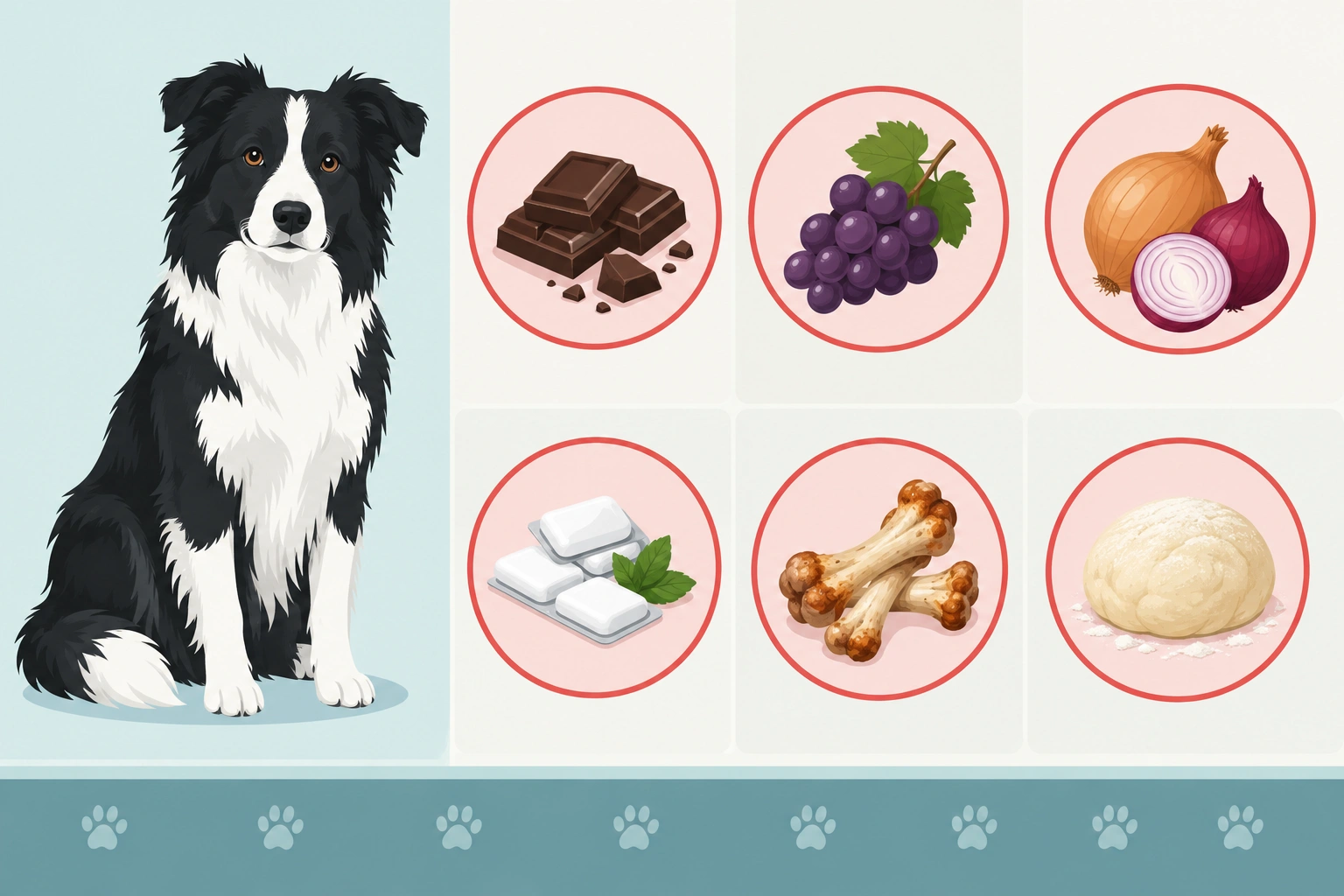
If your dog has already eaten something questionable, the amount, the form, and the ingredients matter more than the label on the package. A spoonful of plain yogurt is a different situation from sugar-free gum with xylitol, and a few crumbs of bread are not the same as raw dough rising in the stomach.
Foods Border Collies Cannot Eat: The Short Answer
If you want the shortest possible answer, keep these out of reach:
- chocolate and cocoa products
- grapes, raisins, and sultanas
- onions, garlic, leeks, and chives in any form
- xylitol and other sugar-free sweeteners found in some gum, candy, and peanut butter
- caffeine from coffee, tea, energy drinks, and some sodas
- alcohol
- macadamia nuts
- raw yeast dough
These are not “sometimes okay” foods. If a Border Collie eats one of them, the safest move is usually to call your veterinarian or pet poison control for advice rather than waiting for symptoms.
A useful rule: if the food is known to be toxic, don’t try to guess based on breed size or whether the dog seems normal. Some toxic effects are delayed.
Quick Reference: Foods, Risks, and What to Do
| Food | Risk level | Common hidden sources | What to do next |
|---|---|---|---|
| Chocolate / cocoa | High | Brownies, cookies, cake, hot cocoa mix, baking chocolate | Call your vet or pet poison control right away |
| Grapes / raisins / sultanas | High | Trail mix, oatmeal cookies, fruit bread, snack packs | Immediate veterinary or poison-control guidance |
| Xylitol | High | Sugar-free gum, mints, candy, peanut butter, baked goods | Immediate veterinary or poison-control guidance |
| Onions / garlic / leeks / chives | High | Soups, broth, gravy, seasoning blends, leftovers | Call your vet promptly |
| Alcohol | High | Drinks, desserts, fermented foods, uncooked dough | Call your vet right away |
| Raw yeast dough | High | Bread dough, pizza dough, homemade rolls | Immediate veterinary or poison-control guidance |
| Macadamia nuts | Moderate to high | Cookies, specialty candies, snack mixes | Call your vet if eaten |
| Cooked bones | Moderate to high | Chicken, rib, pork, and roast leftovers | Call your vet if swallowed |
| Fatty leftovers | Moderate | Bacon, sausage, skin, drippings, holiday scraps | Monitor closely and call if symptoms start |
Truly Toxic Foods Border Collies Should Never Eat
Chocolate, cocoa, coffee, and caffeine
Chocolate contains compounds called methylxanthines, which can affect the nervous system and heart. Dark chocolate and baking chocolate are generally more dangerous than milk chocolate because they contain more of those compounds. Coffee grounds, espresso beans, tea bags, caffeine pills, and energy drinks are also a problem.
Watch for restlessness, vomiting, rapid breathing, a racing heart, tremors, or collapse. If your Border Collie stole a chocolate dessert, the exact type matters: a square of milk chocolate is not the same risk as a pan of brownies or a bar of dark baking chocolate.
Grapes, raisins, and sultanas
Grapes and raisins are especially important because there is no established safe amount. Some dogs eat a small number and never show signs, while others can develop serious kidney injury after a relatively small exposure. That unpredictability is why these foods are treated as urgent.
Common hidden sources include trail mix, oatmeal cookies, fruit bread, and children’s snack packs. If your dog ate them, don’t wait for vomiting or thirst to appear.
Onions, garlic, leeks, and chives
These ingredients can damage red blood cells and lead to anemia. The risk is not limited to raw onions or garlic cloves. Powdered seasonings, soups, broth, gravy, marinades, and leftovers can carry enough of these ingredients to matter.
The danger with this group is that the offending ingredient is often invisible. A Border Collie licking pan drippings from a roast may be exposed to more onion and garlic than an owner realizes.
Xylitol
Xylitol is a sugar substitute found in some sugar-free gum, mints, candy, peanut butter, baked goods, and “low sugar” products. It can cause severe illness and death in dogs, so ingredient-label checking is non-negotiable.
The practical problem is hidden exposure. A spoonful of peanut butter is often harmless, but some brands contain xylitol. The package must be checked every time, even if the product used to be safe.
Alcohol and raw yeast dough
Alcohol can cause intoxication in dogs. Raw yeast dough is dangerous for two reasons: it can expand in the stomach and create painful bloating, and the yeast can produce alcohol as it ferments.
The ASPCA notes that raw bread dough can cause gas buildup and stomach bloat, and that the yeast can produce alcohol in the stomach environment once ingested. That combination is why bread dough is more than a simple stomach upset. ASPCA guidance on foods to avoid
Macadamia nuts
Macadamia nuts can cause weakness, vomiting, tremors, and other neurologic signs in dogs. They are not a “healthy treat” for a Border Collie just because they are a human snack. Keep in mind that cookies, brownies, and specialty candies may contain them.
Foods That Are Not Toxic but Still Unsafe
Some foods are not poisonous in the classic sense, but they still cause enough trouble that they belong on a no-sharing list.
Cooked bones
Cooked bones can splinter. That creates a choking hazard and can injure the mouth, throat, stomach, or intestines. A cooked chicken wing bone from the trash is far riskier than most owners expect.
Raw bones are also risky enough that many owners should avoid them altogether. They can still crack teeth, cause constipation, or become a choking hazard depending on size and chewing style.
Fatty leftovers and greasy meats
Rich scraps, skin, drippings, bacon, sausage, and holiday leftovers can trigger vomiting and diarrhea. In some dogs, very fatty meals can contribute to pancreatitis, which can be painful and serious.
The trade-off here is simple: the food may not be toxic, but the digestive hit can still be rough enough to need a vet visit. If a Border Collie has a history of sensitive stomach episodes, rich scraps are a bad gamble.
Heavily seasoned foods
Salt, onion powder, garlic powder, spicy rubs, sauces, and butter-heavy dishes can all upset the stomach. The seasoning often matters more than the meat itself. Plain chicken is one thing; chicken in creamy garlic sauce is another.
Raw meat and raw animal products
Raw meat is not automatically poisonous, but it can carry bacteria that cause gastrointestinal illness. It also becomes more concerning if it is mixed with bones, seasoning, or spoiled ingredients. If a dog eats raw meat from an unsafe source, monitor closely and call your vet if symptoms develop.
Hidden Ingredients and Everyday Foods That Can Be Dangerous
Many accidental poisonings happen because the dangerous ingredient was hidden inside a normal-looking food.
A few examples:
- sugar-free gum or mints containing xylitol
- peanut butter labeled “low sugar” or “sugar free”
- baked goods with raisins, chocolate, or nut fillings
- gravy, soup, and broth containing onion or garlic
- holiday leftovers with butter, drippings, or seasoning blends
- trail mix with raisins or macadamias
This is where label reading matters. A Border Collie does not need to eat a “toxic food” in the obvious sense to be exposed. One spoonful of the wrong spread or one bite of the wrong casserole can be enough to create a problem.
How Much Is Too Much for a Border Collie?
Dose matters, but it does not make a dangerous food safe. Border Collies are medium-sized dogs, so they are not as vulnerable as tiny toy breeds in every case, yet toxicity thresholds still depend on the specific ingredient, the product strength, and the amount eaten.
Think in three categories:
-
True toxins with no reliable safe amount
Grapes and raisins are the clearest example. If eaten, call for guidance. -
Toxins where the amount and product strength matter
Chocolate, caffeine, and xylitol fall here. A small milk chocolate crumb is different from dark chocolate or baking chocolate, and xylitol risk depends on the product and amount. -
Non-toxic foods that become unsafe by form or quantity
Fatty leftovers, cooked bones, and seasoned scraps can cause trouble based on how much was eaten and how they were prepared.
The safest habit is not to estimate from memory. Check the package, note the amount eaten, and call with specifics. If you can, bring the label or a photo of the ingredients.
Symptoms to Watch For After Your Dog Eats Something Harmful
Symptoms vary by ingredient, but these are the warning signs that deserve attention:
- vomiting or repeated retching
- diarrhea
- drooling
- restlessness or agitation
- weakness or wobbliness
- tremors or shaking
- rapid breathing
- racing or irregular heartbeat
- abdominal pain or a tucked-up posture
- bloated abdomen
- lethargy
- pale gums
- collapse
Some problems show up quickly. Others take hours. Kidney injury from grapes and raisins, for example, may not be obvious right away. That delayed pattern is one reason owners should not wait for visible illness before asking for help.
For fatty food or bone ingestion, watch for vomiting, abdominal pain, constipation, or signs of obstruction such as repeated unproductive retching or refusal to eat.
What to Do Immediately If Your Border Collie Ate a Dangerous Food
Use this sequence:
- Remove the food and keep the packaging.
- Estimate how much was eaten.
- Note the time of ingestion.
- Check the ingredient list for hidden toxins.
- Call your veterinarian or pet poison control right away for known toxic foods.
- Do not induce vomiting unless a veterinarian specifically tells you to.
If the item was chocolate, grapes or raisins, xylitol, onions or garlic, alcohol, caffeine, or raw dough, treat it as an immediate veterinary or poison-control situation. If your dog is already showing symptoms, go to urgent care.
If you’re in the U.S., the ASPCA Animal Poison Control Center is one common reference point, but your regular vet can often guide the next step faster for a specific dog and product. If you want to check a dog-food or treat label while deciding what to do next, the FDA’s pet food and animal safety resources are a useful place to start for broader safety information.
When Home Monitoring Is Reasonable vs When to Call a Vet Now
Home monitoring may be reasonable when:
- the food was not known to be toxic
- the amount was very small
- the dog is acting normal
- the item was plain and unseasoned
- there are no red-flag symptoms
A Border Collie that stole a plain piece of apple or a small bite of plain cooked chicken may only need observation.
Call a vet now when:
- the food is a known toxin
- the ingredient list is uncertain
- the dog ate a large amount
- the food contained xylitol, grapes, raisins, onion, garlic, caffeine, alcohol, or raw dough
- the dog is vomiting, weak, shaking, or painful
- bones were swallowed
- the food was greasy enough to risk pancreatitis
If you’re unsure, err on the side of the call. Waiting for symptoms can cost valuable time with some toxins.
Safe Treat Alternatives and Prevention Tips
The easiest way to avoid emergencies is to make unsafe foods hard to reach and safe foods easy to choose.
Practical prevention habits:
- keep gum, candy, and sugar-free products in closed cabinets
- never leave lunch plates, snack bowls, or baking ingredients within reach
- trash-proof the kitchen, especially after holidays
- read labels on peanut butter, baked goods, and “diet” snacks
- avoid feeding table scraps, especially rich or seasoned ones
- use plain, dog-safe treats instead of sharing from your plate
If you want human-food-style treats, stick to simple options that are known to be dog-safe in moderation, such as plain cooked chicken or a few pieces of fruit that are appropriate for dogs. If you want a broader feeding refresher, our guide on what Border Collies eat can help you separate sensible treats from risky ones. For a fruit-specific example, see our guide to can Border Collies eat bananas?
For chicken specifically, plain cooked meat is very different from seasoned leftovers or bone-in scraps, which is why it helps to read a separate safety guide before sharing from the table. Our article on feeding chicken safely covers the practical differences.
When to Ask Your Veterinarian
Ask your veterinarian if your Border Collie ate any of the truly toxic foods on this list, even if your dog seems fine. That is especially true for grapes, raisins, xylitol, cooked bones, and raw dough.
You should also ask if your dog has repeated vomiting, diarrhea, abdominal pain, weakness, tremors, or a bloated belly after eating something questionable. A quick call is far better than guessing at home, especially when the food involved is known to cause delayed or serious problems.
FAQ
Can Border Collies eat grapes if it was only one or two?
No safe amount has been established for grapes and raisins. Because individual dogs can react differently, it is safer to call your vet or poison control rather than assume a small amount is harmless.
Is peanut butter safe for Border Collies?
Plain peanut butter can be fine in small amounts, but you must check the label first. Some products contain xylitol, which is dangerous for dogs.
Can Border Collies eat cooked bones?
No. Cooked bones can splinter and cause choking or internal injury.
What if my Border Collie licked onion gravy?
That depends on how much was eaten and how concentrated the onion or garlic was, but it is worth calling your vet for advice. Broths, gravies, and sauces can contain enough allium ingredients to matter.
Are fatty leftovers dangerous even if they are not toxic?
Yes. They can trigger vomiting, diarrhea, and sometimes pancreatitis, especially if the meal was rich or greasy.
Should I wait for symptoms before calling?
Not with known toxins. If your dog ate chocolate, grapes, xylitol, onions, garlic, caffeine, alcohol, or raw dough, call right away.
Do Border Collies have special food sensitivities?
Some dogs in general can be sensitive to ingredients like dairy, wheat, soy, or beef, but that is different from toxicity. Sensitivity means a food may upset your dog’s stomach; toxicity means the food can cause poisoning or organ damage. The safety rules in this article are about toxic and risky foods, not allergy testing.
What’s the biggest mistake owners make?
Assuming a human food is safe because it looks natural or because the dog ate a little before without problems. With toxic foods, “fine last time” does not guarantee safety next time.