
How Long Should You Brush a Border Collie?

Quick Answer
Most Border Collies need around 5–15 minutes of brushing per session, once or twice a week. Rough-coated dogs, heavy seasonal shedding, and tangles may require longer sessions or more frequent brushing. Focus on removing loose hair and checking for tangles rather than brushing for a fixed amount of time.
Border Collies are active, intelligent dogs with double coats that need regular maintenance. If you share your home with one, you may wonder how long you should brush your Border Collie to keep its coat clean, healthy, and free from tangles.
The answer depends on your dog’s coat type, the time of year, activity level, and the condition of its fur. A quick brushing session may be enough for a dog with a manageable coat, while a rough-coated Border Collie with thick feathering may need extra attention.
The goal is not to brush for as long as possible. Instead, you want to remove loose hair, identify tangles before they become mats, and keep grooming comfortable for your dog.
How Long Should You Brush a Border Collie?
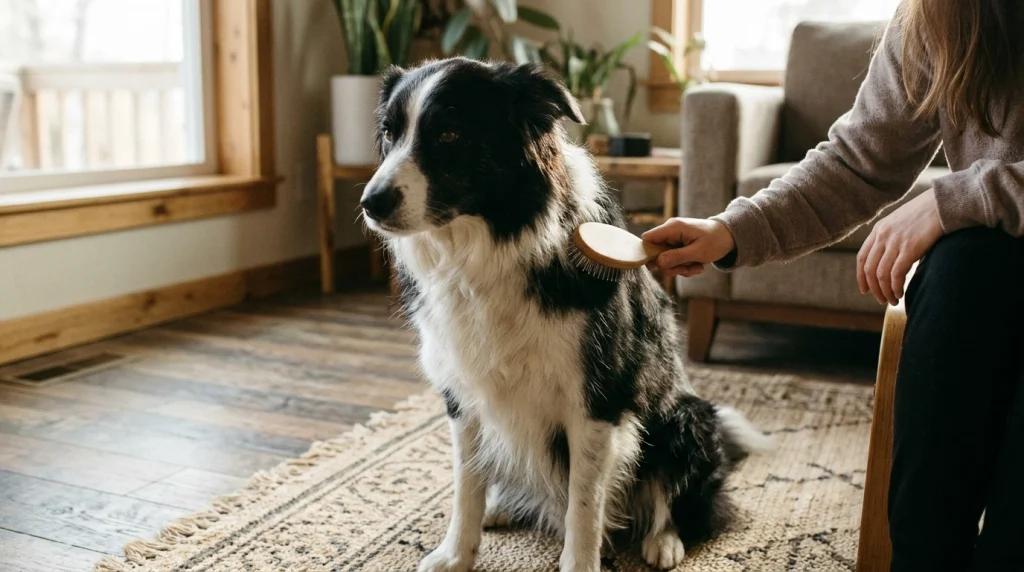
Most adult Border Collies can start with approximately 5–15 minutes of brushing per session. This is a practical estimate rather than a strict veterinary rule. Some dogs need less time, while others require longer sessions depending on coat length, shedding, and tangles.
Use these time ranges as a general starting point:
- Smooth-coated Border Collie: Around 5–10 minutes may be sufficient for routine brushing.
- Rough-coated Border Collie: Around 10–15 minutes may be needed to check longer hair and feathering.
- Heavy shedding: You may need 15–30 minutes, depending on how much loose hair is present.
- Small tangles: Spend a little extra time working gently through individual areas rather than brushing the entire coat repeatedly.
- Puppies learning to accept grooming: Begin with sessions lasting just a few minutes.
These estimates are not targets you must reach. If your dog’s coat is already clean and tangle-free, there is no need to continue brushing simply to fill the time.
Pay attention to your dog’s behavior as well. If your Border Collie becomes restless, flinches, or tries to move away, pause and check whether the brush is pulling the hair or irritating the skin.
How Often Should You Brush a Border Collie?
Most Border Collies benefit from brushing once or twice a week. The American Kennel Club recommends regular brushing and notes that daily brushing can be helpful during shedding season.
However, the ideal frequency varies from one dog to another. A dog that spends time outdoors, develops tangles easily, or sheds heavily may need more frequent attention than one with a relatively tidy coat.
- During normal weeks: Brush once or twice a week and check the coat between sessions.
- During seasonal shedding: Brush more frequently, sometimes daily, if loose undercoat builds up.
- After outdoor activities: Inspect the coat for leaves, dirt, burrs, and small tangles.
- When you notice knots: Address them gently rather than waiting for the next scheduled brushing session.
Regular checks are often more useful than following a rigid schedule. A few minutes spent finding a small tangle early can help prevent a larger mat from developing.
For more guidance, read our guide on how often a Border Collie should be groomed.
Does Coat Type Affect Brushing Time?
Yes. Border Collies generally have either a rough coat or a smooth coat. Both coat types have a protective double coat, but their different hair lengths can affect how much brushing they need.
Rough-Coated Border Collies
Rough-coated Border Collies have medium-length hair, often with feathering around the chest, legs, underside, and tail. These longer areas can collect debris and develop tangles more easily.
Spend extra time checking behind the ears, beneath the front legs, around the chest, and along the tail. Work through the hair gently and in small sections instead of pulling a brush through the entire coat at once.
A rough-coated dog may need longer brushing sessions than a smooth-coated dog, especially during heavy shedding. However, a healthy, well-maintained rough coat may still need only a short session on some days.
Smooth-Coated Border Collies
Smooth-coated Border Collies have shorter hair that generally takes less time to brush. A short session may be enough to remove loose hair and inspect the skin.
Short hair does not mean no grooming is necessary. Smooth-coated dogs still shed and benefit from regular brushing, particularly when their coat is changing seasonally.
Learn more about the differences in our guide to Border Collie coat types.
Border Collie Brushing Time at a Glance
| Situation | Suggested Time | Main Goal |
|---|---|---|
| Smooth coat in good condition | 5–10 minutes | Remove loose hair and check the skin. |
| Rough coat in good condition | 10–15 minutes | Check longer hair and feathering. |
| Heavy seasonal shedding | 15–30 minutes if needed | Remove loose hair without irritating the skin. |
| Small tangles | Short, focused sessions | Loosen tangles gently. |
| Puppy learning to accept grooming | A few minutes initially | Build a positive grooming habit. |
Use the table as a starting point, not a strict schedule. Your Border Collie’s comfort, coat condition, and response to brushing matter more than the clock.
How to Brush a Border Collie Properly

A consistent brushing technique can make grooming more effective and comfortable. You do not need to rush through the coat or pull hard to remove every loose hair.
1. Choose a Suitable Brush
A pin brush or an appropriate slicker brush can help with routine coat maintenance. A metal comb may also help you check longer feathering and identify small tangles.
Choose tools that suit your dog’s coat and use them gently. If a brush repeatedly catches, scratches the skin, or causes discomfort, stop and reconsider your technique or tool.
2. Start Where Your Dog Feels Comfortable
Begin with an area your Border Collie usually enjoys having touched, such as the back or shoulders. Use gentle strokes and reward calm behavior with praise or a small treat.
If your dog is nervous, keep the first sessions brief. Gradually introduce other areas as your dog becomes relaxed. This approach can help make grooming a normal, positive part of your dog’s routine.
3. Brush the Coat in Sections
Move through the body systematically instead of brushing randomly. Check the back, sides, chest, legs, underside, and tail. For rough-coated dogs, pay particular attention to longer hair and feathering.
Use short, gentle strokes. When you encounter a tangle, do not pull the brush through it with force. Try separating the hair carefully with your fingers or a suitable comb.
If a mat is tight, extensive, or close to the skin, seek help from an experienced groomer or veterinarian rather than attempting to pull it out.
4. Check Common Tangle Areas
Some parts of a Border Collie’s coat are more likely to collect knots. Inspect these areas during each brushing session:
- Behind the ears
- Under the front legs
- Around the chest and collar area
- Along the underside
- Behind the hind legs
- At the base and underside of the tail
These checks are particularly helpful for rough-coated Border Collies. Finding a small tangle early is generally easier than removing a tight mat later.
5. Finish With a Gentle Check
When you finish, gently run your fingers through the coat to check for missed tangles. Look for redness, scratches, unusual lumps, or areas where your dog reacts painfully to touch.
Reward your dog for cooperating and end the session calmly. If you find a painful area or notice persistent skin irritation, stop grooming that spot and seek veterinary advice.
Should You Brush Longer During Shedding Season?
Border Collies shed throughout the year, and many experience heavier shedding during seasonal coat changes. During these periods, you may notice more loose hair on furniture, clothing, and the floor.
More frequent brushing can help remove loose hair before it spreads around your home. However, longer brushing sessions are not always better. Repeatedly brushing the same area can irritate the skin, particularly if you press too hard or use an unsuitable tool.
Instead of forcing all the loose hair out in one session, brush gently and adjust the frequency to your dog’s needs. You may find that several shorter sessions are more comfortable than one long session.
If your dog becomes restless or the skin looks irritated, stop. If shedding is accompanied by bald patches, redness, persistent itching, or other unusual symptoms, contact your veterinarian rather than assuming the change is seasonal.
Can You Brush a Border Collie Too Much?
Yes. Brushing too aggressively or repeatedly working over the same area can irritate the skin and damage the coat. Using excessive pressure to remove loose undercoat can also make grooming uncomfortable.
Use gentle strokes and check the skin as you work. Avoid trying to remove every strand of loose hair in one session. If your dog has a tangle, work on it carefully rather than repeatedly dragging a brush through it.
Border Collies have a double coat that helps protect them. Shaving the coat is generally unnecessary for routine grooming and should not be done simply to reduce shedding. If severe matting or a medical condition makes clipping necessary, consult an experienced groomer or veterinarian.
What Grooming Brush Should You Use?
The right tool depends on your Border Collie’s coat and the task you are performing. A pin brush can be useful for routine maintenance, while a suitable slicker brush may help with loose hair and small tangles. A metal comb can help you check feathering and areas where knots tend to develop.
Choose a brush that reaches the coat without scratching the skin. Use extra care on sensitive areas and stop if the tool repeatedly catches or pulls.
Grooming Tools to Consider
A basic grooming kit may include a dog brush suited to your Border Collie’s coat and a metal comb for checking longer hair.
Browse Grooming Brushes on Amazon
As an Amazon Associate, this website may earn from qualifying purchases.
When Should You Stop Brushing?
Stop when your dog’s coat is reasonably free of loose hair and tangles, or when your dog begins showing signs of discomfort. Grooming should not become a struggle.
Signs that your Border Collie needs a break include:
- Repeatedly moving away or trying to escape
- Whining, growling, or becoming tense
- Turning toward the brush or repeatedly licking an area
- Redness or irritation on the skin
- Flinching or showing pain when a particular area is touched
Some dogs need time to become accustomed to grooming. Others may be reacting to a painful mat, skin problem, or injury. If your dog repeatedly shows pain or has irritated skin, consult a veterinarian.
Frequently Asked Questions
1. Should I brush my Border Collie every day?
Not necessarily. Many Border Collies do well with brushing once or twice a week. Daily brushing may be helpful during heavy shedding or when the coat develops tangles more easily.
2. Is 30 minutes too long to brush a Border Collie?
Thirty minutes is not automatically too long, but it may be unnecessary for a routine session. If your dog needs that much time because of tangles or heavy shedding, consider taking breaks and splitting the work into shorter sessions.
3. Do Border Collie puppies need the same brushing time as adults?
No. Puppies are still learning to accept grooming, so start with sessions lasting a few minutes. Reward calm behavior and gradually increase the time as your puppy becomes comfortable.
4. Should I brush my Border Collie before or after a bath?
Check the coat and gently work through loose tangles before bathing because water can make some tangles harder to manage. After bathing, dry the coat appropriately and brush gently as needed, taking care not to pull or damage the hair.
5. Which areas of a Border Collie should I brush most carefully?
Pay particular attention to behind the ears, under the front legs, around the chest, behind the hind legs, and around the tail. These areas can develop tangles, especially in rough-coated Border Collies.
6. Should I brush harder when my Border Collie has mats?
No. Pulling or brushing aggressively can hurt your dog and irritate the skin. Try gently separating a small, loose tangle. For tight mats or mats close to the skin, consult a professional groomer or veterinarian rather than forcing them out.
Conclusion
Most Border Collies need around 5–15 minutes of brushing per session, once or twice a week. Rough coats, seasonal shedding, and tangles can increase the time required, but the right routine depends on your individual dog.
Brush gently, check common tangle areas, and stop when your dog becomes uncomfortable. Consistent, positive grooming is more useful than sticking rigidly to a specific number of minutes.
Sources
- American Kennel Club: Border Collie breed information
- PDSA: Border Collie care and grooming
- The Royal Kennel Club: Dog grooming guidance
“`