
How Long Can a Dog Stay Home Alone? A Practical Guide for Border Collie Owners

A dog can stay home alone for a lot less time than many owners assume—and the “right” limit is not just about convenience. It depends on age, bladder control, training, health, temperament, and how well the dog handles being unsupervised.
Rule of thumb: for many healthy adult dogs, 4 to 6 hours alone is a practical everyday target; 8 hours or more is more of an exception that depends on the individual dog, not a default goal. Puppies usually need much shorter stretches, and senior dogs may need shorter stretches again. Border Collies often need more exercise and mental work before alone time goes well.
That said, “safe” and “ideal” are not the same thing. A dog may be able to tolerate a longer stretch once in a while, but still do better with a shorter routine most days.
Border Collies are the kind of dogs that make the question more serious, not less. They are intelligent, active, and quick to notice patterns. If they are under-exercised or under-stimulated, alone time often becomes harder, not easier.
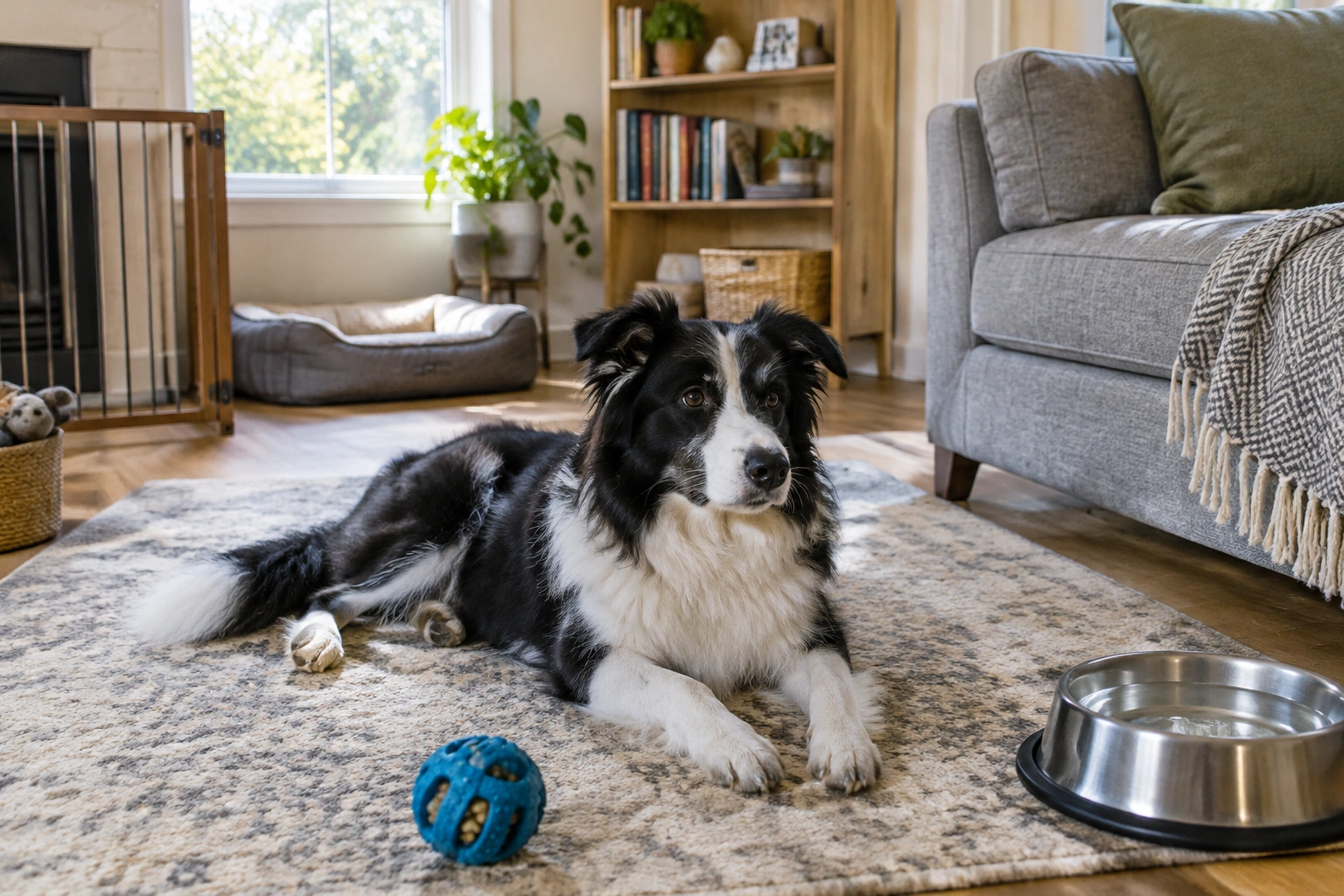
The practical answer: how long most dogs can stay home alone
If you want the short version, here it is:
- Puppies: only short stretches, with bathroom needs as the limiting factor
- Adult dogs: often 4 to 6 hours is a solid baseline
- Some adult dogs: can adapt to 8 to 9 hours if they are healthy, comfortable, and have enough space to move around
- Senior dogs: may need shorter periods again, especially if mobility, medication, or bladder control is an issue
A better decision rule is this:
- Under 4 hours: usually manageable for many healthy dogs
- 4 to 6 hours: a common everyday limit for adult dogs
- 6 to 8 hours: possible for some dogs, but not something every dog should be expected to do regularly
- Over 8 hours: usually needs a specific plan, like a walker, sitter, or split care
The range is broad because dogs are not interchangeable. A calm adult dog with a predictable routine may handle a workday better than a young, busy dog that has not learned to settle. A Border Collie that has been exercised and mentally engaged may do better than a lower-energy dog that is anxious, lonely, or bored.
The key distinction is this: what is possible for a dog is not always what is fair for that dog every day. A dog may survive a longer stretch alone, but still be stressed, restless, or more likely to develop behavior problems.
For a useful benchmark, Rocklin Vets notes that adult dogs are usually okay for 4 to 6 hours, while many dogs can adapt to longer workday periods if the setup supports them.
What actually determines a dog’s alone-time limit
The right answer is less about breed labels and more about practical limits. When I help owners judge alone time, I look at six things.
1) Age and bladder control
This is the most obvious limiter. Puppies simply do not have the same bladder capacity or self-control as adult dogs. A young puppy may need a bathroom break long before boredom becomes the issue.
For example, a 10-week-old puppy may only manage a very short absence, while an older puppy can usually handle a bit more if the routine is consistent. As dogs mature, alone time can usually be increased gradually. That gradual increase matters because it builds tolerance instead of forcing the dog to “figure it out” under pressure.
2) Health and mobility
A dog with arthritis, digestive issues, urinary problems, diabetes, or medication schedules may need more frequent check-ins. Even if the dog seems calm, the body may not be comfortable with long stretches.
For instance, a senior dog with stiff joints may not want to pace around for hours, while a dog with a medical need to urinate more often may need a midday break even if it is otherwise well-behaved.
3) Temperament
Some dogs are naturally more independent. Others are social, vigilant, or easily unsettled by change. A dog that follows you from room to room is telling you something useful: alone time may be harder for that dog than for a more laid-back companion.
A calm, settled adult may be fine with a few hours alone, while a dog that becomes distressed when you reach for your keys may need a much slower build-up.
4) Training history
A dog that has practiced calm departures, short absences, and routine alone time usually handles being left better than a dog that only experiences long, unpredictable departures.
That matters a lot for Border Collies, because they often learn patterns quickly. If every departure has been stressful or inconsistent, the dog may start anticipating a long, hard stretch every time you leave.
5) Routine and predictability
Dogs do best when the pattern is stable. If weekdays mean long absences, but weekends mean constant company, some dogs never fully settle into a rhythm. They keep waiting for the next change.
A predictable schedule usually helps more than a perfect one-off setup.
6) Energy level and enrichment needs
A tired dog is not the same as a fulfilled dog. Physical exercise helps, but mental work matters just as much. That is especially true for Border Collies.
A low-energy dog may be content to nap after a short walk, while a high-energy Border Collie often needs both movement and a job to do before alone time gets easier.
Puppy vs adult vs senior dog: how the limit changes
Puppies
Puppies need the most supervision because they are still learning bladder control, house rules, and how to settle without constant interaction. Leaving a puppy alone for an adult-dog time span is one of the fastest ways to create accidents, frustration, or frantic behavior.
A young puppy usually does best with:
– very short absences
– a bathroom plan
– a safe confinement area
– gradual practice rather than long gaps
If your puppy is still very young, the question is not “How many hours can I leave them?” so much as “How do I structure the day so they succeed?”
Adult dogs
Adult dogs are the most flexible group. Many healthy adults can handle a normal workday better than puppies or seniors, especially if they have had exercise, a chance to potty, and a calm environment.
But “can handle” is not the same as “should routinely be expected to.” A dog that is barely coping is not a dog that is thriving.
Senior dogs
Senior dogs can be wonderfully settled companions, but age can also bring slower movement, weaker bladder control, and more medical needs. Some seniors still do fine for several hours. Others need more frequent breaks, especially if they are on medication or have mobility issues.
If your older dog starts having accidents, pacing, or trouble settling, do not assume it is “just old age.” The limit may need to shrink, or the dog may need a vet check.
Are Border Collies harder to leave alone?
Usually, yes—at least in the sense that they often need more preparation before alone time goes well.
Border Collies are not automatically anxious dogs, but they are often:
– highly alert
– fast learners
– intense about routine
– sensitive to under-stimulation
That combination can work beautifully when their needs are met. It can also create trouble when they are expected to sit quietly for long stretches with nothing to do.
A Border Collie that gets a proper walk, some problem-solving, and a chance to settle may do fine for a few hours. The same dog, on a day with no exercise and no mental outlet, may become restless much sooner.
That is why the real question is not “Can a Border Collie stay home alone?” but “Has this Border Collie had enough outlet before being left alone?”
Signs your dog is nearing its alone-time limit
Many dogs give warning signs before they reach full-blown distress. Those early signs are useful because they tell you the current setup is too hard, even if the dog has not destroyed anything yet.
Watch for:
– pacing
– repeated barking or whining
– clinginess right before you leave
– frantic door-watching
– scratching at exits
– chewing or mouthing objects they normally ignore
– inability to settle after you depart
– accidents that happen only during absences
A dog that is restless after 30 minutes alone is not being “bad.” The current limit is simply too long, or the dog is not prepared well enough yet.
Boredom or separation anxiety? How to tell the difference
These two problems can look similar from the outside, but they are not the same.
More likely boredom or under-stimulation if:
- the dog is calm at first, then gets noisy or destructive later
- the dog settles better after more exercise
- the behavior is mainly chewing, scavenging, or pacing
- the dog is otherwise relaxed when you return
More likely separation anxiety if:
- distress starts very quickly after you leave
- the dog panics, vocalizes intensely, or cannot settle
- the dog targets exits, windows, or confinement areas
- the dog seems genuinely frantic rather than merely busy
Separation anxiety can lead to destructive behavior, including damaged furniture or broken household items. If you suspect true anxiety, the fix is not just “more toys.” The dog needs a different training plan.
For a broader overview of the issue, the ASPCA’s guidance on separation anxiety is a useful starting point.
How to train a dog to stay home alone longer
The safest way to build alone-time tolerance is gradually. Do not jump from 20 minutes to 6 hours and hope the dog adjusts.
A practical progression
-
Leave for a very short period
Start with departures the dog can already handle. -
Repeat the same short absence several times
Use the same routine until the dog stays calm and settles quickly. -
Increase in small time increments
Add about 5 to 10 minutes at a time for dogs that are coping well. For some dogs, especially puppies or anxious dogs, even smaller jumps may be better. -
Watch for “ready to increase” signs
The dog should be able to: - stay calm before you leave
- settle within a few minutes after you go
- remain relaxed through the current time window
-
return to normal behavior when you come back
-
Hold at the current level if stress shows up
If the dog starts pacing, vocalizing, scratching, or having accidents, stay at that duration longer before increasing again. -
Build toward real-life absences
Once the dog can handle the current step consistently, move to the next one and eventually practice the kind of departure you actually need.
For example, you might work like this:
– 5 minutes
– 10 minutes
– 15 minutes
– 20 minutes
– 30 minutes
– 45 minutes
– 60 minutes
That does not need to happen in one day. In fact, for many dogs it should not. Practice a few times per week, or more often if the dog is comfortable, until the current level is clearly easy.
For puppies, this gradual increase is especially important. As they mature, their alone time can usually be extended in stages rather than all at once.
If your dog struggles even with short absences, pause the progression. Pushing through distress usually makes the problem worse, not better.
Best home setup for a dog left alone
A good setup does three things: keeps the dog safe, reduces stress, and lowers the chance of boredom-driven trouble.
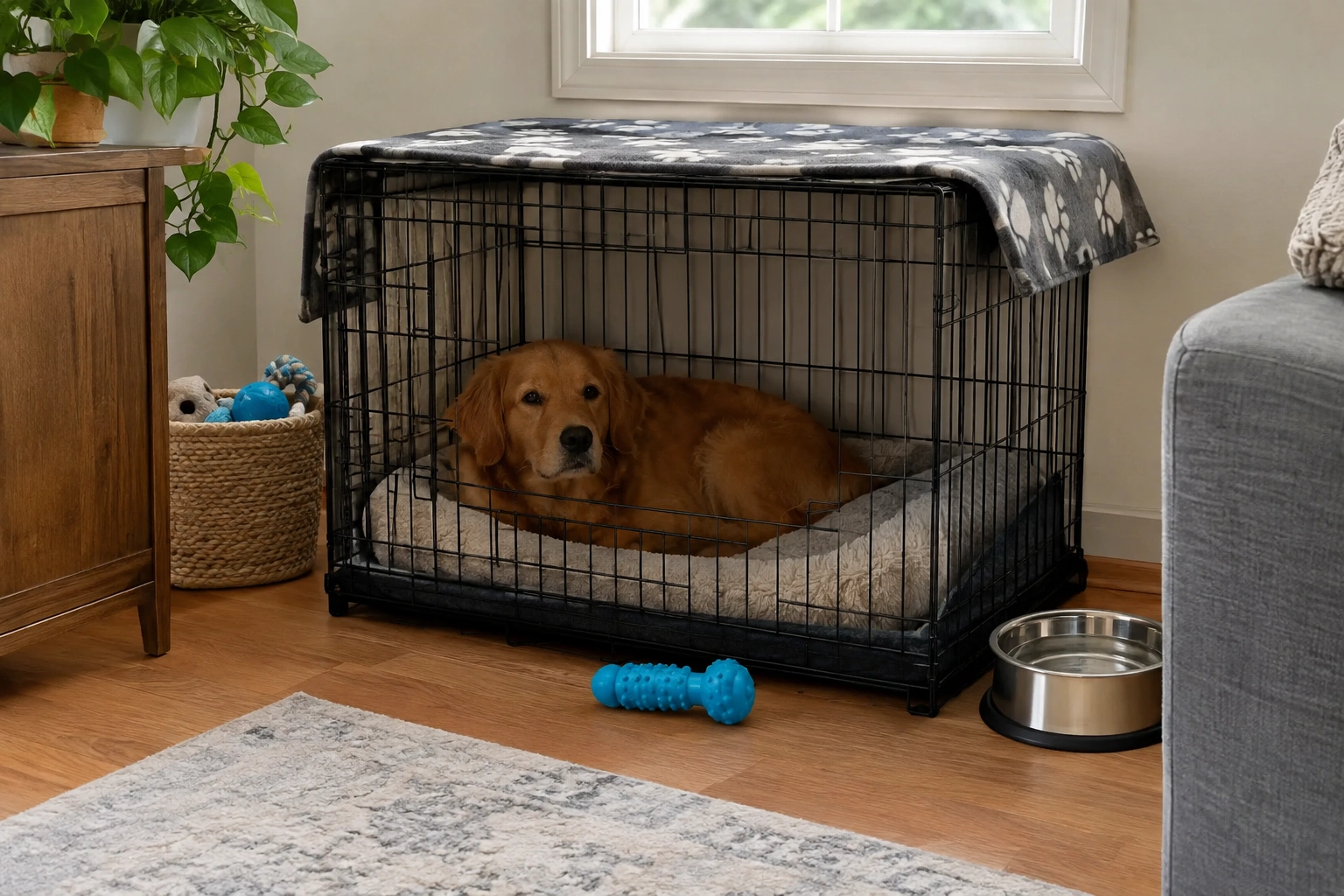
Dog-proof the area
Remove access to:
– electrical cords
– food on counters
– sharp objects
– toxic items
– shoes, remotes, and other tempting chew targets
Crate vs free-roam
This is a trade-off, not a moral test.
Crate use
– Pros: better containment, fewer opportunities for trouble, can help some dogs relax
– Cons: too confining for some dogs, not ideal for long periods, not suitable for every dog
Crating may make sense for a puppy, a dog that is still learning house rules, or a dog that settles well in a crate for short absences. It is usually a short-term containment tool, not a one-size-fits-all answer for longer absences.
Free-roam
– Pros: more comfort, more movement, better for dogs that are reliably calm
– Cons: more risk if the dog is bored, anxious, or destructive
Free-roam can be the better choice for a mature, trustworthy dog that does not panic or chew when unsupervised. It may also be better than crating for longer stretches if the dog can safely move around in a dog-proofed room or pen.
A dog should not be crated for every length of absence or every type of dog. If the dog is very young, anxious, or likely to panic, a crate can make the situation worse. If the dog is calm and trustworthy, free-roam or a larger pen may be a better fit for longer periods.
Water and comfort
A dog left alone for any meaningful stretch should have access to water, a comfortable resting area, and a temperature-safe space.
Enrichment toys
Food puzzles and chew-safe enrichment can help, but they are not a substitute for training or exercise. Think of them as support, not a cure.
What to do if you work long shifts or need to leave overnight
This is where honest planning matters.
If your dog can only handle 4 to 6 hours alone, a 10-hour workday is not a training problem—it is a scheduling problem. The dog needs a mid-day break, more support, or a different arrangement.
Practical long-shift options
- Midday dog walker: good when the dog mainly needs a potty break, short walk, and a reset
- Split care: one person handles morning care and another handles midday or evening care
- Dog daycare: useful for some dogs that enjoy supervised activity and social contact, but not every dog likes the pace or noise
- Pet sitter: a strong option for dogs that do better in their own home and need more individualized care
Make the plan match the dog
- High-energy Border Collie: often needs a real exercise break, not just a quick potty trip
- Low-key adult dog: may only need a walker and some enrichment
- Anxious dog: may do better with a sitter or split care than with daycare
- Dog that dislikes other dogs: daycare may be the wrong fit even if the hours are convenient
If the dog must be left longer than recommended
Do not rely on one long stretch and hope for the best. Instead:
– add exercise before you leave
– arrange a walker, sitter, or neighbor check-in
– consider a midday break plus evening care
– use daycare selectively if your dog genuinely enjoys it and tolerates it well
– build a calmer routine on the busiest days, not a more demanding one
About overnight absences
Leaving a dog alone overnight may be workable only in limited cases, such as a healthy adult dog that is fully house-trained, comfortable alone, and unlikely to need a bathroom break before morning. Even then, it is not ideal for every dog.
It is usually a poor fit for puppies, many seniors, dogs with medical needs, and dogs that show separation anxiety or panic when isolated. If you are unsure, arrange a sitter or overnight care instead of guessing.
Dog walker vs daycare vs pet sitter: which help is best?
Each option solves a different problem.
Dog walker
Best when the main issue is a bathroom break and a little movement in the middle of the day. This is often the most practical choice for a dog that does fine alone but should not be left for the full workday without interruption.
Dog daycare
Best for dogs that enjoy social contact, supervised activity, and lots of stimulation. It can be a strong fit for some Border Collies, but not for every dog. A dog that is overwhelmed by group play may come home more stressed than helped.
Pet sitter
Best when the dog is happier at home and needs individualized care. A sitter can be especially useful for dogs that dislike travel, prefer their own space, or need more tailored handling.
If you are choosing between them, think about the dog’s real need:
– potty break
– exercise
– social interaction
– calm supervision
– routine stability
For some dogs, one midday walk is enough. For others, daycare is too much and a sitter is the better match.
When to see a veterinarian or certified trainer
Get professional help if your dog:
– panics when left alone
– destroys exits or injures themselves
– cannot settle even after gradual training
– has repeated accidents that are new or unusual
– seems worse, not better, after changes to routine
A veterinarian can rule out medical causes that make alone time harder. A qualified trainer or behavior professional can help you build a plan that matches the dog instead of guessing.
If your Border Collie is struggling, do not wait for the behavior to become a habit. The earlier you adjust the plan, the easier it is to fix.
FAQ
How long can a dog stay home alone safely?
For many healthy adult dogs, 4 to 6 hours is a practical everyday limit. Some dogs can handle longer, but that depends on age, health, temperament, training, and how well the dog copes with being alone.
Can a puppy stay home alone for 8 hours?
Usually not. Puppies need much shorter stretches because of bladder control, supervision needs, and training. If a puppy must be left for a long workday, arrange a walker, sitter, or another form of split care.
Is it okay to leave a dog alone overnight?
Sometimes, but only for a healthy adult dog that is fully comfortable alone and unlikely to need a bathroom break before morning. It is often not a good fit for puppies, many seniors, or dogs with anxiety or medical needs.
Should I use a crate or free-roam when I leave?
It depends on the dog. A crate can be useful for short-term containment and for dogs that relax in one, while free-roam can be better for calm, trustworthy dogs and longer absences. Crating is not right for every dog or every length of absence.
Do Border Collies need less alone time than other dogs?
Not always less, but often more preparation. Border Collies usually need more exercise, mental work, and routine before they can settle well alone.
What if my dog has separation anxiety?
If your dog panics quickly, vocalizes intensely, or targets exits and windows, treat it as a behavior issue rather than a simple boredom problem. Start with a veterinarian or qualified trainer and use a gradual alone-time plan.
The bottom line
The safest answer to how long a dog can stay home alone is not a single number. It is the longest stretch your dog can handle without stress, accidents, or behavior problems—and that limit changes with age, health, training, and temperament.
For many adult dogs, 4 to 6 hours is a practical baseline. Some can manage a normal workday with the right setup. Puppies need much shorter stretches. Border Collies often need more exercise and mental engagement before alone time goes well.
If you want the best outcome, judge the dog in front of you, not the average dog in a general article. That is the difference between a setup that merely works and one that actually supports your dog.
