
How Long Can Dogs Be Left Alone? A Practical Guide for Border Collie Owners

If you want the short answer, here it is: dogs should be left alone only for as long as they can stay physically comfortable, mentally settled, and safe without supervision. For some adult dogs, that may be a normal work block. For puppies, anxious dogs, seniors with health issues, and many Border Collies, the limit is often much shorter.
The real question is not “What is the maximum?” but “What can this dog handle today without stress, accidents, or behavior fallout?” That depends on age, house-training, temperament, health, exercise, and whether the dog has been taught to relax alone. A dog that is calm for two hours is not automatically fine for six.
For Border Collie owners, this matters even more. Border Collies are often bright, observant, and quick to notice routine changes. Many can handle a normal workday only with preparation and support, such as exercise, enrichment, and sometimes a midday break. They should not be left alone all day if they are young, anxious, under-exercised, or still showing signs that alone time is stressful.

As a very rough guide, many puppies need only minutes to a couple of hours at most, many adult dogs can manage about 4 to 8 hours, and many senior dogs need a similar or shorter window depending on health and bladder control. These are general ranges, not safe maxima for every dog.
The practical answer: how long dogs can usually be left alone
There is no single safe number that fits every dog. A better way to think about it is in ranges, then adjust for your dog’s age, bladder control, and stress tolerance.
Here is a practical framework:
| Life stage / situation | Typical alone-time tolerance | What usually changes the limit |
|---|---|---|
| Young puppy | Minutes to a couple of hours | Bladder control, emotional development, training stage |
| Adolescent dog | A few hours | Energy level, impulse control, boredom risk |
| Healthy adult dog | About 4 to 8 hours | Exercise, routine, independence, bathroom access |
| Senior dog | About 2 to 6 hours, sometimes less | Mobility, bladder control, discomfort, confusion |
| Dog with separation anxiety | Often much shorter, sometimes under an hour | Panic, vocalizing, self-injury, house-soiling |
| Border Collie with high drive | Often closer to the lower end unless well prepared | Mental stimulation, exercise, frustration tolerance |
Use the table as a starting point, not a rulebook.
A healthy adult dog that is well exercised, house-trained, and genuinely comfortable alone may manage a normal workday better than a puppy or anxious dog. But even then, a full day alone is not ideal if it becomes the routine every weekday with no break, no enrichment, and no chance to toilet.
If you are leaving a dog for longer than it can comfortably hold urine or stay settled, the issue is no longer convenience. It becomes a welfare problem.
For general guidance on separation-related behavior and home-alone management, the ASPCA’s separation anxiety resources are a useful place to start.
The main factors that change the limit
When owners ask me how long dogs can be left alone, I usually look at six things.
1. Age and house-training stage
Puppies are the most obvious exception. They have limited bladder control, but they also struggle with being alone emotionally. A puppy may not just need a toilet break; it may need company, structure, and very short training sessions that teach calm independence.
2. Physical comfort
A dog with arthritis, a urinary issue, digestive upset, or pain will usually have a shorter safe window than a healthy adult. The dog may be able to “hold it,” but that does not mean it is comfortable.
3. Temperament
Some dogs are naturally more independent. Others are people-oriented and struggle when the household goes quiet. The second group needs more gradual training and often more support.
4. Energy level
A dog with a strong work drive or high activity needs may be physically tired after exercise but still mentally restless. Border Collies often fall into this category.
5. Training history
A dog that has practiced calm alone time in small doses usually does better than a dog that only learns solitude when the owner suddenly disappears for hours.
6. Routine
Dogs like predictability. If the dog knows the pattern — walk, toilet break, chew, rest, owner leaves, owner returns — it often settles more easily than a dog that never knows what comes next.
The biggest mistake is assuming the dog’s limit is based on the owner’s schedule. It is based on the dog’s needs.
Puppies, adult dogs, and senior dogs: what changes
Puppies
Puppies need the shortest alone periods because of two things: bladder control and emotional development. A young puppy cannot reasonably be expected to “just cope” with a long absence. If you leave a puppy too long, you are likely to get accidents, crying, chewing, and a puppy that learns being alone is stressful.
A practical puppy plan usually means:
– frequent toilet breaks,
– very short absences at first,
– a safe confinement area,
– and gradual practice with calm departures.
For very young puppies, leaving them alone for a workday is not realistic. If your schedule requires that, you need outside help.
Adult dogs
Healthy adult dogs are the most flexible group. Some can manage several hours alone if they have been exercised, toileted, and trained for it. Others still struggle because they are anxious, under-stimulated, or not used to being alone.
An adult dog that is fine for a few hours may still not be a good candidate for long, repeated absences without a midday break. Watch the dog, not the clock alone.
Senior dogs
Senior dogs are variable. Some older dogs become more settled and sleep more, which can make alone time easier. Others develop mobility issues, urinary urgency, confusion, or discomfort that makes long absences harder.
A senior dog may need:
– easier access to water,
– softer bedding,
– less climbing or jumping,
– and more predictable toilet opportunities.
Do not assume age automatically means “can’t be left alone.” Do assume the dog’s health may have changed enough that the old routine no longer fits.
Can a Border Collie be left alone all day?
Sometimes, yes — but only if “all day” still fits the individual dog.
Border Collies are not automatically needy or unable to settle. But they are commonly more sensitive to under-stimulation than many lower-energy breeds. If you leave a Border Collie alone after a quick potty break and no meaningful exercise or mental work, you are more likely to see frustration than with a less intense breed.
A Border Collie usually does better when the day includes:
– a proper walk or run before the owner leaves,
– some problem-solving or sniffing work,
– a safe chew or food puzzle,
– and a routine the dog has already practiced.
That does not mean you should exhaust the dog until it collapses. Overdoing exercise can create an over-aroused dog, which is not the same as a calm dog. The goal is a dog that is satisfied enough to rest.
A realistic example: an adult Border Collie may cope better with a workday if it gets a solid morning walk, a toilet break, a stuffed feeder or puzzle, and a midday dog walker visit. Without that middle break, the same dog may become restless, vocal, or destructive by afternoon.
For Border Collies specifically, the Kennel Club’s breed guidance is worth reading alongside your own observations, because breed traits matter, but individual temperament matters more.
Signs your dog is not coping well alone
Some dogs are quiet when stressed. Others are loud. The key is to look for patterns, not one-off bad days.
Common red flags include:
– barking or howling after you leave,
– pacing,
– scratching at doors, windows, or crates,
– chewing escape routes or household items,
– accidents from stress or inability to hold it,
– drooling, panting, or trembling,
– refusal to eat food left for them,
– frantic greeting when you return,
– and self-injury, such as broken nails or damaged teeth from trying to get out.
It also helps to separate boredom, frustration, and separation anxiety:
- Boredom: the dog has nothing to do and makes its own entertainment. Example: chewing a cushion, raiding a trash bin, or rearranging toys.
- Frustration: the dog wants more activity or access and does not know how to settle. Example: whining at the door, pacing, or repeatedly trying to follow you.
- Separation anxiety: the dog is distressed by being left and may panic. Example: howling, escape attempts, drooling, trembling, or house-soiling soon after you leave.
If the dog is calm for the first hour and then falls apart later, that still counts as a problem. It tells you the current limit has been exceeded.
How to build up alone time gradually
The safest way to increase alone time is to make departures boring and predictable.
Use this progression:
1. Leave for a very short period.
2. Return before the dog becomes upset.
3. Repeat until the dog treats the absence as routine.
4. Increase the duration in small steps.
5. Only move up when the current step is consistently easy.
If a dog starts barking, pacing, or destroying things, the step was too big. Go back to the last duration the dog could handle comfortably.
A useful rule: if the dog cannot settle within the current setup, do not add more time and hope it improves. Fix the foundation first.
This is especially important with Border Collies, because they often notice patterns quickly. That is an advantage when you train well, and a disadvantage if you accidentally teach them that every departure predicts stress.
How to prepare the home for safe solo time
A good setup lowers both risk and frustration.
Choose the right confinement
Some dogs do best with free roam in a dog-proofed room. Others are calmer in a crate or pen. Crates can help with safety and house-training, but only if the dog is already comfortable in one. A crate is not a shortcut for exercise or supervision.
Remove hazards
Clear away:
– cords,
– shoes,
– food trash,
– toxic plants,
– accessible medications,
– and anything the dog could swallow or tangle in.
Leave useful comforts
Make sure the dog has:
– fresh water,
– a comfortable resting spot,
– and a safe chew or puzzle feeder if it uses those calmly.
Keep the environment predictable
Many dogs settle better when the home is quiet and the departure routine is the same each time. A camera can help you learn what the dog actually does when you are gone, but it does not replace a break.
Crate time versus free-roam time is a trade-off. Crates can prevent damage and support training, but they reduce movement and are not appropriate for every dog or every length of absence. Free roam gives more freedom, but only if the dog can be trusted not to panic or destroy things.
What to do if you must leave a dog alone longer than recommended
Sometimes life does not cooperate. Work runs late, traffic happens, and flights get delayed.
If the dog’s limit will be exceeded, use one of these options:
– a dog walker for a toilet break and short reset,
– a trusted neighbor or family member,
– a pet sitter for longer supervision,
– or daycare if the dog is social and handles group settings well.
The best option depends on the dog, not just the price.
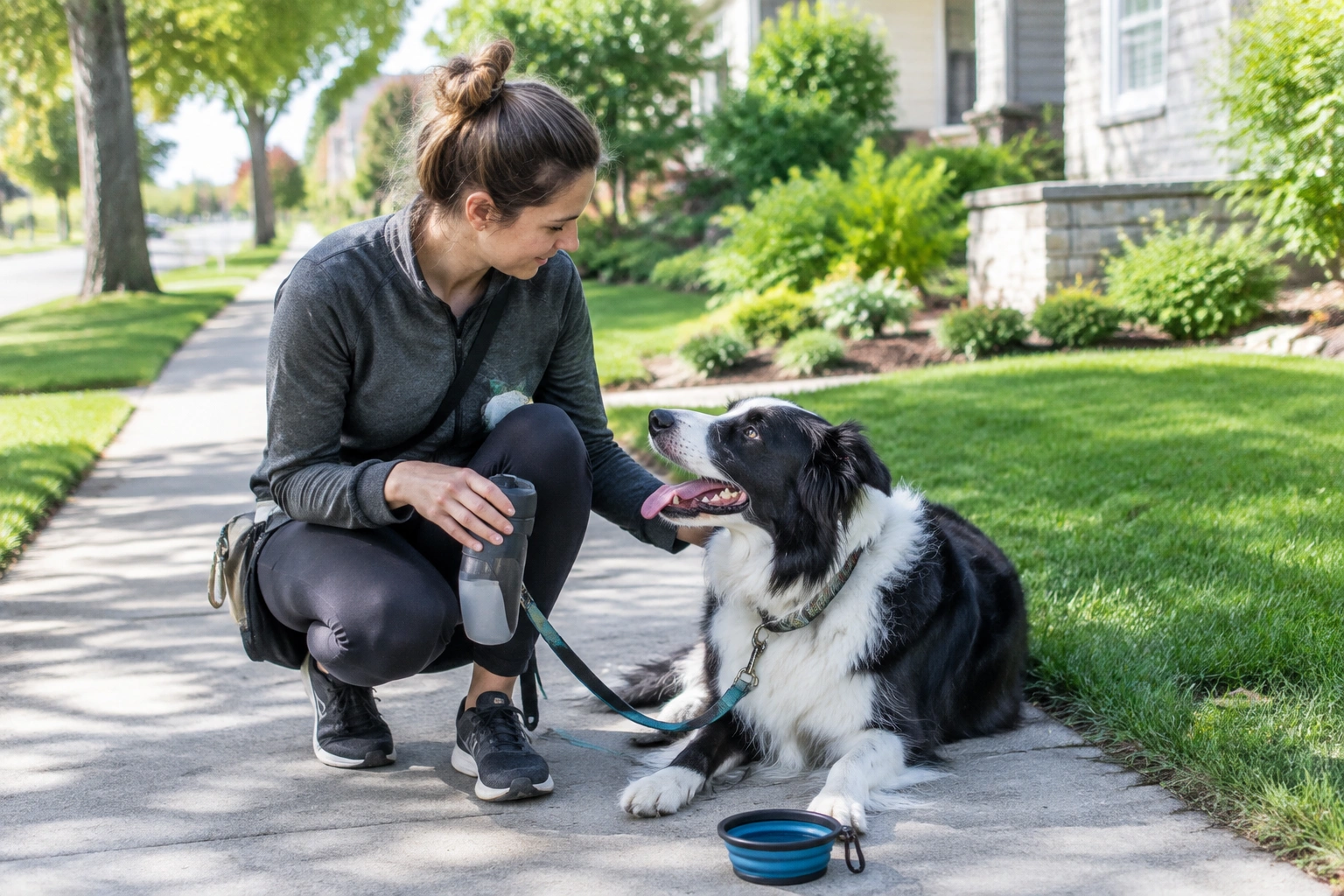
A simple decision guide:
– Need only a quick toilet break or short stretch? Choose a dog walker.
– Need calm, individualized care for a few hours or most of a day? Choose a pet sitter.
– Need several hours of activity and your dog enjoys other dogs? Choose daycare.
– Have a reliable local helper and a predictable routine? Family or neighbor help can work well.
A dog walker is often the best fit when the dog mainly needs a toilet break, a short walk, and a chance to stretch. Daycare can be useful for social, energetic dogs that enjoy constant interaction, but it can overwhelm dogs that are shy, reactive, or easily overstimulated. A pet sitter is often the most flexible choice when the dog needs a calmer environment and more individualized care.
If you work long shifts, build the solution into your routine instead of treating it as an emergency backup. A dog that is regularly pushed beyond its comfort zone will usually show the problem through behavior before it shows it through obvious distress.
Which support option fits your dog and schedule?
Here is the practical comparison.
Dog walker
Best when the dog needs:
– a toilet break,
– a bit of exercise,
– and a quick check-in.
Trade-off: less expensive and very practical, but not enough for dogs that need company for much of the day.
Dog daycare
Best when the dog:
– enjoys other dogs,
– has good social manners,
– and benefits from lots of activity.
Trade-off: useful for some high-energy dogs, but not ideal for every Border Collie. A dog that finds group play stressful may come home more wound up than before.
Pet sitter
Best when the dog:
– needs calmer supervision,
– does not enjoy daycare,
– or needs more individualized care.
Trade-off: usually more tailored, but it may cost more than a quick walk.
Family or neighbor check-ins
Best when:
– you need a simple, local solution,
– and the helper can reliably follow your instructions.
Trade-off: convenient, but quality varies. Make sure the person understands your dog’s routine, feeding rules, and any signs that mean the dog is not coping.
When to see a veterinarian or certified trainer
Get help if the dog shows persistent panic, self-injury, repeated house-soiling despite being house-trained, or destructive behavior that starts as soon as you leave. Also get help if the dog cannot relax even with gradual training and a better setup.
A veterinarian can rule out pain, urinary issues, or other health problems that make alone time harder. A certified trainer or behavior professional can help you build a plan for separation distress without guessing your way through it.
If the dog is already breaking out of crates, injuring itself, or becoming worse each week, do not keep testing the limit. That usually deepens the problem.
The bottom line
A dog can be left alone only as long as it can stay comfortable, safe, and settled. Puppies need the shortest absences. Adult dogs vary widely. Seniors may need adjustments. Border Collies often need more exercise, structure, and mental work than people expect before they can relax alone.
If your dog is coping well, keep the routine stable and build slowly. If the dog is showing stress, shorten the absences and add support. The goal is not to see how long your dog can endure being alone. The goal is to leave the dog in a way it can genuinely handle.
FAQ
How long can a dog be left alone during a workday?
Many healthy adult dogs can manage about 4 to 8 hours, but puppies, seniors, and dogs with anxiety often need much less.
Can a Border Collie be left alone all day?
Sometimes, but usually only with preparation and support. Many Border Collies do better with exercise, enrichment, and a midday break rather than a full day with no check-in.
Is a crate okay for alone time?
It can be, if the dog is already comfortable in the crate and the absence is not too long. A crate should not be used to make up for too much alone time.
What if my dog is fine for a while, then gets upset later?
That still means the current setup is too long. The dog’s comfort limit has been exceeded, even if the problem starts after an hour or more.
Should I choose a dog walker or daycare?
Choose a dog walker for a quick break, daycare for a social dog that enjoys activity, and a pet sitter if your dog needs calmer, more individualized care.
