
How Long Does a Dog Bleed After Giving Birth? What’s Normal and When to Worry

If your dog has just whelped and you’re seeing blood or discharge, the first question is usually the right one: how long does a dog bleed for after giving birth?
The practical answer is that normal postpartum discharge, called lochia, often lasts about three weeks and can last up to eight weeks. The key detail is not just how long it lasts, but how it behaves: it should steadily decrease in amount and gradually darken in color rather than stay bright red, heavy, or worsening.
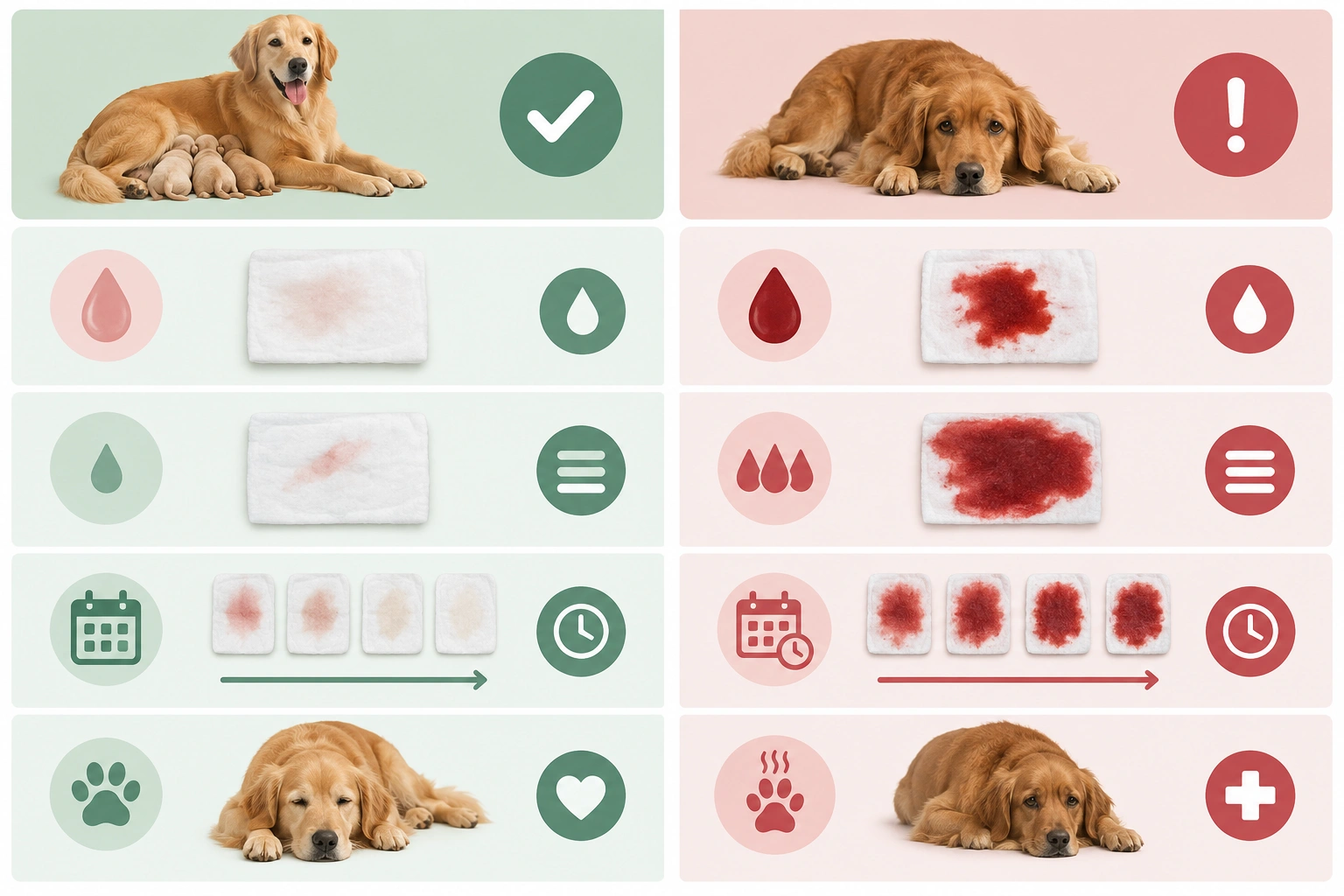
That’s the line I use when helping owners sort worry from normal recovery. A little discharge after birth can be expected. Increasing discharge, a foul smell, bright red bleeding, or a dog that seems unwell is not something to watch casually.
What normal postpartum discharge looks like
Normal postpartum discharge after whelping is usually lochia. In healthy dogs, it can look green, red, or brown, and it should slowly taper off as the uterus recovers. Cornell’s veterinary guidance is especially useful here because it gives the pattern, not just the timeline: the discharge should progressively darken and decrease over time.
That pattern matters more than any single color on one day.
What you might see in the first hours and days
Right after birth, discharge may be more noticeable. It can look reddish or greenish-brown, and that can still be normal if the mother is otherwise doing well. Over the next several days, the amount should usually become lighter and less frequent.
A useful way to think about it:
- First 24 hours: discharge may be more noticeable and can look red, greenish-red, or brownish
- Days 2–7: it should usually start to get lighter and less frequent
- Weeks 2–3: many dogs have much less discharge
- Weeks 3–8: some dogs still have mild lochia, but it should be clearly tapering off
A dog that is still bright, eating, nursing, and resting comfortably can have some discharge and still be recovering normally. The discharge itself is only one piece of the picture.
Normal color changes
A normal progression is usually:
- Red or greenish-red early on
- Brown or reddish-brown as days pass
- Lighter and less frequent over time
The important point is that the discharge should not stay fresh-looking and heavy. Bright red blood is more concerning than darker, fading discharge, especially if it appears after the first day or two or seems to be increasing.
A mild blood-like smell can be normal, especially early on, but it should not be rotten, strongly foul, or getting worse.
For a broader overview of normal dog health after birth, Cornell University’s whelping guidance is one of the clearest references.
How much bleeding is too much after whelping?
This is where owners often get stuck, because “some bleeding” can be normal while “too much” can be dangerous.
A practical rule: normal lochia should get lighter, not heavier. If the flow increases, that is a reason to call a veterinarian.
Signs the amount is becoming concerning
Treat the discharge as abnormal if you notice any of these:
- Soaking bedding or pads quickly
- Fresh bright red bleeding that does not slow
- Large clots
- Discharge that gets heavier instead of lighter
- A sudden return to heavier bleeding after it had been improving
A helpful real-world test is this: if you would need to replace a pad or a towel within a short time because it is getting visibly wet again, or if the bedding is getting blood-soaked rather than just stained, that is too much to ignore. A small stain on bedding is very different from a dog that is leaving wet patches, dripping blood, or needing frequent bedding changes.
A simple decision rule
Use this three-part check:
- Is it getting lighter over time?
- Is the color darkening rather than staying bright red?
- Is your dog otherwise acting normal?
If the answer to any of those is “no,” the situation deserves closer veterinary review.
Normal recovery signs that should appear alongside discharge
Discharge should never be judged in isolation. A healthy mother dog usually shows a pattern of recovery that matches the lochia.
What “normal” often looks like
A dog recovering normally after birth is typically:
- Alert enough to care for the puppies
- Eating at least some food
- Nursing and settling with the litter
- Resting, but not weak or collapsed
- Comfortable enough to move around and care for herself
A brief dip in appetite can happen right after whelping, but it should improve within a day or two. If the mother is refusing food, reluctant to stand, or not nursing well, the discharge becomes more suspicious even if it doesn’t look dramatic.
Why behavior matters so much
Postpartum problems often show up as a combination of signs rather than one dramatic symptom. A moderate amount of discharge in a dog that is bright and attentive is very different from the same discharge in a dog that is lethargic, painful, or uninterested in her puppies.
That’s why I tell owners to watch the whole dog, not just the bedding.
Normal lochia versus abnormal bleeding
Here’s the quickest way to compare what you’re seeing.
| Feature | More likely normal lochia | More concerning bleeding/discharge |
|---|---|---|
| Color | Green, red, or brown; darkens over time | Bright red that stays fresh-looking |
| Amount | Light to moderate, steadily decreasing | Heavy, increasing, or soaking bedding |
| Odor | Mild blood-like smell may be present early; not foul | Strong, foul, or rotten smell |
| Duration | Often around 3 weeks; may last up to 8 weeks | Persistent heavy discharge, or worsening after initial improvement |
| Dog’s condition | Bright, eating, nursing, resting normally | Lethargic, painful, weak, feverish, pale gums |
| Other clues | No clots or only very small amounts | Large clots, sudden change, collapse |
This table is the core decision tool. If the discharge is fading, the dog is well, and nothing else is off, monitoring at home may be reasonable. If the discharge is worsening or the dog seems unwell, don’t wait for it to “settle.”
Warning signs the discharge is not normal
Some symptoms move the situation from “watch closely” to “call a vet now.”
Red flags that need prompt veterinary attention
- Foul-smelling discharge
- Discharge that increases instead of decreases
- Bright red bleeding
- Fever
- Marked lethargy
- Pain or obvious discomfort
- Pale gums
- Weakness
- Rapid breathing
- Collapse
Cornell specifically notes that lochia should not have a foul odor and that if the amount increases, veterinary care should be sought because infection is a concern. That’s a helpful standard because it avoids the trap of assuming all postpartum odor is “normal.”
If you want a general reference point for urgent dog-health warning signs, VCA Hospitals has accessible veterinary education articles that reinforce the importance of acting quickly when a dog seems systemically unwell.
Retained placenta, retained puppy, and other causes of prolonged bleeding
When discharge stays heavy, smells bad, or worsens after birth, one concern is retained tissue. That can mean a retained placenta or, more seriously, a retained puppy.
Why retained tissue matters
A retained placenta is leftover placental tissue that did not pass normally after delivery. A retained puppy means one puppy is still in the uterus, which can keep the uterus from recovering normally and can also lead to infection or ongoing bleeding. Either problem can prolong discharge, and both need veterinary evaluation.
One veterinary source notes that a bloody or odorous vaginal discharge 24 to 48 hours after birth may indicate a retained placenta and can be an emergency.
That time frame is useful because it reminds you not to dismiss an early worsening discharge as “just postpartum cleanup.” If a dog starts to smell bad or bleed more heavily a day or two after whelping, that deserves a call.
Signs that make retained tissue more likely
- Discharge that doesn’t improve
- Odor
- Fever
- Restlessness or pain
- Poor appetite
- Lethargy
- Ongoing illness after an apparently finished delivery
The challenge is that many dogs eat placentas, so you may not know exactly how many passed. That’s why the dog’s condition matters more than trying to count placentas at home.
Postpartum infection and hemorrhage: the problems you do not want to miss
Two of the most important complications after whelping are metritis and postpartum hemorrhage.
Metritis
Metritis is a uterine infection. It can cause abnormal discharge, fever, lethargy, poor appetite, and a generally sick dog. A foul smell is one of the biggest clues that the discharge is no longer routine lochia.
Postpartum hemorrhage
Hemorrhage is the emergency version of bleeding after birth. The bleeding may come from the uterus or vagina and can be associated with clotting problems. One veterinary source describes fresh blood clots being passed frequently in affected bitches, with severe cases sometimes requiring intensive treatment.
What matters at home is not diagnosing the exact cause. What matters is recognizing the pattern:
- heavy bright red bleeding
- clots
- weakness
- pale gums
- collapse or rapid decline
Those signs are not “wait and see” signs.
When to see a veterinarian
For this topic, the professional you need is the veterinarian. This is medical, not behavioral.
Monitor at home if all of these are true
Home monitoring is usually reasonable when:
- Discharge is light
- The color is darkening
- The amount is decreasing
- There is no foul odor
- The dog is eating, nursing, and acting normally
That is the trade-off: if everything is trending the right way, you may avoid an unnecessary clinic visit. But that only works if you are honest about the trend.
Call the vet promptly if you notice
- Discharge that increases
- Bad odor
- Fever
- Poor appetite
- Restlessness
- Pain
- Ongoing bright red bleeding
Seek urgent or emergency care now if you see
- Soaking bedding or pads quickly
- Large clots
- Pale gums
- Weakness
- Collapse
- Rapid breathing
- A dog who looks seriously ill
If you are unsure whether the bleeding is heavy enough to count as an emergency, the dog’s overall condition should tip the scale. A weak or pale mother is not a home-monitoring case.
What to tell the veterinarian if you call
A good phone call saves time and helps the clinic triage correctly. Keep it simple and specific.
Tell the vet:
- How long ago she gave birth
- How many puppies were born
- Whether you saw placentas pass
- What color the discharge is
- Whether the amount is increasing or decreasing
- Whether there is any odor
- Whether she is eating, drinking, and nursing
- Whether she has a fever, seems painful, or seems weak
- Whether you’ve seen clots
- Whether any puppy may still be inside
If you can, describe the discharge in plain terms: “light brown spotting that’s getting less” is more useful than “it looks weird.”
How to monitor your dog at home after birth
A short, consistent check each day is better than repeatedly worrying over every stain.
What to look at
Check:
- Bedding: Is there a little spotting, or is she soaking it?
- Discharge color: Is it darkening or staying bright red?
- Smell: Any foul odor?
- Appetite: Is she eating at least some food?
- Energy: Is she alert and responsive?
- Nursing: Is she settling with the puppies and caring for them?
- Body temperature if your vet has advised it: Is there a fever?
A practical home-monitoring rhythm
Morning and evening are enough for most owners. You do not need to hover every minute. What you do need is a clear sense of trend. If the discharge is gradually improving and your dog is acting like herself, that’s reassuring. If the pattern changes, reassess quickly.
The bottom line
So, how long does a dog bleed for after giving birth? In many dogs, normal postpartum discharge lasts about three weeks, and it can last up to eight weeks. But the real test is not just duration. Normal lochia should steadily decrease and darken.
Call a vet if the discharge becomes heavier, smells foul, or is paired with fever, lethargy, pain, pale gums, or weakness. And if your dog is soaking bedding, passing clots, or collapsing, treat it as an emergency.
FAQs
Is it normal for a dog to still have discharge a week after giving birth?
Yes, it can be normal if the discharge is light, not foul-smelling, and getting less over time.
What color should normal postpartum discharge be?
It can be green, red, or brown, but it should gradually darken and decrease.
Should postpartum discharge smell bad?
No. A foul odor is a warning sign and should be checked by a veterinarian. A mild blood-like smell can be normal early on.
How do I know if it’s too much bleeding?
If bedding is being soaked, the bleeding is bright red and heavy, or the amount is increasing, that is too much.
Can retained placenta cause bleeding after birth?
Yes. Bloody or odorous discharge soon after birth can suggest retained tissue and may be urgent.
