
How Often Do Dogs Need Shots? A Practical Vaccination Guide for Every Life Stage

If you want the short answer: dogs do not get the same shots on one universal schedule. Puppies need a series of vaccines over several visits, while adult dogs usually need boosters at set intervals that depend on the vaccine, the dog’s risk, and local rules.
The exact timing depends on age, vaccine type, and local requirements, so the most useful answer is a simple schedule by life stage.
Dog Vaccination Timeline: Puppies vs. Adults
| Age / life stage | Common vaccines | Typical timing / interval |
|---|---|---|
| 6–8 weeks | First puppy core vaccines, usually DHPP/DAPP | Start the puppy series |
| 10–12 weeks | DHPP/DAPP booster | About 2–4 weeks after the first visit |
| 14–16 weeks | DHPP/DAPP booster; other vaccines may be added based on risk | About 2–4 weeks after the prior visit |
| 16+ weeks | Final puppy booster, depending on the vet’s plan and local risk | Often the last puppy series visit |
| Around 12–16 months | Booster visit for core vaccines, including DHPP/DAPP and rabies where due | Often about 1 year after the puppy series |
| Adult dogs after the first year | DHPP/DAPP, rabies, and any non-core vaccines based on risk | Core boosters are commonly every 1 to 3 years; non-core vaccines are often annual or risk-based |
| Senior dogs | Same as adult dogs, adjusted for health status and exposure | Interval depends on vaccine, product, and local rules |
That means the real question is not just “how often do dogs get shots?” It is “which shots does this dog need, and when?”
Core vs. Non-Core Vaccines: What Every Dog Needs and What Depends on Lifestyle
A good vaccination plan starts with a simple split: core vaccines and non-core vaccines.
Core vaccines
Core vaccines are the ones most dogs should receive because they protect against serious, widespread diseases and help reduce public health risk. For dogs, the big core vaccines usually include:
- Rabies
- DHPP/DAPP combination shots, which protect against:
- Distemper
- Parvovirus
- Adenovirus
- and often parainfluenza, depending on the product
These are the shots most owners should treat as the foundation.
Non-core vaccines
Non-core vaccines are added based on exposure risk, travel, and facility rules. Common examples include:
- Bordetella
- Leptospirosis
- Lyme
- Canine influenza
These are not “extra” in a casual sense. They are targeted tools. A dog that boards, visits daycare, hikes, swims in wildlife-heavy areas, or travels often may benefit from them much more than a low-exposure dog.
The decision rule that actually helps
Think in three layers:
-
What is medically important for most dogs?
Core vaccines. -
What does the law or a facility require?
Rabies, and sometimes Bordetella or other vaccines for boarding, daycare, grooming, or training. -
What does this dog’s life expose them to?
Outdoor time, dog parks, travel, wildlife, and contact with unfamiliar dogs.
A Border Collie that hikes, camps, trains in groups, or spends time around other dogs often sits closer to the “lifestyle vaccine” side of the chart than a quiet, low-contact companion dog.

For a broader health overview, it also helps to understand your dog’s baseline wellness needs. Our guide on whether Border Collies get sick easily can help you think about risk without overreacting.
Puppy Shot Schedule: Typical Timing, Booster Gaps, and Why the Series Matters
Puppies do not get one vaccine visit and then move on. They need a series because early protection from mom can interfere with how well the puppy responds to vaccines. That is why the timing matters.
Most puppies begin their first shots around 6 to 8 weeks of age. After that, boosters are usually given every 2 to 4 weeks until the puppy is at least 16 weeks old. Some puppies in higher-risk situations may benefit from the final shot at around 18 to 20 weeks.
A practical puppy timeline
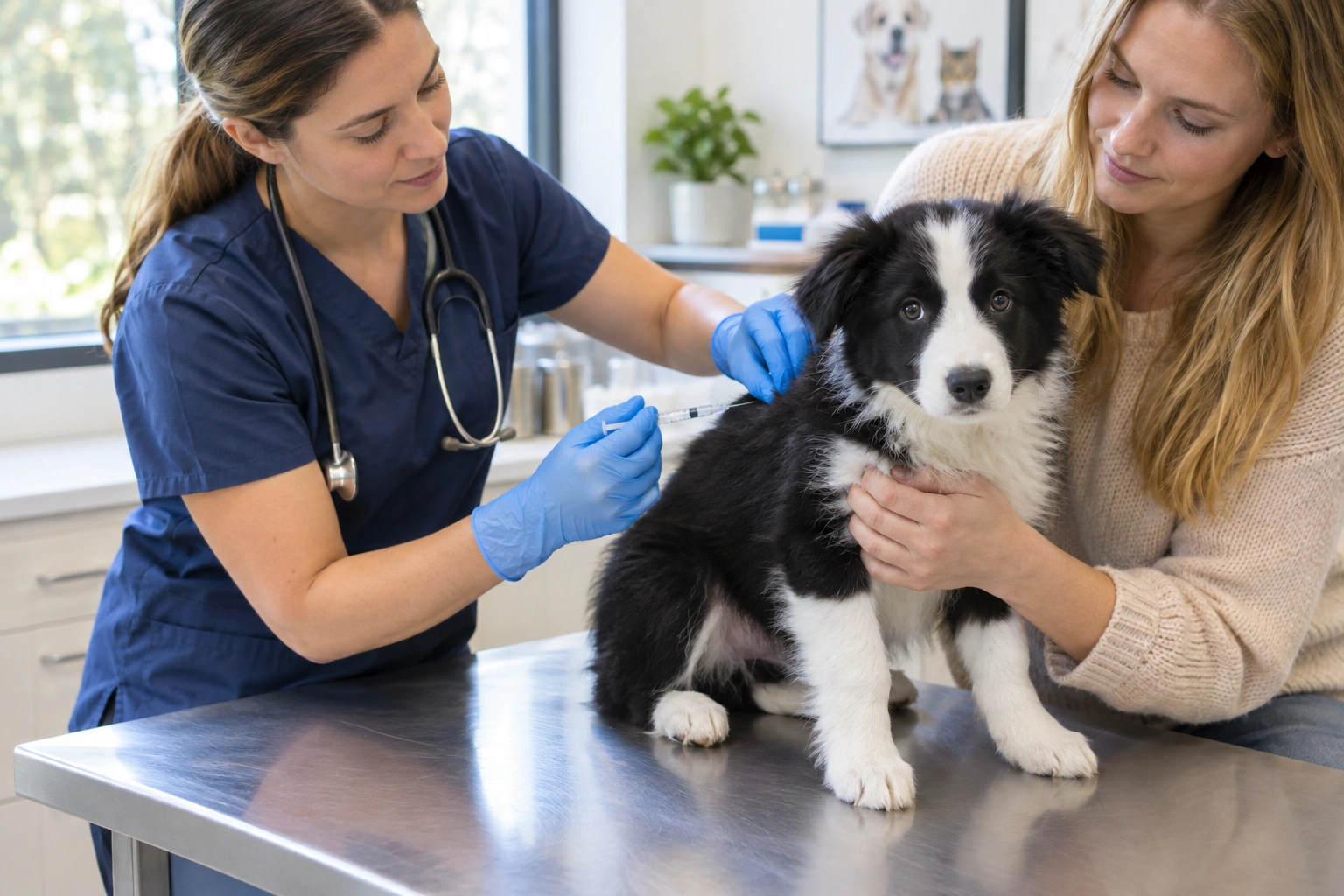
A common schedule looks like this:
- 6–8 weeks: first core vaccines
- 10–12 weeks: next booster
- 14–16 weeks: another booster
- 16+ weeks: final puppy booster, depending on the vet’s plan and local risk
Why the spacing matters
The spacing is not just a calendar habit. If boosters are too far apart, the puppy may not build reliable protection. If the final shot comes too early, maternal antibodies may still blunt the response. That is why the “last puppy shot” is usually not treated as optional.
What this means for owners
If you are scheduling a puppy, plan ahead for repeated visits. A puppy that starts late may need a modified plan, and puppies older than 16 weeks may need a different catch-up approach than a younger puppy. A vet should set that schedule, not guess at it.
If you are comparing puppy care costs or trying to line up training classes after the shots are complete, remember that the vaccine series is a short-term inconvenience that prevents a much bigger problem later.
Adult Dog Booster Schedule: Which Shots Are Yearly, Which Are Every 3 Years, and Why
Once a dog finishes the initial series, the schedule usually slows down. Adult dogs still need boosters, but not every vaccine follows the same interval.
Core boosters
The core vaccines, especially DHPP/DAPP and rabies, do not all follow the same schedule. In many clinics, DHPP/DAPP is given on a 3-year interval after the first-year booster, while rabies may be annual or every 3 years depending on the vaccine label and local law.
Non-core boosters
Lifestyle vaccines are often repeated more often. In many real-world schedules:
- Leptospirosis is usually annual
- Bordetella is commonly repeated every 6 to 12 months, depending on the clinic, product, and facility rules
- Lyme is usually annual if it is needed
- Canine influenza is often annual when recommended
That does not mean every dog needs all of them. It means the interval is usually shorter once a dog is exposed to the kind of life that makes the vaccine worth using.
The trade-off
A longer interval means fewer vet visits and lower short-term cost. A shorter interval can mean better protection for dogs with more exposure, but it also means more planning and more expense. The right answer is usually not “everything yearly” or “nothing unless required.” It is matching the booster schedule to the dog’s actual risk.
For general guidance on vaccine timing, the American Kennel Club’s dog care resources are a useful starting point, but your veterinarian should still make the final call for your dog.
Rabies Vaccine Rules: Medical Timing vs. Local Law and Facility Requirements
Rabies deserves its own section because this is where owners get tripped up.
Three different things can control rabies timing
-
The vaccine label
Some rabies vaccines are labeled for one year, others for three. -
Local law
Many states and municipalities have their own rabies rules. Some require annual vaccination even if the product can last longer. -
Facility requirements
Boarding, daycare, grooming, and training facilities may ask for current rabies proof even when the legal requirement is different.
Why this matters
A dog can be medically “covered” and still be turned away from daycare if the paperwork is not current. On the other hand, a dog can have a recent rabies shot and still need a different booster schedule because the state or city requires it.
What to do
Before you assume the schedule, check:
- the vaccine type your vet used,
- your local rabies law,
- and the policy of any facility your dog uses.
That is the safest way to avoid a surprise at the front desk. The ASPCA’s dog vaccination guidance is a helpful general reference, but local legal rules still control the final answer.
Lifestyle-Based Vaccines: Boarding, Daycare, Grooming, Travel, Parks, and Outdoor Dogs
Non-core vaccines make the most sense when the dog’s daily life creates exposure.
Bordetella
Bordetella is commonly requested by:
- boarding facilities
- daycare
- grooming salons
- training centers
If your dog is around many unfamiliar dogs, this is often one of the first vaccines to discuss.
Leptospirosis
Lepto risk tends to rise with outdoor exposure, wildlife, standing water, and some travel patterns. For a dog that hikes, camps, or spends a lot of time in natural areas, this vaccine is worth a serious conversation with your vet.
Lyme
Lyme vaccination is usually discussed when ticks are part of the dog’s environment. That often means certain hiking areas, wooded regions, or places with known tick pressure.
Canine influenza
Canine flu is more situational, but it can matter for dogs that are around many other dogs in close quarters.
A practical Border Collie example
A Border Collie that goes from trail walks to training classes to dog-friendly travel is not a “low exposure” dog. That does not automatically mean every non-core vaccine is needed, but it does mean the dog’s schedule should be discussed as a lifestyle plan, not just a routine annual checklist.
What to Do If Your Dog Is Overdue, Missed a Shot, or Has Unknown Records
This is where many owners worry they “ruined” the schedule. Usually, they have not.
If your dog is only slightly overdue
Call your vet and ask whether you should come in for the booster as soon as possible or whether the appointment can stay on the current plan. A short delay does not always mean a major change.
If your dog is overdue by a long time
Do not assume you need to restart everything, but do expect the vet to reassess. In some cases, a vet may recommend restarting part of a puppy series or giving a catch-up plan if the gap was long enough. The right answer depends on how long the gap has been and which vaccine is due.
If your dog’s history is unknown
This is common with rescues, rehomed dogs, and dogs adopted with incomplete paperwork. Bring any records you do have to the vet, even if they are incomplete or old. Ask whether the dog needs:
- a catch-up schedule,
- a booster,
- or, in some cases, restarting part of a series.
If the dog had a vaccine reaction before
Do not wing it. A previous reaction changes the risk discussion, and the vet may choose a different product or timing.
The rule to follow
If you are unsure, call the vet before the appointment date, not after the dog is already overdue by months. That gives you a better chance of keeping the schedule efficient.
Cost, Records, and Planning: How to Budget and Stay on Schedule
Vaccines are easier to manage when you treat them like a system.
Budgeting
Costs vary by clinic, region, and vaccine type. As a rough planning guide, many owners see:
- Puppy vaccine series: about $75 to $250+ total, depending on how many visits and add-ons are included
- Adult booster visit: about $20 to $75 for a routine vaccine visit, before any exam fee or extra vaccines
- Common non-core add-ons: often $15 to $40 per vaccine at some clinics, though bundled pricing is also common
Those are only planning ranges, not fixed prices. Your local clinic may charge more or less depending on the exam fee, vaccine brand, and whether the visit includes testing or paperwork.
The smartest budget move is not chasing the cheapest single shot. It is planning for the full year of care, including wellness exams, boosters, and any required paperwork for boarding or travel.
Records
Keep your dog’s vaccine records in one place:
- a digital photo in your phone,
- a copy in your email,
- and a printed version if you board or travel often.
Facilities often want proof quickly, and nobody wants to hunt through old messages the morning of drop-off.
Reminders
Set calendar reminders for:
- puppy follow-up visits,
- annual wellness exams,
- rabies renewal,
- and any non-core boosters your vet recommends.
That matters even more for active dogs that rotate between hiking, daycare, training, and travel.
Vaccine Reactions and When to Contact a Veterinarian
Most dogs do well after vaccination. Mild soreness or a quiet evening is common enough that many owners do not need to worry.
Mild, expected effects can include
- tenderness at the injection site
- mild tiredness
- a lower-energy day
Call a veterinarian promptly if you notice
- facial swelling
- vomiting
- hives
- severe lethargy
- breathing trouble
- collapse
Those are not “wait and see” signs.
Why this matters
A dog that reacted once may still be vaccinated safely in the future, but the plan may need to change. The vet should be the one to decide that, not guesswork at the next appointment.
A Simple Way to Think About Your Dog’s Shot Schedule
If you want the cleanest decision rule, use this:
- Puppy: follow the series on schedule until the vet says it is complete.
- Adult dog: check which core boosters are due this year versus every three years.
- Lifestyle dog: add vaccines based on boarding, daycare, travel, wildlife, or tick exposure.
- Unknown or overdue history: call the vet before assuming anything.
- Rabies: always check both the law and the vaccine label.
That approach keeps the schedule practical instead of confusing.
Frequently Asked Questions
How often do dogs get shots?
Puppies usually get shots every 2 to 4 weeks until at least 16 weeks old. Adult dogs then move to booster schedules that are often every 1 to 3 years for core vaccines, with some lifestyle vaccines given more often.
Do indoor dogs still need vaccines?
Often, yes. Indoor life lowers exposure, but it does not eliminate it. Core vaccines are still commonly recommended, and rabies may still be legally required.
Are rabies shots always yearly?
No. Rabies can be annual or every three years depending on the vaccine and local law.
Which shots are most important for puppies?
The core puppy series is usually the priority, especially vaccines that protect against distemper, parvovirus, adenovirus, and rabies at the appropriate age.
What if my dog missed a booster?
Call your vet. Some dogs can simply get back on schedule, while others may need part of the series repeated.
Do boarding and daycare require extra vaccines?
Often they do. Bordetella is a common example, but policies vary. Always check the facility’s rules before drop-off.
When to See a Veterinarian or Certified Trainer
This topic is medical, so a veterinarian should guide the schedule. Book a visit if:
- your dog is a puppy and you are not sure which shots are due next,
- your dog has unknown or incomplete vaccine records,
- your dog is overdue,
- your dog had a previous vaccine reaction,
- or your dog’s lifestyle has changed and may now justify non-core vaccines.
A certified trainer can help with handling, travel, and clinic comfort, but vaccine timing itself belongs with the vet.
