
How Often Should You Feed a Border Collie? A Practical Life-Stage Guide

Border Collies are active, intelligent dogs, but the safest feeding schedule is still built around age, body condition, and daily routine rather than energy level alone. A healthy adult Border Collie usually does well on two meals a day, while puppies need more frequent smaller meals and seniors may need the same number of meals, or sometimes smaller portions spread more comfortably through the day.
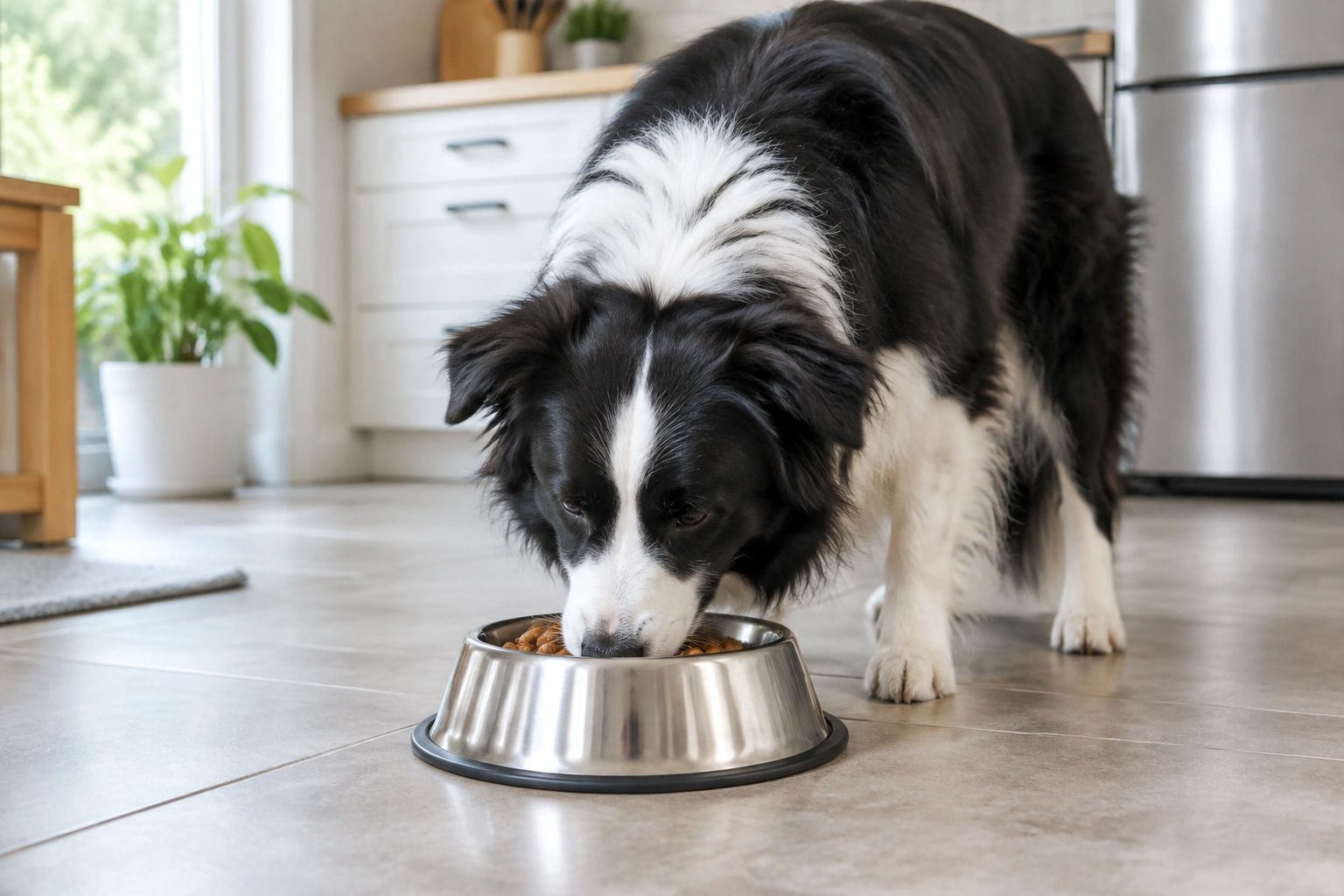
The key point is this: meal frequency and total daily food are not the same thing. You can feed twice a day, three times a day, or more often in puppyhood and still give the same total calories. What changes is how those calories are divided.
Quick answer: the best starting point by life stage
| Life stage | Typical feeding frequency | Practical note |
|---|---|---|
| Border Collie puppy | 3 to 4 meals a day | Smaller meals help with growth, digestion, and steady energy |
| Adult Border Collie | 2 meals a day | The most practical routine for most dogs |
| Senior Border Collie | Usually 2 meals a day | Some do better with smaller, easier-to-digest meals |
| Highly active or working adult | Usually 2 meals a day, sometimes with schedule adjustments | Total calories matter more than adding extra meals |
If you want one simple rule to begin with, use this: feed puppies more often, feed adults twice daily, and adjust from there based on body condition, appetite, and activity.
Border Collie feeding frequency by age
A Border Collie’s feeding schedule should change as the dog moves from rapid growth into adulthood and then into older age. The goal is not to follow a rigid rule forever. It is to match the dog’s stomach capacity, energy needs, and routine at each stage.
Puppies: why Border Collies need more frequent meals
Border Collie puppies should usually eat three or four small meals per day. Breed guides such as PetMD suggest that many Border Collie puppies do well with a regular meal schedule and that puppy food is often used until roughly 12–18 months of age, when the dog can move to adult food. That makes them a helpful starting reference, but individual puppies may need a little more or less depending on growth, appetite, and digestion.
Why the extra meals matter:
- Small stomachs fill fast. A puppy that gets one or two large meals may struggle to eat enough overall.
- Growing bodies use energy quickly. More frequent meals help spread calories through the day.
- Steadier intake is easier on digestion. Smaller meals are usually less likely to cause gulping, vomiting, or big hunger swings.
A practical puppy schedule often looks like this:
– Morning meal
– Midday meal
– Late afternoon or early evening meal
– Optional fourth meal for very young puppies or especially small eaters
If your puppy is leaving food behind at one meal but hungry at the next, that can be a sign the meals are too large, too close together, or not matched well to the puppy’s current appetite.
Adults: is twice a day enough for a Border Collie?
For most adult Border Collies, yes—twice a day is enough. That is the most common and practical routine, and it is also a schedule commonly recommended in breed-focused feeding guides. It works well because it:
- keeps the routine simple
- avoids very large single meals
- makes it easier to monitor appetite
- fits most work schedules
- helps many dogs stay settled between meals
For most households, two meals a day is a good default. If your dog does well on that schedule, there is usually no need to complicate things.
Is once a day enough?
Some adult dogs can technically be fed once a day, but for a Border Collie, it is usually not the best default choice. One larger meal can be less comfortable to digest, and many dogs do better with their calories split into morning and evening meals. If a dog has a very predictable appetite and a vet has no concerns, once-daily feeding may be workable for some households, but it is not the routine I would pick first for most Border Collies.
A useful decision rule: if you are unsure, choose two meals instead of one. It is the safer, more manageable starting point for most adults.
Seniors: adjusting meal frequency for aging Border Collies
Senior Border Collies often stay on two meals a day, but the size and timing of those meals may need to change. Older dogs may eat more slowly, have a smaller appetite, or seem more comfortable with smaller portions split into two manageable meals. Some seniors also benefit from a routine that is easier on the stomach and easier to keep consistent.
Watch for these changes:
– finishing meals more slowly
– leaving food behind
– seeming hungry but tiring quickly
– weight creeping up or down
– softer stools or more digestive sensitivity
If your senior Border Collie is maintaining weight and eating comfortably, there may be no reason to change meal frequency. If appetite or digestion shifts, the schedule can be adjusted without changing the whole diet at once.
Quick note: Portion size should be based on your dog’s ideal body weight, the food label’s feeding guidance, and your vet’s advice—not meal count alone.
How activity level changes feeding needs
Border Collies are known for being active, but activity level does not automatically mean more meals. It usually means more total calories, not necessarily more feeding times.
A pet Border Collie that gets daily walks and play may do perfectly well on two meals a day. A working or highly active Border Collie may still eat twice a day, but the portions may be larger and the timing may need to be more thoughtful around exercise.
Pet dogs vs working dogs
- Typical pet Border Collie: two meals daily is usually enough
- Very active or working Border Collie: often still two meals daily, but with closer attention to total calories, recovery, and exercise timing
If a dog is burning a lot of energy, the first question is not “Should I add more meals?” It is “Is the dog getting enough total food for the work it is doing?”
That distinction matters because extra meals without extra calories do not solve weight loss, and extra calories without a plan can lead to unwanted weight gain.
When smaller, more frequent meals can help
A working Border Collie may benefit from splitting food into smaller meals when:
– the dog gulps food quickly and seems uncomfortable after eating
– meals need to fit around training sessions or long work blocks
– the dog has a sensitive stomach and does better with less food at one time
– the dog struggles with weight loss and needs calories spread across the day
That does not always mean adding a full extra meal. Sometimes it simply means dividing the same daily amount into smaller portions for easier digestion or training convenience.
Meal frequency vs portion size: what matters more?
This is where many owners get tripped up. A dog can be fed three times a day and still be underfed. Another dog can be fed twice a day and still be overfed. The number of meals is only the delivery system.
What matters most:
1. Total daily calories
2. Body condition
3. Weight trend over time
4. How well the dog digests the food
If your Border Collie is too thin, adding a meal may help only if it also increases total daily intake. If your dog is gaining too much weight, reducing meal frequency alone may not help unless the total calories also come down.
A practical example:
– Two meals a day, each the right size, can maintain a healthy adult perfectly well.
– Three meals a day can be useful for a puppy or a dog that gets hungry between meals.
– One meal a day may be simple, but it often makes portion control and digestion harder.
How to tell if you’re feeding too much or too little
The best check is not the bowl. It is the dog’s body.
Signs your Border Collie may be getting too much food
- weight gain over several weeks
- waist becoming less visible
- ribs harder to feel under a light layer of fat
- slower movement or less willingness to exercise
- frequent begging that may be tied to treats, not actual hunger
Signs your Border Collie may be getting too little
- weight loss
- ribs, spine, or hip bones becoming too obvious
- low energy or reduced stamina
- finishing meals very quickly and still seeming unsatisfied
- poor coat condition or a generally “flat” look, especially if paired with weight loss
A simple body condition check is useful here: you should usually be able to feel the ribs without pressing hard, and the dog should have a visible waist when viewed from above.
If body condition is changing, do not assume the feeding frequency is the problem. Often the real issue is total calories, treats, or an activity change.
Treats, training rewards, and extra calories
Treats are one of the easiest ways to accidentally overfeed a Border Collie. This breed often trains well, which means training rewards can add up fast.
A practical rule:
– keep treats small
– count them as part of the day’s intake
– reduce meal portions slightly if training rewards are frequent
This matters most for dogs in training, dogs with busy family routines, and Border Collies that get multiple snack sources from different people in the household. A dog that seems to be “always hungry” may simply be getting more calories than anyone is tracking.
When to feed around exercise
Border Collies are active enough that meal timing around exercise matters. Feeding too close to hard exercise can make some dogs uncomfortable, especially if they eat quickly or gulp a large meal.
A conservative routine is:
– avoid a big meal right before intense activity
– give time after eating before vigorous exercise
– keep post-exercise meals calm and unhurried
For a dog that is going out for a hard run, agility session, or long training block, the safest pattern is usually to feed after the intense work, not immediately before. For lighter walks or casual play, timing is less critical.
If your Border Collie tends to eat fast, splitting the meal into two bowls or using a slow feeder can make the routine more comfortable without changing total intake.
How to transition from puppy meals to an adult schedule
Most Border Collies can stay on puppy food until 12–18 months of age, then move to adult food. That transition is a good time to reduce meal frequency from three or four meals to two.
A gradual transition over about 1 to 2 weeks is usually easiest on digestion and appetite:
1. Keep the puppy on the current schedule for the first few days.
2. Move one meal closer to another meal time, or combine two smaller meals into one slightly larger meal.
3. Watch stool quality, appetite, and energy as the schedule changes.
4. If stools soften, appetite drops, or the puppy starts leaving food behind, slow the transition down.
5. Once the dog is eating steadily, maintaining weight, and looking lean but not bony, settle into the adult schedule.
Do not rush this change just because the dog looks bigger. Growth rate, body condition, and stool quality matter more than age alone.
Adjusting meal frequency when life changes
Feeding needs can change when your Border Collie’s lifestyle changes. A dog that becomes less active with age may need the same meal schedule but smaller portions. A pet dog that starts doing regular herding, agility, or endurance work may need more calories and sometimes smaller, more frequent meals for comfort.
A good rule is to revisit the schedule when:
– activity level changes noticeably
– weight starts drifting up or down
– the dog develops a sensitive stomach
– training volume increases
– the dog becomes a senior and slows down
Common feeding mistakes Border Collie owners make
The most common problems are not exotic. They are routine mistakes that build up slowly.
1. Confusing meal frequency with portion size
More meals do not automatically mean more food.
2. Feeding a puppy too infrequently
Young Border Collies need more frequent meals than adults.
3. Overdoing treats
Training rewards can quietly add a lot of calories.
4. Changing too quickly from puppy to adult feeding
A gradual transition is easier on the stomach and appetite.
5. Feeding too close to hard exercise
This can make some dogs uncomfortable and may encourage gulping.
6. Ignoring body condition
The bowl is not the best judge. The dog’s shape and weight trend are.
When to ask your veterinarian
A feeding schedule should be reviewed if your Border Collie:
– is losing weight without a clear reason
– is gaining weight quickly
– has ongoing vomiting, loose stools, or poor appetite
– seems hungry all the time despite adequate portions
– has a medical issue that affects digestion or energy use
– is a puppy with low energy, shakiness, or poor growth
If the dog’s body condition or digestion is changing, a vet visit is more useful than endlessly adjusting meal timing at home.
FAQ
How many times a day should a Border Collie eat?
Most adult Border Collies do well with two meals a day. Puppies usually need three to four smaller meals, and seniors often stay on two meals unless digestion or appetite suggests a change.
Can I feed my Border Collie once a day?
It may work for some adults, but twice a day is usually a better default. It is often easier on digestion and simpler to manage.
Should a Border Collie with a sensitive stomach eat smaller meals?
Often, yes. Some dogs with sensitive stomachs do better when the same daily food is split into smaller, more frequent meals. If vomiting, loose stools, or discomfort continue, ask your vet.
What if my Border Collie is gaining weight?
Do not just change meal frequency. Check the total daily calories, treats, and exercise level. Your dog may need smaller portions, fewer treats, or a different food.
How do I change feeding when my Border Collie becomes less active?
Keep the schedule if it still works, but reduce total calories if weight starts to rise. Lifestyle changes matter as much as age.
Bottom line
For most Border Collies, the answer is straightforward: puppies need three to four smaller meals a day, adults usually do best on two meals a day, and seniors often stay on two meals with adjustments for comfort and appetite. Activity level changes the amount of food more than the number of meals, and the best routine is the one that keeps your dog at a healthy weight, eating comfortably, and staying consistent day to day.