
How Old Is a Senior Dog? A Practical Age Guide for Border Collie Owners

If you’re trying to answer how old is a senior dog, the honest answer is: there isn’t one universal age that fits every dog.
A dog’s “senior” status depends on both chronological age and functional health. In other words, the number on the calendar matters, but so does how the dog is actually moving, recovering, and aging in daily life.
A small dog may not be considered senior until much later than a large or giant breed. As a practical rule, many dogs begin entering senior status somewhere between 5 and 12 years old, depending on size, breed, and health. That range sounds wide because it is wide. A 7-year-old Border Collie may still look and act very youthful, but that same age can mean something very different in a larger, faster-aging breed.
The better question is not just “How old is my dog?” It is “Is my dog starting to show senior changes, and should I adjust care now?”
How old is a senior dog? The short answer
A dog is often considered senior when it reaches the later part of its expected lifespan, but that point shifts with breed size.
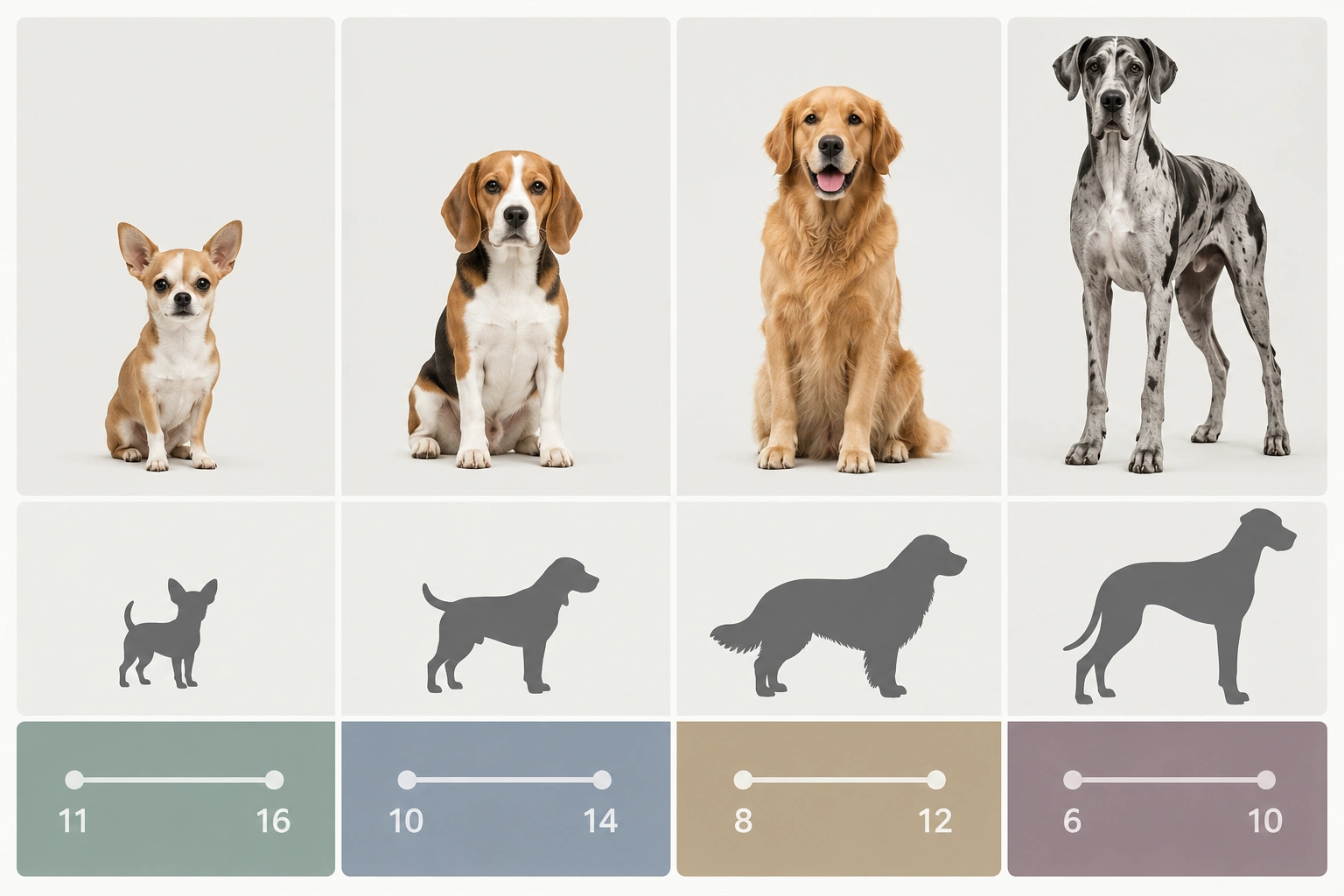
Here’s the practical version:
- Small dogs under 20 pounds: often senior around 7 to 10 years
- Medium dogs: often senior around 7 years
- Large dogs: often senior around 5 to 6 years
- Giant breeds: often senior around 5 to 6 years, sometimes earlier
That lines up with veterinary guidance that senior status depends on breed size and life expectancy, not a single birthday. The AVMA notes that senior status is often discussed as the later portion of a dog’s estimated lifespan, which is a useful way to think about it because it accounts for breed differences.
For many owners, the most useful takeaway is this: 7 years old is a common senior benchmark, but it is not a rule.
Why senior age depends on breed size and type
Dogs do not all age at the same pace. Larger dogs generally move into senior status sooner than smaller dogs because they tend to have shorter lifespans overall.
Why this matters in real life:
- A small dog may still be energetic at 10 or 11 and only just be entering senior care.
- A large dog may need joint support, screening, and diet adjustments earlier.
- A giant breed can show age-related stiffness or slower recovery surprisingly early, even if the dog still seems mentally sharp.
The practical trade-off is this: if you wait for obvious “old dog” signs, you may miss the best window for prevention. If you treat every middle-aged dog as a senior too early, you can overmanage a dog that is still thriving. The goal is to match care to the dog in front of you, not the number on the calendar.
Senior age ranges by dog size
This table gives you a usable starting point.
| Dog size | Typical senior range | What that often looks like |
|---|---|---|
| Small dogs under 20 lbs | 7–10 years, sometimes later | Still active, but may need dental and weight monitoring |
| Medium dogs | Around 7 years | Often the first stage where screening becomes more important |
| Large dogs | 5–6 years | May show stiffness, slower recovery, or reduced stamina sooner |
| Giant breeds | 5–6 years, sometimes earlier | Joint and mobility changes can appear before obvious “old age” behavior |
These are guidelines, not diagnoses. A healthy, lean, well-conditioned 7-year-old dog may function more like a younger adult than a senior. On the other hand, a dog with arthritis, chronic dental disease, or a history of health problems may need senior-style care sooner than the table suggests.
The AAHA’s senior pet guidance also emphasizes that senior status varies by size and lifespan, with smaller dogs often aging into that stage later and large dogs earlier. That range is one reason owners should use breed size, not age alone, as the first filter.
Where Border Collies usually fit
Border Collies sit in an interesting middle ground.
They are not toy dogs, but they are not giant breeds either. Most fall into the medium-to-large category, which means many Border Collies begin entering senior years around 7 years old, though some may not show meaningful age changes until later. Their high drive can make them seem “young” well into adulthood because they still want to work, chase, hike, and train.
That creates a common trap: an active Border Collie can look younger than its joints and recovery time actually are.
A 7-year-old Border Collie that still loves fetch may still need senior-aware care if you notice any of these:
- slower warm-up before exercise
- more stiffness after hard activity
- longer naps after outings
- less enthusiasm for jumping into the car
- taking longer to recover after a big training day
In Border Collies, aging often shows up first in recovery, not attitude. A dog may still want the ball, but the body may need more time to bounce back.
Senior dog vs adult dog vs middle-aged dog
Aging in dogs is not a switch. It is a progression.
Adult dog
An adult dog usually has stable stamina, normal recovery, and predictable movement. Exercise tolerance is steady. Appetite is usually consistent. Small changes may happen, but they are not persistent.
Middle-aged dog
A middle-aged dog often still performs well, but recovery starts to stretch out a little. You may notice:
- more sleep
- slightly less explosiveness
- mild weight gain if activity drops
- occasional stiffness after intense exercise
This stage is easy to miss because the dog still seems “fine.”
Senior dog
A senior dog usually shows more consistent age-related change. That may include:
- slower movement after resting
- less tolerance for long or intense sessions
- more visible joint stiffness
- sensory changes like cloudier eyes or reduced hearing
- altered sleep patterns
A useful decision rule: if your dog is still eager but needs noticeably more recovery, you may be looking at the shift from adult to senior care even if the dog seems mentally bright.
Signs your dog may be entering senior years
Some aging signs are obvious. Others are subtle enough that owners excuse them as “just an off week.”
Look for patterns, not one isolated day.
Physical signs
- graying around the muzzle or face
- stiffness after rest or exercise
- slower stairs, jumps, or car entry
- reduced muscle tone
- weight gain or weight loss
- bad breath, tartar, or chewing changes
- cloudy eyes
- reduced hearing or slower response to cues
Behavioral signs
- sleeping more
- shorter play bursts
- less interest in long outings
- slower recovery after exercise
- choosing rest over interaction more often
- seeming less confident in dim light or noisy spaces
A dog can still be cheerful and active while showing several of these changes. That is why “still acting like a puppy” is not a reliable measure of age.
The RSPCA’s senior dog guidance is useful here because it emphasizes that dogs age at different rates and that regular health checks matter for catching problems early.
What senior status means for health and preventive care
Senior status is not just a label. It changes what you should watch more closely.
The main shift is from reactive care to preventive care. Instead of waiting for a problem to become obvious, you start looking earlier for:
- arthritis and mobility decline
- dental disease
- weight changes
- heart, kidney, liver, or thyroid concerns
- vision and hearing changes
That does not mean your dog is sick. It means the odds of age-related issues rise enough that early detection matters more.
For Border Collies, this is especially important because their drive can hide discomfort. A dog that keeps working hard may still be compensating for pain, stiffness, or sensory decline.
When to start senior wellness exams and screenings
A practical rule: start senior-focused vet conversations before your dog looks “old.”
For many medium dogs, that means around 7 years old. For larger dogs, it can be earlier. For smaller dogs, it may be later. If your dog has a chronic condition or a history of orthopedic issues, start sooner.
Senior wellness exams are useful because they can catch gradual changes before they become obvious at home. A typical senior visit may include a physical exam, weight and body-condition scoring, a joint and mobility check, a dental/oral exam, and screening tests such as bloodwork, urinalysis, and sometimes blood pressure measurement or other testing based on the dog’s history.
How often? Many senior dogs benefit from wellness exams at least once a year, but some veterinarians recommend checking older dogs every 6 months or increasing frequency when age, breed, or medical risk factors make that helpful.
You do not need a dramatic symptom to justify a senior checkup. If your dog is entering the age band where senior status is plausible, that alone is a good reason to schedule one.
Nutrition changes that may be needed in older dogs
Older dogs do not all need the same food, but many do need fewer calories than they used to because activity often drops with age.
That creates a balancing act:
- Too many calories can lead to weight gain, which strains joints.
- Too few calories can lead to muscle loss, especially in dogs that are still active.
For a Border Collie, the right feeding plan often depends on whether the dog is still working, hiking, training, or mostly companion-level active. A highly active senior may need a different diet than a couch-loving senior of the same age.
Do not switch foods just because a bag says “senior.” Instead, use body condition, muscle tone, appetite, and energy as your guide. If your dog is gaining weight, leaving food behind, or losing muscle, that is the time to review the diet with your vet.
How exercise should change as dogs age
Older dogs still need exercise, but the format often matters more than the total amount.
The goal is to preserve mobility without creating avoidable strain.
What usually helps
- more frequent but slightly shorter walks
- longer warm-ups before intense activity
- lower-impact exercise days mixed with active rest
- avoiding repeated high jumps if joints are stiff
- watching recovery the next day, not just performance in the moment
What to watch for
If your dog is limping after exercise, lagging on stairs, or stiff the morning after a long outing, the current workload may be too much.
For active breeds like Border Collies, this is where owners often have to make a hard but useful trade-off: keeping the dog mentally satisfied without overloading aging joints. A dog can still love fetch and agility-style movement but may need fewer repetitions and more recovery time.
Joint, dental, vision, and hearing care in senior dogs
These are the systems owners most often miss because changes can be gradual.
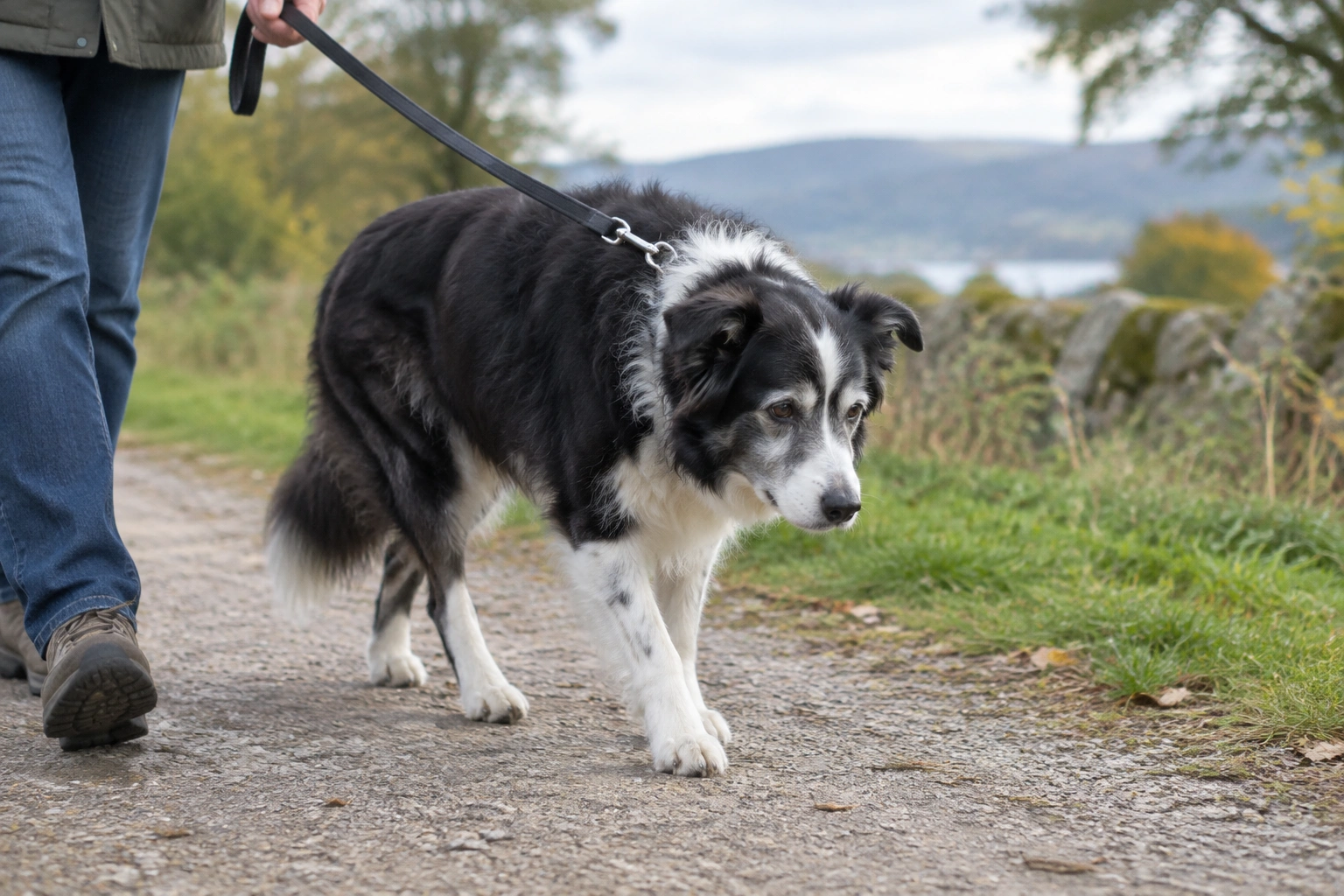
Joint care
Stiffness, slower rising, and reluctance to jump are common early clues. If your dog is moving differently, do not assume it is “just getting older.” Aging and pain are not the same thing.
Dental care
Bad breath is not normal just because a dog is older. Dental disease can affect comfort, appetite, and overall health. If chewing changes or tartar is visible, that deserves attention.
Vision
Cloudiness, hesitating in dim light, or bumping into objects can signal eye changes. Dogs often adapt surprisingly well, so the signs may be subtle.
Hearing
If your dog stops responding to familiar sounds or seems easier to startle, hearing loss may be part of the picture.
The key point: these changes often happen slowly enough that owners normalize them. Once you notice a trend, document it and bring it up at the next vet visit.
When to call the vet about aging changes
Some changes are normal parts of aging. Others should not be brushed off.
Call a veterinarian promptly if you notice:
- sudden appetite loss
- rapid weight loss
- repeated vomiting or diarrhea
- sudden limping or clear pain
- trouble standing up or climbing stairs
- sudden confusion or behavior change
- sudden vision loss or marked eye cloudiness
- major hearing or responsiveness changes
- breathing changes or exercise intolerance
A slow decline over months is different from a sudden shift over days. Sudden change is the red flag.
If you are unsure whether a change is “just age,” treat it as worth checking. Older dogs often hide discomfort well, and early assessment is usually more useful than waiting.
The practical takeaway for Border Collie owners
If your Border Collie is around 7 years old, you do not need to panic and label them “old.” But you should start thinking like an owner of a maturing dog: watch recovery, watch joints, watch weight, and make veterinary screening part of the plan.
That is the real answer to how old is a senior dog: it depends on size, breed, and health, but for many Border Collies, senior care often begins around the 7-year mark, even if the dog still looks and feels energetic.
FAQ
Is 7 years old old for a dog?
For many medium and large dogs, yes, 7 is often the age when senior care becomes relevant. But it is not a universal cutoff. Small dogs may be younger in body than that, while large dogs may already be showing senior changes.
At what age is a Border Collie a senior?
Many Border Collies begin entering senior years around 7 years old, though individual dogs vary. Health, body condition, and activity level matter as much as the birthday.
Does senior age depend on breed size?
Yes. Smaller dogs usually become senior later than larger dogs, while large and giant breeds often reach senior status earlier.
What are the first signs my dog is aging?
The earliest signs are often subtle: slower recovery, more sleep, stiffness after exercise, and slight changes in mobility or appetite.
When should I start senior dog checkups?
A good rule is to begin senior-focused vet discussions when your dog enters the age range where senior status becomes likely for its size and breed. For many medium dogs, that is around 7 years old.
Should I change my dog’s food when they become senior?
Not automatically. A change may help if your dog is gaining weight, losing muscle, or becoming less active, but the best diet depends on the dog’s body condition and health history.
