

Quick Answer
To bathe a Border Collie puppy, brush the coat first, use comfortably lukewarm water, apply puppy-safe shampoo, and rinse until the water runs clear. Dry the double coat thoroughly, and follow a sensible Border Collie puppy bathing schedule to avoid stripping natural skin oils.
Quick Bathing Steps
- Prepare everything: Place shampoo, towels, treats, a washcloth, and a nonslip mat within reach.
- Brush first: Remove loose hair, dirt, and small tangles before adding water.
- Wet slowly: Use lukewarm water and start at the paws instead of the head.
- Wash gently: Massage diluted puppy shampoo through the coat without scrubbing the face.
- Rinse completely: Keep rinsing until no foam or slippery residue remains.
- Dry thoroughly: Towel-blot the coat and use a cool dryer only if your puppy accepts it.
Bathing a lively Border Collie puppy can feel like washing a small, furry tornado. I’ve found that preparation and calm handling matter more than speed.
This 2026 guide explains the complete process for both rough-coated and smooth-coated Border Collie pups. You’ll also learn how to prevent fear, protect the double coat, and spot problems that need veterinary care.
In This Guide
- When Can You Give a Border Collie Puppy Its First Bath?
- What Do You Need to Bathe a Border Collie Puppy?
- How Should You Prepare a Border Collie Puppy’s Coat?
- How Do You Bathe a Border Collie Puppy Step by Step?
- How Do You Dry a Border Collie Puppy Safely?
- How Often Should a Border Collie Puppy Be Bathed?
- What Border Collie Puppy Bathing Mistakes Should You Avoid?
- What If Your Border Collie Puppy Hates Baths?
- Frequently Asked Questions
- Make Every Puppy Bath Calm and Positive
When Can You Give a Border Collie Puppy Its First Bath?
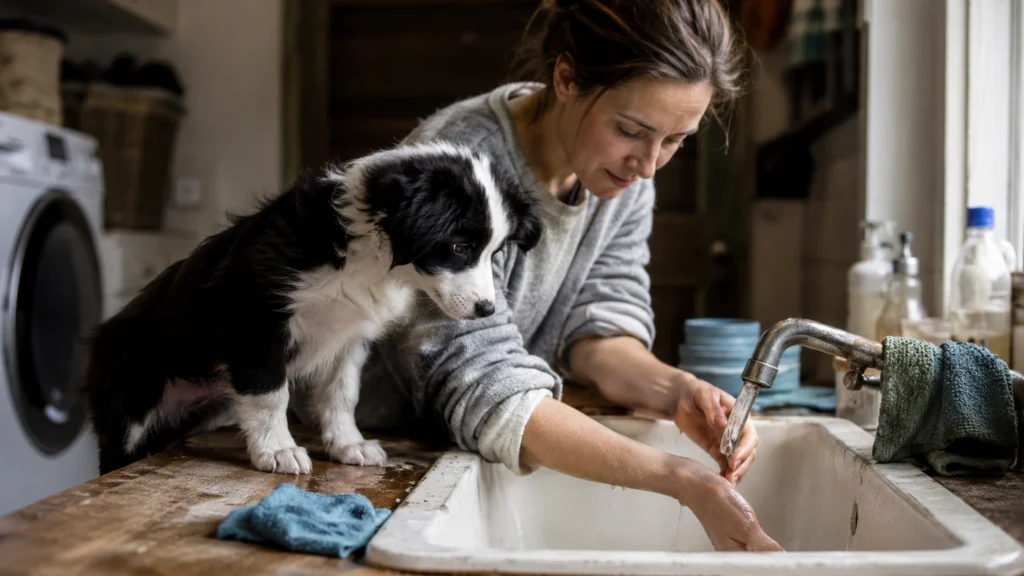
Most healthy Border Collie puppies can have a careful home bath from about eight weeks old. A younger puppy should usually be spot-cleaned unless a veterinarian recommends a full bath.
Age isn’t the only consideration. Your puppy must be healthy, warm, alert, and able to remain indoors until completely dry.
When should you delay the bath?
Postpone a routine bath if your puppy is sick, unusually sleepy, shivering, or recovering from treatment. Ask your veterinarian before bathing a puppy with stitches, open skin, or a diagnosed skin condition.
- Very young puppy: Use a warm damp cloth for small messes.
- Recently vaccinated puppy: Follow your veterinarian’s aftercare instructions.
- Flea or skin problem: Get professional advice before applying medicated products.
- Cold home: Wait until you can provide a warm, draft-free drying area.
- Public grooming salon: Confirm its vaccination and health requirements first.
A puppy doesn’t need to visit a public groomer for its first bath. A quiet sink, laundry tub, or bathtub at home offers more control and less exposure.
Vet note: Contact your veterinarian if your puppy has redness, sores, hair loss, strong odor, discharge, or persistent itching.
Section Takeaway: A healthy puppy around eight weeks or older can usually have a gentle home bath. Delay it when illness, skin damage, or chilling could make bathing unsafe.
What Do You Need to Bathe a Border Collie Puppy?
Gather every item before bringing your puppy into the bathroom. Once the water starts, you shouldn’t have to leave an active puppy unattended.
Border Collies learn patterns quickly. A prepared, predictable setup helps turn bathing into a normal grooming routine.
| Item | Recommended Choice | What to Avoid |
|---|---|---|
| Shampoo | Mild, dog-specific puppy shampoo | Human shampoo, dish soap, or strong perfume |
| Water | Comfortably lukewarm, near 98°F or 37°C | Hot water or a cold outdoor hose |
| Bath surface | Rubber mat or folded nonslip towel | Bare, slippery porcelain |
| Rinsing tool | Cup or low-pressure handheld sprayer | Loud, forceful spray |
| Drying tool | Two absorbent towels and optional cool dryer | High heat held near the skin |
Which shampoo is safe?
Choose a product labeled for dogs and puppies. A mild, fragrance-light formula is often easier on young skin, although medical needs vary.
Human skin and canine skin have different needs. The ASPCA’s dog grooming guidance recommends using products formulated specifically for pets.
If you need help comparing ingredients, read our guide to choosing the best shampoo for a Border Collie puppy. Follow the product label and your veterinarian’s instructions.
How Should You Prepare a Border Collie Puppy’s Coat?
Brush your puppy before getting the coat wet. Water can tighten small tangles and make hidden mats harder to remove.
A Border Collie’s double coat is a two-layer coat consisting of a protective outer layer and a softer, insulating undercoat. Shampoo and rinse water must reach both layers without rough scrubbing.
Rough coat versus smooth coat
Rough-coated puppies develop longer feathering around the chest, legs, and tail. These areas hold more water and need extra brushing and drying.
Smooth-coated puppies have shorter outer hair, but they still carry a dense undercoat. Short hair doesn’t remove the need for thorough rinsing.
- Check behind the ears: Fine hair can form small tangles in this area.
- Comb the armpits: Friction from movement or a harness can cause knots.
- Inspect the tail: Remove burrs and dried dirt gently.
- Check the paws: Look between the toes for mud, grass seeds, or irritation.
- Remove the collar: Wash and dry the neck area completely.
Never shave a healthy double coat simply to make bathing easier. Learn how coat length and texture differ in our guide to Border Collie coat types.
I use a short brushing session before filling the tub. My puppies stay calmer when brushing and bathing feel like two separate activities.
How Do You Bathe a Border Collie Puppy Step by Step?
Keep the first bath short, quiet, and controlled. Ten minutes of calm practice creates a better lesson than a long struggle for perfect cleanliness.
Set up a safe surface. Place a rubber mat inside the empty sink or tub so your puppy can stand without sliding.
Test the water. Run comfortably lukewarm water and check it against the inside of your wrist.
Introduce the bath area. Let your puppy step onto the mat and reward calm standing before water touches the coat.
Wet the body slowly. Begin at the paws, then move up the legs, chest, back, and tail.
Protect the face. Keep water away from the eyes, nose, and ear canals, using a damp washcloth instead.
Apply puppy shampoo. Dilute it if the label allows, then massage it gently from the neck toward the tail.
Clean dirty areas carefully. Focus on the paws, underside, rear legs, and tail without aggressively scrubbing the skin.
Rinse completely. Work from the neck backward and part the coat with your fingers to check the undercoat.
Finish positively. Praise your puppy, offer a small treat, and move directly to a warm drying area.
How do you wash the face?
Use a soft washcloth dampened with clean water. Wipe outward around the muzzle and below the eyes without touching the eyeballs.
Don’t pour water over the head. Sudden water near the ears and nose often causes panic, shaking, and attempts to escape.
How can you tell when rinsing is finished?
The water should run clear, and the hair shouldn’t feel slippery. Check the chest, armpits, groin, and tail because residue hides easily there.
Leftover shampoo can contribute to dryness and irritation. Rinsing usually deserves more time than lathering.
For broader adult-dog instructions, see our complete guide on bathing and drying a Border Collie.
Section Takeaway: Work from the paws upward, keep water away from the face, and rinse both coat layers completely. Make the first sessions short enough that your puppy can succeed.
How Do You Dry a Border Collie Puppy Safely?
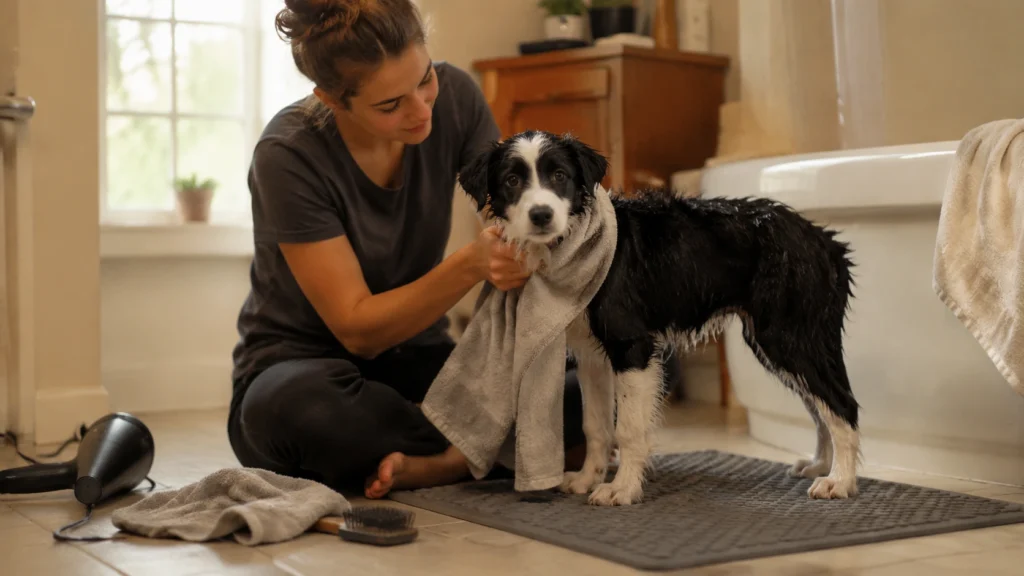
Move your puppy onto a dry, nonslip surface immediately after rinsing. Gently squeeze water from longer hair before wrapping the body in a towel.
Blot and press instead of rubbing in circles. Vigorous rubbing can create tangles in a rough coat and encourage wild post-bath behavior.
Can you use a hair dryer?
You can use a dryer on a cool or low-warm setting if your puppy remains comfortable. Keep it moving and maintain enough distance that the airflow never feels hot.
- Introduce the sound first: Switch the dryer on across the room and reward calm behavior.
- Use low airflow: Strong air may frighten a young puppy.
- Start at the rear: Avoid blowing air toward the face and ears.
- Check the skin: Slide your fingers into the coat to find damp areas.
- Brush when nearly dry: Use gentle strokes in the direction of hair growth.
Keep your puppy indoors until the undercoat feels dry. A damp double coat can trap moisture near the skin, especially behind the ears and under the legs.
The VCA coat-care guide explains why regular grooming helps owners notice coat and skin changes. Bath time is a useful inspection opportunity.
How Often Should a Border Collie Puppy Be Bathed?
A healthy indoor Border Collie puppy often needs a full bath about every six to eight weeks. Bathe sooner when mud, feces, salt, or another unsafe substance contaminates the coat.
There is no perfect calendar for every puppy. Coat length, outdoor activity, skin health, weather, and veterinarian instructions all affect timing.
- Light dust: Brush the coat or wipe it with a damp cloth.
- Muddy paws: Rinse only the feet and lower legs.
- Small dirty patch: Spot-clean instead of washing the whole body.
- Strong recurring odor: Check the ears, mouth, and skin rather than repeatedly shampooing.
- Medical shampoo: Follow the exact schedule provided by your veterinarian.
Frequent unnecessary shampooing can dry the skin and coat. Regular brushing is usually more useful than weekly bathing for normal dirt and loose hair.
Your puppy’s coat will also change while growing. Our guide to when Border Collies lose their puppy coat explains what owners may notice during that transition.
Vet note: Persistent odor, dandruff, greasy hair, bald areas, or constant scratching needs veterinary attention rather than another bath.
What Border Collie Puppy Bathing Mistakes Should You Avoid?
The most common mistakes involve temperature, traction, product choice, and handling. Each one can create discomfort or make the next bath harder.
- Using human shampoo: Fragrances and other ingredients may irritate a puppy’s skin.
- Using hot water: Water that feels pleasantly hot to you may be uncomfortable for your puppy.
- Filling a deep tub: A small puppy may panic when surrounded by water.
- Spraying the head: Water can enter the eyes, nose, or ear canals.
- Washing before brushing: Water can tighten existing tangles.
- Rushing the rinse: Hidden shampoo residue may cause itching.
- Using high dryer heat: Concentrated heat can harm sensitive skin.
- Letting the puppy escape: Jumping from a wet tub can cause injury.
- Scolding fearful behavior: Punishment can strengthen the puppy’s fear of bathing.
- Leaving the undercoat damp: Trapped moisture may contribute to skin trouble.
Never use flea shampoo, essential oils, medicated products, or home remedies without professional guidance. Products described as natural aren’t automatically safe for puppies.
Good routine care goes beyond bathing. This Border Collie grooming guide covers brushing and other coat-care basics.
What If Your Border Collie Puppy Hates Baths?
Fear should be addressed through gradual exposure, not restraint or force. Border Collies are observant learners, so one frightening session can influence later behavior.
Break bathing into small lessons over several days. Stop each lesson while your puppy is still relaxed and willing to engage.
- Day one: Reward your puppy for approaching the dry bathroom.
- Day two: Practice standing on the nonslip mat outside the tub.
- Day three: Place the mat in the empty tub and offer treats.
- Day four: Introduce a damp cloth and quiet water sounds.
- Day five: Wet the paws briefly, then finish with play.
- Later sessions: Increase the wet area only while your puppy remains comfortable.
What stress signals should you watch for?
Mild uncertainty can include lip licking, yawning, turning away, or repeatedly lifting a paw. More serious distress may include trembling, frantic scrambling, growling, snapping, or refusing treats.
Pause when stress rises. A lick mat or floating toy may help, but it shouldn’t be used to push a panicking puppy through the bath.
I once shortened a first bath after a puppy became worried by the sprayer sound. During the next session, a quiet cup produced a calmer result within minutes.
Seek help from a qualified reward-based trainer or veterinarian if fear escalates. Sudden resistance can also indicate painful skin, ears, joints, or paws.
Section Takeaway: Treat bathing as a series of teachable skills. Slow exposure, secure footing, rewards, and permission to pause build lasting confidence.
Frequently Asked Questions
Can I use baby shampoo on my Border Collie puppy?
Use a shampoo formulated specifically for dogs and puppies. Human baby shampoo may still contain fragrances or ingredients that irritate canine skin, so it isn’t the safest routine choice.
Can I bathe my Border Collie puppy every week?
Weekly full baths are usually unnecessary unless a veterinarian prescribes them. For ordinary dirt, brush the coat, wipe the body, or rinse only the muddy areas.
Should I put cotton balls in my puppy’s ears?
Some groomers use loosely placed cotton, but it can become lodged or forgotten. The simpler home method is to keep the spray below the neck and clean the outer ear with a damp cloth.
What if my puppy gets shampoo in its eyes?
Rinse the eye gently with plenty of clean, lukewarm water. Contact your veterinarian promptly if squinting, redness, discharge, pawing, or discomfort continues.
Can I wash a Border Collie puppy after swimming?
Rinse the coat after swimming in salt water, chlorinated pools, algae-prone water, or dirty ponds. Dry the ears and double coat carefully, then watch for irritation or illness.
Why does my puppy smell bad soon after a bath?
A recurring odor may come from damp undercoat, ears, teeth, anal glands, or a skin condition. Don’t hide it with fragrance; ask your veterinarian to identify the source.
Should I trim my Border Collie puppy before bathing?
Routine body trimming is rarely needed before a puppy bath. Remove tangles with gentle brushing, and ask an experienced groomer for help with dense mats close to the skin.
Make Every Puppy Bath Calm and Positive
A good Border Collie puppy bath is short, safe, and predictable. Prepare the room, brush first, use puppy shampoo, rinse thoroughly, and dry the undercoat completely.
Focus on the lesson as much as the cleaning. When your puppy leaves feeling secure, every future grooming session becomes easier.
The American Kennel Club’s Border Collie profile describes the breed as bright and energetic. Give that active mind a clear routine, patient guidance, and plenty of rewards.
