
How to Get a Urine Sample from a Dog Without Stress or Mess

If your vet has asked for a urine sample, the goal is simple: collect something clean enough to test, fresh enough to matter, and with as little drama as possible for your dog. With a Border Collie, that last part matters more than people expect. Many are quick, sensitive, and very aware of human movement. If you rush toward them with a cup, they may stop mid-stream and you lose the sample.
The good news is that most owners can collect a usable sample at home for a basic urinalysis, as long as the vet has not specifically asked for a sterile sample. The usefulness of a home-collected sample depends on the test and the clinic’s requirements, so when in doubt, call the clinic first and ask what they need. That one call can save you from collecting the wrong thing.
Why a Vet Might Need Your Dog’s Urine Sample
Urine testing helps a veterinarian look for clues that are not obvious from behavior alone. A urinalysis may help screen for a urinary tract infection, bladder inflammation, kidney disease, diabetes, or other problems that change the way urine looks or behaves.
A home-collected sample is often useful for screening, depending on the test and the clinic’s requirements. It is usually less stressful than taking the dog straight to the clinic and trying to collect there. But there is a trade-off: a free-catch sample is more likely to pick up dirt, grass, skin cells, or bacteria from the environment. That may be fine for some tests, but not for all of them.
A sterile urine sample is different. It is collected in a way that minimizes contamination and is often preferred for a urine culture or any test where outside bacteria could confuse the result. If your vet is trying to confirm a urinary infection, they may prefer to collect the sample themselves.
For general guidance on why urine testing matters, the VCA overview of urinalysis is a helpful starting point, and the ASPCA’s pet health resources are also useful if you want to understand common warning signs that should prompt a vet visit.
What to Ask the Vet Before You Collect Anything
Before you grab a container, ask the clinic five practical questions:
- Do you want a home-collected sample or a sterile one?
- How much urine do you need?
- Do you want the sample refrigerated if I can’t bring it right away?
- What container should I use?
- How long after collection will you still accept it?
Those answers shape everything else. A sample that is perfect for a screening urinalysis may be useless for culture. A clinic may also have a preferred container, especially if they want to transfer the sample into their own test tube or send it to an outside lab.
The clinic may also give timing instructions, such as collecting the first urine of the morning, avoiding a sample right after the dog has been outside, or bringing one collected within a certain time window.
If the dog is painful, straining, or unable to pass urine, do not keep trying to collect at home. That is a veterinary problem, not a collection problem.
Best Containers and Tools for Collecting Dog Urine
The best container is clean, dry, and non-absorbent. If the clinic provides a container, use that one because it may be food-safe or sterile. That matters because absorbent materials can soak up cells and alter the sample. You do not need anything fancy unless your vet gives you a specific kit.
Here are the most practical options:
| Tool | Best use | Trade-off |
|---|---|---|
| Clean cup | Easy for larger dogs or steady stream collection | Can be awkward to maneuver under a small dog |
| Small ladle or scoop | Helpful when the dog squats low or moves while urinating | Must be very clean and non-absorbent |
| Spoon | Useful for tiny dogs or short streams | Small capacity, so it can overflow quickly |
| Sterile urine cup from the vet | Best if the clinic provided one | Usually the best choice, but not always available at home |
| Syringe for transfer only | Helps move urine into a vial after collection | Not for collecting directly from the dog |
A shallow cup or ladle is often easier than a deep jar because you can slide it under the stream without bumping the dog. If you already have a sterile container from the clinic, use that. If not, a very clean, dry, non-absorbent container is the next best choice.

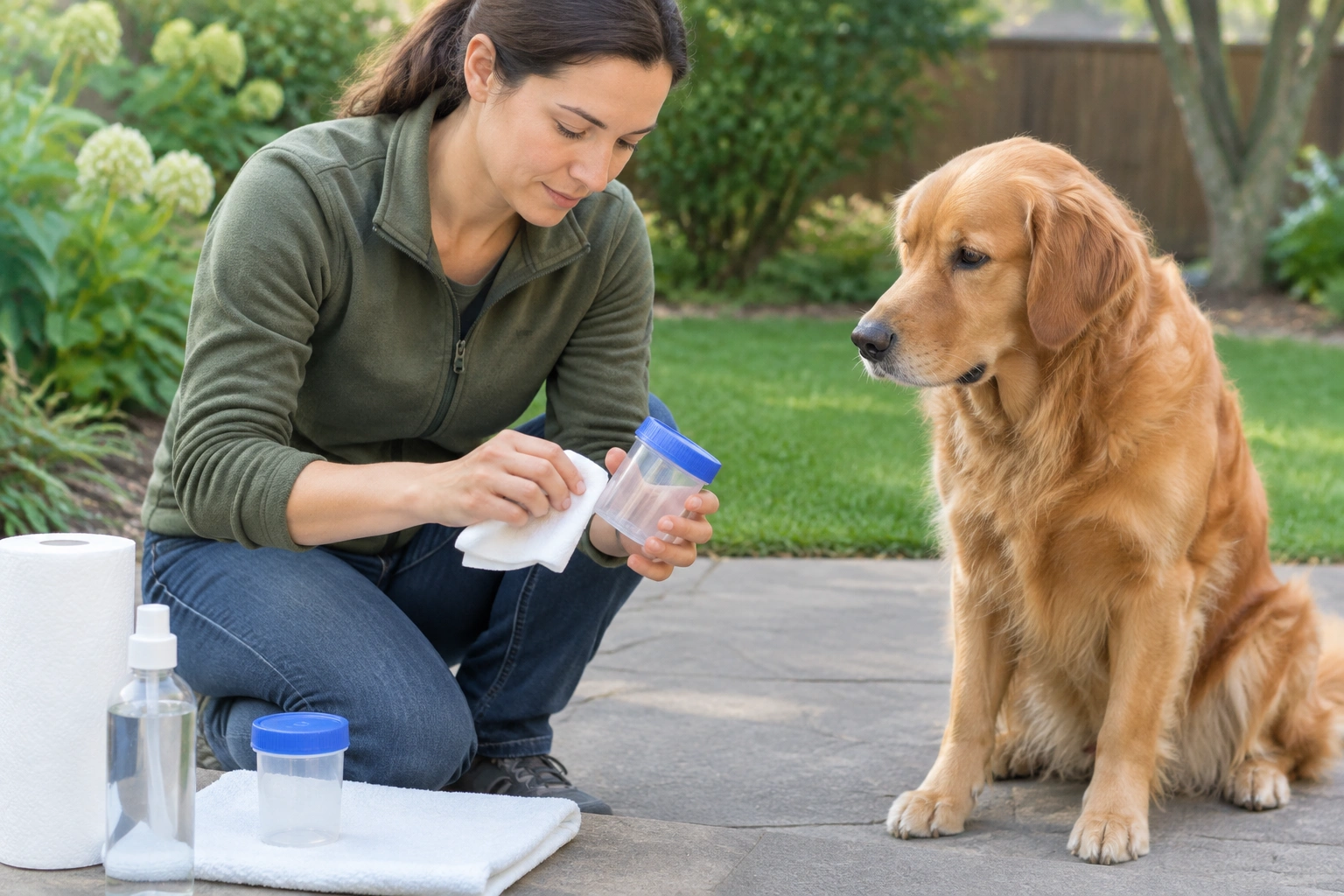
Avoid anything porous, scented, or previously used for food, chemicals, or cleaning products. Some households use a ladle only as a last resort, but if you do, make sure it has been thoroughly cleaned and rinsed so residue does not contaminate the sample.
Free-Catch vs Sterile Collection
Some clinics will accept a home-collected sample for urinalysis but still prefer a sterile sample for culture. Here is the basic difference:
| Collection type | When it’s appropriate | Commonly needed for |
|---|---|---|
| Free-catch urine sample | When the vet says a home sample is okay and you can catch urine mid-stream | Screening urinalysis, some routine checks |
| Sterile urine sample | When contamination could affect the result or the vet specifically requests it | Urine culture, some infection workups, cases where exact bacteria identification matters |
If you are unsure which one your vet wants, ask before you collect. That is especially important if the dog may have a UTI or the clinic is trying to confirm bacteria in the urine.
How to Get a Free-Catch Urine Sample Step by Step
A free-catch sample means you collect urine while your dog is naturally peeing, without needles or invasive handling. This is the method most owners can try at home.
1. Set yourself up before the dog starts
Have the container ready in your hand before you go outside. If you need a lid, loosen it first. If you need to transfer the sample later, lay out the clean cup and the final container in advance.
The biggest mistake is waiting until your dog starts urinating and then fumbling for supplies. Dogs notice that. A Border Collie especially may stop if you suddenly move in fast.
2. Stay calm and let the dog begin
Stand quietly at a normal distance. Do not hover over the dog. Let the stream start first if possible. Catching the middle portion of the stream is usually better than grabbing the very first part, because the first part may contain more debris from the urethra or skin.
3. Move in slowly from the side
Approach from the side or slightly behind, not head-on. Slide the container under the stream without touching the dog. If the dog glances back or pauses, freeze for a second. Sometimes stillness is what keeps the stream going.
4. Collect only what you need
You do not need to fill the container unless the clinic asked for a specific amount. A modest sample is often enough for screening. If the vet needs more, they will tell you.
5. Stop before you contaminate the sample
If the dog finishes urinating before you have enough, do not scoop from the ground unless you have no other option. A clean partial sample is better than a contaminated one.
A practical example: a Border Collie that keeps walking while peeing may be easier to catch with a shallow ladle than with a narrow cup. The goal is not elegance. The goal is to get usable urine without interrupting the dog’s natural posture.
How to Collect Urine From Grass, Dirt, or Other Unavoidable Surfaces
Sometimes you miss the stream. Sometimes the dog squats in thick grass, and there is no clean way to catch it mid-air. In those cases, a fallback sample may still be worth taking, especially if the vet only needs a screening urinalysis.
Here is the conservative rule: the cleaner the surface, the better the sample. A sample pulled from wet grass, dirt, mulch, or a dirty floor is more likely to be contaminated. That does not automatically make it useless, but it lowers confidence in the result. Samples from grass or dirt are best treated as backup options for screening only, and they may not be acceptable for culture.
If you must collect from a surface:
- Use the cleanest non-absorbent tool you have.
- Try to collect from the top of the puddle, not from soaked debris.
- Avoid grass clippings, leaves, fur, and dirt.
- Transfer the urine into a clean container right away.
If the sample is visibly dirty, cloudy with debris from the surface, or mixed with feces, tell the clinic. They may still want it for a rough screen, or they may ask you to try again.
How to Handle Hard-to-Catch Dogs, Small Urine Volumes, or Shy Peeers
Some dogs change the rules. They stop urinating when they notice movement. Some squat low. Some only give a tiny amount.
If your dog stops when you approach
Do not rush. That is the most common reason owners miss the sample. Walk slowly, keep your body relaxed, and avoid leaning over the dog. If possible, stand by and wait for the next opportunity rather than trying to force the catch.
If your dog moves while peeing
Use a wider, shallower container. A narrow cup can miss the stream if the dog shifts even a little. A ladle or scoop often gives you a better target.
If your female dog squats very low
This is where a shallow container matters most. Try to slide it in from the side rather than from behind. Keep your hand low and smooth. If the dog is very low to the ground, a spoon or ladle may be easier than a cup.
If your dog only produces a small amount
Collect what you can and call the clinic. Small amounts may still be enough for a screening test. Do not keep chasing the dog around the yard and turning the event into a game of pressure. That usually makes the next attempt harder.
If your dog is anxious or reactive
Safety comes first. If your dog is likely to snap, bolt, or panic when approached, do not force a close catch. Ask the vet whether they want you to attempt home collection at all, or whether a clinic collection would be safer.
How Much Urine You Need and What Makes a Sample Usable
The amount needed depends on the test. Some screenings need only a small sample, while others need more for a full urinalysis or follow-up work. Because clinics vary, the safest move is to ask before collection.
A sample is more likely to be usable when it is:
- Clean enough to avoid obvious contamination
- Collected into a non-absorbent container
- Labeled with the dog’s name and collection time
- Delivered promptly
- Refrigerated if there will be a delay
A sample may be less useful when it is mixed with dirt, grass, feces, or cleaning residue. If you are unsure, bring it anyway and explain how it was collected. The clinic can decide whether it is still worth testing.
How to Keep the Sample Clean, Label It, and Store It Safely
Once the urine is collected, the clock starts.
Label the container with:
- Your dog’s name
- The date
- The time of collection
That time matters because freshness affects how reliable the sample is. If you collected it at 7 a.m. and drop it off at noon, the vet needs to know that.
Keep the lid secure. Place the container in a clean bag or sealed secondary container for transport. Wash your hands afterward.
If there will be a delay before drop-off, refrigeration is commonly recommended by clinics for home-collected samples. Follow your clinic’s exact cutoff for refrigeration and drop-off, since acceptance times vary by practice and by test. Do not freeze the sample unless your veterinarian specifically tells you to. Cold storage helps slow changes in the sample, but it is still best to get it to the clinic as soon as you reasonably can.
A useful reminder: if you would not want to leave a sample warm in the car, do not leave it there.
How Fresh the Sample Needs to Be and When to Drop It Off
Freshness matters because urine can change over time, though the effect depends on the test, storage conditions, and how the clinic handles the sample. That is why same-day delivery is often the safest plan.
If you cannot get to the clinic right away:
- Refrigerate the sample if your vet says that is appropriate.
- Keep it cool during transport.
- Deliver it as soon as possible.
Different clinics and tests have different tolerances, so avoid guessing. If you are unsure whether your sample is still acceptable, call before you drive over.
For a helpful general overview of when urine testing is used in pets, the American Kennel Club’s dog health resources can be a useful reference point, especially for owners who want to understand the broader health context without getting lost in lab detail.
When Home Collection Is Not Enough and You Should Call the Vet
Skip home collection and call the clinic if:
- Your dog is straining but producing little or no urine
- Your dog seems painful while trying to urinate
- There is repeated urgency with very little output
- The veterinarian specifically asked for a sterile sample
- Your dog is too anxious or reactive to collect safely
- You suspect the sample is contaminated and the clinic needs a clean result
Those situations are not about convenience. They are about getting the right test without delaying care.
A sterile sample may be collected at the clinic using a veterinary procedure. You do not need to handle that part yourself. If the vet thinks that is the best route, they are usually trying to protect the accuracy of the test.
A Simple Decision Guide Before You Head Outside
If you want the shortest path to the right choice, use this:
- Need a routine screen and your vet said home collection is okay? Try a free-catch sample.
- Dog pees in motion or squats low? Use a shallow cup, ladle, or spoon.
- Only have a grass sample? Take the cleanest possible version and call the clinic.
- Need a culture or sterile sample? Ask the vet to collect it.
- Dog is straining, painful, or unable to pee? Call the vet now.
That is the practical version. Not every sample has to be perfect. It has to be useful.
When to See a Veterinarian or Certified Trainer
If your dog’s urinary behavior is tied to fear, reactivity, or handling difficulty, a certified trainer can help reduce the stress around collection setups. But if the dog is straining, in pain, or unable to urinate, the priority is veterinary care, not training.
If you are also dealing with hygiene concerns around urine, feces, or other exposure risks in the home, you may find it helpful to read our guide on can a human get worms from a dog for basic household safety context.
FAQs
Can I use a urine sample from the floor or grass?
Yes, sometimes, but it is less ideal than a clean free-catch sample. Use it only when you cannot catch urine mid-stream, and tell the clinic how it was collected.
How much urine does the vet need?
It depends on the test. Some screenings need only a small amount, while others require more. Ask the clinic before you collect so you do not waste time.
Should I refrigerate the sample?
If there will be a delay before drop-off, clinics often recommend refrigeration for home-collected samples. Do not freeze it unless your vet tells you to.
How long is a dog urine sample good for?
That depends on the test and the clinic’s protocol. Fresh is best, and follow your clinic’s cutoff for refrigeration and drop-off because acceptance windows vary.
What if my dog won’t pee on command?
Do not force it. Stay calm, wait for the next opportunity, and use a shallow container if your dog is hard to catch. If collection keeps failing, call the vet for advice.
Is a home-collected sample good enough?
Often, yes for a screening urinalysis. Not always for culture or other tests that require a sterile sample. Ask the clinic before you collect.
What if my dog is peeing very little?
Collect what you can and call the clinic. Small amounts may still be usable, depending on the test.
Can I touch the inside of the container?
No. Keep the inside clean and dry. Touching it can contaminate the sample.
What if the urine looks dirty?
Bring it to the clinic and explain how it was collected. The vet can decide whether it is still usable or whether you need to try again.
Do I need a special container?
Not always. A clean, dry, non-absorbent container is often enough for a home sample, but use a clinic-provided container if they give you one.
Can I collect urine from a pee pad or litter box?
Sometimes as a backup, but it is not ideal. Like grass or dirt, those surfaces can contaminate the sample, and they may not be acceptable for culture.
