
How to Give a Border Collie a Bath: Step-by-Step Guide

Quick Answer
To give a Border Collie a bath, brush the dry coat first, wet it completely with lukewarm water, apply dog-specific shampoo, rinse the double coat thoroughly, and dry all the way to the undercoat. Keep water away from the eyes and ear canals, and use calm handling throughout the process. General dog grooming guidance also recommends brushing before bathing and using lukewarm water.
Quick Border Collie Bath Steps
- Brush first: Remove loose undercoat, dirt, burrs, and small tangles before the coat gets wet.
- Prepare the tub: Use a non-slip mat and place shampoo, towels, and treats within reach.
- Wet deeply: Use lukewarm water and work it through the weather-resistant outer coat to the skin.
- Shampoo gently: Massage dog shampoo through the coat without scrubbing aggressively.
- Rinse completely: Keep rinsing until the coat feels clean and no slippery shampoo remains.
- Dry thoroughly: Blot with towels and finish the dense undercoat with gentle airflow if needed.
One Rule I Never Skip
- Never finish bath day while the chest, neck, belly, rump, or other dense areas still feel damp underneath.
Bathing a Border Collie isn’t difficult, but their dense double coat changes how you should approach the job. A quick surface wash can leave shampoo or moisture hidden underneath.
I’ve bathed enough muddy Border Collies to know that preparation usually matters more than scrubbing. This 2026 guide walks through the complete process I use at home.
In This Guide
- What Do You Need Before Bathing a Border Collie?
- How Do You Give a Border Collie a Bath Step by Step?
- Do Rough and Smooth Border Collies Need Different Bathing?
- How Do You Rinse and Dry a Border Collie’s Double Coat?
- How Often Should You Bathe a Border Collie?
- What Border Collie Bathing Mistakes Should You Avoid?
- What If Your Border Collie Hates Baths or Has Sensitive Skin?
- Border Collie Bathing FAQ
- Final Takeaway
What Do You Need Before Bathing a Border Collie?
You need surprisingly little equipment. The goal is to control slipping, clean the coat gently, and remove water efficiently afterward.
A Border Collie’s double coat consists of protective outer hairs and a softer insulating undercoat. Both rough-coated and smooth-coated Border Collies have this basic coat structure.
- Dog-specific shampoo: Choose a mild product formulated for canine skin rather than human shampoo.
- Brush or undercoat tool: Use a tool appropriate for your dog’s coat density and current shedding level.
- Metal comb: This helps you find small tangles behind the ears and around feathering.
- Non-slip bath mat: Secure footing can make an uncertain dog noticeably calmer.
- Two or three absorbent towels: One towel disappears quickly into a wet Border Collie coat.
- Handheld sprayer or large cup: Controlled rinsing is much easier than splashing water from a fixed faucet.
- Treats: I use small rewards for entering the tub, standing quietly, and accepting rinsing.
- Pet dryer if needed: Use comfortable airflow rather than blasting hot air against the skin.
For shampoo, I favor simple formulas without an overpowering fragrance. Pet owners comparing ingredients can also review current dog shampoo guidance from PetMD.
Brush the coat before you turn on the water
Run your hands through the dry coat first. Check behind the ears, under the front legs, around the chest, tail, rear feathering, and trousers.
Remove loose hair and manageable tangles now. Wet fur can make existing knots harder to see and work through.
How Do You Give a Border Collie a Bath Step by Step?
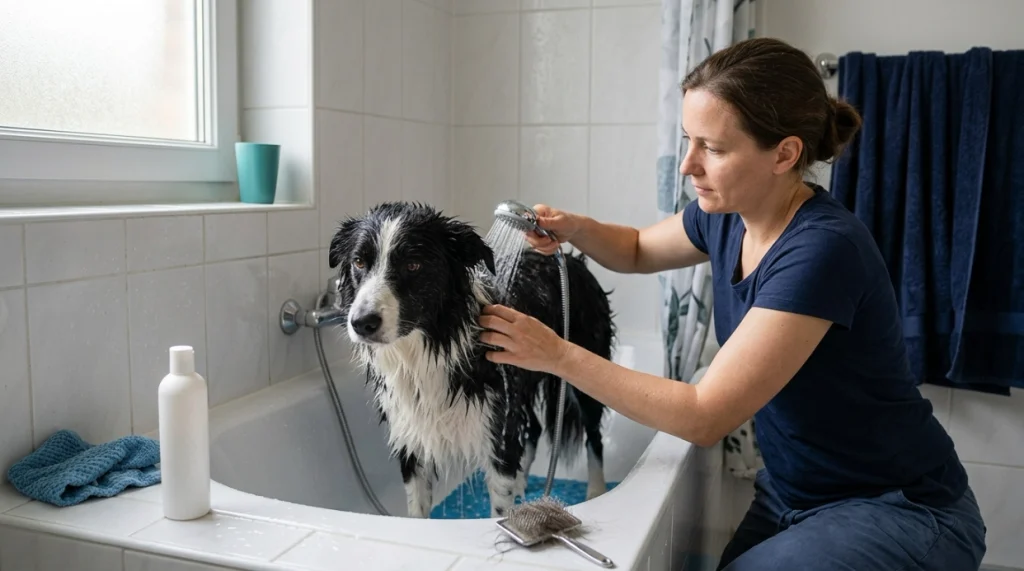
The easiest Border Collie bath follows the same order every time: prepare, brush, wet, shampoo, rinse, and dry. Keeping the routine predictable also helps nervous dogs learn what happens next.
- Brush your Border Collie while the coat is dry. Remove loose fur, dirt, grass seeds, burrs, and small tangles before bathing.
- Prepare everything before bringing your dog in. Put the non-slip mat in place and open the shampoo before your hands are wet.
- Set the water to lukewarm. Test it with your hand and avoid water that feels distinctly hot.
- Start wetting at the shoulders. Work toward the back, chest, belly, legs, and tail while keeping the face for last.
- Separate the coat with your fingers. Border Collie guard hairs can shed water at first, so confirm that moisture has reached the undercoat.
- Apply dog shampoo. Follow the product label if dilution is recommended rather than assuming every shampoo should be used full strength.
- Massage instead of scrubbing. Work shampoo through the coat using your fingertips and gentle hand pressure.
- Clean the legs, belly, rear, and paws carefully. These are often the dirtiest areas after hiking, farm work, agility, or a muddy walk.
- Clean the face with control. I prefer a damp cloth rather than spraying water toward the eyes, nose, or ear canals.
- Rinse much longer than you think you need. Separate the coat in several places and keep rinsing until it no longer feels slippery.
How long does a Border Collie bath take?
For a cooperative adult, I usually allow about 30 to 60 minutes for the complete process. A rough coat, heavy seasonal shedding, or thick feathering can push drying beyond that.
| Bath Stage | My Typical Planning Time | Main Goal |
|---|---|---|
| Pre-bath brushing | 10–20 minutes | Remove loose coat and tangles |
| Wetting and shampooing | 10–15 minutes | Reach the undercoat without harsh scrubbing |
| Rinsing | 5–10+ minutes | Remove shampoo completely |
| Drying | 20–40+ minutes | Dry the skin and dense undercoat |
These are practical home-bathing estimates, not fixed targets. Coat density, dog size, shedding, equipment, and your dog’s comfort can change them considerably.
Section Takeaway: A successful bath is more about sequence and thoroughness than speed. Give yourself enough time to brush, rinse, and dry properly.
Do Rough and Smooth Border Collies Need Different Bathing?
The basic bathing method stays the same because both Border Collie coat varieties are double coated. The main differences appear in detangling and drying.
The AKC’s double-coat guidance describes Border Collies among the herding breeds with medium double coats that benefit from regular grooming.
| Area | Rough Coat | Smooth Coat |
|---|---|---|
| Before bathing | Check feathering, ears, tail, chest, and trousers carefully | Focus on loose undercoat and trapped surface debris |
| Wetting | Longer outer hair can hide dry areas underneath | Easier to inspect visually, but undercoat still needs soaking |
| Drying | Allow extra time for feathering and dense rear coat | Usually quicker, but don’t assume short-looking hair is dry underneath |
My rough-coated dogs have always demanded more patience around the chest and rear feathering. Those areas can look dry on top while still holding moisture closer to the skin.
How Do You Rinse and Dry a Border Collie’s Double Coat?
Rinsing and drying are the stages I take most seriously. Shampoo residue and hidden moisture are easy to miss in a dense Border Collie coat.
Rinse in sections
- Start at the neck and shoulders.
- Work down the back and sides.
- Separate dense coat with your fingers.
- Rinse the chest, armpits, belly, and groin carefully.
- Flush shampoo from the rear feathering and tail.
- Finish the legs and paws.
Run your fingers through several areas afterward. If the hair still feels unusually slick or foamy, keep rinsing.
Blot instead of rubbing wildly
Press towels firmly into the wet coat. Vigorous back-and-forth rubbing can twist longer hair together and create extra tangles.
I usually go through at least two towels with a rough-coated adult. The first absorbs surface water, while the next pulls more moisture from the dense areas.
Use a dryer carefully
If your Border Collie accepts a pet dryer, use comfortable airflow and keep the nozzle moving. Avoid concentrating high heat on one patch of skin.
Before finishing, feel the neck, chest, armpits, belly, rump, and base of the tail. These areas often stay damp longest.
How Often Should You Bathe a Border Collie?
A healthy Border Collie generally doesn’t need frequent shampoo baths simply because a date appears on the calendar. I bathe based primarily on dirt, odor, coat condition, activity, and skin needs.
For many healthy companion Border Collies, a full bath roughly every 6 to 8 weeks can be a practical starting point. Some active dogs need cleaning sooner, while cleaner indoor dogs may comfortably go longer.
Give a bath sooner when needed
- Thick mud has worked through the coat.
- The coat has developed a persistent dirty odor.
- Your dog rolled in something unpleasant.
- Dirty water has soaked the belly and undercoat.
- A veterinarian has prescribed a specific bathing schedule.
A little mud on four paws doesn’t always justify washing the whole dog. I often rinse the paws and lower legs or let ordinary mud dry before brushing it away.
Vet note: Skin allergies, infections, persistent odor, sores, unusual flakes, or ongoing itching can change bathing needs. Ask your veterinarian before starting frequent or medicated baths.
What Border Collie Bathing Mistakes Should You Avoid?
The biggest mistakes usually come from rushing. Most are easy to prevent once you understand the double coat.
- Skipping the pre-bath brush: Loose undercoat and existing tangles become harder to manage when soaked.
- Using human shampoo: Choose a shampoo formulated for dogs unless your veterinarian has given different instructions.
- Using hot water: Lukewarm water is a safer and more comfortable default.
- Spraying the face directly: Use a damp cloth around the muzzle and face instead.
- Rushing the rinse: Dense fur can hide shampoo close to the skin.
- Rubbing aggressively with towels: Blotting helps avoid unnecessary tangling.
- Leaving the undercoat damp: Check thick areas with your hands before declaring the job finished.
- Shaving for convenience: Routine bathing does not require removing the protective double coat.
Don’t turn every muddy walk into shampoo day
Border Collies were developed as active herding dogs, and many seem magnetically attracted to puddles. Frequent outdoor dirt doesn’t always require frequent full shampooing.
Use the smallest cleanup that solves the problem. Paw washing, belly rinsing, brushing dried soil, or wiping one dirty patch can save a full bath.
What If Your Border Collie Hates Baths or Has Sensitive Skin?
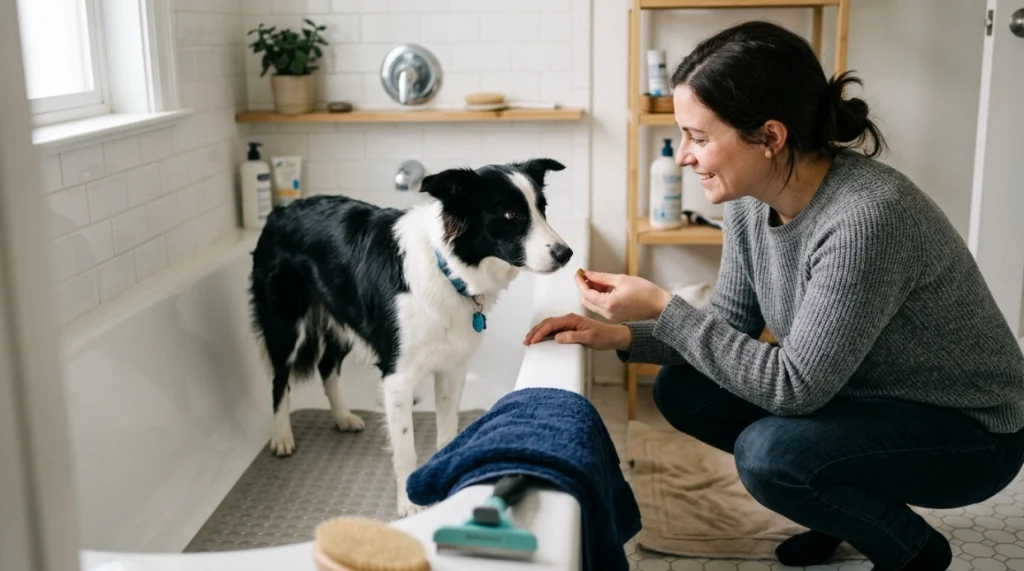
Fear and skin sensitivity require a slower approach. Forcing either issue can make future grooming harder.
For a Border Collie that fears the bath
Start training when the tub is dry. Reward your dog for stepping onto the bath mat, standing for several seconds, and calmly leaving again.
- Practice entering the bathroom without bathing.
- Reward standing on the non-slip mat.
- Introduce the sound of running water gradually.
- Use low-value excitement and high-value calm rewards.
- Keep early sessions short.
- Never punish struggling or nervous behavior.
Border Collies notice patterns quickly. I’ve found that several two-minute practice sessions can achieve more than one exhausting wrestling match.
For puppies
Early bath training should focus on confidence rather than perfect grooming. Let a puppy experience the tub, towels, touching, and gentle water in manageable stages.
Keep the puppy warm afterward and supervise the entire process. A slippery bath can frighten even a confident young dog.
For sensitive or irritated skin
Choose mild dog-specific products and avoid experimenting with strongly scented soaps. A dog with an active skin problem may need veterinary treatment rather than a different supermarket shampoo.
General veterinary grooming guidance from VCA can help owners understand when coat and skin changes deserve professional attention.
Vet note: Contact your veterinarian if you notice sores, persistent redness, unusual hair loss, a strong recurring odor, excessive scratching, or worsening irritation after bathing.
Border Collie Bathing FAQ
Can I use human shampoo on my Border Collie?
Dog-specific shampoo is the better routine choice because canine skin and human skin have different needs. If you don’t have dog shampoo, a plain water rinse may be more appropriate for light dirt until you can get a suitable product.
Should I brush my Border Collie before or after a bath?
Brush before the bath to remove loose undercoat, dirt, burrs, and tangles. Once the coat has dried, a gentle second brushing can help separate the hair and remove loosened undercoat.
Can I bathe a Border Collie without shampoo?
Yes, plain lukewarm water can work for light dust, fresh mud, or a simple paw and belly rinse. Use dog shampoo when the coat is greasy, strongly smelly, or too dirty for water alone.
How do I keep water out of my Border Collie’s ears?
Don’t aim the sprayer into the ear canal. I control water around the head carefully and use a damp washcloth for the face instead of pouring water directly over it.
Can I let my Border Collie air-dry?
Some air-drying is fine in suitable conditions, but don’t assume a dense coat is dry because the surface feels dry. Towel well and check the undercoat with your fingers, especially around the chest, neck, belly, and rear.
What should I do if my Border Collie smells again soon after a bath?
A recurring strong odor may indicate that the coat wasn’t fully rinsed or dried, but skin and ear problems can also cause odor. If the smell repeatedly returns despite good grooming, arrange a veterinary check rather than bathing more often.
Final Takeaway
Giving a Border Collie a bath comes down to five priorities: brush first, use lukewarm water, choose dog shampoo, rinse deeply, and dry the double coat thoroughly. The washing itself is often the easiest part.
I also avoid bathing more of the dog than necessary. A paw rinse after a muddy walk is often better than turning every small mess into a full shampoo session.
- Prepare all supplies before starting.
- Brush and inspect the dry coat.
- Give your dog secure footing.
- Wet the undercoat, not just the surface.
- Keep shampoo away from the eyes and ear canals.
- Rinse until no residue remains.
- Blot with towels instead of rough rubbing.
- Check dense areas for hidden moisture before finishing.
A calm, methodical bath protects the coat and makes the next session easier. With practice, even a muddy Border Collie can go from field-dog disaster to clean companion without turning your bathroom into a wrestling arena.
