
How to Help a Dog With Itchy Ears: Practical Steps, Warning Signs, and Safe Home Care

If your dog is scratching at one ear, shaking their head, or rubbing their face on the carpet, the goal is not to guess the cause and hope for the best. The goal is to calm the ear without making the problem worse, then decide whether this looks like simple irritation or something that needs veterinary treatment.

With itchy ears, the small details matter: smell, discharge, redness, pain, and whether one ear or both ears are affected. Those clues usually tell you more than the scratching itself.
What to Do First When Your Dog’s Ears Are Itchy
The first job is to stop the cycle of scratching and irritation.
If your dog is only mildly itchy and otherwise acting normal, gently look at the outer ear flap and the entrance to the ear canal. You are checking for obvious debris, redness, swelling, or discharge. Do not dig around inside the ear.
If the ear looks mildly dirty but not painful, you can usually clean it with a dog-safe ear cleaner. If the ear seems sore, very red, swollen, or your dog pulls away, skip the cleaning and call your vet. Pain changes the plan.
If the ear is severely painful, markedly swollen, or you suspect a ruptured eardrum, do not clean it at home at all. Prompt veterinary care is the safer choice.
A useful rule: mild itch with no odor and no pain can often be monitored briefly. Strong odor, discharge, or obvious discomfort should move you toward a vet visit.
If your dog is scratching hard enough to break the skin, use an e-collar if you have one and keep the nails trimmed if possible. Scratching can turn a small problem into a much bigger one.
How to Tell Whether It’s Simple Irritation, Ear Mites, Allergies, or an Ear Infection
You cannot diagnose every ear problem at home, but you can often narrow the field.
Here is a practical comparison.
| Possible cause | Common clues | What it often looks like | Safe next step |
|---|---|---|---|
| Simple irritation | Mild scratching, maybe after swimming, bathing, or a dusty walk | Ear may look a little pink but not swollen; little or no odor | Observe closely, clean gently if the ear is not painful |
| Ear mites | Intense itching, dark crumbly debris, head shaking, possible scratching in both ears | Debris may resemble coffee grounds | Vet exam needed for confirmation and treatment |
| Allergies | Itchy ears plus paw licking, face rubbing, or recurring seasonal flare-ups | Often affects both ears; may come and go | Vet visit if recurring or widespread |
| Ear infection | Odor, redness, discharge, head shaking, pain, swelling | Yeasty smell or foul smell is a common warning sign | Vet visit promptly; treatment may be prescription-based |
A few patterns help more than others.
Both ears itching often points toward allergies or a broader skin issue, especially if your dog also licks their paws or scratches other parts of the body.
One ear only can suggest something local, such as irritation, a foreign object, or an infection starting on one side.
Dark debris may fit ear mites, but it can also be wax or infected material, so it should not be treated as proof on its own.
Odor and pain are the biggest clues that this is more than simple itch.
If your dog has repeated ear problems, the ear itself may be the last place the issue shows up. Allergies and skin inflammation often drive recurring ear trouble, which is why the same ear can flare again after seeming to improve.
For a broader look at ear care and treatment options, our guide on how to put drops in your dog’s ears without a struggle can help once a vet has prescribed medication.
Warning Signs That Mean Your Dog Needs a Veterinarian Now
Some ear symptoms should not wait.
Call a veterinarian promptly if you notice any of the following:
- Strong or foul odor
- Yellow, brown, bloody, or pus-like discharge
- Marked redness or swelling
- Crying, yelping, or flinching when the ear is touched
- Head tilt
- Loss of balance or walking oddly
- Bleeding from repeated scratching
- A dog that will not let you touch the ear at all
Balance issues and head tilt are especially concerning because they can mean the problem is affecting deeper structures. That is not a “wait and see” situation.
If the ear is very painful, do not try to clean it at home. Pain is a sign that the canal may be inflamed enough that cleaning could cause more damage or make your dog resist harder.
Is It Safe to Clean a Dog’s Itchy Ears at Home?
Sometimes yes, sometimes no.
Home cleaning is reasonable when:
- The ear is only mildly dirty
- There is no strong odor
- Your dog is not in obvious pain
- There is no active bleeding
- The ear canal is not severely swollen
Home cleaning is not a good idea when:
- The ear is very red or painful
- There is discharge
- You suspect an ear infection or ruptured eardrum
- Your dog shakes their head violently or cries when touched
The trade-off is simple: cleaning can remove mild wax and debris, but it can also irritate an already inflamed ear. If you are unsure, it is safer to wait for the vet than to “try something” and make the canal angrier.
How to Clean a Dog’s Ears Safely
Use a dog-safe ear cleaner made for canine ears, and follow the label directions. Do not improvise with household liquids.
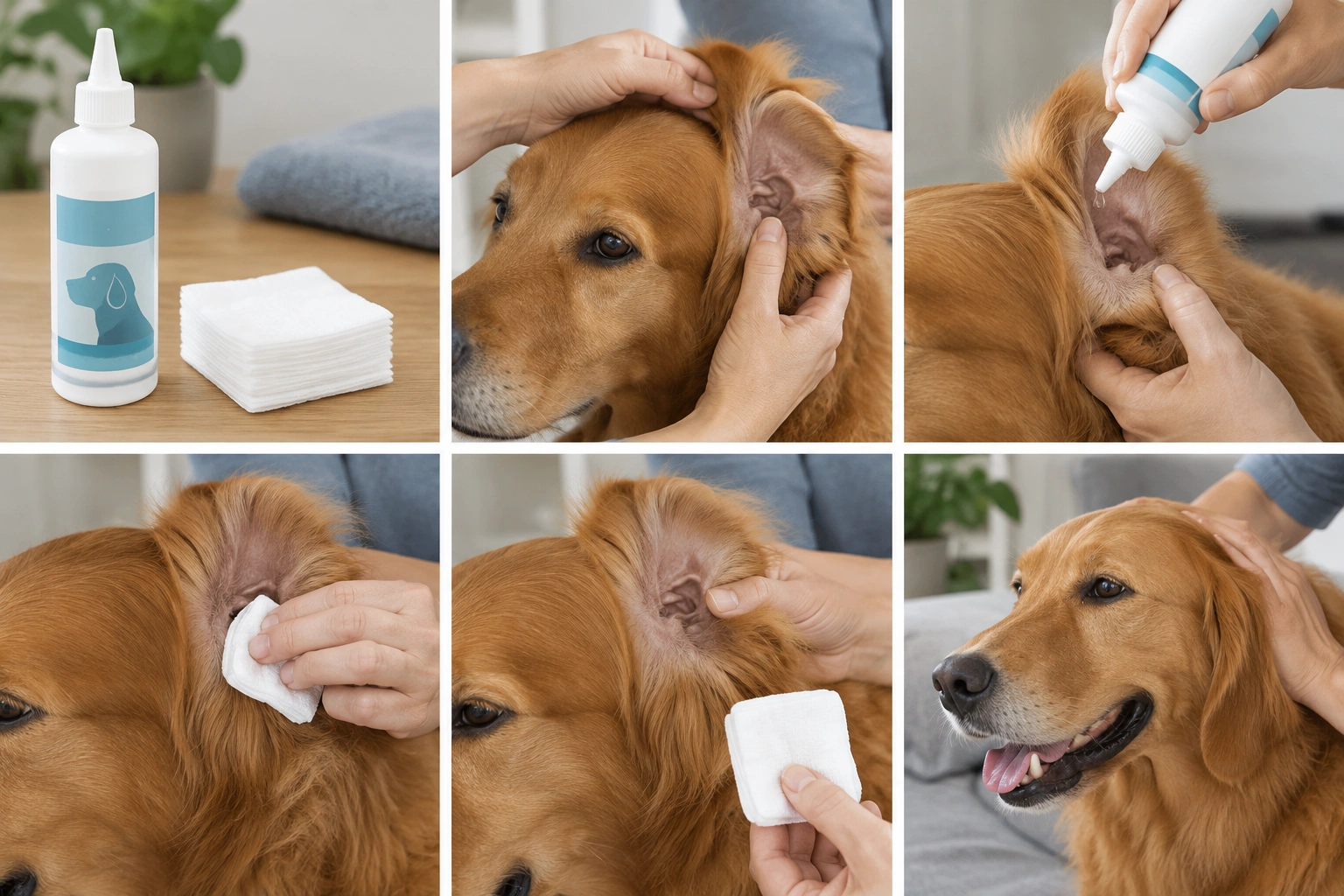
A careful cleaning routine looks like this:
- Hold the ear flap up and look for obvious redness, swelling, or bad odor.
- If the ear seems suitable for cleaning, fill the canal with the recommended amount of ear cleaner.
- Gently massage the base of the ear for a few seconds. You should hear a soft squishing sound.
- Let your dog shake their head. That helps loosen debris.
- Wipe the outer ear and visible opening with gauze or a soft cotton pad.
- Stop if your dog becomes painful, panicked, or more irritated.
Do not aim for a “perfectly clean” ear. The goal is to remove surface debris safely, not to scrub the canal spotless.
How often should you clean? Only as often as needed or as your veterinarian recommends. Frequent cleaning can dry out the ear or irritate sensitive skin, especially in dogs prone to inflammation.
A practical example: if your dog had a swim and the ears look mildly damp or dirty, a gentle cleaning may make sense. If the ear smells sour or your dog keeps shaking their head, that is no longer a routine cleaning problem.
What Not to Put in a Dog’s Ears
This part matters because the wrong product can turn irritation into injury.
Avoid putting these in your dog’s ears unless a veterinarian specifically tells you to:
- Cotton swabs deep in the canal
- Alcohol
- Hydrogen peroxide
- Vinegar
- Human ear drops
- Essential oils
- Leftover prescription medication from another pet or person
Cotton swabs can push debris deeper and irritate the ear canal. Alcohol and hydrogen peroxide can sting inflamed tissue. Vinegar may be too harsh for an already irritated ear. Human ear products are not automatically safe for dogs, especially if the eardrum might be affected.
Some veterinarian-prescribed ear medications may contain ingredients owners would otherwise avoid. That is why the key rule is not to use anything without veterinary guidance, rather than judging a product by the ingredient list alone.
If you want a conservative rule, use only a dog-specific ear cleaner and only when the ear is not clearly painful or severely inflamed.
When It’s More Likely to Be Infection, Mites, or Allergies
The likely cause changes the next step.
Ear infection
An infection is more likely when you see odor, discharge, redness, swelling, and pain. Yeast and bacteria can both be involved, and the ear often looks and smells “off” rather than just itchy. These cases usually need a veterinary exam because treatment depends on what is actually growing in the ear.
Ear mites
Ear mites are more likely when the itching is intense and the debris looks dark and crumbly. Dogs with mites often scratch hard and shake their heads a lot. Mites are not something to guess about; a vet can confirm them and choose the right treatment.
Allergies
Allergies are more likely when both ears are itchy, the problem keeps returning, or the dog also has paw licking, face rubbing, or seasonal flare-ups. In those cases, the ears are often one part of a bigger skin issue. Cleaning alone may help briefly, but it will not solve the underlying trigger.
A useful decision rule: if the problem keeps coming back, treat it as a pattern, not a one-off ear nuisance. Recurring ear itch usually deserves a deeper veterinary look.
For owners who are already dealing with prescribed treatment, our step-by-step ear drop guide can make the medication phase less stressful.
What a Veterinarian May Do and Why It Matters
A vet visit is not just about getting a stronger medicine. It is about identifying the cause.
Your veterinarian may:
- Look inside the ear with an otoscope
- Check for redness, swelling, foreign material, or injury
- Take a sample of the ear debris to look for yeast, bacteria, or mites
- Choose medication based on what the ear actually needs
- Recommend anti-inflammatory or pain-relief medication when the ear is inflamed or uncomfortable
That matters because different problems can look similar from the outside. A dog with mites, a yeast infection, or allergic inflammation may all scratch the same way, but they need different treatment.
If the eardrum is affected or the canal is badly inflamed, the wrong product can cause more harm. That is one reason not to rely on guesswork when the ear is painful or smelly.
How to Reduce Recurrence in Dogs Prone to Itchy Ears
If your dog gets ear problems more than once, prevention is mostly about reducing the triggers that keep the ear inflamed.
A few habits help:
- Dry the ears after swimming or bathing
- Keep up parasite prevention if your vet recommends it
- Watch for seasonal itching patterns
- Notice whether paw licking or skin itching happens at the same time
- Follow your vet’s cleaning schedule if your dog is prone to wax buildup
Border Collies and other active dogs often spend time outdoors, in grass, water, or dusty environments. That does not automatically cause ear disease, but it can make irritation more likely if the ears stay damp or debris builds up.
If allergies seem likely, the real solution is usually broader than ear care. That may mean managing the skin problem behind the ear flare-ups, not just treating the ear itself each time.
When to Monitor Briefly Versus Schedule a Vet Visit
Use this simple framework.
You can monitor briefly if:
- The itch is mild
- There is no odor
- There is no discharge
- Your dog seems comfortable
- The ear is not swollen or very red
You should schedule a vet visit soon if:
- The problem lasts more than a day or two
- Scratching keeps getting worse
- The issue keeps coming back
- Both ears are involved repeatedly
- You see debris, redness, or discharge
You should seek prompt care now if:
- Your dog is in pain
- There is a strong smell
- The ear is swollen or bleeding
- There is head tilt or balance trouble
That triage approach keeps you from overreacting to a minor itch while still catching the cases that need real treatment.
A Final Practical Rule for Dog Owners
If the ear is mildly itchy and otherwise quiet, gentle cleaning and observation may be enough. If the ear is painful, smelly, swollen, or producing discharge, stop home care and call the vet. And if the problem keeps returning, look beyond the ear itself for allergies or another underlying cause.
For a trusted general reference on canine ear problems, VCA Hospitals’ ear infection resources are a helpful place to learn more, and the AKC’s health guidance can also support your next steps while you arrange care.
FAQs
Can I use human ear drops in my dog’s ears?
No, not unless your veterinarian specifically tells you to. Human products are not automatically safe for dogs.
How do I know if it’s ear mites?
Dark crumbly debris and intense itching can fit ear mites, but only a vet can confirm it reliably.
Should I clean my dog’s ears every day?
Usually not unless your vet has given you a specific plan. Too much cleaning can irritate the ear.
What if my dog shakes their head but seems fine otherwise?
Brief head shaking can happen with mild irritation, but if it continues or comes with odor, redness, or pain, it deserves a vet check.
Can allergies really cause itchy ears?
Yes. Allergies often show up as recurring ear itch, especially when both ears are involved and the dog also has skin or paw symptoms.
