
How to Tell If Your Dog Has a Blockage: Signs, Red Flags, and What to Do Next

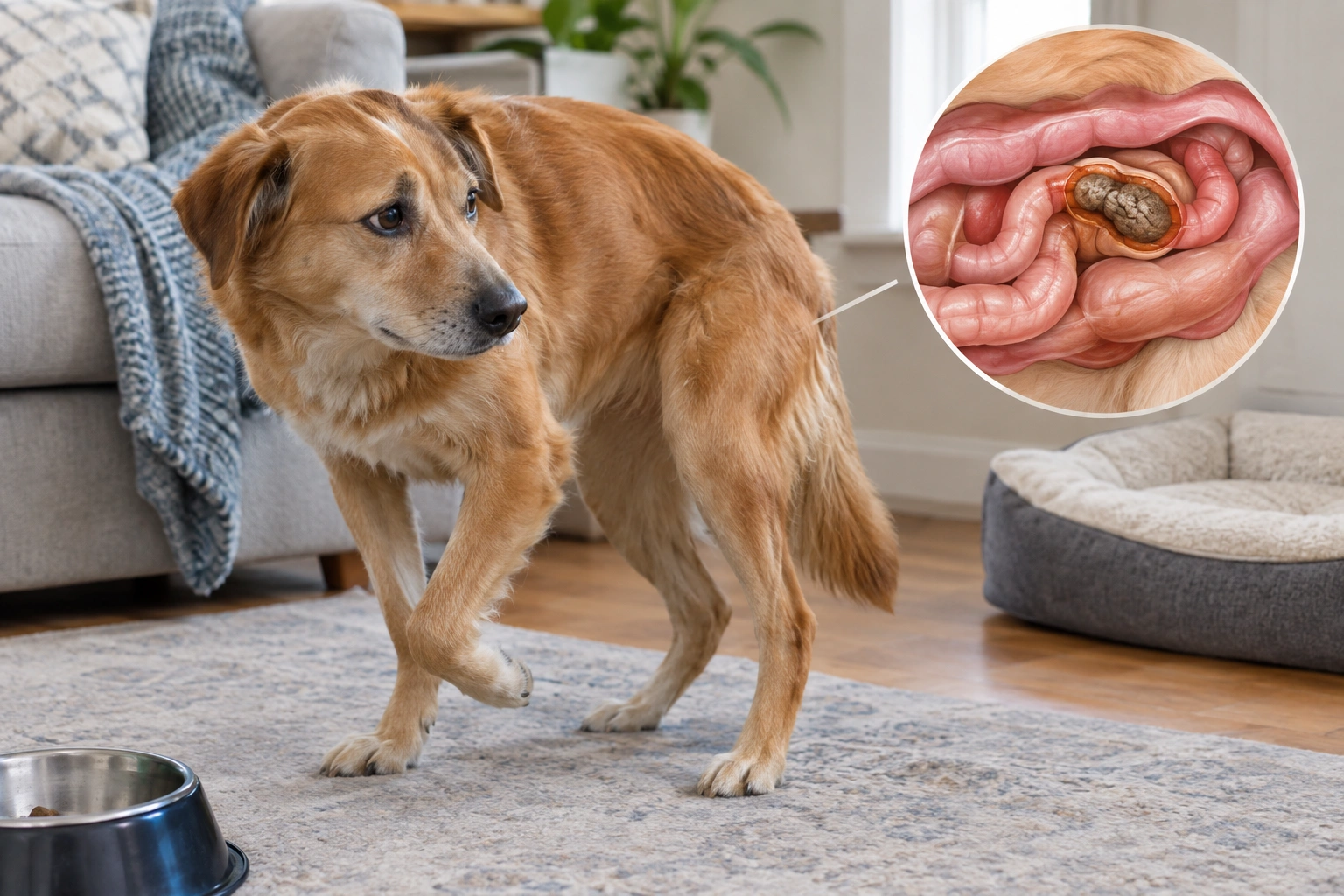
If your dog may have swallowed something they shouldn’t have, don’t wait for the problem to “settle.” A gastrointestinal blockage can become an emergency quickly, and the early signs are easy to mistake for a routine upset stomach.
The practical question is not “Could this be a blockage?” but “Does this dog need a vet now?” That answer depends on the pattern of symptoms, whether your dog can keep water down, and whether you know or strongly suspect they swallowed a foreign object.
For Border Collies especially, this matters because their activity level and chewing habits can make it easier for them to get into trouble with swallowed objects. A sock, toy fragment, stick, or rock can go from a quiet mistake to a serious obstruction before the day is over.
How to Tell If Your Dog May Have a Blockage Right Now
If your dog is repeatedly vomiting, retching without bringing anything up, refusing food, acting painful, or becoming weak, treat it as urgent. A true blockage can stop food, fluid, or gas from moving normally through the digestive tract, and symptoms can appear suddenly or build over several hours. Rise Pet Health
The most worrying pattern is this combination:
– a known or strongly suspected swallowed object
– vomiting or unproductive retching
– no appetite
– belly pain or a hunched posture
– worsening lethargy or weakness
If your dog vomits more than once, cannot keep water down, or seems noticeably worse over the course of a few hours, that should be treated as immediate emergency care rather than home monitoring. The same is true if the dog becomes bloated, develops marked pain, or collapses.
If that sounds familiar, this is not a “wait and see tomorrow” situation. CareCredit’s veterinary guidance is clear that dogs with signs of intestinal blockage, especially after eating something they shouldn’t have, should be evaluated by a veterinarian immediately.
A useful rule: if the dog is getting worse over hours instead of better, you should assume this is more than simple stomach upset until a vet proves otherwise.
First Signs of a Gastrointestinal Blockage in Dogs
Early blockage signs can be subtle. Some dogs are still alert at first, which is one reason owners miss the problem.
Common early signs include:
– vomiting or repeated nausea
– loss of appetite
– restlessness or inability to get comfortable
– whining
– abdominal tenderness
– diarrhea or reduced stool output
– straining to poop
– dehydration
– weakness or lethargy
Those signs line up with veterinary guidance on bowel obstruction symptoms, including straining or being unable to poop, weakness, loss of appetite, diarrhea, nausea, vomiting, restlessness, whining, dehydration, bloating, and a painful abdomen. Springhouse Animal Hospital
Why vomiting matters so much
Vomiting alone does not prove a blockage. But vomiting plus no stool, or vomiting plus a known swallowed object, raises concern sharply. One veterinary source notes that if a dog is vomiting but not producing any stool, that is a strong indication of an intestinal blockage. PetMD
That does not mean every vomiting dog has a blockage. It does mean you should stop assuming it is “just an upset stomach” if the vomiting is repeated, the dog cannot keep water down, or the dog seems painful.
Why Border Collie owners should pay attention early
Some dogs hide discomfort better than others, so changes in behavior can be easy to miss. Restlessness, pacing, hovering near you, or seeming frustrated can all be signs of abdominal discomfort rather than simple anxiety. In practice, those changes matter most when they happen alongside nausea, vomiting, or reduced appetite.
Blockage vs. Upset Stomach, Constipation, or Diarrhea
This is where owners get tripped up. The symptoms overlap, but the pattern and severity matter.
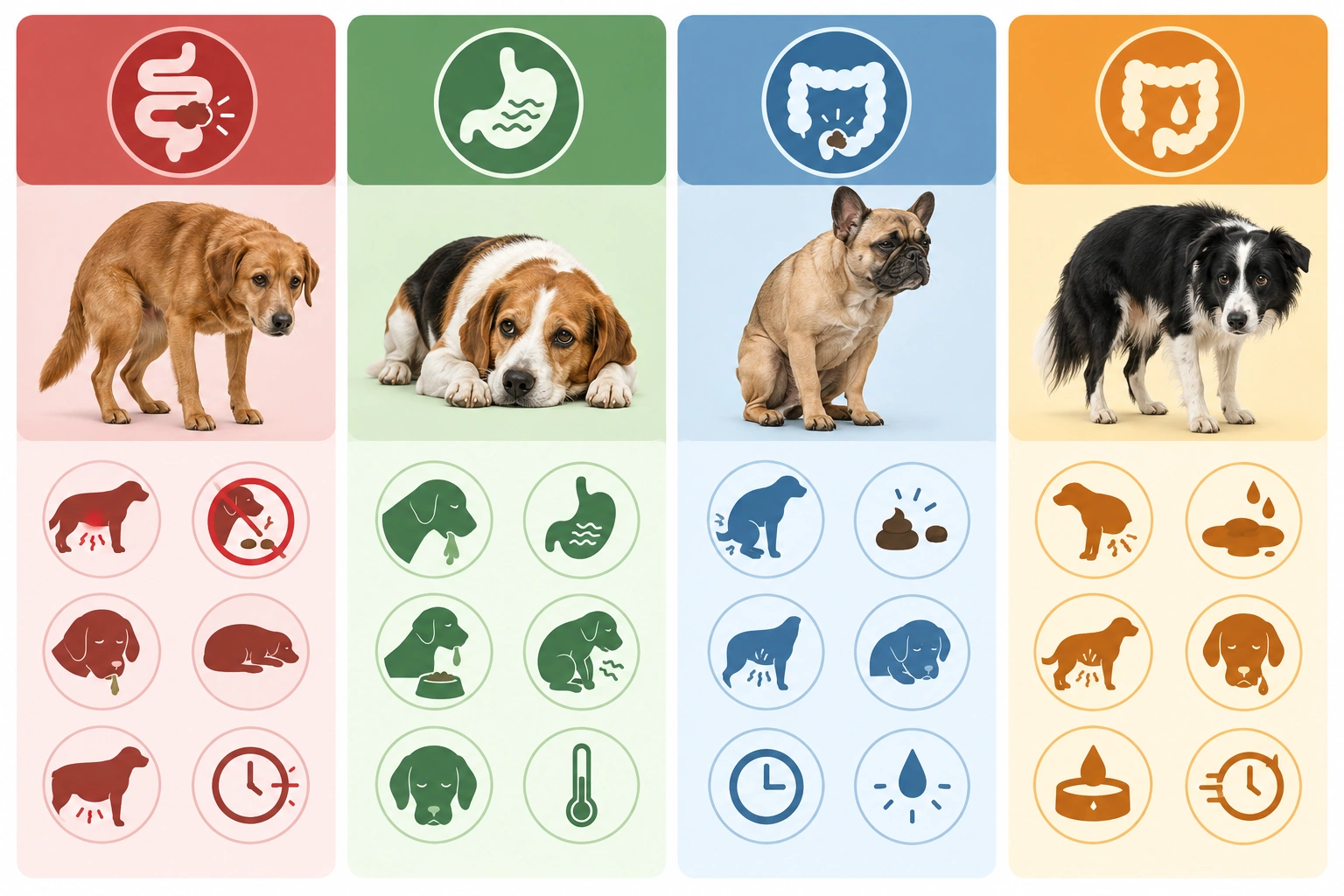
| Problem | Typical pattern | What makes it less concerning | What makes it more concerning |
|---|---|---|---|
| Mild upset stomach | One or two vomits, soft stool, then gradual improvement | Dog is bright, drinking, and improving over a few hours | Repeated vomiting, pain, worsening lethargy |
| Constipation | Straining with small, dry stool | Dog otherwise feels normal | Vomiting, belly pain, no stool, bloating |
| Diarrhea | Loose stool, maybe mild appetite loss | Dog is still drinking and acting fairly normal | Vomiting, weakness, abdominal tenderness, no improvement |
| Possible blockage | Vomiting, no appetite, restlessness, pain, stool changes | None if a foreign object is suspected | Repeated retching, inability to keep water down, bloating, collapse |
A dog with diarrhea can still have a blockage, especially early on or with a partial obstruction. A dog can also still pass some stool and still have a serious obstruction. So stool output alone does not rule anything out.
The real difference is progression. A simple stomach bug usually trends toward improvement. A blockage often trends the other direction.
Partial Obstruction vs. Complete Obstruction
A partial obstruction means something is still passing through, just not normally. A complete obstruction means little or nothing can pass.
That difference matters because a partial blockage can look milder and still be dangerous. The dog may vomit intermittently, have diarrhea early, or still pass small amounts of stool. Owners often relax too soon because “he’s still pooping.”
That is a mistake.
A partial obstruction can become complete. It can also keep irritating the intestine, causing dehydration and pain while the dog seems only “a bit off.” If symptoms are consistent with obstruction, the fact that your dog passed stool once today does not make it safe to delay care.
Emergency Red Flags That Mean You Should Go to a Vet Now
Go now, not later, if you see any of these:
– repeated vomiting
– unproductive retching
– swollen or bloated abdomen
– obvious abdominal pain
– weakness or collapse
– inability to keep water down
– severe lethargy
– aggression or guarding when the belly is touched
– a known swallowed object plus any digestive symptoms
Those signs line up with veterinary descriptions of intestinal blockage and indicate a problem that can become life-threatening. CareCredit describes intestinal blockage as a life-threatening medical emergency.
If your regular vet is closed, do not wait for morning if your dog is getting worse. Go to the nearest emergency veterinary hospital.
What to Do Immediately If You Suspect a Blockage
Your job in the first few minutes is simple: reduce risk and get professional help moving.
1) Stop feeding for now
Do not offer meals, treats, bones, chews, or rich snacks while the dog is actively vomiting or clearly unwell.
2) Decide who to call first
- Call your regular vet if your dog is stable, alert, and only mildly off, but you suspect they swallowed something or have ongoing digestive symptoms that are not improving.
- Go straight to an emergency clinic if your dog is repeatedly vomiting, cannot keep water down, is bloated, has marked pain, is very weak, or collapses.
- Call a poison helpline right away if the swallowed item may be toxic, such as medication, chemicals, a poisonous food, or another substance that could cause poisoning rather than a simple blockage.
3) Tell the clinic the key details
When you call, be ready to say:
– what your dog may have swallowed
– when it happened
– how many times they have vomited
– whether they can keep water down
– whether they are still passing stool
– whether the abdomen seems painful or swollen
4) Go straight to emergency care if red flags are present
If your dog is weak, bloated, repeatedly retching, or unable to keep water down, skip the watchful waiting.
A practical example: if your dog ate a sock and then starts vomiting and pacing, that is a vet-now situation. If they ate a chew toy and seem fine for a few minutes, you still monitor closely, but you should not assume you are in the clear.
What Not to Do at Home
This is the part that saves time and prevents harm.
Do not:
– give laxatives unless a vet tells you to
– pour oils into the mouth
– force food to “push it through”
– give large amounts of water if the dog is vomiting
– induce vomiting on your own
– wait for diarrhea to “clear it out”
If you witnessed your dog eat a foreign object, one veterinary source specifically advises not to attempt to help the dog pass the obstruction yourself. Springhouse Animal Hospital
The reason is straightforward: if the item is sharp, large, or stuck, home treatment can worsen the problem or delay the care that actually helps.
Common Causes of Blockages in Dogs
Most blockages are caused by foreign bodies: things the dog swallowed that should not be in the digestive tract.
Common examples include:
– socks and underwear
– toys and balls
– bones
– rocks
– sticks
– fabric
– fruit pits
– tampons
– string, yarn, thread, or ribbon
PetMD lists many of these common causes, including linear objects like string or ribbon, which are especially risky because they can bunch up the intestine.
Why some objects are more dangerous than others
Large, sharp, or spiky items can tear the gut wall. PDSA notes that if the item eaten is very large, sharp, or spiky, the gut may tear and cause peritonitis, a serious infection. PDSA
That is one reason corn cobs, bones, and broken toy pieces deserve extra caution. Even if the dog seems only mildly sick at first, the object itself may make the situation high risk.
How Veterinarians Diagnose a Suspected Blockage
A vet usually starts with a physical exam and a history of what the dog may have eaten. Then they often use imaging.
X-rays
Abdominal X-rays are often the first imaging tool used. They can show gas buildup, abnormal intestinal patterns, or sometimes the object itself. Hershey Veterinary Hospital
Ultrasound
Some materials do not show clearly on standard X-rays. In those cases, ultrasound can provide more detail by showing movement within the intestines and helping identify trapped material. Hershey Veterinary Hospital
When X-rays are inconclusive
If the signs are vague, intermittent, or the first X-rays do not give a clear answer, vets may repeat imaging, compare films over time, or use contrast studies to see whether material is moving through the digestive tract. That can help distinguish a partial obstruction from a complete one, or a blockage from another cause of vomiting.
Bloodwork and hospital monitoring
Bloodwork helps the vet assess dehydration and overall stability. If the dog is sick enough, the clinic may admit them for fluids, monitoring, and further imaging. PDSA notes that dogs with gut blockages are often admitted for X-rays, a scan, and possibly surgery. PDSA
How Blockages Are Treated and What the Options Mean
Treatment depends on what the object is, where it is, and whether the blockage is partial or complete.
Supportive care
Many dogs need intravenous fluids, pain relief, and sometimes antibiotics. PDSA notes that a dog may need a fluid drip and medications, and may stay in hospital for a few days while recovering. PDSA
Endoscopy
If the object is reachable and has not moved too far, a vet may be able to remove it with an endoscope. This can avoid surgery in some cases.
Surgery
Surgery is more likely when the object is large, sharp, stuck, or has already caused damage. The longer a blockage remains, the greater the risk of dehydration, tissue damage, and complications.
The key decision is not “Can the dog wait?” but “Can the object pass safely on its own without causing harm?” Often, the answer is no.
What Can Happen If a Blockage Is Left Untreated
This is where a suspected blockage turns into a true emergency.
Without treatment, the dog can become dehydrated, weak, and increasingly painful. Pressure builds behind the blockage. Blood flow to the intestine can be affected. In severe cases, the gut can tear, leading to peritonitis, which is a life-threatening infection.
That is why the safest approach is to treat a suspected blockage as urgent from the start, especially if the dog is vomiting, painful, or getting worse.
How to Reduce the Risk of Future Blockages
Prevention is mostly about managing access and chewing habits.
Focus on:
– picking up socks, underwear, and fabric items
– storing toys that break apart
– supervising stick chewing
– choosing chew items that are size-appropriate and not brittle
– keeping rocks, corn cobs, and food scraps out of reach
– watching closely after guests, children, or visitors leave items on the floor
If your dog has a history of swallowing objects, assume they will do it again. That means prevention has to be environmental, not just hopeful.
For Border Collies, mental and physical exercise also helps reduce destructive scavenging. A tired dog is not immune to swallowing things, but a dog with enough structured activity is often less likely to hunt for trouble in the first place.
When to See a Veterinarian or Certified Trainer
For this topic, the veterinarian is the right professional when you suspect a blockage, even if the symptoms seem mild. A certified trainer becomes useful later, after medical causes are ruled out or after recovery, if your dog’s chewing, scavenging, or object-grabbing habits keep creating risk.
If your dog is vomiting, painful, weak, bloated, or unable to keep water down, skip training advice and go to the vet.
FAQs
Can a dog still poop if it has a blockage?
Yes. A dog can still pass some stool with a partial obstruction, and that is one reason blockages are missed. Passing stool does not rule out a blockage.
Can a blockage clear on its own?
Sometimes small objects may pass, but you should not assume that will happen safely. If symptoms are present, the dog needs veterinary assessment.
Is vomiting always a blockage?
No. But vomiting plus no stool, abdominal pain, or a known swallowed object is much more concerning.
How fast can a blockage get worse?
Symptoms can appear suddenly or develop over several hours. Some dogs decline quickly, especially if they keep vomiting or cannot keep water down. Rise Pet Health
Should I give my dog water?
Offer water only if the dog is not actively vomiting and can keep it down. If they vomit after drinking, that is a reason to seek urgent care.
What if I’m not sure whether it’s a blockage or just an upset stomach?
If your dog is bright, improving, and has a mild one-off issue, short observation may be reasonable. If the dog is worsening, painful, vomiting repeatedly, or may have swallowed something dangerous, treat it as urgent.
What if my dog swallowed a sock but seems normal?
Call your vet. Some dogs look normal at first and then develop symptoms later. A known swallowed object should never be ignored.
