
How to Tell if Your Dog Has Kennel Cough: Signs, Lookalikes, and What to Do Next

If your dog has started coughing, the first question is usually the practical one: is this kennel cough, or something more serious?
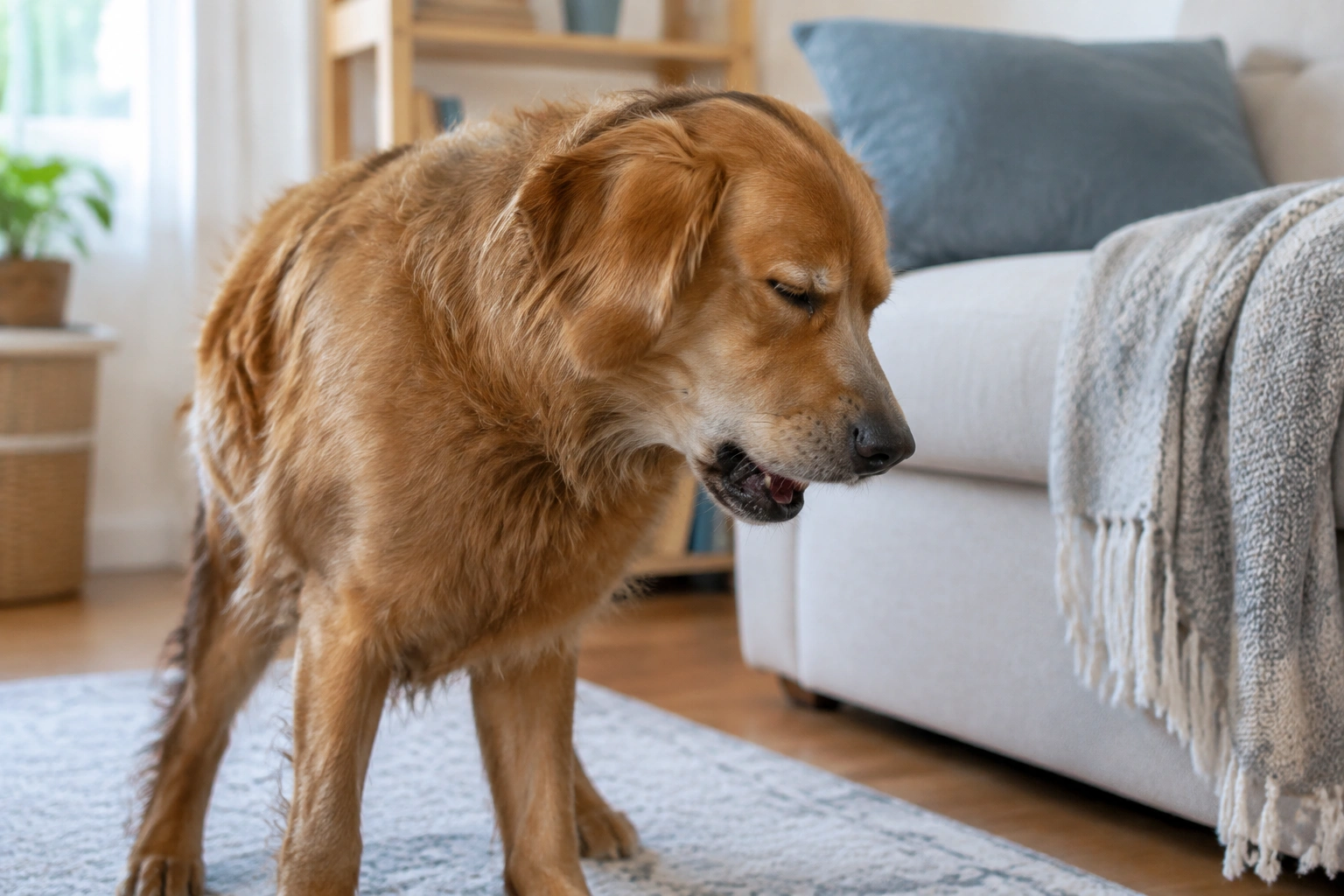
That question matters because kennel cough can be contagious, and it can look a lot like other problems that need faster treatment. The goal is not to guess perfectly from one symptom. It is to use the pattern: what the cough sounds like, whether your dog was around other dogs, and whether there are any red flags that change the urgency.
For Border Collie owners, this comes up a lot. These dogs are often in daycare, group training, boarding, agility, or busy parks. That gives them more exposure opportunities than a dog who mostly stays home. So when a cough appears, it helps to think like a detective: sound, context, and overall condition.
What kennel cough usually sounds and looks like
The classic kennel cough sound is often described as dry, harsh, and honking or hacking. Some owners say it sounds like the dog is trying to clear something from the throat or “has a goose honk.” It may also sound like a repeated throat-clearing cough, especially if you hear a short, sharp hack followed by a pause and then another cough.
The cough may come in bursts, especially when the dog is excited, pulling on a leash, or waking up after resting.
A dog with kennel cough may otherwise seem fairly normal, but that does not automatically mean the illness is mild or harmless. Some cases stay limited to the upper airway, while others can become more serious. That is one reason kennel cough can be confusing: the dog may look okay between coughing episodes.
You may also notice:
- gagging or retching after a coughing fit
- mild throat irritation
- a cough that gets worse with excitement or activity
- occasional sneezing
That pattern points toward kennel cough more than a random one-off cough. If your dog had a recent exposure to other dogs, the suspicion goes up.
What makes the cough more suspicious
A cough is more likely to fit kennel cough when it is:
- dry rather than wet
- repetitive rather than isolated
- triggered by pressure on the neck, excitement, or exercise
- paired with a recent stay at boarding, daycare, grooming, shelter, dog park, or group class
If you want a more focused breakdown of the sound itself, I cover that in detail in what kennel cough sounds like in dogs.
Symptoms that commonly travel with kennel cough
Kennel cough is often used as the everyday term for what veterinarians may call canine infectious respiratory disease complex, or CIRDC. That matters because more than one germ can be involved. Bordetella bronchiseptica and parainfluenza virus are two common names you will hear, but as an owner, the useful part is simpler: the illness tends to irritate the upper airway.
Along with the cough, some dogs may have:
- mild nasal discharge
- sneezing
- slight lethargy
- throat sensitivity
- gagging after coughing
Those signs can still fit a straightforward case, especially if your dog is otherwise breathing normally and recovering between coughing episodes.
What starts to shift the concern is not just the presence of symptoms, but the combination. A mild cough plus a little sneezing is one thing. A cough plus clear tiredness, appetite loss, or breathing changes is another.
A useful owner rule
If your dog is still interested in food, can settle normally, and is breathing comfortably, kennel cough is more plausible than a more serious lower-respiratory problem. If your dog seems “off” in a bigger way, assume the picture may be more than a simple throat irritation.
Recent exposure is the biggest clue
The best clue is often not the cough itself. It is where the dog has been.
Kennel cough spreads more easily in places where dogs are close together and share air, surfaces, or stress. That includes:
- boarding facilities
- daycare
- grooming salons
- shelters and rescues
- dog parks
- group training classes
- busy playdates
If the cough starts after one of those exposures, kennel cough moves higher on the list.
Timing matters too. If your dog was at a dog-heavy setting recently and then develops a cough, that connection is more meaningful than a cough that appears out of nowhere after a quiet week at home. You do not need proof of contact with a visibly sick dog. One exposed dog can be enough to spread infection.
Kennel cough vs lookalike problems dog owners commonly confuse it with
A lot of unnecessary worry comes from mixing up kennel cough with other common sounds. The table below is the fastest way to sort through the usual lookalikes.
| Condition | Typical sound or behavior | Common clues | Urgency |
|---|---|---|---|
| Kennel cough | Dry, honking, hacking cough; may gag after | Recent dog exposure; otherwise fairly normal energy | Usually monitor closely if mild, but isolate from other dogs |
| Reverse sneezing | Repeated snorting or rapid inhaling, often with neck extended | Episode looks startling but usually passes quickly | Often not an emergency if the dog recovers normally |
| Choking / foreign object | Sudden gagging, pawing at mouth, distress | May follow chewing, eating, or toy play | Urgent, especially if breathing seems affected |
| Pneumonia | Wet cough, fatigue, faster or harder breathing | Dog seems ill, weak, or feverish | Needs prompt veterinary attention |
| Collapsing trachea | Harsh cough that can worsen with excitement or pressure | More common in some small dogs, but any dog can cough this way | Vet evaluation recommended |
| Heart-related coughing | Cough with exercise intolerance, weakness, or breathing changes | Often not just a simple cough; may worsen at night or with exertion | Veterinary assessment soon |
Kennel cough vs reverse sneezing
Reverse sneezing sounds alarming, but it is usually more of a snorting inhale than a true cough. Dogs often stand still, extend the neck, and make repeated snorting noises for a short period. Kennel cough, by contrast, is usually a cough first, often with a hacking or honking quality.
Kennel cough vs choking
Choking tends to come on suddenly. The dog may paw at the mouth, panic, drool, or seem unable to settle. If you suspect something is stuck, treat it as urgent. Kennel cough usually does not begin as a sudden crisis after chewing.
Kennel cough vs pneumonia
Pneumonia is the comparison that matters most. A wet cough, reduced energy, fever, or faster breathing pushes you away from simple kennel cough and toward a more serious illness. A dog that looks tired, weak, or short of breath should not be managed as a routine cough at home.
Kennel cough vs collapsing trachea or heart-related coughing
These are less likely to be the first explanation for a young, otherwise healthy dog after exposure, but they matter if the cough keeps returning or if the dog has other signs like exercise intolerance or breathing changes. A repeated cough without exposure history deserves a broader look.
Red flags that mean it may not be simple kennel cough
Some signs should move you from “monitor and isolate” to “call the vet now.”
Watch for:
- labored breathing
- blue or pale gums
- severe lethargy
- fever
- refusal to eat or drink
- a wet or productive cough
- rapid worsening over hours or a day
- collapse, weakness, or obvious distress
These signs suggest a problem beyond a mild upper-airway infection. Puppies, seniors, and dogs with other health issues deserve a lower threshold for veterinary care because they can become ill faster or handle respiratory illness less comfortably.
What to do in the first 24 to 48 hours
The first two days are about containment, observation, and avoiding mistakes that make things worse.
First 24 hours checklist
Monitor at home overnight if:
– the cough is mild and occasional
– your dog is eating and drinking
– breathing looks comfortable
– energy is mostly normal
– there are no red flags
Call your veterinarian the same day if:
– the cough is persistent or getting worse
– your dog seems tired, feverish, or not interested in food
– the cough sounds wet
– your dog has a history of heart, airway, or immune problems
– you are unsure whether this is kennel cough or something more serious
1) Keep your dog away from other dogs
If kennel cough is possible, isolate your dog from other dogs right away. That means no daycare, no group class, no dog park, and no playdates. Even if your dog feels mostly fine, it may still spread infection.
2) Reduce excitement and exercise
Keep activity calm. Short leash walks for bathroom breaks are usually easier on the throat than rough play or hard exercise. Avoid anything that gets your dog barking, pulling, or overaroused.
3) Use a harness instead of a collar
Pressure on the neck can trigger coughing. A harness is usually kinder while the airway is irritated.
4) Watch the pattern, not just the count
Notice whether the cough is improving, staying stable, or getting worse. Also watch appetite, energy, breathing, and temperature if your vet has taught you how to check it.
5) Decide whether the vet needs to hear about it now
If the dog is bright, breathing normally, and the cough is mild, a short period of home monitoring may be reasonable. If symptoms are worsening, or if your dog is young, old, or medically fragile, call your veterinarian sooner rather than later.
When home care is reasonable and when it is not
Home care can be reasonable when the cough is mild, your dog is still eating, energy is mostly normal, and breathing is comfortable. In that situation, the main job is rest, isolation, and close observation.
Home care is not the right plan when the cough is accompanied by red flags, when your dog seems sick rather than just irritated, or when the cough is not improving over a short period.
A practical way to think about it:
- Monitor at home if the dog is bright, the cough is mild, and breathing is normal.
- Call the vet soon if the cough is persistent, worsening, or your dog is in a higher-risk group.
- Seek urgent care if breathing changes, gums change color, or your dog seems weak or distressed.
This is where owners sometimes wait too long. They assume “it’s just kennel cough” and miss the moment when the illness stops being simple.
How kennel cough spreads and why isolation matters
Kennel cough is contagious to other dogs. Spread can happen through close contact and shared air, which is why places with lots of dogs are common exposure points. A dog does not need to look severely ill to be contagious.
That is why isolation matters even when the dog seems cheerful. If your Border Collie is still eager to train, chase, or greet every dog on the block, that enthusiasm can spread infection as easily as it spreads joy. Keep the dog out of social settings until the cough has clearly resolved and your veterinarian says it is safe to return. Depending on the case and the environment, your vet may want a symptom-free interval before daycare, boarding, or group training.
For general prevention guidance, the American Kennel Club’s advice on kennel cough and VCA Hospitals’ respiratory illness resources are both useful starting points.
What a veterinarian may recommend
A vet visit usually starts with an exam and a discussion of exposure history, cough sound, and overall condition. From there, the vet may decide whether the case looks like a mild respiratory infection that can be managed supportively or whether further evaluation is needed.
Depending on the situation, a veterinarian may recommend:
- rest and isolation
- a cough suppressant to make the dog more comfortable and help reduce throat irritation
- antibiotics if a bacterial infection is suspected or if the vet thinks they are appropriate for the case
- additional testing, such as chest X-rays, if the cough sounds wet, the dog seems unwell, or pneumonia or another lower-airway problem is a concern
- monitoring for worsening signs
Antibiotics are not automatically the answer for every cough, because kennel cough can involve different causes. That is one reason it is better to let the vet decide rather than reaching for a one-size-fits-all approach.
Recovery timeline and when it is safe to return to social settings
Recovery can vary. Mild cases may improve gradually with rest, while others linger longer. The key question is not just whether the cough exists, but whether it is clearly getting better and whether the dog is fully back to normal behavior.
Before returning to daycare, boarding, group training, or dog parks, use this decision check:
- the cough has stopped or is clearly resolving
- your dog is eating and acting normally
- breathing is comfortable
- your vet has not advised further isolation
- you are confident your dog is no longer likely to spread infection
If you return too early, you risk passing the illness to other dogs and potentially setting your own dog back by re-irritating the airway.
How to reduce the risk next time
You cannot remove every risk, but you can reduce the odds.
Use vaccination strategically
Vaccination can reduce risk, but it does not guarantee complete prevention. That matters if your dog regularly attends boarding, daycare, or group training. Ask your veterinarian which vaccines make sense for your dog’s lifestyle and local risk.
Match exposure to your dog’s real routine
A dog who rarely sees other dogs has different needs from one who trains weekly in a group. The more social the routine, the more important it is to plan ahead before boarding, grooming, or big events.
Ask facilities the practical questions
If your dog goes to daycare, boarding, grooming, or group classes, ask about:
- vaccination requirements
- whether coughing dogs are excluded right away
- how often shared surfaces and equipment are cleaned
- ventilation and air flow in indoor areas
- how dogs are grouped and separated
- whether staff will call you if your dog develops a cough
Keep hygiene simple and consistent
Wash bedding, clean shared items, and avoid sending a coughing dog back into social settings too soon. If your dog has been around a coughing dog, it is worth being more cautious for a while.
Special considerations for Border Collies and other highly active dogs
Border Collies are often harder to manage through rest because they are built for motion, patterns, and work. A dog that is mentally under-stimulated may try to turn a mild illness into a wrestling match or a running session.
That creates a practical trade-off: you want enough calm activity to prevent frustration, but not so much that the cough gets worse.
Useful adjustments include:
- shorter leash walks instead of off-leash play
- quiet food puzzles if the dog is not coughing more from excitement
- avoiding tug, fetch, and barking games
- using a harness to reduce throat pressure
- keeping greetings calm and limited
The goal is not to “tire the dog out” during recovery. It is to protect the airway until the cough settles.

When to see a veterinarian or certified trainer
For a cough, a veterinarian is the right professional. A certified trainer can help later if your dog becomes overexcited, frustrated, or reactive while recovering, but training should not replace medical evaluation when the cough is new or worsening.
See a veterinarian promptly if:
- the cough is paired with breathing trouble, fever, or lethargy
- your dog is a puppy, senior, or has another health problem
- the cough is getting worse instead of better
- you suspect choking or a foreign object
- the cough sounds wet or your dog seems unwell
If your dog is otherwise bright, the cough is mild, and there is a clear exposure history, you may have a short window to monitor at home. But keep the dog isolated, keep the routine calm, and stay ready to escalate if the picture changes.
FAQ
Can kennel cough go away on its own?
It can in some mild cases, but that is not a reason to ignore it. The question is whether your dog is truly mild and improving, or whether the cough is a sign of something more serious.
How long does kennel cough last?
The duration can vary. Mild cases may improve fairly quickly, while others linger. What matters most is the trend: better, worse, or unchanged.
How long is kennel cough contagious?
It can be contagious while your dog is actively coughing and sometimes for a period after symptoms improve. Because that window can vary, follow your veterinarian’s guidance before returning to shared dog spaces.
Can my dog still spread kennel cough while recovering?
Yes, that is possible. That is why coughing dogs should stay away from other dogs until they are clearly better and, ideally, cleared by a veterinarian if there is any doubt.
Is a wet cough still kennel cough?
Sometimes, but a wet cough raises more concern for pneumonia or a lower-airway problem. A wet cough should not be treated casually.
Should I give human cough medicine?
Do not give human medication unless your veterinarian specifically tells you to. Some products are unsafe for dogs, and the wrong medicine can muddy the diagnosis.
Can kennel cough happen even if my dog is vaccinated?
Yes. Vaccination may reduce risk or severity, but it does not make infection impossible.
What if my dog only coughs after excitement?
That can still fit kennel cough, but it can also happen with other airway problems. If it keeps happening, or if your dog was around other dogs recently, it deserves attention.
When can my dog go back to daycare or group training?
Only after the cough has resolved or is clearly resolving, your dog is acting normally, and your veterinarian has no concerns. Returning too early can spread infection and slow recovery.
What should I do if I am unsure whether it is kennel cough?
Separate your dog from other dogs, keep things calm, and call your veterinarian if the cough is persistent, worsening, or paired with any red flags. If you are genuinely torn between kennel cough and choking or breathing trouble, treat it as urgent.
