
How to Lower a Dog’s Blood Sugar Quickly: What to Do Safely in an Emergency

If you’re searching for how to lower dogs blood sugar quickly, the first thing to know is this: high blood sugar in dogs is usually not something you should try to “fix” fast at home. If your dog is already diabetic, feels unwell, is vomiting, weak, or not eating, the safest move is usually to get veterinary help quickly rather than experimenting with insulin, food, or exercise.
Emergency checklist: what to do in the first 5–10 minutes
1. Call your veterinarian or an emergency clinic now.
2. If your dog is vomiting, not eating, weak, breathing fast, or collapsing, go to the clinic immediately.
3. Do not give extra insulin unless your veterinarian specifically told you to.
4. If your dog is diabetic and you were taught to do so, check glucose or ketones only if it will not delay leaving.
5. Bring insulin, syringes, glucose meter, ketone strips, and the time of the last dose.
6. Offer water if your dog is alert and can drink normally; do not force food.
The exception is if you’re actually dealing with low blood sugar, which can look similar at first glance and needs a very different response. That confusion is where owners get into trouble. A dog that is wobbly, glassy-eyed, collapsed, or having seizures may need immediate sugar on the gums if hypoglycemia is suspected — not extra insulin.
If anything in this article sounds like your dog right now, treat it as urgent and call a veterinarian or emergency clinic immediately.
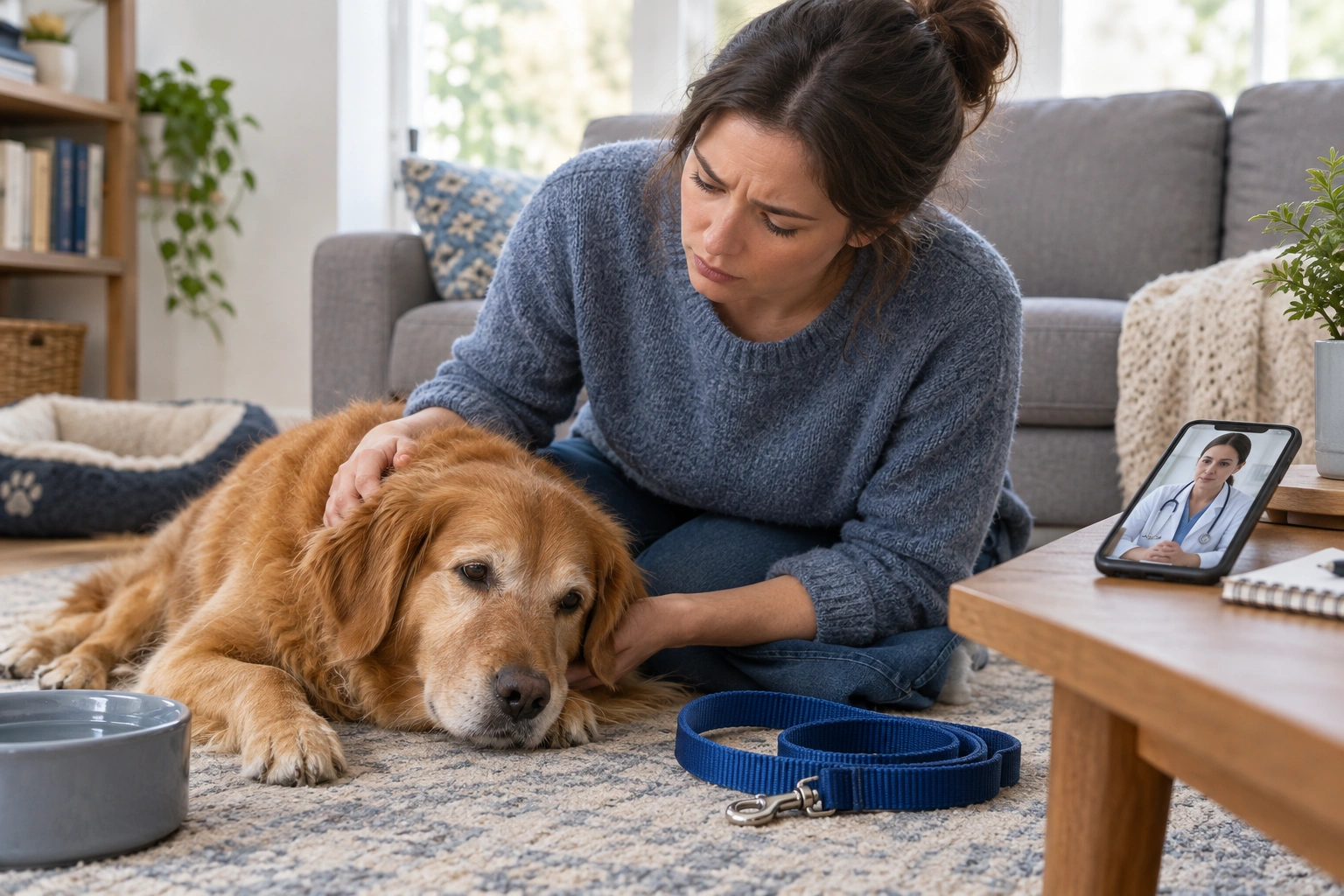
Is This an Emergency? What High Blood Sugar Looks Like in Dogs
High blood sugar, or hyperglycemia, often shows up as the classic diabetes signs: drinking more, urinating more, and sometimes increased appetite early on. But those signs alone do not tell you whether the situation is stable or dangerous.
The real question is whether your dog is still acting reasonably normal or whether there are signs of a diabetic crisis, especially diabetic ketoacidosis (DKA). DKA is the situation that can turn a “high glucose” problem into a true emergency.
A dog with high blood sugar may seem tired, thirsty, and hungry. A dog with a crisis may be more likely to vomit, stop eating, become weak, breathe rapidly, or collapse. If your dog is diabetic and suddenly looks sick rather than just “a bit off,” don’t try to manage it as a routine glucose problem.
A practical rule: if your dog is drinking a lot but otherwise bright, eating, and acting normally, that is usually a same-day vet call rather than a panic situation. If the drinking is paired with vomiting, not eating, weakness, fast breathing, or collapse, treat it as an emergency.
For general background on canine diabetes management, Cornell’s guide to managing canine diabetes is a useful reference point, but if your dog is showing emergency signs, skip the reading and call the clinic.
Red-Flag Symptoms That Mean Go to an Emergency Vet Now
These are the signs that make home treatment unsafe:
- Vomiting
- Not eating
- Marked weakness or lethargy
- Rapid or unusual breathing
- Dehydration
- Confusion or disorientation
- Collapse
- Severe lethargy or inability to stand
If a diabetic dog has several of these signs together, assume a possible DKA or another serious illness until a veterinarian proves otherwise.
A practical rule: if your dog cannot comfortably stand, swallow, or keep food down, you are past the point where home glucose-lowering efforts make sense. That dog needs veterinary care, not guesswork.
Quick comparison: high blood sugar vs low blood sugar
| Problem | Common signs | What to do first |
|---|---|---|
| High blood sugar | Drinking, urinating, tiredness, vomiting, poor appetite, weakness | Call vet/emergency clinic; do not guess extra insulin |
| Low blood sugar | Wobbliness, twitching, blindness, seizures, collapse | Put corn syrup or honey on gums if suspected; seek urgent care |
| Not sure which one it is | Weak, strange behavior, collapse, confusion | Treat as an emergency and get help fast |
The Red Cross lists wobbliness, twitching, blindness, seizures, and collapse as signs of low blood sugar in dogs, which is why “just give insulin” can be a dangerous mistake when you’re unsure.

What to Do Right Now While You’re Arranging Care
If your dog is alert enough to stand and swallow, your job is not to lower the blood sugar at home by force. Your job is to stabilize the situation and get to a veterinarian quickly.
Do this now:
- Call your regular vet or an emergency clinic immediately.
- Tell them your dog has diabetes if that’s the case, and describe the symptoms clearly.
- Gather the insulin bottle, syringe, glucose meter, ketone strips, and recent readings if you have them.
- Bring a list of the last insulin dose and the time it was given.
- Offer water if your dog wants it and can drink normally.
- Do not force food if your dog is vomiting or nauseated.
- Head out as soon as you have instructions or if the symptoms are severe.
If your dog is weak, keep the trip calm and direct. No long walk to “burn off” sugar, no extra exercise, and no trying to make the dog eat a full meal before leaving if nausea is part of the picture.
If you already have a home monitoring plan from your vet, use it only if it can be done without delaying transport. Ketone testing is especially useful when a diabetic dog is off food or vomiting, but it should never slow you down if the dog is clearly sick.
What Not to Do at Home When Blood Sugar Is High
This is where good intentions can cause harm.
Do not give extra insulin because you think “more will fix it faster.” Do not give insulin to “cover” a missed dose unless your veterinarian has told you exactly how to handle that situation. A well-meaning extra dose can overshoot and create a second emergency.
Do not use human diabetes advice, human medications, or random internet dosing charts. Dogs do not respond in the same way humans do, and the wrong insulin change can make things worse.
Do not rely on food and water alone if your dog is clearly sick. Hydration matters, but water will not treat DKA or correct a dangerous glucose problem.
Do not use exercise as a “quick fix.” Regular exercise can help overall glucose control, but unusually long or vigorous exercise can push blood sugar too low.
Should You Give the Scheduled Insulin Dose or Wait?
This is one of the most stressful decisions owners face, and it is not a good place to improvise.
The simplest rule is this:
- Stable dog, eating normally, acting fairly normal, and you are following a vet-approved diabetes plan: usually give the scheduled insulin as prescribed and contact your vet if the numbers are off.
- Missed dose, but the dog seems stable: call your vet or clinic for instructions before doubling, “catching up,” or changing the next dose.
- Vomiting, not eating, or clearly sick: do not guess. Call a veterinarian before giving insulin unless your vet has already given you a specific sick-day plan.
- Possible overdose or you’re not sure what happened: treat it as an emergency.
The “missed dose vs overdose” difference matters because the response is opposite. A missed dose may lead to high glucose, but an overdose can cause life-threatening hypoglycemia. If you are uncertain which one happened, assume you need veterinary help.
High Blood Sugar vs Low Blood Sugar: How to Tell the Difference
Owners often expect high blood sugar to look dramatic. In reality, the early signs can be vague. That’s why confusion is common.
High blood sugar tends to build more gradually: more thirst, more urination, fatigue, sometimes vomiting, and in serious cases dehydration or rapid breathing.
Low blood sugar often looks neurologic: wobbliness, trembling, twitching, odd behavior, blindness, seizures, or collapse. The Red Cross and Cornell both emphasize that mental changes and wobbliness can point to hypoglycemia, which is the emergency where sugar on the gums may help.
If you cannot confidently tell the difference, do not try to “balance it out” with insulin or food. Get the dog seen.
If you suspect low blood sugar instead
Cornell advises putting corn syrup or honey on the gums if hypoglycemia is suspected. Merck also notes that a small amount should be rubbed on the gums rather than poured, because pouring risks aspiration into the lungs.
Once the dog can swallow, feed a small amount of food and contact a veterinarian immediately. If the dog is unconscious or not improving, this is emergency territory.
When to Check Glucose or Ketones at Home—and When Not To
A blood glucose meter and urine ketone test can be useful if your veterinarian already taught you how to use them and your dog is stable enough for testing.
Ketone testing is especially important in a dog with known diabetes who is vomiting, off food, or acting sick. Ketones can suggest the body is breaking down fat instead of using glucose properly, which is one of the pathways toward DKA.
But there’s a limit: home testing should never delay emergency transport if your dog is weak, vomiting, breathing fast, collapsing, or mentally dull. A number on a meter is not more important than the dog’s condition.
A simple rule: if the dog is stable enough that testing won’t slow down leaving, test. If testing means you’ll “wait and see,” skip it and go.
How Veterinarians Lower Blood Sugar Safely in the Clinic
This is where the real correction happens.
Veterinary treatment for a diabetic emergency may include:
- Fluids to correct dehydration
- Insulin given in a controlled way
- Electrolyte correction
- Monitoring of glucose and overall status
- Hospitalization if needed
Treatment also often includes looking for the trigger behind the crisis, such as infection, pancreatitis, or another illness that made the diabetes harder to control.
That controlled setting matters because the clinic can adjust treatment based on how the dog responds. At home, you do not have that safety net. That’s why the answer to “how to lower dogs blood sugar quickly” is often: not by doing it yourself, but by getting the dog to the place that can do it safely.
After Stabilization: What Ongoing Diabetes Management Usually Changes
Once the emergency passes, the next step is usually not a dramatic new trick. It’s a reassessment.
Your veterinarian may recommend a glucose curve, insulin adjustment, diet review, or closer monitoring. Some dogs with good clinical control can still have occasional high readings, so a single number should be interpreted in context. That’s a useful reminder not to panic over every single high reading — but it does not mean severe symptoms should be ignored.
The follow-up goal is steadier control, not perfection. Your vet will usually care more about whether your dog is eating, drinking, peeing, and behaving normally than about chasing a single isolated reading.
When to Call Your Regular Vet vs Go Straight to Emergency
Use this decision rule:
Call your regular vet first if:
- Your dog is known diabetic
- The dog is bright and stable
- The issue is a routine reading concern or a missed dose question
- Your vet can respond quickly
Go straight to an emergency clinic if:
- Your dog is vomiting
- Your dog will not eat
- Your dog is weak, collapsed, or confused
- Breathing looks abnormal
- You suspect DKA
- You cannot get a fast answer from your regular vet
A good test is this: if you’re debating whether the dog can safely wait, that debate itself is often the sign to go.
FAQs
Can I lower my dog’s blood sugar quickly with exercise?
Not safely as a DIY emergency fix. Regular exercise can help overall control, but unusually long or vigorous activity can drop glucose too far.
Is it safe to give extra insulin if the reading is high?
Not without veterinary direction. Extra insulin can cause hypoglycemia, especially if the dog isn’t eating or the reading is misleading.
Should I feed my dog if I think the blood sugar is high?
Only if the dog is alert and able to eat normally. If the dog is vomiting or refusing food, don’t force it.
What if I missed my dog’s insulin dose?
Call your vet for instructions. Do not automatically double the next dose.
How do I know if it’s low blood sugar instead?
Wobbliness, twitching, blindness, seizures, and collapse are classic low-sugar signs. If you’re unsure, treat it as an emergency.
Can water alone fix high blood sugar?
No. Water may help with dehydration, but it does not correct a dangerous glucose problem or DKA.
When to See a Veterinarian or Certified Trainer
For this topic, the right professional is a veterinarian, not a trainer. A trainer can help with routines around medication, feeding schedules, or calm travel to the clinic, but only a vet can diagnose the cause of the glucose problem and adjust treatment safely.
If your dog is already in a diabetes care plan, keep that plan visible and easy to follow. If you do not have one, or if the current plan is no longer working, book a veterinary appointment even after the emergency is over.
For more general dog-health guidance, you can also review trusted resources like the AKC’s dog health information and the ASPCA’s pet care resources. For diabetes-specific emergency guidance, Cornell’s canine diabetes page and Merck’s emergency guidance are the more relevant references.
