
How to Show a Dog You Love Them: Practical, Dog-Friendly Ways That Build Trust

If you want your dog to feel loved, the goal is not to act more human. The goal is to communicate in ways dogs actually understand: clear tone, predictable care, respectful touch, and time spent doing things they enjoy.
That matters because dogs do not experience affection exactly the way we do. A hug may feel comforting to one dog and restrictive to another. A long cuddle may be perfect for a clingy, confident dog and too much for a sensitive one. What many dogs value is not a dramatic display of emotion, but a pattern of safety: you are calm, you are consistent, and good things happen when you are around.
For Border Collies, this is even more important. Many are affectionate, but they are also highly observant, active, and mentally demanding dogs. They often feel most connected through shared work, training, movement, and routines that make sense to them.
What Dogs Actually Experience as Love
Dogs do not need you to say the words. They read your behavior.
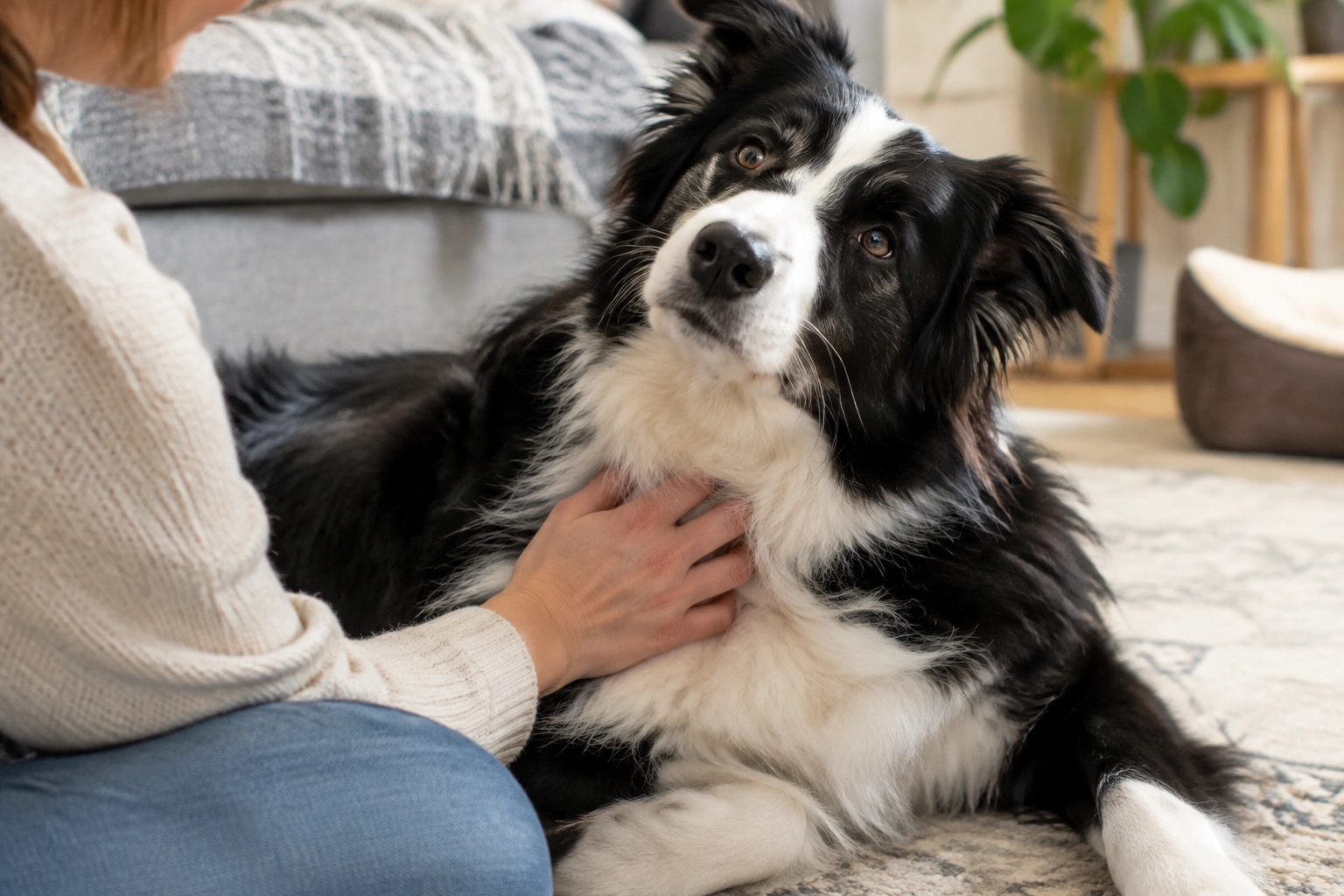
A dog feels cared for when your actions are predictable, your voice is calm, your handling is gentle, and your presence leads to things they like: food, exercise, play, rest, and comfort. That is why love, from a dog’s point of view, often looks less like a dramatic cuddle session and more like a reliable daily pattern.
Think of it this way: affection is only one part of the bond. A dog also notices whether you meet needs. Do you feed them on time? Do you give them enough movement? Do you notice when they are uneasy? Do you make their world feel safe?
For many dogs, those things matter more than a big show of affection.
Dogs also express attachment in ways humans sometimes miss. Following you from room to room can be a sign of security and closeness. Leaning against you can signal trust. Licking, nuzzling, and choosing to settle near you are often ways dogs maintain connection. A wagging tail may be part of that picture too, but tail wagging alone is not a universal “happy” signal; body posture, facial tension, and context matter.
A few very concrete dog-friendly love behaviors go beyond general care:
– giving a calm greeting when you come home instead of overwhelming the dog,
– taking them on a sniff-filled walk that lets them explore at their pace,
– spending a few minutes on a favorite game or training cue they already enjoy.
If you want a broad reminder of this principle from a veterinary source, AKC’s guidance on dog body language is a useful place to reinforce what you see at home.
How to Tell Whether Your Dog Enjoys Affection or Wants Space
This is the decision point that prevents most mistakes: does your dog actually want more contact, or are they just tolerating it?
A dog that enjoys affection usually leans in, stays loose through the body, and may seek more contact after you stop. They may nudge your hand, settle beside you, or reposition themselves so you can keep petting the spot they like.
A dog that wants space often gives smaller, easy-to-miss signals first. They may turn their head away, lick their lips, yawn when they are not tired, stiffen slightly, step out from under your hand, or move to a different spot. If they freeze, flinch, or repeatedly leave, that is not a “maybe.” That is a clear cue to stop.
One common mistake is reading tail wagging or licking as automatic consent. A dog can wag, lick, or even approach and still be uncomfortable with the touch itself. The whole body tells the story, not one signal by itself.
One helpful rule: if the dog chooses contact and stays soft, continue. If the dog endures contact but does not actively seek it, shorten it. If the dog creates distance, respect that immediately.
This is especially important with dogs who are polite but not cuddly. Some dogs do not object loudly; they simply tolerate touch until they can move away. That can fool owners into thinking the dog enjoys it. Tolerance is not the same thing as enjoyment.
A quick home check helps:
– Relaxed and engaged: soft eyes, loose body, leaning in, returning for more.
– Uncertain or overstimulated: head turns, lip licking, yawning, shifting away.
– Done with the interaction: moving off, freezing, avoiding your hand, or showing tension.
If you want more guidance on reading stress signals, ASPCA’s dog behavior resources are worth bookmarking.
The Safest Ways to Show Physical Affection
Physical affection is best when the dog can opt in.
That means petting the areas your dog already enjoys, pausing often, and watching their response instead of assuming they want more. Many dogs prefer chest scratches, ear rubs, or gentle strokes along the side rather than being reached over the top of the head. Start where the dog is already relaxed and build from there.
A simple consent-based approach works well:
1. Offer a brief touch.
2. Stop.
3. See whether the dog leans in, stays put, or asks for more.
4. If yes, continue.
5. If no, end the interaction cleanly.
Here is a simple example you can copy right away: sit beside your dog, offer three seconds of chest scratches, then remove your hand. If your dog turns toward you, nudges your hand, or stays loose and expectant, offer another short round. If they look away, shift their weight, or stand up, let them go and try again later.
That small pause tells you a lot.
Hugs and face-to-face contact need extra caution. Some dogs tolerate them, but many find them restrictive or confusing. A dog cannot easily move away when wrapped up, which is exactly why the gesture can feel stressful even when the intention is loving. Kissing a dog on the face can also be awkward for the same reason: it puts human proximity into the dog’s personal space without asking first.
Compared with what humans often think is affectionate, dogs usually prefer less pressure and more choice. Eye contact can be meaningful when it is soft and brief, but staring can feel intense. Leaning over a dog may seem warm to us, yet it can feel looming to them. Excited talking can be fun in small doses, but some dogs do better with a steady, calm voice.
If your dog already enjoys close body contact, you may see them press into your legs, flop beside you, or settle against you on the sofa. Even then, keep the interaction brief enough that the dog stays relaxed. The moment their body gets stiff or they shift away, you have gone past their comfort zone.
A useful comparison:
– Petting: usually the easiest to tailor to the dog.
– Cuddling: good for dogs that actively seek closeness; too much for others.
– Hugging: least universally dog-friendly; use sparingly, if at all.
– Kissing: often more for the human than the dog; skip it unless your dog clearly enjoys it.
Show Love Through Communication, Praise, Treats, and Play
Not every dog feels loved through touch. Many feel loved through clear communication.
Praise works best when it is immediate, calm, and tied to something the dog understands. A cheerful “good dog” after the exact behavior you want helps the dog connect your approval to the action. If praise is delayed, inconsistent, or overexcited, it becomes background noise instead of meaningful feedback.
Treats are often the strongest short-term reward because they are concrete and easy to understand. That does not make them “better” than praise in every case. It means they are often more useful when you need to teach, reinforce, or redirect. Praise is excellent for maintaining a bond and marking success. Treats are excellent for clarity. Play is excellent for relationship-building and energy release.
Here is the trade-off:
– Treats are clear and motivating, but not every moment should revolve around food.
– Praise is convenient and emotionally warm, but some dogs care less about it than others.
– Play builds joy and connection, but it can overstimulate dogs that struggle to settle afterward.
The best combination depends on what your dog values most. A food-motivated dog may light up for tiny treats during training. A toy-driven dog may bond through fetch or tug. A calmer dog may prefer soft praise and quiet attention after a walk.
For Border Collies, play and training often do double duty. A short training session followed by a controlled game can feel more meaningful than passive petting because it gives them a job, a clear pattern, and a shared success.
Why Routine, Exercise, and Basic Care Are Forms of Love
A dog does not only need affection. They need a life that feels stable.
Routine reduces uncertainty. When meals, walks, potty breaks, training, and rest happen in a generally predictable rhythm, your dog does not have to spend energy guessing what comes next. That predictability is a form of security.
Basic care is also emotional care. Fresh water, appropriate food, comfortable rest, grooming, and a clean living space all contribute to how safe and settled a dog feels. If a dog is itchy, under-exercised, or constantly interrupted when resting, affection alone will not make them feel well cared for.
Exercise deserves special mention because many behavior problems are really unmet needs in disguise. A dog with too little movement may become restless, noisy, destructive, or clingy. That does not mean they need endless miles every day. It means they need enough activity for their age, fitness, and breed type.
Mental stimulation matters too. Puzzle toys, scent games, training drills, and short problem-solving sessions can be deeply satisfying, especially for intelligent dogs. Border Collies often benefit from this more than from extra passive attention.
A practical rule: if your dog seems “needy” all day, first ask whether they are under-exercised, under-stimulated, or under-rested. Love is not just more attention. Sometimes it is a better schedule.
How to Bond with a Border Collie Specifically
Border Collies usually bond through shared purpose.
They are not one-note dogs, and many do not want constant physical affection the way a lapdog might. What they often want is engagement: a task, a pattern, a game, or a job they can understand. That is why structured training is one of the clearest ways to show them love.
A Border Collie often reads the quality of your interaction very quickly. If you are inconsistent, distracted, or vague, they notice. If you are calm, clear, and fair, they usually respond with focus and loyalty.
Good bonding options for this breed include:
– short obedience sessions with clean repetition,
– fetch or frisbee with rules,
– scent games,
– herding-style games if appropriate,
– trick training,
– calm leash walks with chances to observe and sniff,
– simple shaping games that ask the dog to think without frustration.
The key is not endless intensity. It is purposeful engagement.
For example, a 10-minute training session plus a 15-minute walk with sniffing opportunities may do more for your relationship than an hour of passive sitting if your Border Collie seems mentally underfed. On the other hand, if your dog is already overstimulated, more arousal is not the answer. In that case, a structured training session followed by quiet downtime is the better expression of care.
Border Collies often feel most loved when you are consistent, challenging in a fair way, and willing to meet their mental needs instead of assuming affection alone is enough.
Common Mistakes That Make Affection Feel Stressful Instead of Loving
The biggest mistake is forcing closeness.
If you pick up a dog that wants to move away, hold a dog in a hug that they cannot exit, or keep petting after they have clearly signaled “enough,” you are not building trust. You are teaching the dog that your affection overrides their comfort.
Another common mistake is confusing excitement with comfort. A dog may rush toward you, jump, or wag hard and still dislike certain kinds of touch. Energy is not the same as consent.
A third mistake is overvaluing cuddling while underdelivering on what the dog actually needs. A Border Collie that gets a few pats but no meaningful exercise, no training, and no problem-solving is not living a balanced life. The dog may still love you, but the relationship will feel incomplete from their side.
The correction is simple:
– Let the dog initiate more often.
– Shorten touch before the dog has to escape it.
– Match affection to temperament.
– Build the day around care, not just contact.
If your dog is sensitive, shy, newly adopted, or still building trust, keep affection low-pressure. Sit nearby. Speak softly. Offer a treat. Let them choose whether to come closer. For some dogs, trust grows fastest when affection is indirect and predictable rather than frequent and hands-on.
A Simple Daily Love Routine You Can Adapt
You do not need a perfect routine. You need a repeatable one.
Here is a practical structure that works for many dogs:
Morning:
Offer a calm greeting, a potty break, and a short check-in. If your dog likes touch, use a few seconds of gentle petting. If not, use a soft voice and let them settle beside you.
Midday:
Give a walk, training session, or enrichment activity. For a Border Collie, this is often the most important bonding window of the day because it combines movement, focus, and shared work.
Afternoon or evening:
Use play or a puzzle toy, depending on what your dog enjoys most. Keep the session short enough that the dog ends satisfied, not frantic.
Night:
Offer quiet companionship. Some dogs want to curl up near you. Others simply want to rest in the same room. Both can be meaningful.
The best routine is the one your dog can predict. When your dog knows that good things happen around you in steady, understandable ways, affection becomes more than a moment. It becomes a pattern.
When to See a Veterinarian or Certified Trainer
If your dog suddenly avoids touch, seems unusually irritable, or resists handling when they used to accept it, a veterinary check is worth booking. Pain, skin discomfort, ear issues, and other physical problems can change how a dog responds to affection.
If your dog is persistently fearful, reactive, or aggressive around contact, a certified trainer or behavior professional can help you work safely and gradually. Do not force closeness and hope it improves.
FAQ
Do dogs know when you love them?
They do not understand love exactly as humans do, but they do understand patterns of safety, care, and consistency. Dogs notice your tone, your timing, your handling, and whether good things happen around you.
Is hugging a dog a bad idea?
Not always, but it is not universally welcome. Some dogs tolerate hugs; others find them stressful because they restrict movement. If your dog leans into hugs and stays loose, they may enjoy them. If they stiffen, turn away, or try to leave, skip them.
What is the best way to show affection to a dog?
The best way is the one your dog clearly enjoys. For some dogs that is petting. For others it is play, training, treats, or simply being near you without pressure.
How do I know if my dog wants more petting?
If they lean in, stay relaxed, and keep returning for more, they probably want it. If they turn away, lick their lips, stiffen, or move off, stop.
Why does my Border Collie seem happier after training than cuddling?
Many Border Collies feel deeply satisfied by structured work. Training gives them mental effort, clarity, and connection. For this breed, shared activity often communicates care better than passive affection.
Can I show love by giving my dog toys?
Yes, if the toy matches what your dog enjoys and you use it as part of shared time. A toy can be a reward, a game, or an enrichment tool. What matters is that it fits your dog’s preferences.
What if my dog is not cuddly?
That is fine. Some dogs prefer side-by-side companionship, play, routine, and calm attention over physical closeness. Respecting that preference is part of loving them well.
Final thought
The strongest way to show a dog you love them is to make your presence easy to trust. Use touch they welcome, not touch they endure. Give them movement, mental work, and routines that fit who they are. Notice when they want closeness and when they want space. For Border Collies, especially, shared activity and clear communication often matter as much as affection itself. When you match your behavior to the dog in front of you, love becomes something they can actually feel.
