
How to Socialise an Older Dog Without Overwhelming Them

Older dogs can absolutely learn to feel safer around people, dogs, and new places. What usually changes is the pace. With an adult or senior dog, the goal is rarely “make them love everything.” The real win is calmer responses, fewer blow-ups, and enough confidence that daily life becomes easier.
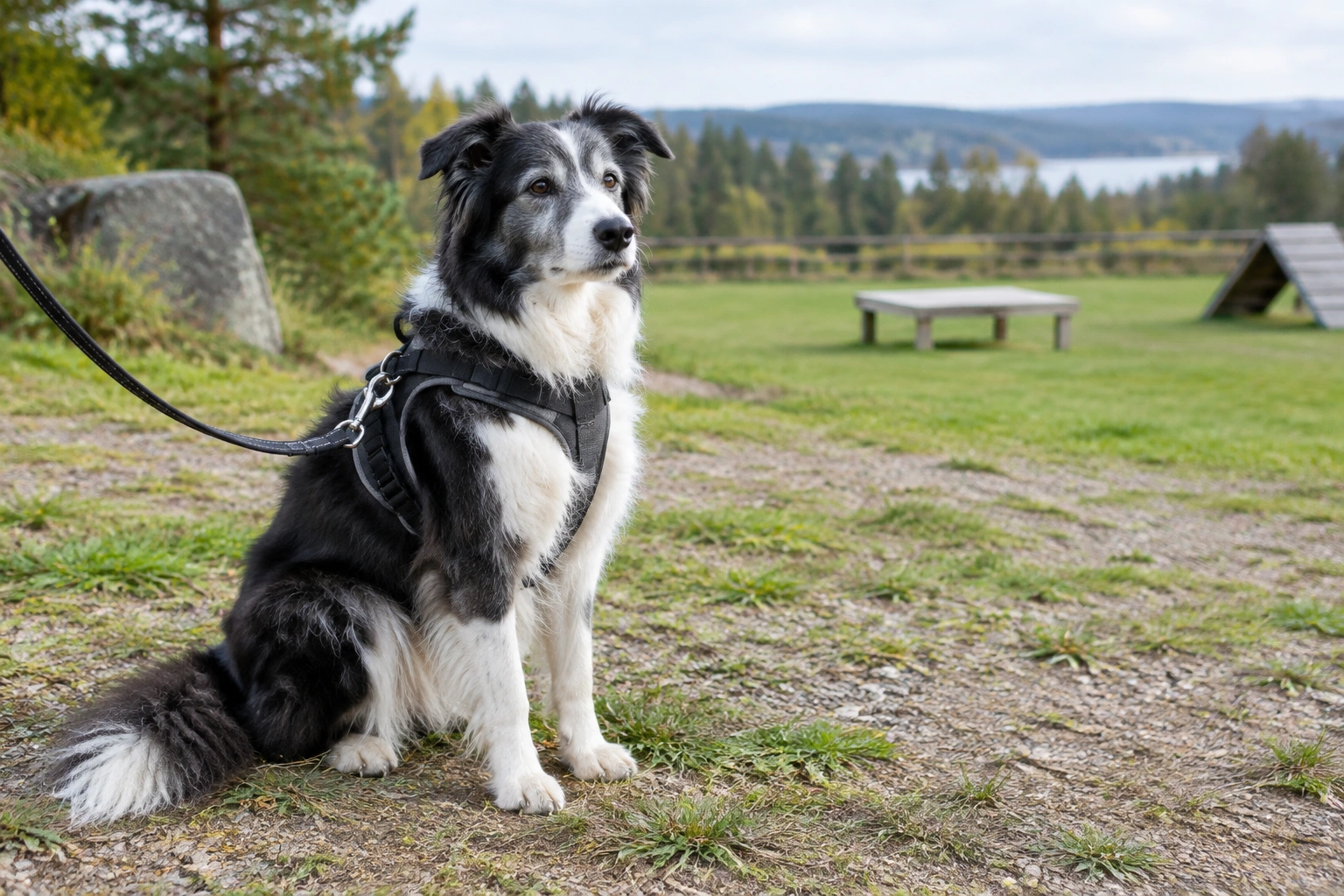
That matters for Border Collies too. Many are quick to notice movement, noise, and unfamiliar social pressure. If an older Border Collie has had limited exposure, a rough rescue history, or a few bad experiences, the answer is usually not more pressure. It is better structure, better distance, and better timing.
Is an Older Dog Still a Good Candidate for Socialization?
In most cases, yes — if you define success correctly.
An older dog is a good candidate for socialization work when they can still learn from experience. That usually means they can notice a trigger, stay under control at a workable distance, and recover after the moment passes. If the dog can eat treats, look away, and settle again, that is a useful sign that training can help.
Some dogs are not ready for “socialization” in the usual sense and need mostly management at first. That does not mean failure. It means the dog is too close to threshold to learn safely, so your job is to prevent rehearsals of fear, barking, lunging, or snapping while you build tolerance more slowly.
A simple decision rule helps:
- Proceed with training if the dog can stay calm enough to take treats and recover quickly.
- Go slower if the dog is tense, but not exploding.
- Manage, not socialize, for now if the dog is repeatedly barking, lunging, snapping, or cannot settle even with distance.
- Get professional help early if there is biting, escalating aggression, extreme panic, or repeated failed attempts.
A few concrete examples can help:
- A dog that startles at strangers but can watch from 30 feet away, take treats, and relax again is usually a socialization candidate.
- A dog that barks once, then can disengage and recover with space, may still be trainable with careful setup.
- A dog that charges the end of the leash, cannot eat, and keeps escalating when people or dogs appear is usually in management-first territory.
- A dog that growls, snaps, or bites when approached, or seems panicked rather than merely wary, should not be pushed into social contact.
A rescue or newly adopted dog also needs a decompression period before you push social work. The common “rule of threes” is a useful general guideline: the first days are for decompression, the next few weeks are for settling in, and it can take months for the dog’s fuller personality to show. That is not a law, but it is a useful reminder that the first phase should be predictable and low-stress, not crowded with novelty.
For a practical overview of adult-dog social comfort, I also recommend reading this site’s guide to older-dog socialization alongside this one.
What Socialization Means for Adult and Senior Dogs
People often use “socialization” to mean several different things. For older dogs, it helps to separate them.
| Term | What it means | When to use it | Main trade-off |
|---|---|---|---|
| Socialization | Building comfort with people, dogs, places, sounds, and handling | When the dog is under threshold and can learn from exposure | Can be too much if rushed |
| Desensitization | Very gradual exposure at low intensity | When the trigger is present but far enough away not to cause panic | Progress may look slow |
| Counterconditioning | Changing the dog’s emotional response by pairing the trigger with good things | When the dog can notice the trigger and still eat or engage | Timing has to be precise |
| Behavior modification | The larger training plan that may include all of the above plus management | When fear, reactivity, or aggression is already established | Takes longer and may need a professional |
The practical difference matters. If your dog is barking at visitors, you do not “socialize” by forcing greetings. You work below threshold, pair the sight of people with something the dog values, and gradually reduce the distance. That is behavior change, not a quick fix.
Adult dogs also bring history. Some have learned that strangers are unsafe. Others have simply never been taught how to handle novelty. Puppies are more flexible because they are still building expectations. Older dogs can still improve, but they tend to need more repetition and a cleaner setup.
Read the Dog’s Body Language Before You Start
The best socialization plan fails if the dog is already too stressed to learn.
Watch for the difference between curiosity and pressure. A curious dog may look, sniff, and then relax. A stressed dog often gets stiff, still, or hyper-focused. General body-language guidance to stop and create more space includes a stiff posture, showing the whites of the eyes, a closed mouth, and attempts to move away or escape. Those are not “minor” signals. They are your cue that the dog is losing comfort.
Other warning signs that the dog is over threshold include:
- freezing or locking onto a person or dog
- repeated barking or lunging
- panting when the temperature does not explain it
- refusing food they would normally take
- turning away, crouching, or trying to leave
- shaking off repeatedly after a social moment
Progress cues look different:
- looser posture
- quicker recovery after seeing a trigger
- the ability to take treats while the trigger is present
- less staring and less scanning
- choosing to disengage instead of react
The key question is not “Did the dog react?” It is “Did the dog stay calm enough to learn something useful?”
Set Up Safe, Controlled Exposure
The safest early sessions are usually boring by design.
The best starting environment is one where you can control distance. A quiet parking lot, driveway, empty field edge, or calm sidewalk is often better than a busy park. For some dogs, a baby gate, crate, or barrier inside the home is the safest first setup because it lets the dog observe without being trapped in direct contact.
Use this first-week framework:
First session: establish the starting distance
- Begin where the dog can notice the trigger but still stay loose and take treats.
- For many dogs, that may be far enough away that the trigger is only barely visible or audible.
- If you are unsure, start farther back than you think you need.
What to do in the session
- Stay at that distance for 3 to 5 minutes.
- Feed small treats for calm observation, then pause and watch the body.
- If the dog stays loose, can eat, and can look away, you can remain a little longer.
- If the dog stiffens, stops eating, or starts scanning hard, increase distance immediately.
When to increase distance or intensity
- Increase distance first if the dog shows tension.
- Only move closer if the dog has stayed loose for several minutes, is still taking treats, and recovers quickly after noticing the trigger.
- Change only one thing at a time: distance, duration, or trigger intensity.
How to end the session
- End the session while the dog is still under threshold.
- If the dog is getting tired, edgy, or less interested in food, stop before a reaction happens.
- A good first session is one that ends with the dog thinking, “That was manageable.”
How to progress over the first week
- Repeat the same easy setup several times before making it harder.
- If the dog is calm in one location, try the same type of distance-based exposure in a slightly busier version of that place.
- If the dog struggles, go back to the easier version rather than pushing forward.
A leash and harness are usually the baseline for public exposure. The leash should be properly secured, not held loosely, and the harness should give you enough control without creating a fight. If your dog is likely to bite, a basket muzzle can be a smart safety tool, but only if it is properly conditioned first. A muzzle is not a punishment; it is a safety layer that can let training happen more calmly.
How to Introduce an Older Dog to People Safely
The first rule is simple: strangers should not rush the dog.
A calm human introduction is usually better when the stranger ignores the dog at first. No leaning over, no direct hand in the face, no sudden reaching. Let the dog observe from a distance, then reward calm interest. If the dog chooses to approach, that is a better sign than being pulled in.
Use this progression:
- Start at a distance. The dog sees the person but does not feel cornered.
- Pair the sight of the person with treats. The reward should appear while the person is still at a safe distance.
- Watch the body. If posture tightens, increase distance.
- Allow choice. If the dog wants to move away, let them.
- Keep the first meeting short. End before the dog is tired or edgy.
The timing of treats matters. Rewarding after the dog has already barked or lunged is usually too late. The dog has already rehearsed the reaction. The reward should help the dog form a better association before the emotional spike.
For fearful dogs, the best “socialization” with people may simply be learning that strangers can exist nearby without pressure. That is enough to build trust for now.
How to Introduce an Older Dog to Other Dogs Safely
With other dogs, one-on-one is usually safer than groups.
A safer progression looks like this:
1. Parallel walking
Walk both dogs at a comfortable distance in the same direction. The goal is not interaction; it is calm coexistence. If either dog stiffens, increase space.
2. Short pauses with distance
If both dogs stay loose, you can briefly pause and let them notice each other. Keep the leash slack enough that neither dog feels trapped, but short enough that you can prevent a sudden rush.
3. Controlled closer approach
Only move closer if both dogs are still loose, sniffing the environment, and recovering quickly after looking at each other.
4. Brief sniffing, then separate
If direct contact happens, keep it short and end it before tension builds. Many dogs do better with a quick, neutral hello than with prolonged face-to-face pressure.
Do not move from parallel walking to sniffing just because the dogs are nearby. Stay at the walking stage if either dog is staring, leaning forward, freezing, pulling hard, or refusing to take treats. Those are signs that the dogs are not ready for closer contact yet.
If the dog is already reactive on leash, the leash itself can make greetings worse by creating frustration. In that case, parallel movement at distance is often more useful than trying to manufacture a nose-to-nose introduction.
Introducing an Older Dog to New Environments
New environments are often harder than new people because they combine sound, smell, movement, and uncertainty.
A good rule is to match the setting to the dog’s current tolerance. A home introduction is usually easier than a busy public outing because you can control who enters, where the dog rests, and how much movement happens. Public outings are useful, but they should be simpler and more predictable at first.
At home
- Let the dog enter and explore one area at a time.
- Keep the first day low-key with limited visitors, noise, and handling.
- Use gates, crates, or closed doors to create quiet rest zones.
- If guests come over, have them ignore the dog unless the dog chooses to approach.
On sidewalks
- Start on a quiet block, not a crowded street.
- Stand far enough away from traffic, bikes, strollers, and pedestrians that the dog can observe without bracing.
- If the dog is tense, turn around and increase distance rather than “pushing through.”
In parking lots
- Use parking lots as controlled in-between spaces, not as social free-for-alls.
- Begin at the edge where there is less movement.
- Let the dog watch cars, carts, and people from a distance.
- Leave before the dog becomes overwhelmed.
In stores or other public places
- Keep the first visit short and low-pressure.
- Choose quiet times and simple routes.
- Avoid aisles or entrances where the dog will be repeatedly surprised.
- If the dog cannot stay loose, it is too soon.
The goal is not to expose the dog to every possible setting in one week. It is to help the dog learn that unfamiliar places can be predictable and safe.
Using Positive Reinforcement, Counterconditioning, and Timing Correctly
The goal is to change emotion, not just behavior.
Positive reinforcement works best when the dog can still think. If the dog sees a stranger, stays loose, and gets a treat, the stranger begins to predict good outcomes. That is counterconditioning in action. Over time, the trigger becomes less alarming because it consistently appears with something the dog values.
A practical rule: reward calm observation, not panic recovery. If the dog is already over threshold, food may not help because the nervous system is too activated. In that case, create more distance first. Then restart at a lower intensity.
Treat placement matters too. For some dogs, tossing a treat away from the trigger helps them disengage and reset. For others, hand-feeding at a calm distance is better because it keeps the dog anchored to you. Use the method that keeps the dog soft and able to recover.
Older dogs usually need repetition, consistency, and a slower pace. That is normal. The dog is learning a new emotional pattern, not memorizing a trick.
Special Cases: Fearful, Reactive, Rescue, and Multi-Dog Household Dogs
Rescue dogs often need the most patience because you may not know what they have already learned about the world. A predictable decompression period matters here. Familiar routes, a consistent schedule, and fewer surprises give the dog a base level of safety before you add social challenges.
For fearful dogs, the biggest mistake is flooding. Flooding means overwhelming the dog with too much exposure too quickly and hoping they “get used to it.” That usually backfires. The dog may shut down, escalate, or learn that the trigger really is dangerous.
For highly fearful dogs, the first goal may be management rather than socialization. That can mean:
– limiting exposure to the trigger
– using barriers at home
– choosing quiet outdoor routes
– keeping sessions extremely short
– rewarding any calm observation from a safe distance
In a multi-dog home, early structure matters. Feed dogs separately if there is tension. Use gates or barriers to prevent face-to-face pressure. Introduce new dogs gradually, and do not assume the resident dog will “sort it out.” Calm separation is often the fastest route to peaceful coexistence.
A Border Collie may be especially quick to notice movement and social conflict. That does not mean the dog is difficult by nature. It means the setup has to be cleaner.
Safety Tools: Leash, Harness, Muzzle, Barriers, and When to Use Them
Each tool solves a different problem.
- Leash: Prevents rehearsal of bad behavior in public, but can create tension if held too tightly.
- Harness: Gives safer physical control than a flat collar for many dogs, especially if they lunge.
- Basket muzzle: Adds bite safety and can help everyone stay calmer, but it must be fitted and conditioned properly.
- Baby gate or crate: Useful for home introductions because they create safety without direct pressure.
- Barrier: Helpful when the dog needs to see but not meet.
The trade-off is simple: more safety usually means less freedom in the short term. That is worth it when the dog is fearful or reactive. The point is not to maximize contact. The point is to create enough safety that learning can happen.
If you are unsure whether to use a muzzle, ask whether a mistake would be dangerous. If yes, condition the muzzle before you do social work.
How Often to Practice and How to Progress Without Setbacks
Short, repeatable sessions work better than rare big outings.
Frequent visits to the same place often help a dog feel more at ease there. That repetition matters because the environment becomes predictable. One successful visit is nice; several calm visits build confidence.
A good session usually ends before the dog is tired or edgy. If the dog starts to lose focus, that is your cue to stop. You are trying to leave with the dog thinking, “That was manageable,” not “I survived that.”
Progress criteria should be practical:
- The dog can notice the trigger and still take treats.
- The dog recovers faster after seeing the trigger.
- The dog needs less distance than before.
- The dog shows less scanning, staring, or stiffening.
If those markers are not improving after repeated, careful sessions, the plan may need to be simplified rather than intensified.
What Progress Looks Like in an Older Dog
Progress is often subtle.
Owners sometimes expect tail-wagging friendliness. In reality, the first signs of success are usually quieter:
- the dog stops bracing at the sight of a trigger
- the dog can turn away instead of reacting
- the dog begins eating sooner
- the dog can remain in the area longer without tension
- the dog bounces back faster after a surprise
That is meaningful progress. For many older dogs, the realistic end goal is not “loves everyone.” It is “can move through the world safely and calmly enough to function.”
Common Mistakes That Make Socialization Worse
The biggest mistakes are usually about speed.
- forcing greetings too soon
- using crowded places as the first training environment
- allowing repeated barking or lunging as “practice”
- moving closer because the dog looked fine for only a moment
- rewarding too late, after the reaction already happened
- confusing stillness with relaxation
- assuming a dog park is a shortcut
One especially common error is misreading quiet as calm. A dog that has frozen may be more stressed than a dog that is moving and sniffing. Body language matters more than silence.
When to See a Veterinarian or Certified Trainer
Get help early if the dog is biting, escalating, or showing extreme panic. Also seek support if the dog cannot recover after exposure, cannot eat in the presence of triggers, or seems to be getting worse despite careful work.
A certified trainer can help with setup, timing, and exposure plans. A veterinary behaviorist is the better choice when fear, aggression, or panic is severe, when there may be a medical issue contributing to the behavior, or when the dog’s reactions feel dangerous or hard to predict. If you are seeing possible pain, sudden behavior change, or intense panic, start with a veterinarian and ask whether a veterinary behaviorist is the right next step. The earlier you ask, the less likely you are to rehearse the problem.
Realistic Timelines and Expectations
Older dogs can change, but usually not on a puppy timeline.
Some dogs show early improvement in a few sessions because the setup finally makes sense to them. Others need weeks or months of repetition before they relax in the same environment. That is normal. The dog is not being stubborn; the dog is updating expectations.
The most realistic goal is often safer, calmer coexistence. If your older dog can walk past people without panic, share space with one carefully chosen dog, or settle in new places without shutting down, that is real progress.
For many owners, that progress is enough to transform daily life.
FAQs
Is it too late to socialize an older dog?
No. Older dogs can still learn, especially when the work is gradual, predictable, and reward-based. The pace is usually slower than with puppies.
Should I let my older dog greet every dog or person?
No. Repeated greetings can overwhelm a fearful dog. Controlled exposure at a safe distance is often more useful than direct contact.
Can I use a dog park to socialize an older dog?
Usually not as a first step. Dog parks add too much pressure for fearful or reactive dogs. Start with one dog at a time or calm public walks instead.
How do I know if my dog is over threshold?
Look for stiffness, freezing, closed mouth, whites of the eyes showing, escape attempts, barking, lunging, or refusing treats.
How often should I practice?
Often enough to build familiarity, but not so often that the dog gets overwhelmed. Repetition helps, but only if the dog stays calm enough to learn.
When should I get professional help?
If there is biting, escalating aggression, extreme panic, or no improvement after careful work, bring in a certified trainer or veterinary behaviorist.
