
How to Stop a Dog from Urinating in a Crate: A Practical Fix-First Guide

If your dog keeps peeing in the crate, treat it like a troubleshooting problem, not a character flaw. The fix usually comes from identifying the real cause: a medical issue, stress or anxiety, a crate setup problem, or a potty-training gap.
What to do right now after a crate accident
1. Interrupt calmly, if you catch it happening.
2. Take the dog outside right away for a potty break.
3. Clean the crate thoroughly with an enzyme cleaner.
4. Temporarily shorten the next crate session.
5. Check for medical red flags if this is new or recurring.
Border Collies can be especially tricky here because they are smart, sensitive, and quick to react to routine changes. A dog that seems “fine” in every other part of life may still urinate in the crate if the setup, timing, or emotional pressure is off.
A better approach is to work in the right order. Rule out health problems first, then tighten the crate setup, then reset the potty routine, and only then dig deeper into anxiety or training habits. Some cases improve quickly with that sequence, but others need veterinary or behavioral help.
Why dogs urinate in the crate
Crate urination is usually one of four things:
- A medical problem
- Stress, fear, or separation anxiety
- A crate setup that makes accidents easier
- Incomplete house training or poor timing
That order matters. If you only adjust training while ignoring a urinary tract infection, or if you assume the dog is “being difficult” when the crate is too large, you can waste weeks.
A useful example: a puppy that pees in the crate after three hours may simply need more frequent potty breaks. An adult dog that suddenly starts doing it after months of being dry needs a vet check before anything else.
When crate urination is a vet issue
A sudden change is the biggest red flag. If your dog was dry in the crate and now keeps urinating there, especially with any of the signs below, call your veterinarian:
- blood in the urine
- straining or discomfort
- frequent small urinations
- lethargy
- obvious pain
- accidents that are new or rapidly worsening
Those signs can point to a urinary tract infection, pain, or another medical issue that training will not fix.
Even without blood or obvious pain, recurrent crate urination in an adult dog can still warrant a vet visit, especially if the pattern is new or getting worse. That helps rule out urinary issues, pain, hormone-related problems, or other medical causes before you assume it is behavioral.
If you want a general housetraining reference from a trusted source, the ASPCA’s house-training guidance is a useful place to cross-check the basics, but it should not replace a vet visit when the pattern looks medical.
Medical cause vs. behavior problem: how to tell the difference
This comparison can help you decide what to do first.
| Pattern | More likely cause | Best first move |
|---|---|---|
| Sudden crate accidents in a previously dry dog | Medical issue | Vet exam |
| Frequent small urinations, straining, blood | Medical issue | Vet exam |
| Crate accidents with whining, panting, drooling, escape attempts | Anxiety or crate distress | Behavior plan + professional help if severe |
| Puppy pees after being crated too long | Bladder control / timing | More frequent potty breaks |
| Dog only pees in a large crate | Crate setup | Resize or reconfigure the crate |
| Dog pees despite being house-trained, but only when alone | Stress or separation anxiety | Address anxiety separately |
| Dog pees in crate and the crate still smells like urine | Odor reinforcement | Deep clean with enzyme cleaner |
The practical rule is simple: medical-looking patterns get a vet first; timing and setup problems get management first; panic-looking patterns get behavior support.
Fix the crate setup: size, bedding, and location
A crate should be big enough for the dog to stand, turn around, and lie down comfortably, but not so large that one end becomes a bathroom and the other becomes a bed. That trade-off matters more than many owners realize.

If the crate is too large, some dogs will pee in one corner and stay dry in the rest. If it is too small, the dog may become stressed, restless, or reluctant to settle. The goal is a snug resting space, not a tiny box.
What to change first
If the crate is too large:
Use a divider or a smaller crate. This is one of the most practical fixes when the dog seems to “choose” a bathroom corner.
If the crate is too small:
You are more likely to see pacing, repeated repositioning, whining, refusal to lie down, or the dog appearing tense instead of settling. In that case, the crate may be creating stress rather than solving a potty problem.
If bedding keeps getting soaked:
Remove it temporarily. AKC guidance notes that some puppies may learn to soil bedding and cover the mess. Bare crate floors are less cozy, but they can break the habit faster.
If the crate is in a noisy or high-traffic area:
Move it somewhere calmer. Some dogs relax better in a quiet room; others do better where they can still feel connected to the household. The right spot is the one where the dog settles, not the one that looks best on paper.
If anxiety is part of the picture, moving the crate closer to your bedroom at night can sometimes help the dog feel less isolated and reduce nighttime accidents. That said, it is not a fix for medical causes, so do not use it to delay a vet visit if the pattern is new or suspicious.
Here’s the trade-off: bedding improves comfort, but it can also hide odor and absorb urine. If your dog is repeatedly soiling the crate, comfort should take a back seat until the habit improves.
Reset the potty schedule and confinement timing
One of the most reliable prevention steps is to make sure the dog empties out before crate time. That means a potty break right before crating, then watching to confirm the dog actually urinates.
That recommendation is echoed in practical crate-training guidance from AKC’s puppy crate advice and in other training resources: don’t assume the dog went out just because you opened the door.
Use this sequence
- Take the dog out.
- Wait quietly for a real potty break.
- Bring the dog in only after they eliminate.
- Crate them immediately after, while they are still empty.
- Repeat the same pattern before every long crate stay.
This works because it removes the “I might still need to go” problem before confinement starts.
How often should you break the schedule?
Puppies, small dogs, and senior dogs usually need more frequent potty chances because they cannot hold urine as long. That is common-sense physiology, not a training failure.
If your dog has repeated accidents near the end of crate time, the crate period is probably too long for that dog right now. Shorten it and build back up gradually.
A dog walker can be a smart temporary fix if your workday is longer than your dog’s current bladder control allows.
Nighttime crate accidents: what to change first
Night accidents are often about timing, not defiance. The evening routine usually needs adjustment before you blame the crate.
Check these points:
- Give a calm potty break right before bed.
- Avoid a chaotic last hour with lots of stimulation.
- Keep the bedtime routine predictable.
- If your dog is still having accidents overnight, consider whether they need one additional potty break.
A tired dog is often easier to settle, and a calm pre-crate routine can help the dog settle into the crate more predictably. But “tired” should mean calm and physically satisfied, not overstimulated. A Border Collie that has been over-aroused all evening may be harder to settle than one that had a steady walk and some mental decompression.
If your dog is waking and peeing at the same time every night, look at the schedule, not the dog’s “obedience.”
If the dog is anxious in the crate
Some dogs urinate because they are stressed, not because they need to go. That distinction is important.
Watch for:
- whining or barking that escalates
- panting when the dog is not hot
- drooling
- scratching at the crate
- frantic attempts to escape
- urinating soon after being left alone
Those signs point toward anxiety or crate aversion. In that case, simply adding more crate time can make the problem worse.
For dogs that seem panicked when confined, management matters more than repetition. Short, calm crate sessions, paired with positive reinforcement, usually work better than forcing long stays. Humane World for Animals also notes that if a dog is marking out of anxiety, a veterinarian may need to discuss whether medication is appropriate, depending on the diagnosis and severity.
If the crate triggers panic, that is a behavior case, not a “just wait it out” case.
How to clean the crate so urine odor does not bring accidents back
If a crate still smells like urine, your dog may keep returning to it. Dogs notice scent far more than we do.
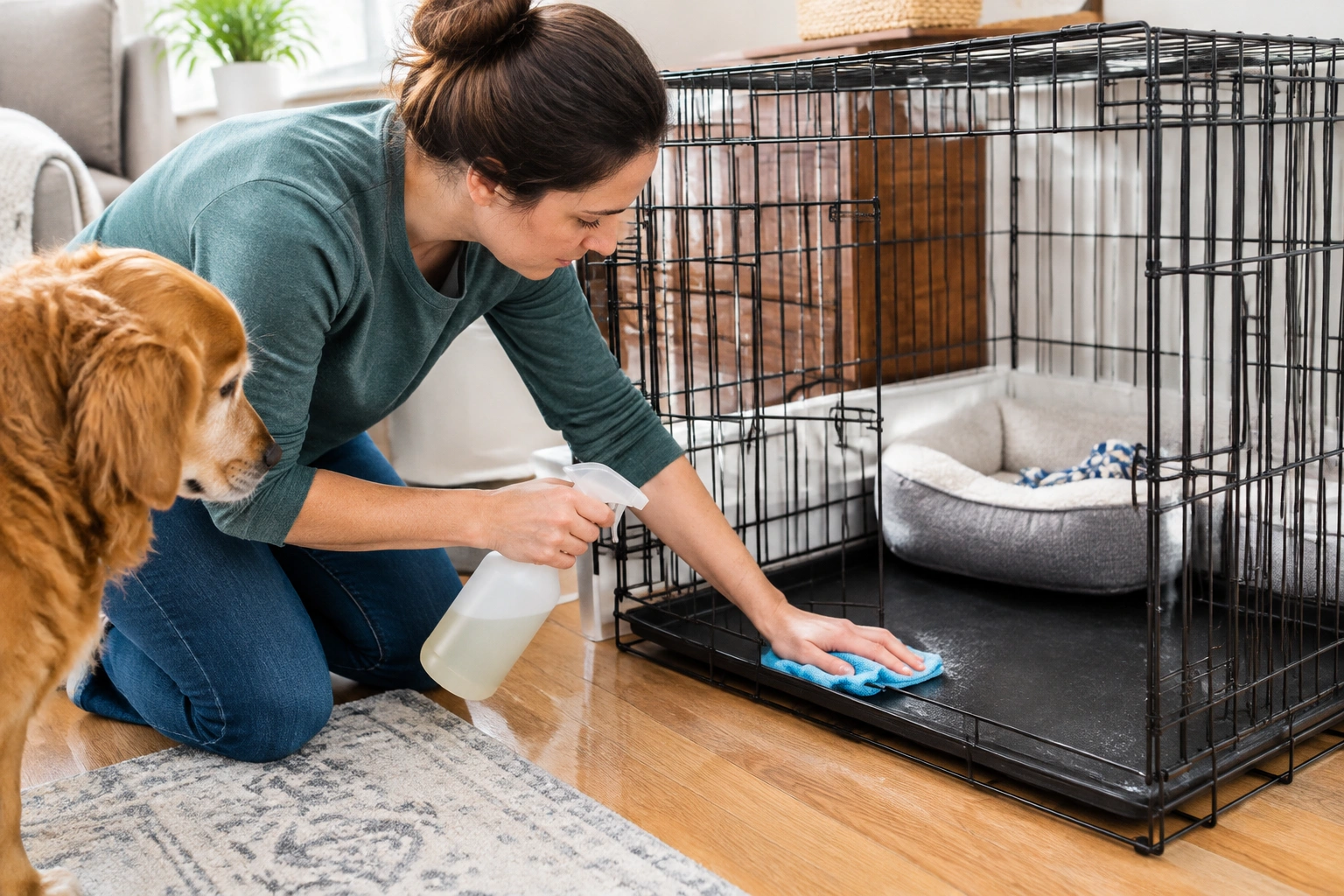
Do not rely on a quick wipe-down alone. Use an enzyme cleaner designed to break down urine odor, then let the crate dry fully before reuse. For best results, remove all bedding and washable liners first, wash the crate surfaces with the enzyme cleaner according to the label, and let every part air-dry completely before putting anything back in.
If bedding is washable, run it through a full wash after treating it with an enzyme cleaner or a pet-safe odor remover. If the bedding still smells like urine after washing, replace it. Porous bedding can hold odor even when it looks clean, and that lingering scent can bring accidents back.
A practical rule: if you can still smell urine, your dog probably can too.
This is one reason repeat accidents happen in the same corner. The dog is not “remembering the mistake” in a human sense; it is responding to scent and habit.
Puppy vs. adult dog: different solutions
Puppies and adult dogs peeing in crates can look similar, but the fix is often different.
Puppy
A puppy who pees in the crate is often dealing with simple bladder limits, incomplete house training, or a crate that is too large. The main tools are:
- more frequent potty breaks
- shorter crate sessions
- tighter crate sizing
- temporary removal of bedding if needed
Adult dog
An adult dog who suddenly starts urinating in the crate is more concerning. If the dog was previously reliable, think medical issue first. If the dog has always struggled only when left alone, think anxiety or crate aversion.
That distinction saves time. Puppies usually need more structure. Adults with new accidents need more investigation.
Border Collie-specific considerations
Border Collies are often highly trainable, but that does not mean they are automatically easy in the crate. Their sensitivity cuts both ways: they learn quickly, but they also react quickly to tension, inconsistency, and over-arousal.
Three Border Collie patterns show up often:
-
They are mentally underworked and restless.
A dog with no real outlet may struggle to settle in the crate. -
They are physically tired but emotionally keyed up.
A hard game of fetch is not always the same as calm decompression. -
They notice routine changes immediately.
A missed potty break or a sudden schedule shift can show up as crate accidents fast.
For this breed, a calmer pre-crate routine often works better than simply “wearing them out.” Think steady walk, potty break, then quiet settling rather than a frantic energy dump.
When to see a veterinarian or certified trainer
See a veterinarian first if:
- the behavior is new
- the dog seems painful or unwell
- the urine looks abnormal
- the dog is straining or going often in small amounts
See a certified trainer or behavior professional if:
- the dog is house-trained but still pees in the crate from stress
- the dog shows panic signs in the crate
- the problem persists after you’ve fixed the schedule, crate size, and cleaning
If the dog shows clear separation-anxiety signs, look for a certified behavior professional or trainer with separation-anxiety experience rather than a general trainer. Panic-related crate problems often need a more specialized plan than basic obedience coaching.
That second category is where many owners get stuck. The dog is not “stubborn”; the dog is distressed. A behavior professional can help you rebuild the crate association without turning every crate session into a battle.
Step-by-step troubleshooting order
If you want the fastest path forward, use this order:
- Check for medical red flags.
- Clean the crate deeply with an enzyme cleaner.
- Adjust the crate size and remove bedding if needed.
- Take the dog out right before crate time and confirm they urinate.
- Shorten crate sessions if the dog is not holding it comfortably.
- Watch for anxiety signs during confinement.
- Bring in a vet or certified trainer if the problem persists.
That sequence keeps you from changing five things at once and losing track of what actually helped.
FAQ
Why does my dog pee in the crate but not in the house?
The crate may be too large, the schedule may be too long, or the dog may feel stressed when confined. A dog can be house-trained and still struggle in a crate if the context is different.
Should I remove bedding from the crate?
If bedding stays wet, traps odor, or seems to encourage accidents, yes—temporarily. Some dogs do better on a bare crate floor during retraining.
How do I know if it’s separation anxiety?
Look for distress signs like whining, drooling, panting, scratching, and frantic behavior that happen when the dog is left alone. If those signs are present, treat it as a behavior issue, not just a potty issue.
Can exercise before crating help?
Often, yes—but the goal is calm physical and mental satisfaction, not overstimulation. A Border Collie that is amped up may actually do worse.
What if my puppy keeps peeing in the crate at night?
Shorten the gap between potty breaks, make the bedtime routine more predictable, and make sure the puppy empties out right before bed. Puppies cannot hold urine like adults.
A good crate plan is not about forcing a dog to “hold it.” It is about making the dog successful often enough that the habit changes.
Should I use medication for anxiety-related urination?
Only with veterinary guidance. If the crate accidents are tied to anxiety, medication may be part of the plan, but it should be discussed with your vet rather than guessed at at home.
Final takeaways
If your dog is urinating in the crate, do not treat every accident the same way. A puppy that needs more potty breaks, an adult dog with a UTI, and a Border Collie that panics when confined all need different fixes.
The fastest wins usually come from three places: a vet check when the pattern is new or suspicious, a better crate setup, and a tighter potty routine. Once those are in place, you can tell whether you are dealing with a training gap or a deeper behavior problem.
