
How to Tell If a Dog Has a Blockage: Signs, Urgency, and What to Do Next

A suspected blockage is one of those problems where waiting for “one more day” can cost you a lot. If your dog is vomiting repeatedly, retching without bringing anything up, refusing food, acting painful, or straining to poop with little or no result, treat it as urgent and call a veterinarian now. If the dog is weak, collapsed, bloated, or in obvious pain, go to an emergency veterinary hospital immediately.
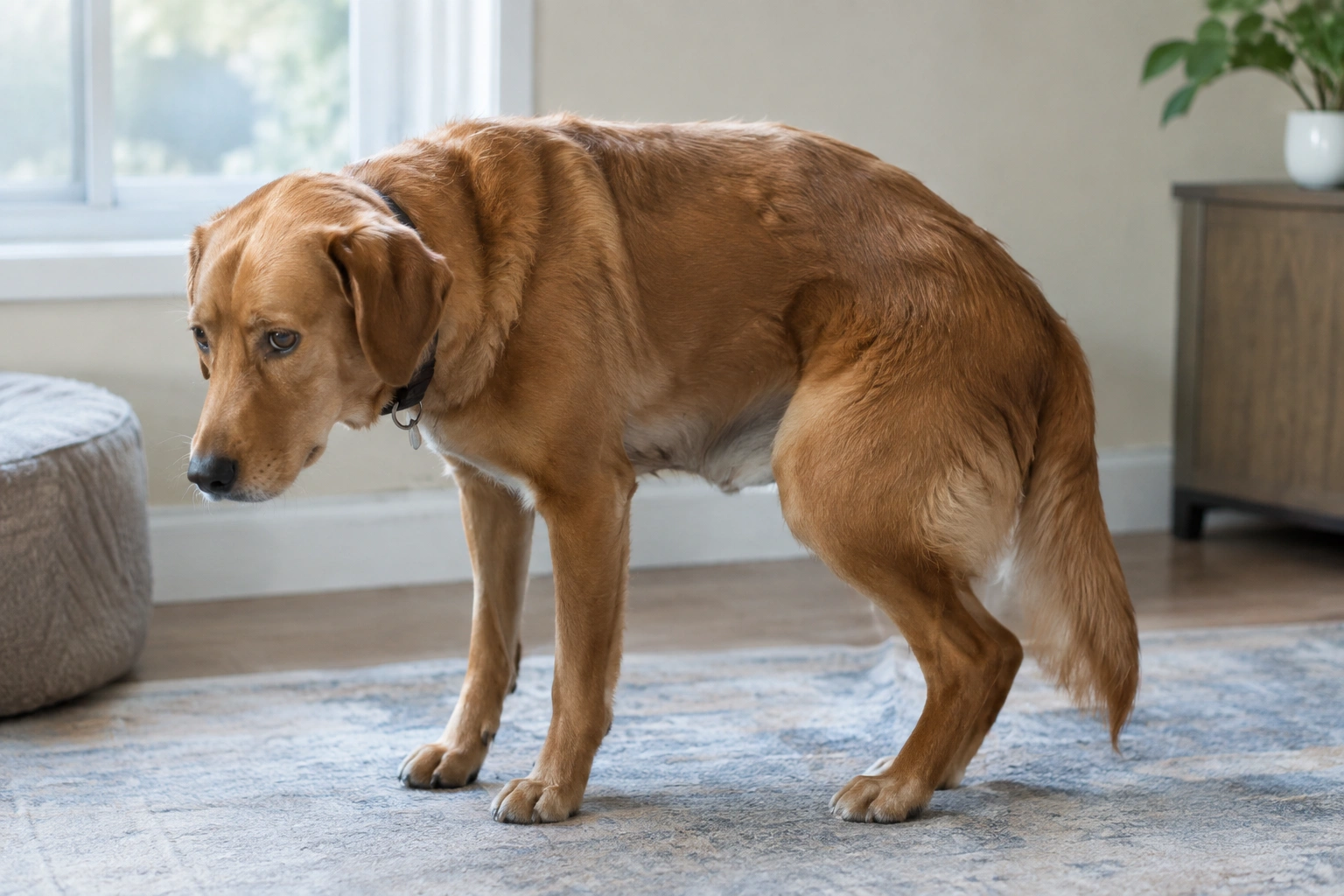
That urgency matters because an intestinal blockage can stop food, fluid, and gas from moving normally through the digestive tract, and that can become life-threatening quickly. Signs may appear suddenly or build over several hours, which is why a dog that seems “sort of okay” early on can still be in real danger later.
For Border Collie owners, the risk often comes from the way these dogs play: hard fetch sessions, intense toy chewing, and fast, enthusiastic swallowing when a toy starts to break apart. A partial blockage can be especially deceptive because the dog may still pass some stool and even seem normal for a while before symptoms return.
Quick Answer: When a Dog Blockage Is an Emergency
Use this rule: if your dog is vomiting and not producing normal stool, or if you know or strongly suspect they swallowed something they should not have, get veterinary help immediately. That guidance is especially important if the dog cannot keep water down, seems painful, is getting worse rather than better, or has a swollen belly.
Emergency care is also the right move if you see any of these red flags:
- repeated vomiting or dry heaving
- a swollen or tight belly
- clear abdominal pain
- severe lethargy or weakness
- collapse
- repeated straining without stool
- sudden bloating
If your regular vet is closed, go to the nearest emergency clinic rather than waiting until morning. That is the trade-off here: you may spend a few hours and a visit fee on a problem that turns out not to be a blockage, but the cost of delay can be much higher if it is one.
Blockage vs Constipation vs Simple Stomach Upset
A lot of owners get stuck here because the early signs overlap. The difference is not always obvious at home, but some patterns are more concerning than others.
| Problem | Typical pattern | What makes it concerning |
|---|---|---|
| Constipation | Straining, hard dry stool, fewer bowel movements | Usually the dog still feels fairly well and may not be vomiting |
| Simple stomach upset | Mild vomiting or diarrhea, but dog may still drink, improve, and pass stool | Symptoms should trend better, not worse |
| Partial blockage | Intermittent vomiting, reduced appetite, sometimes some stool still passes | Can look normal between episodes and then deteriorate |
| Complete blockage | Repeated vomiting or retching, no stool or only tiny amounts, pain, lethargy | This is the most urgent pattern and can become dangerous fast |
The biggest mistake is assuming that any stool means “no blockage.” A dog with a partial obstruction may still pass some stool because the blockage is not fully sealing the intestine. That false reassurance is how owners lose time.
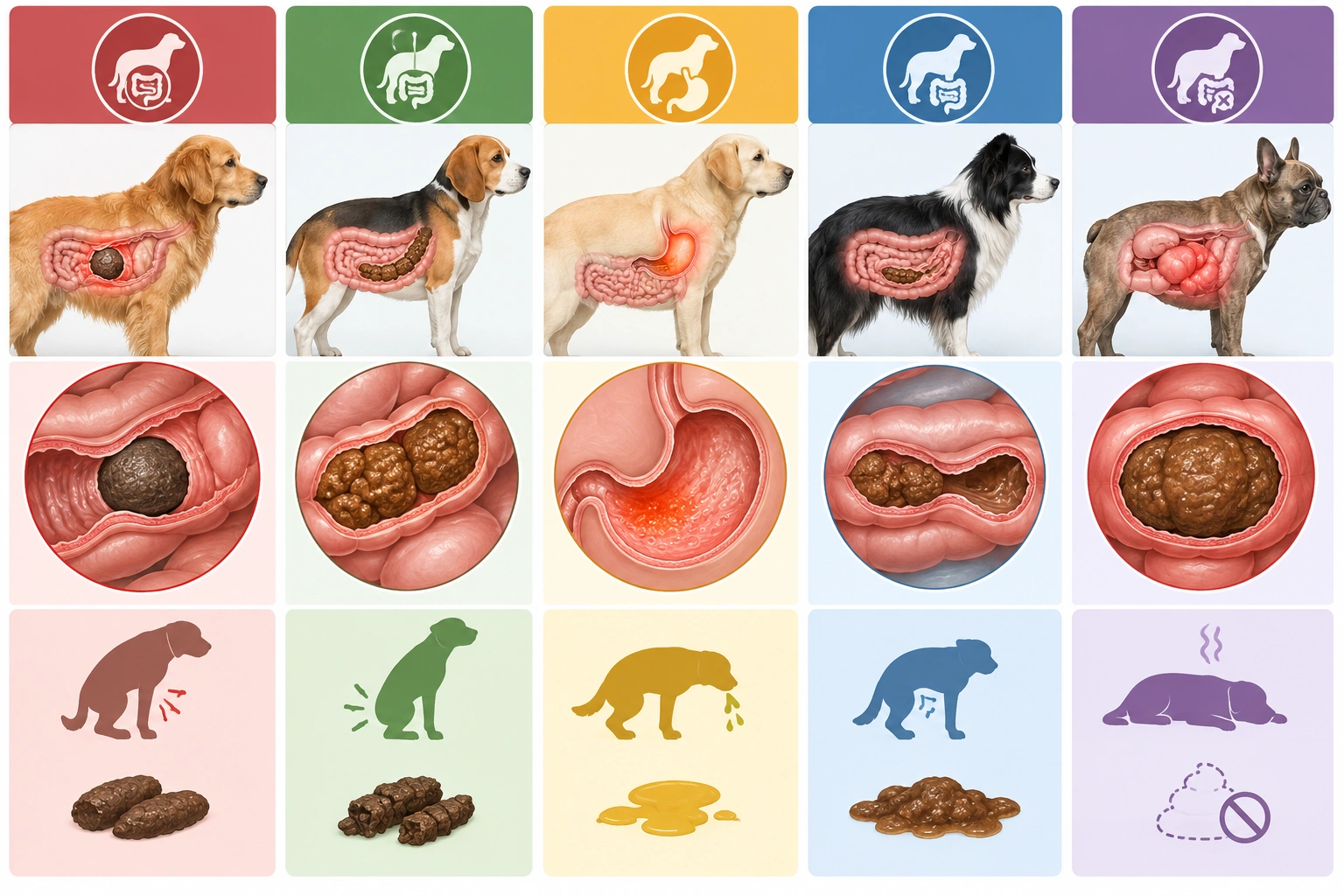
Another useful distinction: constipation usually centers on the back end. A blockage often affects the whole dog. Vomiting, nausea, drooling, belly pain, and refusal to eat push the concern away from simple constipation and toward obstruction.
Early and Advanced Signs of a Dog Intestinal Blockage
The earliest signs can be subtle, which is why owners sometimes miss them until the dog becomes clearly sick.
Early warning signs
- reduced appetite
- one or two episodes of vomiting
- restlessness or inability to settle
- mild abdominal discomfort
- decreased interest in food or treats
- unusual drooling
- small changes in stool amount or consistency
These signs matter most when they follow a known swallowing event. If your dog chewed up a toy, ate part of a ball, grabbed a sock, or swallowed a stick fragment, those mild symptoms deserve a much lower threshold for veterinary contact.
More advanced signs
- repeated vomiting
- retching with little or nothing produced
- obvious abdominal pain
- hunched posture
- lethargy
- dehydration
- bloating
- weakness
- no stool, or only tiny amounts
- collapse in severe cases
Retching means the dog is making the motion to vomit, but nothing or very little comes up. That is different from vomiting, where stomach contents are actually brought up. Nonproductive retching is especially concerning because it can point to a serious obstruction or bloat-type emergency, not just an upset stomach.
A painful belly often shows up in behavior before it shows up in the abdomen itself. Some dogs become reluctant to be picked up, tense when touched, or unusually quiet. Others pace, whine, or keep changing positions because they cannot get comfortable.
Can a Dog Still Poop, Eat, or Act Normal With a Blockage?
Yes, and that is exactly why blockages are missed.
A dog with a partial obstruction may still:
– eat a little
– drink some water
– pass occasional stool
– have a few normal moments between symptoms
That does not mean the problem is gone. It means the intestine is still moving some material past the blockage. The danger is that the situation can shift from partial to complete, or the intestine can become more inflamed and painful over time.
A dog may also act “mostly normal” for a few hours after swallowing something. That gap can fool owners into thinking the object passed. In reality, symptoms can take time to build, especially if the object is not causing immediate total blockage.
What Commonly Causes Blockages in Dogs
Most canine blockages involve foreign bodies: things the dog swallowed that should never have been eaten.
Common examples include:
– toys and toy fragments
– balls
– bones
– rocks
– socks and underwear
– string, ribbon, yarn, or thread
– fruit pits
– tampons or sanitary products
– pieces of rubber, plastic, metal, or porcelain
Linear objects like string or ribbon are especially risky because they can bunch the intestine up rather than simply sit in one place. That is one reason you should not assume “small” means safe.
Border Collies are not uniquely prone to blockages in a medical sense, but they are practically at risk because they tend to work hard with their mouths and bodies. Fetch games, tug toys, and high-drive play can all end with a torn ball, chewed toy, or swallowed fragment if the dog is moving fast and you miss the damage.
What to Do Right Now If You Suspect a Blockage
If the signs fit, do not try to “wait and see” for long. Your first hour should be about gathering useful information and getting veterinary advice.
Do this
- Call your veterinarian or an emergency clinic now.
- Tell them what may have been swallowed, when it happened, and what symptoms you are seeing.
- Note whether the dog has vomited, passed stool, or kept water down.
- Watch for worsening signs such as pain, bloating, weakness, or collapse.
Be ready to answer these questions
- What object might have been swallowed?
- How long ago could it have happened?
- Is the dog vomiting or retching?
- Is the dog passing stool at all?
- Can the dog keep water down?
- Is the belly painful or swollen?
That information helps the vet decide whether the dog needs to come in immediately and what imaging or treatment may be most useful.
Do not withhold food and water on your own unless a veterinarian tells you to; call first and follow their instructions.
What Not to Do at Home
This is where well-meant help can backfire.
Do not:
– give laxatives unless a veterinarian tells you to
– give oils or home remedies
– force food to “keep something in the stomach”
– offer large amounts of water if the dog is vomiting
– induce vomiting without veterinary direction
– give human pain medication
– give over-the-counter anti-nausea or antidiarrheal medications unless your veterinarian specifically instructs you to do so
Inducing vomiting is especially risky if the dog is already weak, repeatedly vomiting, or may have swallowed something sharp or obstructive. If the object is already moving through the digestive tract badly, vomiting it back up can cause more harm.
The safest home move is usually not treatment; it is rapid evaluation.
How Veterinarians Diagnose a Suspected Blockage
If a vet suspects obstruction, they usually begin with a physical exam and gently press on the abdomen to check whether it is unusually taut or painful. If the object is large enough, the vet may even be able to feel it.
From there, common next steps include:
– radiographs (X-rays) to look for signs of obstruction
– ultrasound if X-rays are unclear or the object is not visible
– endoscopy in some cases, especially if the object may be retrievable without surgery
X-rays can identify some obstructions, but not all. Objects made of stone, metal, plastic, porcelain, or rubber are often easier to see than softer materials. That is why a “normal” X-ray does not always end the conversation if the symptoms still fit.
How Blockages Are Treated and What Recovery Can Involve
Treatment depends on what is stuck, where it is, and how sick the dog is.
Possible treatments include:
– fluids and supportive care if the dog is dehydrated or unstable
– endoscopic removal for some objects that can be reached without surgery
– surgery for complete obstructions, sharp objects, or items that cannot be removed safely another way
Timing changes the options. The earlier the dog is seen, the more likely the vet can choose the least invasive path. Delay can turn a manageable problem into a surgical emergency.
Recovery can involve hospitalization, pain control, fluids, and careful reintroduction of food. The exact plan depends on how much damage the intestine has suffered and whether surgery was needed.
Why Delays Are Dangerous
A blockage is not just “something stuck.” It can lead to:
– dehydration from vomiting and poor intake
– worsening pain
– pressure buildup in the intestine
– tissue damage
– perforation in severe cases
– collapse
Once the dog starts getting weaker, the situation is no longer about comfort or appetite. It is about whether the intestine and the rest of the body can still cope.
Border Collie-Specific Risk Context
Border Collies often earn their trouble through intensity, not carelessness. They learn fast, play hard, and can destroy a toy faster than an owner expects. A toy that looked fine at breakfast can be missing pieces by lunch.
Practical risk points for this breed include:
– hard fetch with balls that start to split
– tug toys that shed strings
– squeaky toys with torn seams
– sticks or fragments swallowed during fast outdoor play
– grabbing socks, wrappers, or household items during high-energy moments
If your Border Collie is the type to “work” a toy until it fails, inspect toys early and often. Once a toy starts breaking apart, the safest choice is to remove it rather than hope the last piece survives one more session.
When to See a Veterinarian or Certified Trainer
For a suspected blockage, this is a veterinarian issue first. A trainer cannot diagnose obstruction, and behavior advice should wait until the medical problem is ruled out.
See a veterinarian immediately if your dog:
– is vomiting repeatedly
– retches without producing vomit
– cannot keep water down
– has abdominal pain or bloating
– is weak, lethargic, or collapsing
– is straining without stool after a possible swallowing incident
If your dog is safe and stable after the vet rules out a medical cause, then a certified trainer can help reduce future swallowing risks by improving toy selection, fetch structure, impulse control, and supervision habits. But the medical question has to be answered first.
FAQ
Can a dog have a blockage and still poop?
Yes. A partial blockage can still allow some stool to pass, which is why normal-looking bowel movements do not rule it out.
How fast can a blockage become serious?
It can worsen over several hours, and some cases become dangerous quickly. If symptoms are building, do not wait for a full day to pass.
Is vomiting always a sign of blockage?
No. Dogs vomit for many reasons. The concern rises when vomiting is repeated, paired with no stool, belly pain, lethargy, or a known swallowed object.
Should I feed my dog if I think there is a blockage?
Do not force food or give home remedies. Contact a veterinarian first and follow their instructions.
What if my dog swallowed a toy but seems fine?
Monitor closely, but do not assume the risk is gone. If any vomiting, appetite loss, pain, or stool changes appear, call a vet right away.
Can X-rays always find a blockage?
No. X-rays can help, but they do not detect every obstruction. That is why vets may also use ultrasound or other diagnostics.
How do I know if it is constipation instead?
Constipation usually centers on hard stool and straining, without the stronger pattern of repeated vomiting, pain, or dehydration. If vomiting enters the picture, the concern shifts.
A blockage is one of those problems where the safe choice is usually the earlier choice. If the symptoms fit even loosely, call the vet and let them help you sort out whether this is constipation, an upset stomach, or something much more serious.
