
How to Tell if a Dog May Have Been Poisoned: Signs, Urgency, and What to Do

If you’re trying to work out whether your dog has been poisoned, the first rule is simple: treat the situation as urgent until a veterinarian tells you otherwise. Poisoning can look like a mild stomach upset at first, but it can also turn serious quickly, and some toxins cause delayed signs after the dog seems normal.
The practical question is not “Is this definitely poisoning?” It is “Could this be poisoning, and does my dog need help now?” That frame keeps you from waiting too long.
Decide whether this is an emergency right now
If your dog has seizures, collapse, trouble breathing, severe weakness, pale gums, or rapidly worsening signs, skip the guesswork and go to an emergency vet now.
Other red flags that deserve immediate emergency care include:
- repeated vomiting
- tremors or wobbliness
- extreme agitation or sudden confusion
- loss of consciousness
- very abnormal gum color, especially pale, blue, or very bright red gums
- a known exposure to a highly toxic substance, even if symptoms are still mild
A dog can look only slightly off and still be in danger. That is especially true with some common household toxins. If your dog ate something suspicious and is now weak, shaky, or unusually quiet, assume the clock is already running.
Quick rule: if the dog is getting worse, not better, it is an emergency.
The earliest signs a dog may have been poisoned
The first signs are often vague. That is what makes poisoning easy to miss. Many dogs begin with one or more of these:
- vomiting
- diarrhea
- drooling or foaming at the mouth
- loss of appetite
- lethargy or unusual tiredness
- restlessness or pacing
- sudden behavior changes such as hiding, agitation, or seeming “not quite right”
- increased thirst or urination
- pale, blue, or very bright red gums
One mild symptom by itself may have a lot of explanations. Two or three together are much more concerning, especially if they appeared after your dog had access to medication, bait, cleaning products, plants, or human food.
A useful way to think about it: poisoning often causes a pattern, not just one isolated sign. A dog that is vomiting and suddenly lethargic after chewing something unknown is more concerning than a dog with one loose stool and otherwise normal energy.
Symptoms by body system
Digestive signs
Many toxins first show up in the stomach and intestines. Watch for:
- vomiting, with or without blood
- diarrhea, with or without blood
- drooling
- nausea or lip-smacking
- refusal to eat
Digestive signs are common across many poisonings, but they are not specific. A stomach bug can look similar at first. The difference is the context: if there was a possible exposure, don’t assume it is “just an upset stomach.”
Neurologic signs
These are the signs that should raise your concern fast:
- tremors
- wobbliness or ataxia
- weakness
- unusual agitation
- disorientation
- seizures
- collapse
Neurologic signs often mean the poison is affecting the brain, nerves, muscles, or circulation. If your dog is stumbling, shaking, or acting mentally altered, that is not a wait-and-see situation.
Respiratory signs

Breathing changes can show up with some toxins or after the dog becomes weak and unstable. Look for:
- fast breathing
- labored breathing
- noisy breathing
- open-mouth breathing when the dog is not hot or exercising
- blue gums
- loss of consciousness
Breathing trouble is always urgent, whether poisoning is the cause or not.
Cardiovascular and circulation signs
Some poisons affect the heart, blood clotting, or circulation. Possible signs include:
- pale gums
- weakness
- racing heart rate
- collapse
- unusual bruising or bleeding
- vomiting or coughing up blood
These signs matter because they can point to toxins that become dangerous before the dog looks dramatically ill.
How fast poisoning symptoms can appear
Timing gives you clues, but it does not give you safety.
Some toxins cause signs quickly. Others can be delayed. A dog may seem normal after exposure and then worsen later. That delayed pattern is one reason owners get caught off guard.
A few practical timing patterns:
- Immediate or fast onset: some medications, insecticides, marijuana, and certain chemicals can cause signs within minutes to hours.
- Delayed onset: some toxins, including certain rodenticides and antifreeze, may not cause obvious symptoms right away.
- Progressive onset: the dog may start with mild vomiting or lethargy and then worsen over the next several hours.
The dangerous mistake is assuming “no symptoms yet” means “no problem.” It may only mean the toxin has not reached its peak effect.
The toxins most likely to cause rapid deterioration
Some exposures deserve extra respect because even small amounts can be serious.
Xylitol
Xylitol is a sugar substitute found in some gums, candies, peanut butters, baked goods, and dental products. It can cause a rapid and dangerous decline. If your dog ate sugar-free gum or a product with xylitol, treat it as urgent.
Rodenticides
Rat and mouse baits are a major concern because they may cause internal bleeding or other severe effects. A dog that chewed bait and later becomes weak, pale, or unsteady needs immediate veterinary attention.
Antifreeze (ethylene glycol)
Antifreeze is especially dangerous because dogs may be attracted to the taste, and signs can be delayed. A dog can look normal initially and still be in serious trouble.
Chocolate and other methylxanthines
Chocolate poisoning depends on the type and amount eaten. Dark chocolate and baking chocolate are more concerning than milk chocolate. Theobromine and related compounds can cause vomiting, tremors, and heart problems.
Human medications
Pain relievers, antidepressants, ADHD medications, and many other pills can be toxic to dogs. A single missing pill bottle is enough reason to call for help.
Grapes and raisins
These can cause severe illness in some dogs, and the risk is not predictable from appearance alone. Even a small amount should not be brushed off.
Insecticides and organophosphates
Recent yard treatments, flea products used incorrectly, or access to pesticide containers can lead to drooling, tremors, weakness, and breathing problems.
Marijuana
Dogs that ingest cannabis products may become very lethargic, wobbly, disoriented, or incontinent. Mixed edible products can also contain chocolate or xylitol, which raises the risk.
For a broader emergency reference on similar signs, the ASPCA animal poison control resources are a useful place to confirm what details to gather before you call.
What to do immediately after suspected exposure
Do these steps in order:
- Remove your dog from the source. Get the dog away from the plant, bait, pill, spill, or food.
- Take the toxin out of reach. Secure the packaging, bait, bottle, or food so your dog cannot get back into it.
- Photograph the label or product. Brand name, ingredients, and concentration matter.
- Write down the time of exposure. Estimate as closely as you can.
- Estimate how much was eaten, licked, or contacted. Even a rough guess helps.
- Call a veterinarian or poison helpline immediately.
- Go to an emergency vet if the symptoms are severe, worsening, or the toxin is high risk.
If the dog is already having seizures, trouble breathing, or collapse, don’t spend time hunting for perfect information before you leave. Bring what you can, but move first.
The AAHA guidance on recognizing poisoning also emphasizes identifying the toxin and amount consumed, then contacting a veterinarian or poison hotline right away.
What not to do at home
This is where people accidentally make things worse.
Do not induce vomiting unless a veterinarian tells you to
Vomiting is not universally helpful. With some substances, it can cause more harm. With others, the timing matters. If a vet or poison expert does not specifically tell you to induce vomiting, do not do it. Never induce vomiting after caustic or petroleum-based products, or if your dog is already drowsy, seizing, or having breathing trouble.
Do not give food, milk, oils, or home remedies
These can delay proper care or worsen absorption depending on the toxin. “Diluting” the poison at home is not a safe strategy.
Do not give activated charcoal unless directed
Charcoal can be useful in some cases, but only when a veterinarian decides it is appropriate. Giving it blindly is not a shortcut.
Do not wait for symptoms to become obvious
By the time a dog is collapsing or seizing, the window for easier intervention may already be closing.
How to tell poisoning apart from other urgent problems
Poisoning can look like other emergencies. Use the pattern, not just one symptom.
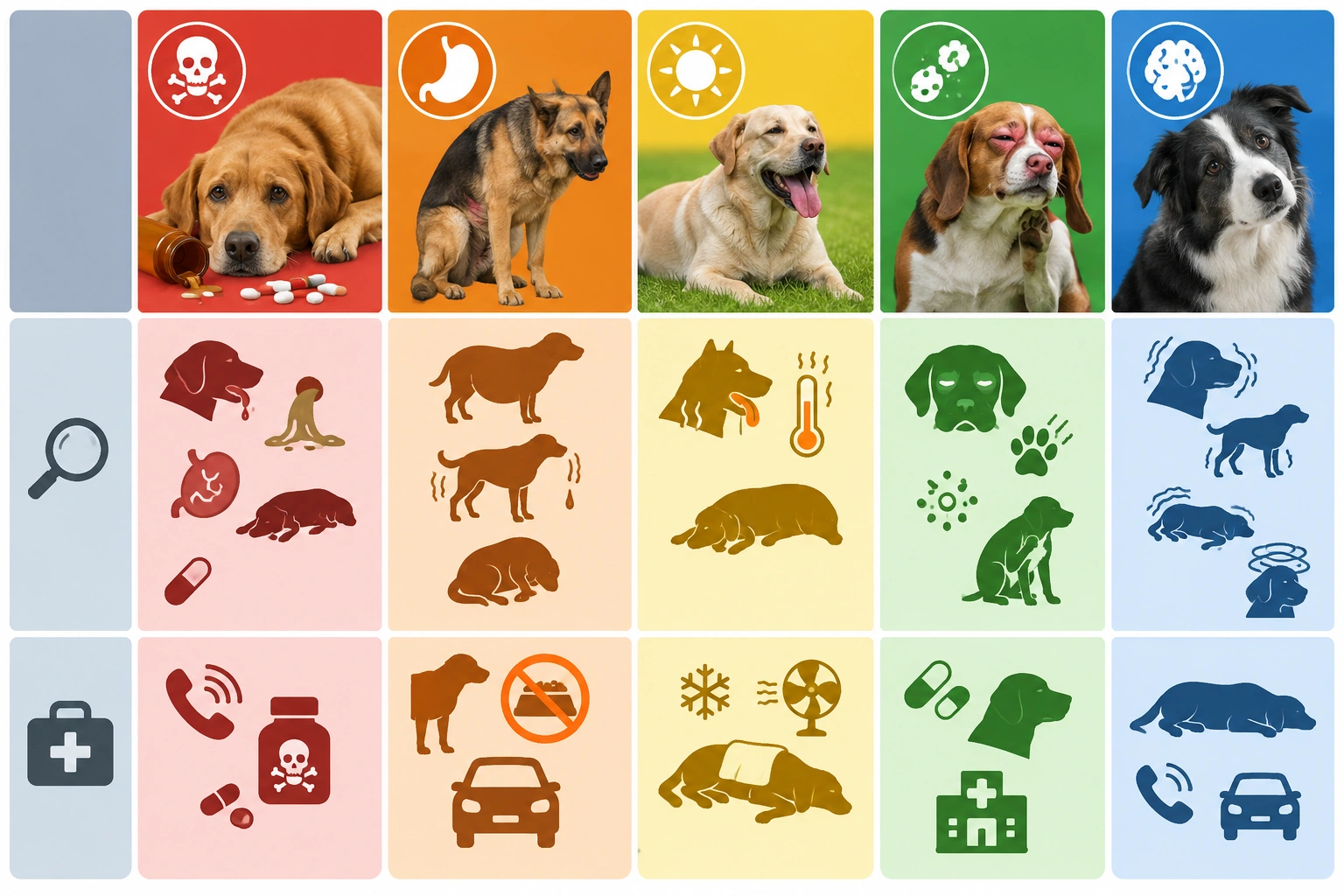
| Possible problem | Clues that fit | Clues that make poisoning more likely | Best first action |
|---|---|---|---|
| Poisoning | Vomiting, drooling, tremors, weakness, behavior change, collapse | Known access to medication, bait, chemicals, toxic food, or plants | Call vet or poison helpline immediately |
| Bloat | Distended abdomen, retching without producing vomit, restlessness, pain | Less tied to a toxin exposure; more tied to a swollen abdomen and distress | Emergency vet now |
| Heatstroke | Heavy panting, overheating, weakness, collapse, bright red gums | Recent exercise, hot car, hot weather | Cool the dog safely and go to ER immediately |
| Allergic reaction | Facial swelling, hives, itching, sudden breathing changes | Often follows sting, bite, or allergen exposure rather than ingestion | Emergency vet now if breathing is affected |
| Neurologic disease | Wobbliness, seizures, odd behavior | No known exposure to toxin, but similar signs can overlap | Emergency vet now, especially if severe |
If you are stuck between poisoning and another emergency, don’t try to solve the diagnosis at home. The right move is to get veterinary help quickly and let them sort out the cause.
If you also need help distinguishing obstruction signs, this guide on how to tell if your dog has a blockage can help you compare symptoms.
When to call a poison helpline versus going straight to an emergency vet
A poison helpline is useful when your dog is stable and you need help identifying the substance, estimating risk, or deciding whether home monitoring is acceptable. It is also useful when you know what was eaten but do not know whether the amount is dangerous.
Go straight to an emergency vet when:
- your dog has seizures
- your dog collapses
- breathing is difficult
- weakness is severe
- symptoms are rapidly worsening
- the toxin is known to be high risk, such as antifreeze, rodenticides, xylitol, or a large medication ingestion
- you cannot safely delay transport to make a call
If the dog is stable enough for a call, have the product label ready and be prepared to describe the exposure clearly. If the dog is not stable, the clinic comes first.
The Pet Poison Helpline is one of the commonly used resources for this kind of triage, but it should never delay emergency care when the dog is deteriorating.
What the vet or poison hotline will need
Have this information ready:
- the substance or product name
- the brand name
- the ingredient list, if available
- the estimated amount eaten, licked, or contacted
- the time of exposure
- your dog’s weight
- your dog’s current symptoms
- whether your dog has vomited, tremored, seized, or collapsed
- photos of the package, label, plant, bait, or spill
If you can safely bring the packaging, do it. If collecting it delays transport during a serious emergency, leave immediately and take a photo on the way out if you can.
What a Border Collie owner should know about urgency and risk
Border Collies are often quick, curious, and good at getting into trouble before you realize they’ve found something interesting. That matters in poisoning cases because a dog that moves fast can also reach hazards fast.
Body weight matters too. A medium-sized dog may still be at serious risk from a small amount of a concentrated toxin. That is why “it was only a little” is not a reliable safety check.
In practical terms, keep this mindset: if your Border Collie had access to a toxin and now seems even slightly off, don’t wait for the situation to declare itself. A calm, fast response is usually the safest one.
When to see a veterinarian or certified trainer
For poisoning, the answer is simple: see a veterinarian or emergency vet immediately if there is any real suspicion of exposure and any concerning symptom. A certified trainer is not the right professional for medical triage, but a trainer can help later with prevention if your dog repeatedly scavenges, counter-surfs, or grabs items outdoors.
The immediate job is medical safety. Behavior work can come after the dog is stable.
FAQ
Can a dog have been poisoned without vomiting?
Yes. Some toxins cause neurologic signs, breathing changes, weakness, or collapse before vomiting appears. A dog can also look normal for a while after exposure.
Should I wait to see if symptoms get worse?
No. Waiting is one of the biggest mistakes owners make. Some poisons are easier to manage early, before they cause severe damage.
What if I only think my dog ate a small amount?
Call anyway. With toxins like xylitol, rodenticides, or certain medications, a “small amount” can still matter.
Is drooling alone enough to worry about?
Drooling alone can have several causes, but if it follows possible exposure to a toxin, it should be taken seriously—especially if it comes with vomiting, wobbliness, agitation, or weakness.
Can poisoning signs show up later?
Yes. Some signs are delayed, and a dog may seem fine at first. That is why a known exposure should still be treated as urgent even before symptoms appear.
What should I bring to the vet?
Bring the product, packaging, label photo, or a picture of the plant or bait if you can do so without delaying care. Also bring your notes on time, amount, and symptoms.
Is it ever safe to make a dog vomit at home?
Only if a veterinarian or poison expert specifically instructs you to do it. The wrong substance, wrong timing, or wrong dog can make vomiting dangerous.
What if the toxin got on my dog’s skin?
Some poisons can irritate the skin or be absorbed through it. If that happened, call a veterinarian promptly for advice on safe next steps.
How fast do I need to act?
As fast as you can. For severe signs, the answer is now. For a known exposure without severe symptoms, call immediately and follow the advice you are given.
