
How to Tell if Dogs Like Each Other: A Practical Guide for Dog Owners

When two dogs are meeting, living together, or sharing space, the clearest answer usually comes from the whole picture: posture, movement, distance, and whether both dogs can relax. A single wag, growl, or cuddle does not tell you enough on its own.
If you want the short version, dogs that like each other usually look loose, curious, and able to disengage without drama. They may approach at an angle instead of head-on, take turns during play, and settle near each other without tension. Dogs that are merely tolerating each other tend to look polite but guarded. Dogs that are uncomfortable often show stiffness, avoidance, hard staring, repeated lip licking, or a strong urge to leave.
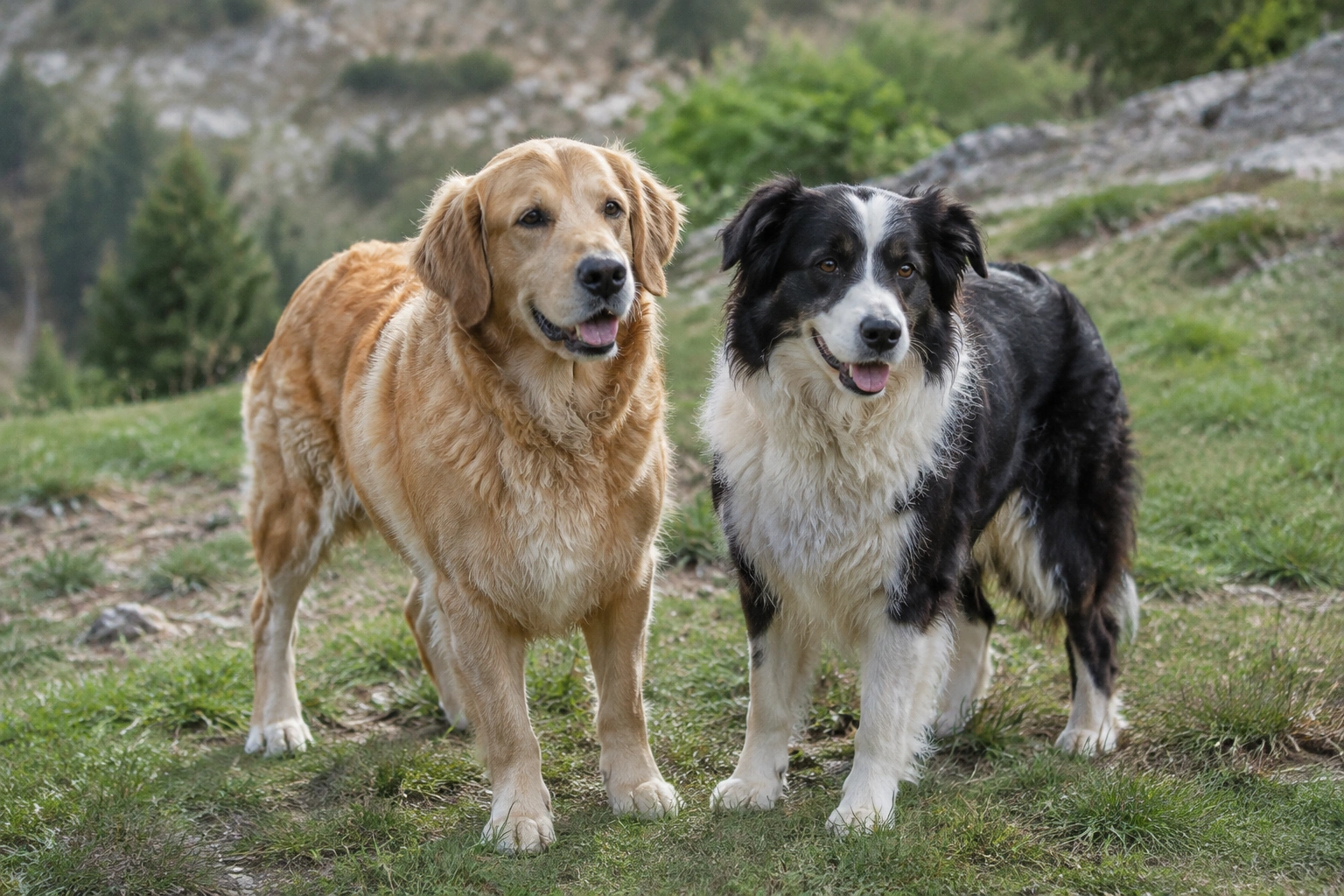
The practical goal is not to guess whether the dogs are “best friends.” It is to decide whether the interaction is safe, balanced, and likely to improve with time—or whether you need to slow things down.
Dogs should not be left unsupervised together until they have shown repeated calm, predictable behavior in controlled settings. Even then, supervision is still needed around food, toys, beds, narrow spaces, doorways, and any situation where one dog tends to guard resources or pressure the other. If the dogs are still figuring each other out, keep interactions managed rather than assuming they will sort it out alone.
The clearest signs two dogs are comfortable together
The most useful signs are the ones that appear repeatedly, not just once.
Look for loose, wiggly bodies
A dog that feels safe around another dog usually carries its body in a loose, unforced way. The movement looks fluid rather than braced. Their weight shifts easily, their muscles do not look locked, and they can change direction without hesitation.
That matters because tension often shows up before barking or snapping does. A dog may still be quiet while already feeling unsure. If the body gets stiff, the interaction is no longer relaxed.
Soft eyes, relaxed mouth, and easy breathing matter more than one wag
Soft eyes can suggest a dog is comfortable, especially when the face and body match. A relaxed mouth may hang slightly open, and the dog may breathe normally rather than panting hard from stress.
Tail wagging is helpful only when you read it with the rest of the body. A wagging tail can happen during excitement, uncertainty, or even conflict. A loose, mid-height wag with a relaxed body is a very different picture from a high, tight wag paired with a frozen stance.
They choose to stay near each other
One of the strongest signs that dogs like each other is simple: they keep choosing the same space. They may lie in the same room, follow each other from place to place, or settle close enough to share the environment without crowding.
That does not always mean constant play. In many good relationships, the real clue is calm coexistence. If both dogs can rest nearby and neither seems on edge, that is meaningful.
They greet after separation
When dogs seem pleased to see each other after a break, that can be a useful sign of a positive relationship. The greeting may be brief and calm rather than explosive. You may see a quick sniff, a loose body, and then a return to normal activity.
This is more telling when it happens consistently. A single excited reunion is less useful than a pattern of relaxed, repeatable greetings.
How to read dog body language in context
The biggest mistake owners make is reading one signal in isolation. Dogs communicate with combinations of signals, not single clues.
A relaxed dog usually looks “soft” all over
A comfortable dog often has:
– loose muscles
– a neutral or gently curved body
– an open, relaxed mouth
– ears that are neither pinned back nor rigidly forward
– movement that is easy and unhurried
The important part is the pattern, not any one detail. A single relaxed feature does not cancel out a tense body.
Easy-to-miss cues can matter when they cluster
Some of the subtle signs people overlook most often are:
– repeated blinking
– whale eye, where the white of the eye shows because the dog is looking sideways or away while keeping the head still
– lip licking when no food is present
– a head turn or body turn away while the dog stays physically present
These cues are not automatically a problem. But they become more concerning when they appear together, or when they happen alongside stiffness, freezing, avoidance, or a hard stare. For example, a dog that repeatedly lip licks, shows whale eye, and keeps turning the body away while another dog keeps pressing in is probably not comfortable.
Indirect approaches are often more polite than direct ones
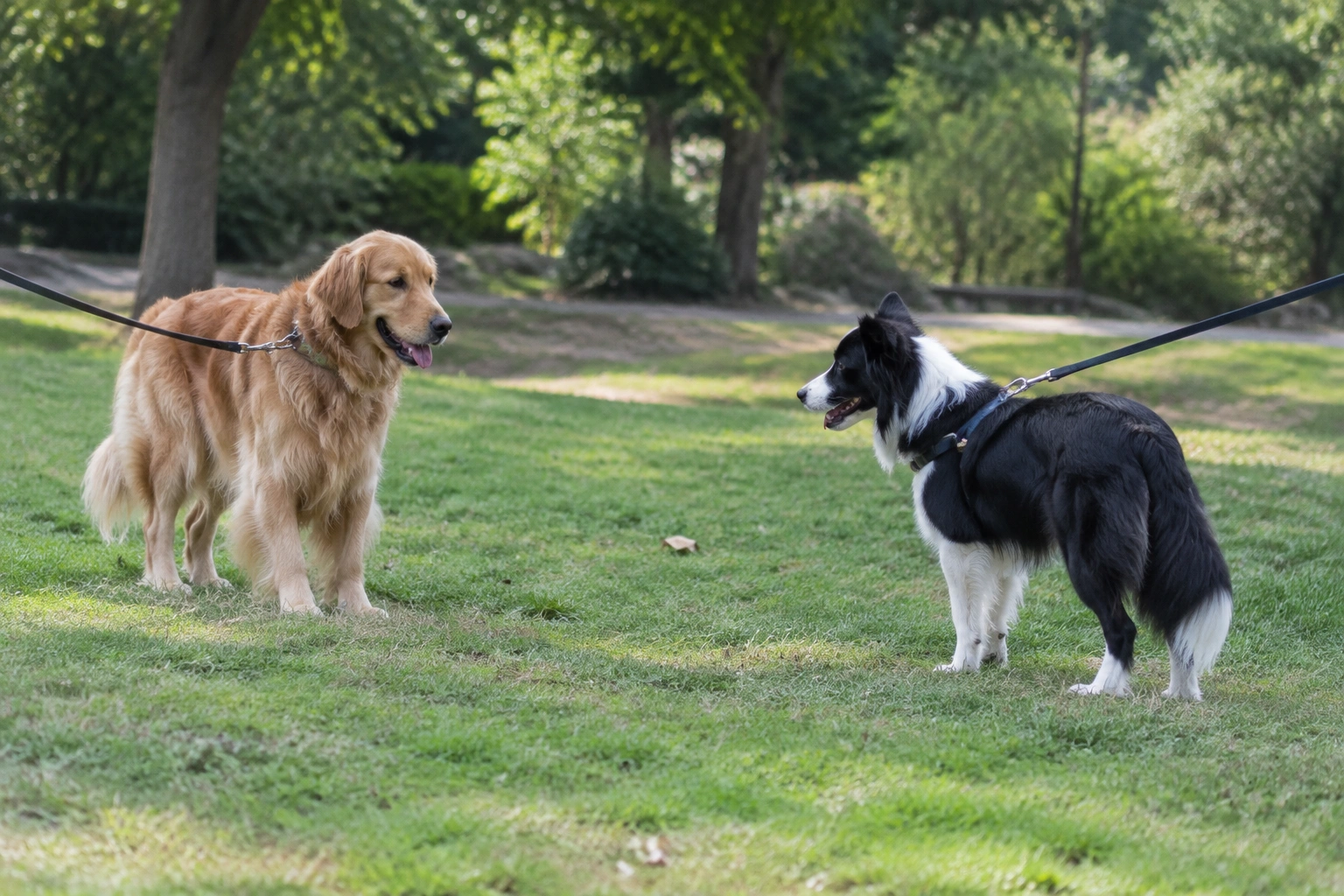
Dogs commonly greet each other at an angle instead of walking straight in face-to-face. That usually gives both dogs more room to assess each other. A curved or sideways approach often feels less intense than a direct rush, especially on leash.
Context changes everything
A dog leaning into another dog might be affectionate, or it might be trying to control space. A paw draped over another dog may be playful in one moment and pushy in another. Even cuddling can mean comfort, but it can also be about warmth, habit, or a narrow resting spot.
So ask three questions:
1. Are both dogs loose?
2. Can both dogs disengage easily?
3. Does the same behavior happen repeatedly without tension?
If the answer to all three is yes, the behavior is more likely to be friendly.
Friendly play vs tense or escalating behavior
This is the section that usually saves owners from trouble. Play and conflict can look similar at first glance, especially in energetic dogs.
| Friendly play | Tense or escalating behavior |
|---|---|
| Loose bodies, bouncy movement | Stiff bodies, frozen posture |
| Play bow, then re-engagement | Hard staring, then sudden stillness |
| Role-switching: both dogs chase or pin in turn | One dog does most of the chasing, pinning, or cornering |
| Brief pauses, then both return willingly | One dog tries to leave or hides repeatedly |
| Play growls with loose faces and movement | Growling with a closed mouth, hard stare, or freezing |
| Self-handicapping, like taking it easy with a smaller dog | One dog overwhelms the other and ignores signals to stop |
Healthy play has give-and-take
A useful rule: good play is mutual. Both dogs get turns, both dogs can pause, and both dogs come back in willingly. You may see a play bow, then chasing, then a pause, then roles reverse.
That balance matters more than intensity. Some dogs play hard. What you want to see is not “gentle” play, but responsive play.
Watch for one-sided pressure
If one dog keeps pinning, chasing, mounting, or blocking access to space while the other dog keeps trying to leave, the interaction is no longer fair. Even if nobody has snapped yet, the dog being pressured may be getting stressed.
One-sided play often becomes the point where trust starts to erode. If the weaker or younger dog stops re-engaging, that is a signal to intervene.
Growling is not automatically bad
A growl during play can be normal if the body stays loose and both dogs keep swapping roles. The problem is the combination. Growling plus stiffness, hard staring, freezing, or repeated cornering is a different message.
In other words, listen to the whole conversation, not just the volume.
Signs one dog is uncomfortable, stressed, or avoiding the other
Some dogs are obvious. Others are polite to the point that people miss the warning signs until the dog is already overwhelmed.
Subtle stress signals are easy to overlook
Look for:
– lip licking when no food is present
– yawning in a tense context
– turning the head or body away
– walking wide around the other dog
– sniffing the ground to avoid contact
– repeated retreating
– tucked tail or tail held very low
– raised hackles
– stiff legs or a rigid spine
None of these proves danger by itself. But a cluster of them usually means the dog is not relaxed.
Avoidance is a message
If one dog keeps trying to disengage and the other keeps following, the first dog is telling you something important. A dog that likes another dog does not need to be forced into repeated contact.
This is especially relevant in households where one dog is “fine” but never truly enthusiastic. Tolerance is not the same as enjoyment.
Freezing is a red flag
Freezing often comes right before a more serious reaction. When a dog suddenly stops moving, the body may be preparing to confront, not relax. If you also see a hard stare, closed mouth, or weight shift forward, separate the dogs.
When dogs tolerate each other but do not truly like each other
Some dogs live together peacefully without being social partners. That can still be successful, but the difference matters.
Peaceful coexistence is not the same as friendship
Dogs that merely tolerate each other may:
– keep distance
– share a home without interacting much
– avoid each other unless necessary
– show calm around resources only because management is excellent
That may be perfectly workable. Many households do not need affection between dogs; they need safety and predictability.
How to tell the difference
A genuinely comfortable pair usually seeks each other out at least sometimes, relaxes in each other’s presence, and can share space without constant monitoring. Tolerant dogs often look careful rather than warm. They may coexist well, but they do not appear especially drawn to one another.
That distinction helps you set realistic expectations. Not every pair needs to cuddle. Some pairs simply need clear boundaries and routine.
How to tell if a first meeting is going well
First meetings deserve a slower, more deliberate read than people often give them.
Set up the meeting in a simple sequence
A practical first-meeting setup usually works best in this order:
1. Start in neutral territory, not in either dog’s home space.
2. Begin with parallel walking or parallel distance so the dogs can notice each other without pressure.
3. Let them have a brief greeting if both appear loose.
4. Break the interaction before either dog gets too intense.
5. Repeat only if both dogs stay loose and recover quickly.
Avoid high-value items during the first meeting. Skip food bowls, toys, bones, beds, or anything else one dog may guard. The goal is to keep the focus on calm social information, not competition.
Healthy curiosity looks calm, not urgent
Good signs include:
– brief sniffing
– loose bodies
– curved approaches
– easy recovery after a pause
– both dogs checking in with the handler and the environment
A little awkwardness is normal. Many dogs need a moment to size each other up. What you want is quick recovery, not instant perfection.
When awkward is still okay
A first meeting can be a little clumsy if both dogs remain soft and recover quickly. For example, one dog may pause, sniff, then step away. If the other dog respects that space and both return to neutral, the interaction is still on track.
The key question is whether the dogs are adapting or escalating. Adaptation looks like more ease over time. Escalation looks like more stiffness, more fixation, or less ability to disengage.
Early warning signs that the meeting should end
End the session if you see repeated avoidance, body blocking, stiffening, hard staring, or one dog repeatedly trying to escape while the other keeps pushing in. A little brief awkwardness is normal; repeated conflict or increasing tension is not.
If the dogs do not get looser after a short break, stop the session rather than trying to “push through.”
Safe ways to introduce two dogs
A safe introduction is less about “making them like each other” and more about preventing pressure.
Use space, not pressure
A direct head-on approach can be intimidating. Give the dogs room to approach at an angle and avoid forcing them nose-to-nose. If leashes are used, keep them loose enough that the dogs do not feel trapped, but controlled enough that you can create distance quickly.
Tight leashes often make introductions worse because they remove the dogs’ ability to use normal social movement. That can turn mild uncertainty into frustration.
Keep the first session short
Short, successful meetings are usually better than long ones. End while both dogs are still doing well. If the session is already tense, a break is not a failure; it is information.
Use barriers when needed
Gates, pens, and distance can help dogs observe each other without direct pressure. For some pairs, that is the safest first step. It gives you more control and lets the dogs acclimate before closer contact.
When to interrupt, separate, or stop the introduction
You do not need to wait for a fight before stepping in.
Separate the dogs immediately if you see:
– stiffening
– freezing
– hard staring
– repeated snapping
– one dog repeatedly trying to escape
– one-sided chasing or pinning that does not stop
– body blocking that prevents the other dog from moving away
– a dog ignoring clear avoidance signals
If the behavior is escalating, more time together is not the answer. Break the interaction, increase space, and reset.
Brief monitoring is acceptable only when both dogs are loose, responsive, and able to disengage. If either dog cannot relax or keep choosing distance, supervision needs to become active management.
A useful rule is simple: if both dogs cannot disengage easily, the interaction is too intense.
What affects whether dogs get along
Compatibility is not just about “personality.” Several practical factors matter.
Age and energy level
A young, high-energy dog may overwhelm an older dog that prefers predictability. That does not mean the pair cannot live together, but it often means the play styles will differ.
Size and physical confidence
Large size differences can make rough play riskier, even when both dogs mean no harm. The smaller dog may become wary if it keeps getting knocked over, pinned, or chased too hard.
Play style and temperament
Some dogs love wrestling. Others prefer sniffing, parallel walking, or brief bursts of chase. Dogs with very different play styles may coexist well but never become close playmates.
History matters
A dog with a history of guarding, fear, or bad social experiences may need more time and more structure. That does not make the dog “bad.” It just means the introduction needs to be more careful.
How long it can take dogs to decide if they like each other
There is no universal timeline. Some dogs relax quickly. Others need several short, successful encounters before they settle.
A practical way to think about it is this: if the dogs are going to improve, you usually see some loosening over a few controlled sessions—less staring, softer bodies, easier disengagement, and more natural movement. If the relationship still looks stiff or awkward after days of calm, well-managed exposure, that can still be normal. If it continues for weeks without any real softening, or if the dogs keep showing avoidance, stiffness, or repeated conflict, incompatibility becomes more likely.
What matters is the trend:
– Are the dogs becoming looser over time?
– Are greetings getting easier?
– Is there less staring, less tension, and more natural movement?
Temporary awkwardness can be normal. Ongoing stiffness, repeated conflict, or increasing avoidance is more concerning. If the relationship is not improving after several managed, low-pressure sessions, treat that as useful information rather than a phase to ignore.
When to call your veterinarian
Call your veterinarian if the dogs’ interactions include repeated aggression, sudden personality changes, or fear that seems intense and persistent. A vet can help rule out pain or medical contributors that may be affecting behavior.
You should also seek professional help if:
– one dog is regularly guarding food, toys, beds, or people
– the dogs’ interactions are unpredictable
– the dogs cannot relax in the same home
– you feel you are constantly managing near-conflicts
For general dog-to-dog behavior guidance, the AVMA’s pet behavior resources and VCA’s behavior articles are useful starting points. If the problem is serious or escalating, work with a qualified trainer or veterinary behavior professional.
FAQ
How can I tell if dogs like each other or are just being polite?
Look for repeated relaxed behavior: loose bodies, easy movement, mutual play, and the ability to rest near each other. Polite tolerance usually looks more guarded and less engaged.
Is tail wagging enough to show dogs are happy together?
No. Tail wagging only matters when you also read posture, face, and movement. A stiff body with a wagging tail can still mean tension.
Should I let dogs work it out on their own?
Not if the interaction is getting stiff, one-sided, or hard to interrupt. Supervision is there to prevent escalation, not to watch a problem grow.
Can dogs be left unsupervised together?
Only after they have shown they can stay calm together reliably, and even then not in situations with food, toys, beds, or other triggers. If the dogs are still adjusting, keep them supervised or separated.
What if one dog likes the other but the feeling is not mutual?
Then manage the interaction more carefully. Give the reluctant dog space, shorten sessions, and avoid forcing closeness. Compatibility needs to work for both dogs.
Can dogs become friends over time?
Yes, some do. Others simply learn to coexist comfortably. Either outcome can be successful as long as the dogs are relaxed and safe.
If you want, I can also turn this into a more search-optimized version with a stronger intro, tighter FAQ targeting, and internal-link placement tailored to Border Collie Hub’s existing articles.
