
How to Tell If Your Dog Has Tooth Pain: Signs, Checks, and Next Steps

If you’re asking, “how do i know if my dog has tooth pain,” the short answer is this: look for a pattern, not a single symptom.
A dog with dental pain may still eat, still wag, and still try to act normal. That’s what makes tooth pain easy to miss. The clues usually show up in small changes first: chewing on one side, dropping food, avoiding hard treats, pawing at the mouth, bad breath, or pulling away when you touch the face. None of those signs proves tooth pain on its own, but several together make it much more likely.
For Border Collies, this can be especially easy to overlook because many are so willing to work through discomfort. A dog that keeps playing fetch but suddenly spits out a ball, avoids tug toys, or becomes less interested in chew rewards may be telling you something is wrong in the mouth.
The clearest signs your dog may have tooth pain
The most useful way to think about dental pain is this: does your dog’s behavior look different around eating, chewing, or being touched near the face?
The signs that most often point toward oral pain include:
- chewing on only one side of the mouth
- dropping food or toys unexpectedly
- preferring soft food over kibble
- chewing more slowly than usual
- reluctance to eat hard treats or toys
- bad breath that does not go away
- excessive drooling
- pawing at the mouth or rubbing the face
- pulling away when you touch the muzzle or head
- swelling around the jaw or face
- bleeding from the gums
That list does not mean every dog will show all of them. In real life, many dogs show only one or two at first. A dog may simply become a little slower at meals or stop taking crunchy treats. That can look like fussiness, but if it keeps happening, dental pain moves higher on the list.
A useful rule: if the symptom is centered around chewing, biting, or face touch, think dental first.
Temporary mouth irritation vs. likely ongoing tooth pain
Not every mouth change means a tooth problem. Some dogs have brief irritation from chewing something rough, getting into a scuffle with a toy, or being a little picky for a meal or two.
Temporary irritation is more likely when:
– the change lasts only a short time
– your dog still eats and drinks normally
– there is no swelling, bleeding, or strong bad breath
– the dog acts normal once the meal or treat is over
Ongoing tooth pain is more likely when:
– the same chewing change keeps coming back
– your dog favors one side of the mouth
– bad breath, drooling, or gum redness comes with it
– your dog avoids hard food, toys, or face touch
– the behavior change is getting worse instead of better
If the pattern keeps repeating, it is safer to treat it as dental pain until a vet says otherwise.
Behavior changes that can look like “mood” but may be pain
Dental pain often shows up before obvious mouth symptoms do. Owners sometimes describe the dog as “off,” “clingy,” “grumpy,” or “not himself.”
That matters because oral pain can change how a dog responds to normal handling. A dog that usually loves ear rubs may turn its head away. A dog that normally rushes to greet you may seem withdrawn or less playful. Some dogs become less tolerant of grooming, especially around the face. Others may seem irritable when approached while eating or when a toy touches the mouth.
This is where owners can get misled. A change that looks like stubbornness may actually be discomfort. If your dog is suddenly avoiding head contact, resisting face touch, or acting less enthusiastic about play, ask whether the mouth is involved before assuming it is a training issue.
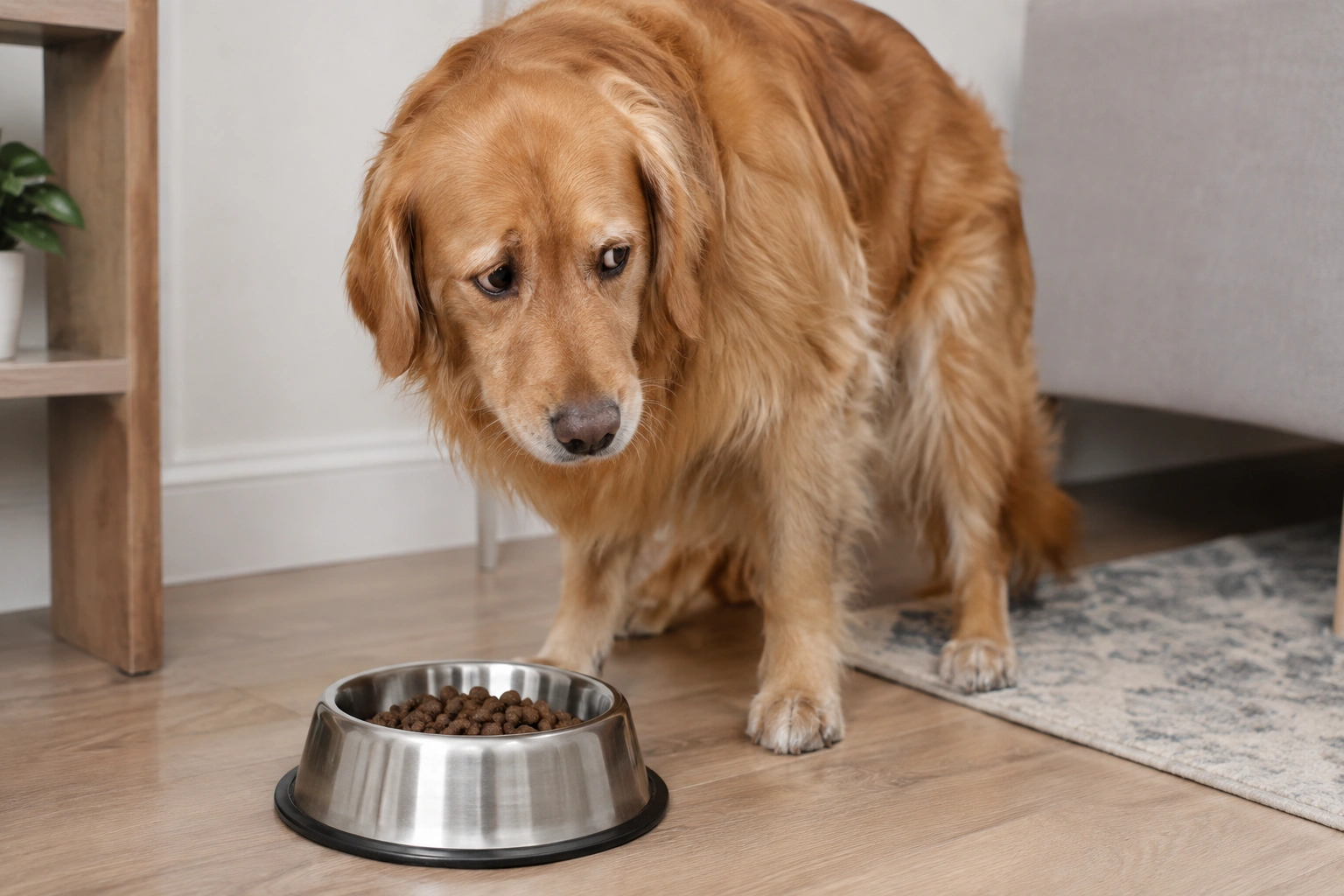
A practical example: a Border Collie that normally lives for tug games starts grabbing the toy, then letting go after a few seconds. If that same dog also has bad breath and chews on one side, the pattern is much more suggestive of oral pain than of boredom.
Eating and chewing changes that matter most
A dog with a painful tooth does not always stop eating. That is one of the biggest traps for owners.
Some dogs keep eating because they are hungry and can swallow food without much chewing. Others change only the way they eat: they take longer, chew carefully, or drop pieces of food as soon as they hit the sore side of the mouth. A dog may also start preferring soft food because it hurts less than crunching kibble.
Here’s the trade-off to watch: one day of picky eating can happen for many reasons, but repeated chewing changes usually deserve attention.
Normal picky eating vs. likely dental pain
| Situation | What it may mean | How urgent it is |
|---|---|---|
| Skips one meal but then eats normally | Temporary issue, stress, or mild stomach upset | Monitor briefly if otherwise normal |
| Eats but drops food, chews slowly, or favors one side | Possible mouth pain | Vet visit soon |
| Suddenly refuses hard food but accepts soft food | Dental discomfort becomes more likely | Vet visit soon |
| Refuses food and water or will not chew at all | More serious pain or illness possible | Same-day veterinary care |
If your dog is eating only by swallowing soft pieces whole, that can hide a painful tooth. The absence of total food refusal does not rule out a problem.
Mouth and face signs that should raise concern
Bad breath is one of the most common clues owners notice, but it helps to interpret it correctly. A little odor after eating is not the same as persistent foul breath. Ongoing bad breath, especially when paired with drooling, gum bleeding, or chewing changes, is more concerning for dental disease.
Other visible signs matter too:
- red or inflamed gums
- blood on toys or in the water bowl
- one side of the face looking puffy
- discharge near a tooth or along the gumline
- a broken or visibly damaged tooth
- jaw sensitivity when the dog yawns or chews
Swelling is a big red flag because it can suggest infection or an abscess. A dog with facial swelling should not be put on a “wait and see” plan for long. The same goes for bleeding that keeps happening or a dog that suddenly cannot chew comfortably.
How to safely check your dog’s mouth at home
A home check can help you gather clues, but it should be brief and low stress. The goal is not to diagnose the problem yourself. The goal is to see whether the mouth looks irritated enough to justify a vet visit sooner rather than later.
Here’s the safest approach:
- Pick a calm moment when your dog is relaxed.
- Lift the lips gently for just a second or two.
- Look for broken teeth, red gums, swelling, blood, or something stuck near the teeth.
- Watch your dog’s reaction more than the details.
- Stop immediately if the dog pulls away, stiffens, growls, snaps, or seems more painful.
Do not force the mouth open. Do not pry at a tooth. Do not keep trying if your dog resists. A sore dog may react defensively even if they are normally gentle, and pushing through that resistance can make the pain worse and increase the chance of a bite.
If you can only safely see a little, that is still useful. Even a quick look can tell you whether there is obvious swelling, bleeding, or a broken tooth.
What can cause tooth pain in dogs
Several problems can create oral pain, and they do not all look the same from the outside.
Gingivitis and periodontal disease
Gingivitis is inflammation of the gums. Periodontal disease is the more advanced form, where the tissues supporting the tooth are affected. These problems often build slowly, which is why owners may miss them until bad breath, gum redness, or chewing changes show up. At home, this often looks like persistent bad breath, red gums, drooling, or a dog that starts avoiding crunchy food.
Broken teeth
A fractured tooth can be very painful, especially if the inner part of the tooth is exposed. Sometimes the break is obvious. Other times it is easy to miss unless a veterinarian examines the mouth carefully. Dogs with a broken tooth may chew on one side, drop food, or pull away when the face is touched.
Tooth abscess or dental infection

An abscess is an infected pocket around a tooth or root. These are important because they can cause swelling, pain, and a strong smell, and the problem may be hidden below the gumline. Compared with routine gingivitis, an abscess is more likely to come with facial swelling, obvious tenderness, or a sudden worsening of symptoms.
Retained roots or developmental issues
In some dogs, especially younger ones, retained baby teeth, missing teeth, or abnormal tooth development can contribute to oral discomfort. That is one reason puppies should still have their mouths checked during routine veterinary care.
The important takeaway is that the visible symptom and the cause are not always the same thing. A dog may drool because of a broken tooth, but the real issue may be infection deeper in the mouth.
For a broader overview of canine dental health, the AKC Canine Health Foundation’s dental health guide is a useful reference point.
When tooth pain is urgent and when it can wait briefly
Some situations can be watched for a short time. Others should move you straight to the veterinarian.
Usually okay to monitor briefly
- one mild symptom that lasts only a short time
- a single day of slightly reduced interest in a treat
- minor mouth irritation with no swelling, bleeding, or appetite change
Needs a veterinary appointment soon
- repeated chewing on one side
- persistent bad breath
- drooling that is new for your dog
- reluctance to eat hard food
- pulling away from face touch
- a broken tooth, even if your dog still seems bright
Needs prompt or same-day care
- facial swelling
- bleeding gums that do not stop
- refusal to eat for over 24 hours
- obvious pain when the mouth is touched
- lethargy along with mouth symptoms
- pus, discharge, or a strong foul odor suggesting infection
That 24-hour eating threshold matters because refusing food that long can signal severe pain or another medical issue. If your dog has swelling plus bad breath, or swelling plus not eating, do not wait to see whether it improves on its own.
What a veterinarian may do next
A veterinarian will usually start with a mouth exam and ask about the behavior changes you’ve noticed. They may gently check for broken teeth, loose teeth, swollen gums, gum pockets, and areas that seem painful when the mouth is handled. Depending on what they find, they may recommend a dental evaluation and, in some cases, X-rays to look for problems below the gumline. That is especially important for broken teeth or hidden infection.
Because a full oral exam can be limited if a dog is sore or tense, the vet may explain that some parts of the dental check are done more thoroughly with sedation or anesthesia. In plain language, that helps them see below the gumline and find pain that is not obvious during a quick awake exam.
The treatment plan depends on the cause. A professional dental cleaning may help with gum disease, while a damaged or infected tooth may need more specific treatment. What matters most is that pain relief and the underlying problem are handled safely by a vet, not guessed at at home.
If your dog needs a few days of softer food after treatment, your veterinarian may suggest moistening food temporarily so chewing is easier while the gums heal. For more on that, see VCA’s dental pain guidance for dogs.
What not to do if you suspect tooth pain
A few common mistakes can make things worse:
- do not force the mouth open
- do not give human pain medication unless your vet specifically instructs you to
- do not assume the problem will resolve on its own
- do not keep testing the sore area if your dog is resisting
One practical warning: a dog that is mouth-painful may snap even if it has never shown aggression before. Handle the face carefully and avoid putting your fingers near the teeth.
A simple decision rule you can use today
If your dog has one mild symptom and is otherwise acting normal, you can watch closely for a short period.
If your dog has two or more signs — especially bad breath plus chewing changes, drooling, pawing, or face sensitivity — book a veterinary exam.
If there is swelling, bleeding, refusal to eat, or obvious pain, treat it as urgent.
That rule is not a diagnosis. It is a way to avoid waiting too long when dental pain is already building.
FAQ: Dog tooth pain
Will my dog still eat if it has tooth pain?
Yes, it can. Many dogs keep eating by chewing on one side, swallowing softer food more easily, or simply pushing through discomfort. Eating does not rule out dental pain.
Is bad breath always a sign of dental disease?
No. Food can cause temporary odor. Persistent foul breath, especially with drooling, gum redness, or chewing changes, is more suggestive of dental disease.
Can tooth pain make my dog act aggressive or withdrawn?
It can make a dog more irritable, head-shy, or less social. Pain often shows up as avoidance rather than obvious whining.
How can I check my dog’s mouth without hurting them?
Keep it brief, gentle, and stop if the dog resists. Lift the lips for a quick look only. Do not force the mouth open.
What if my dog suddenly prefers soft food?
That can be a clue that hard chewing hurts. If it lasts more than a day or comes with other signs, schedule a vet visit.
When should I call the vet?
Call soon if you notice chewing on one side, drooling, bad breath, pawing at the mouth, or avoiding hard food. Go sooner if there is swelling, bleeding, or refusal to eat.
For a broader look at dog dental warning signs, the ASPCA’s pet dental health resources are also worth reviewing.
