
How to Tell If Your Dog May Be Dying: Warning Signs and What to Do Next

If you’re asking this question, you need clarity fast. The short answer is this: a dog that is nearing death often shows a cluster of warning signs such as profound weakness, loss of appetite and water intake, withdrawal or confusion, trouble breathing, incontinence, and a clear drop in responsiveness. One sign alone does not prove your dog is dying. A pattern of several signs, especially if they are getting worse, is what should make you act.
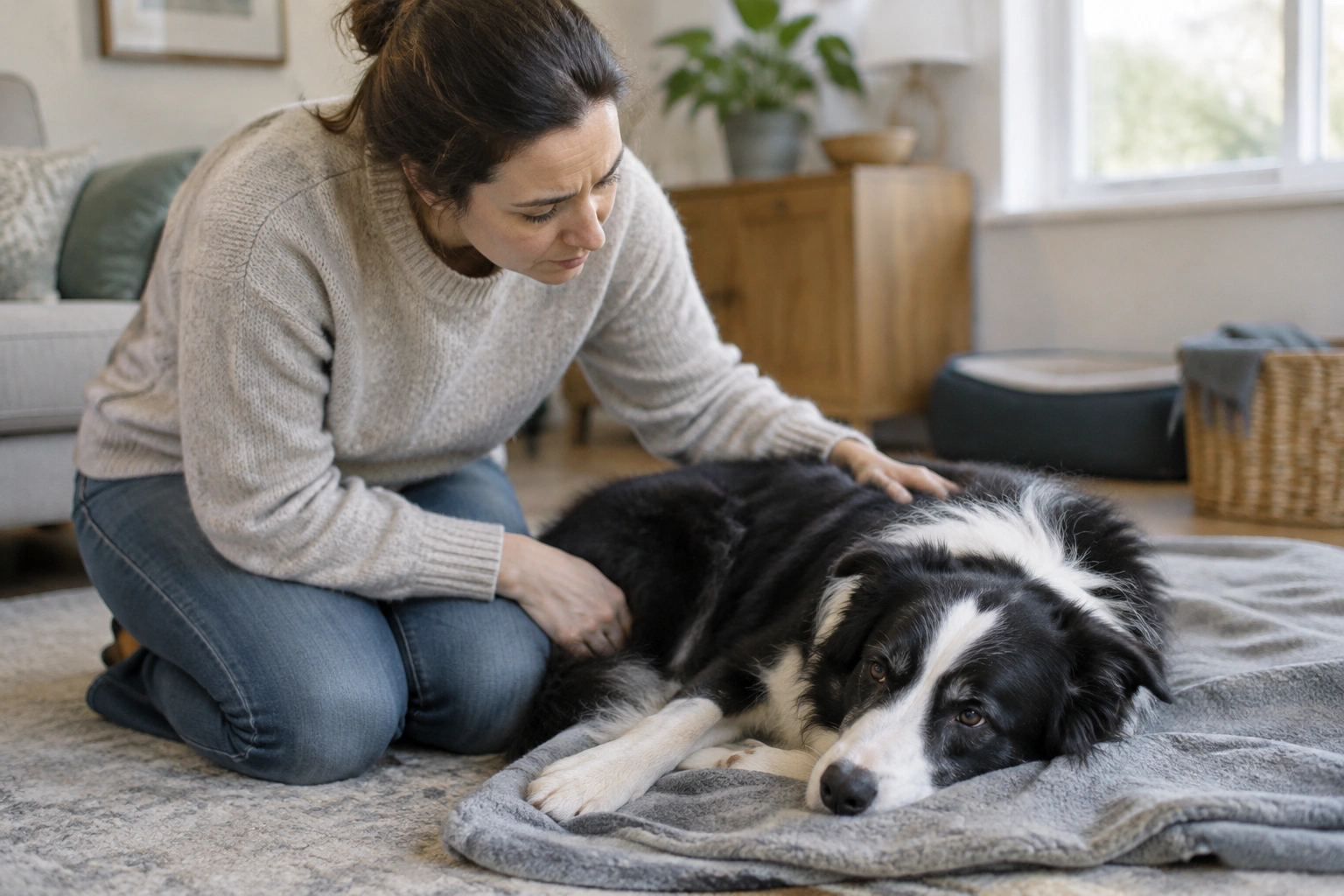
What to do right now
- If your dog is struggling to breathe, has collapsed, is unresponsive, is having a seizure, or is bleeding heavily, go to an emergency clinic now.
- If your dog is weak, not eating or drinking, or seems suddenly “off” but is still breathing comfortably, call your regular vet today.
- Check whether your dog can drink, swallow, stand, and urinate comfortably.
- Do not force food, water, or human medication.
- Write down what changed and when, so you can describe it clearly to the vet.
For Border Collies in particular, this can be hard to judge because they often try to keep going even when they feel terrible. A dog that still lifts its head for you, changes position, or perks up briefly is not necessarily “fine.” Brief good moments can happen even in serious illness.
If your dog is struggling to breathe, has collapsed, cannot get up, has a seizure, is bleeding heavily, or seems unresponsive, treat it as urgent and contact an emergency vet now.
The Short Answer: When a Dog May Be Nearing Death
The most telling end-of-life pattern is not one symptom but a steady decline. Owners often notice that the dog stops eating, drinks very little or not at all, becomes extremely weak, spends most of the day lying still, and seems less aware of what is happening around them. Some dogs withdraw. Others become unusually clingy. CareCredit’s overview of end-of-life changes describes behavior shifts such as depression, anxiety, aggression, or clinginess, which matches what many owners see in real life.
A dog nearing the end may also have cooler ears or paws, lose bladder or bowel control, or breathe in a more labored, irregular way. These signs do not always mean death is hours away, but they do mean the situation is serious enough to call a veterinarian promptly.
A useful rule: if your dog is no longer functioning in a way that lets them rest, drink, stand, or respond comfortably, stop thinking in terms of “wait and see” and start thinking in terms of “what is the kindest next step?”
Signs That Require Immediate Veterinary or Emergency Care
Some symptoms are not “monitor at home” symptoms. They need veterinary attention right away because they can reflect a crisis, not just decline.
Seek urgent help if your dog has any of the following:
- Labored breathing, open-mouth breathing at rest, or breathing that looks strained
- Collapse or inability to stand
- Unresponsiveness, extreme disorientation, or inability to recognize you
- Seizures
- Severe bleeding
- Repeated vomiting, especially if the dog cannot keep water down
- A sudden inability to rise or move normally
- Obvious severe pain, such as crying out, trembling, rigid posture, or panic that does not settle
If breathing is the issue, keep handling minimal. Do not force food, water, or walking. Get to an emergency clinic or call your vet immediately for instructions.
If your dog is weak, not eating, or drinking less but is still breathing comfortably and responsive, call your regular vet today. If the dog is collapsing, struggling to breathe, having seizures, or unresponsive, go straight to an emergency clinic now.
This is where owners can get misled by a dog’s stubbornness. A Border Collie may still try to stand, follow you, or “push through” discomfort, but that does not make the situation safe. If the dog is struggling to breathe or cannot rise, the problem is already beyond normal aging.
Common Signs a Dog Is Dying in the Final Days or Hours
The final stage often looks like a slow shutdown of energy, appetite, and awareness. CodaPet’s guide notes common signs such as loss of appetite, extreme fatigue, labored breathing, incontinence, disinterest in surroundings, cooler body temperature, and unresponsiveness or confusion. Those are the kinds of changes owners usually notice first.
Loss of appetite and drinking less
A dog that no longer wants meals, treats, or water may be very ill or nearing the end of life. Refusing food for one meal is not the same thing as refusing food for a day or more, especially if the dog is also weak or withdrawn. If your dog is not drinking and seems weaker by the hour, that is more concerning than appetite loss alone.
A practical check: offer fresh water and see whether your dog approaches it, licks it, swallows normally, or turns away. If the dog tries to drink but coughs, gags, or seems unable to swallow comfortably, call a veterinarian promptly.
Extreme weakness or sleeping most of the time
Persistent lethargy is one of the clearest warning signs. The Kindest Goodbye describes sustained lethargy and withdrawal as an early and common sign. In practical terms, this may look like a dog that does not want to get up, changes position with effort, or lies in one place for long stretches without engaging.
Withdrawal, hiding, or unusual clinginess
Some dogs pull away and look for quiet corners. Others follow their person more closely than usual. Both can be signs that the dog feels unwell and is seeking either solitude or reassurance. The change matters more than the direction of the change.
Incontinence or loss of control
A dog that starts having accidents indoors, dribbling urine, or soiling bedding may be losing strength or awareness. That does not automatically mean the dog is dying, but alongside weakness and poor appetite, it can point to serious decline.
Labored or irregular breathing
Breathing changes are a major red flag. If each breath looks like work, the dog is using abdominal muscles to breathe, or the rhythm becomes irregular, call a veterinarian. This is one of the clearest signs that comfort care at home may not be enough.
Cooler body temperature and poor circulation
Cold ears, paws, or a generally cool body can happen as circulation declines. If the dog also seems dull, weak, or unresponsive, the picture is more concerning.
Dying, Sick, or Just Old? How to Tell the Difference
This is the hardest judgment call for most owners. Old age slows a dog down. Illness changes how a dog functions. End-of-life decline usually does both, but more severely and more consistently.
Use these comparisons:
| What you’re seeing | More likely aging | More likely treatable illness | More concerning for end-of-life decline |
|---|---|---|---|
| Slowing down | Gradual, mild, still enjoys normal routines | New or sudden slowdown, may improve with treatment | Severe, progressive weakness, little interest in anything |
| Appetite | Slightly picky, still eats most meals | Off food but may still drink or perk up | Refusing food and water together, worsening over time |
| Breathing | Normal at rest | Faster than usual, but stable | Labored, irregular, or visibly hard work |
| Responsiveness | Tired but engaged | Variable, often still responsive | Confused, unresponsive, or hard to rouse |
| Mobility | Stiff but able to stand and walk | Painful but may improve with care | Cannot rise, collapses, or struggles to reposition |
| Comfort | Resting well | Uncomfortable but can settle | Cannot get comfortable, restless, or distressed |
A simple test: if the dog still has meaningful good moments, can drink, can get up with some help, and the symptoms have a plausible reversible cause, a vet visit is urgent but the situation may still be treatable. If the dog is rapidly worsening, cannot stay comfortable, and is losing basic functions, the focus may need to shift to comfort and dignity.

How to Judge Pain, Distress, and Quality of Life
Pain in dogs is easy to miss because many dogs hide it. Distress is often clearer than pain itself. Watch for trembling, whining, panting when the room is not hot, a hunched posture, refusal to lie down, restlessness, or repeated position changes without settling. A dog in pain may also become irritable or unusually quiet.
Quality of life is not about whether the dog can still have one nice moment. It is about whether most of the day is tolerable. Ask yourself:
- Can my dog rest without constant repositioning?
- Can my dog drink or swallow safely?
- Can my dog stand or walk without obvious distress?
- Is my dog still interested in people, food, or surroundings at least some of the time?
- Are the bad periods becoming longer or more frequent?
If the answer to most of those is no, suffering may be outweighing comfort.
The biggest mistake here is false reassurance. A dog that wags once, eats a bite, or looks at you for a moment can still be in serious decline. One better moment does not erase the overall trend.
What to Do Right Now While You’re Waiting for the Vet
If you are waiting for a call back or preparing to leave for the clinic, keep things simple.
Move the dog to a quiet, warm place with easy access to water and a soft bed. Reduce stairs, jumping, and unnecessary handling. If the dog wants to lie in one spot, let them. If they can drink on their own, offer a small bowl close by. If they are struggling to swallow, do not force water into the mouth.
Do not give human pain medication unless a veterinarian specifically told you to. Some common human drugs are dangerous for dogs.
If your dog is anxious, stay nearby and speak calmly. Your job is not to fix the situation at home. Your job is to prevent extra stress and get veterinary guidance as quickly as possible.
When Palliative Care Is Appropriate and When It Is Not
Palliative care means focusing on comfort rather than cure. That can be a compassionate choice when a dog has a terminal condition or when treatment would not realistically restore a meaningful quality of life.
Home comfort care may be reasonable for a short time if the dog is still breathing comfortably, can drink, can rest, can urinate without obvious distress, and is not in severe pain. In that case, a vet can help you plan pain control, hydration support, and a realistic monitoring plan. This may fit a dog with a known terminal illness who is still resting peacefully between symptoms.
Palliative care is not enough when the dog cannot breathe comfortably, cannot stand, is repeatedly vomiting, is in severe pain, cannot swallow without distress, or is no longer responsive. At that point, waiting at home can become a way of prolonging suffering.
When Euthanasia May Be the Kindest Option
Euthanasia becomes a serious consideration when the dog’s bad days clearly outweigh the good ones and the body is no longer able to recover enough to live comfortably. That decision is not about giving up. It is about preventing prolonged distress when the outcome is no longer changeable.
A veterinarian usually thinks about whether the dog can eat, drink, breathe, move, and rest with dignity. If the answer is no, and the condition is not realistically reversible, humane euthanasia may be the kindest path.
This is often hardest when the dog still has brief bright moments. Those moments matter emotionally, but they do not always mean the dog is truly comfortable. Look at the whole day, not the best five minutes.
What to Expect If You Choose Euthanasia
The process is usually calm and deliberate. Your veterinarian will explain what happens, answer questions, and may give a sedative first so your dog can relax. The final medication is then given to allow the heart and breathing to stop peacefully.
Most owners want to know whether their dog will feel pain. In general, the goal of euthanasia is to keep the dog relaxed and comfortable; many veterinarians use sedation first, and the final injection is intended to be peaceful. If you are worried, ask the vet exactly what medication plan they will use and what your dog is likely to notice.
You may be able to stay with your dog, depending on the clinic and your preference. Some owners want a private goodbye at home or in the clinic before the procedure. If you need time to decide about cremation or aftercare, ask the clinic to walk you through those options before the appointment.
It also helps to know what to bring and prepare:
– A leash, blanket, or favorite bed if the clinic says to bring them
– Any paperwork or medication list the vet requested
– A decision about cremation or burial if you already have one
– Tissues, a water bottle, and another person for support if possible
The appointment is often not long, but the exact timing varies. Ask the clinic how they handle check-in, sedation, time for goodbyes, and aftercare so there are no surprises. If you are emotionally overwhelmed, that is normal. What helps most in the moment is having the logistics handled in advance so the focus stays on your dog.
Final Hours and the Dog’s Last Day: What May Happen
In the final hours, some dogs become very still and sleep most of the time. Others seem restless, shift positions often, or have trouble settling. You may also see intermittent alertness: a brief lift of the head, a small response to your voice, then a return to sleep.
Some dogs may stretch or take a deep breath near the end, and after death there can be reflex movements, changes in breathing, or muscle twitches that may briefly resemble life. These are not universal and should be understood as possible physical changes, not a reliable sequence of dying signs.
If you are at this point, keep the environment quiet and let your vet guide the next steps. If the dog is still alive but clearly suffering, do not wait for a dramatic moment to act.
Common Mistakes That Delay the Right Decision
Three mistakes cause the most regret later.
First, assuming severe weakness is “just old age.” Sudden or progressive collapse is not a normal part of aging.
Second, forcing food or water. If the dog is struggling to swallow, vomiting, or too weak to manage it, forcing intake can make things worse.
Third, waiting for a crisis because the dog still has brief good moments. Serious decline often comes in waves. The question is not whether the dog can brighten for a minute. The question is whether the overall trend is toward comfort or suffering.
If you are unsure, call your veterinarian now and describe exactly what you see: breathing, appetite, ability to stand, responsiveness, and whether the symptoms are getting worse. Those details help a vet tell you whether you are dealing with an emergency, a treatable illness, or the final stage of life.
When to See a Veterinarian or Certified Trainer
For this topic, the professional you need is a veterinarian, not a trainer. A certified trainer cannot assess organ failure, pain, or end-of-life decline. If your dog is showing the signs in this guide, call a vet or emergency clinic first.
For Border Collie owners, one final note: these dogs often hide weakness well. If your dog seems “off” and the change is new, do not wait for the problem to become obvious. Early veterinary help is the safest move.
FAQ
What are the most common signs a dog is dying?
The most common pattern is a combination of loss of appetite, extreme weakness, withdrawal or confusion, incontinence, and breathing changes. One sign alone is not enough to tell you the dog is dying.
How can I tell if my dog is in pain or just weak?
Weakness usually looks like low energy and reduced movement. Pain more often adds trembling, whining, panting at rest, restlessness, or a hunched posture. If the dog cannot settle comfortably, pain is likely part of the picture.
Should I wait and watch if my dog still has a few good moments?
Not if the bad moments are severe or getting worse. Brief good moments can happen even when a dog is seriously ill. Look at the whole pattern, not the best moment.
Can a dog die naturally at home?
Sometimes, but it should only happen with veterinary guidance. If the dog is struggling to breathe, cannot stand, or appears to be in severe distress, natural death at home may mean prolonged suffering.
How do I know if it’s time for euthanasia?
When your dog can no longer rest, breathe, drink, or move without distress, and the situation is not realistically reversible, euthanasia may be the kindest option. A veterinarian can help you judge that line clearly.
What should I do first if I think my dog is dying?
Call a veterinarian or emergency clinic, describe the symptoms clearly, and ask whether you should come in immediately. While you wait, keep your dog warm, quiet, and as comfortable as possible.
How do I tell whether my dog is still drinking, swallowing, or able to urinate?
Watch for whether your dog approaches water, licks or swallows normally, and seems able to keep water down. For urination, note whether your dog can get into position, produce urine, or is straining, dribbling, or having repeated accidents. If you are unsure, tell the vet exactly what you observed.
Should I call my regular vet or go to an emergency clinic?
Call your regular vet today if your dog is weak, not eating, or drinking less but still breathing comfortably and responding to you. Go to an emergency clinic now if your dog is struggling to breathe, collapsing, having seizures, bleeding heavily, or unresponsive.
