
How to Treat a Dog Eye Infection at Home: Safe First Aid and When to Call the Vet

A red, goopy, or squinty eye can look like a simple infection, but in dogs it can also be a scratch, a foreign body, an allergy flare, dry eye, or a more serious corneal problem. That matters because the wrong home remedy can make the eye worse fast.
If your dog has mild discharge, slight redness, and is otherwise comfortable, short-term home care may be reasonable while you watch closely. If the eye is cloudy, very painful, swollen, kept shut, bleeding, or your dog is rubbing it hard, skip home treatment and arrange veterinary care the same day. Eye damage is one area where “wait and see” can cost vision.
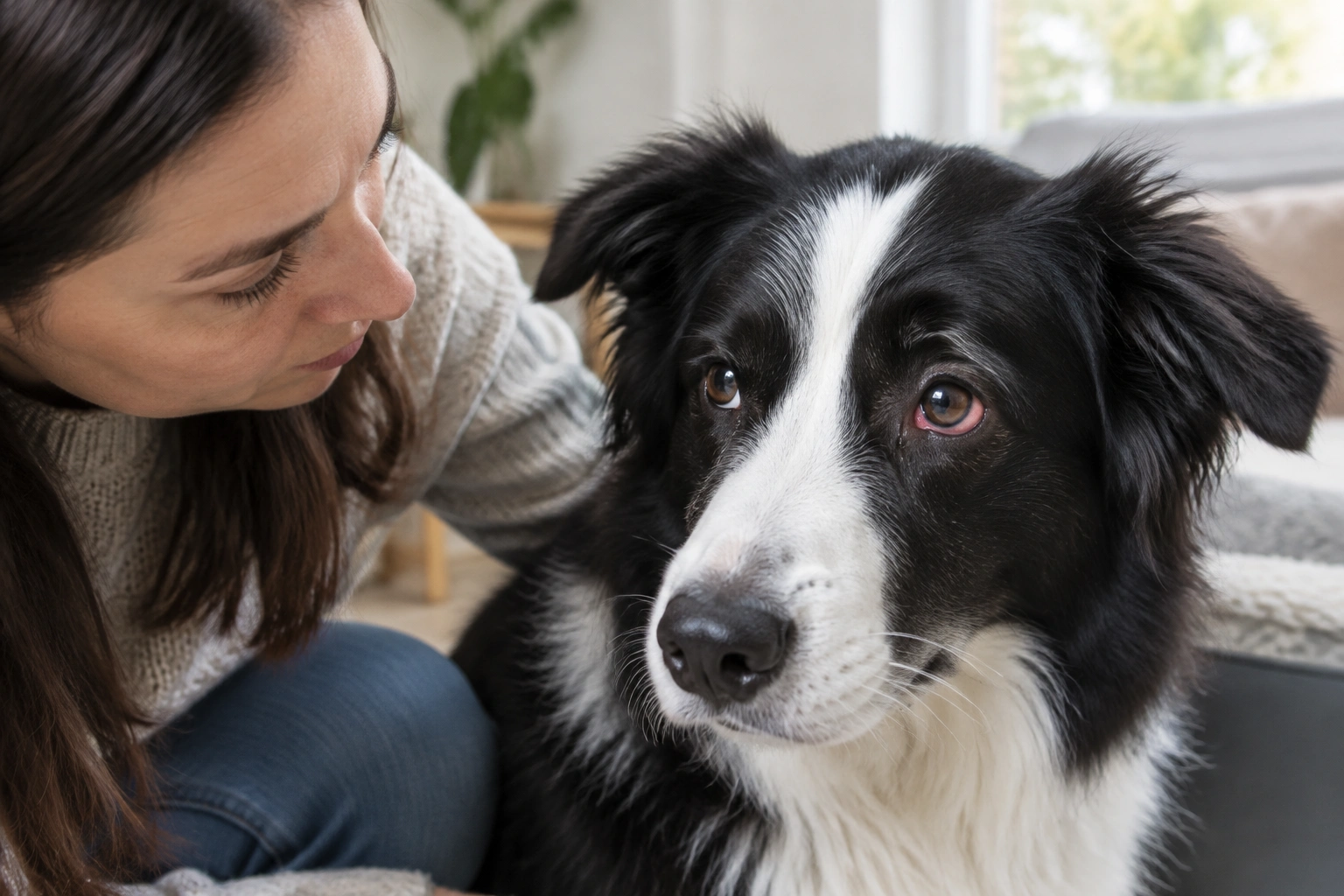
Can You Treat a Dog Eye Infection at Home?
Sometimes you can do safe first aid at home, but that is not the same as treating the infection itself.
A good rule is this:
- Home care is reasonable for a short window only if the symptoms are very mild, the eye is only slightly red, your dog is eating and acting normal, and there is no obvious pain.
- Stop home care immediately and call a vet if the eye becomes more red, more painful, cloudier, or more swollen, or if your dog starts squinting, pawing, or holding it closed.
- Emergency care is needed now if the eye looks cloudy, bulging, bleeding, or the dog seems unable to see normally.
That decision point matters because many “eye infections” are not infections at all. A scratch on the cornea, a trapped grass seed, or a dry-eye problem often needs a different treatment than conjunctivitis. A vet exam is what separates a simple irritation from a vision-threatening issue.
If you suspect a foreign body in the eye, act like this right away: if the object appears loose, you may gently flush with sterile saline only; do not try to pick it out, press on the eye, or keep manipulating the lids. If the object seems stuck, or the eye is painful or cloudy, stop and get veterinary help.
If you want a broader health reference on dog eye problems, VCA Hospitals’ eye care guidance is a useful starting point.
How to Tell Infection From Irritation, Allergy, or a Scratch
The eye gives clues, but it does not hand you a diagnosis. Use the pattern, not just the redness.
| What you see | More likely | What it usually means |
|---|---|---|
| Mild watery discharge in both eyes, itchy face, seasonal pattern | Allergy or irritation | Often linked to pollen, dust, or wind |
| One eye red with pawing, squinting, or blinking | Scratch, foreign body, or ulcer | Needs a closer look if it persists |
| Thick yellow-green discharge, redness, swelling | Possible infection | Often needs prescription treatment |
| Eye held shut, strong light sensitivity, cloudiness | Corneal injury or serious inflammation | Same-day vet visit |
| Mild crusting after sleep, dog otherwise normal | Minor irritation | May respond to gentle cleaning and monitoring |
A Border Collie that runs through brush and wakes up with one watery, irritated eye may simply have debris under the lid. A dog with sticky discharge plus a closed eye is a different problem. Pain changes the urgency.
Also watch for one eye versus both eyes. Both eyes involved often points more toward allergies or environmental irritation. One eye alone raises suspicion for a foreign body, scratch, or local infection.
Safe First Aid: What You Can Do Right Now
The safest home step is to gently clean the eye area and prevent more rubbing.
A practical sequence:
- Wash your hands first.
- Use sterile saline solution to rinse the eye or moisten a clean gauze pad.
- Wipe discharge from the inner corner outward with one gentle pass.
- Use a fresh pad or gauze for each wipe so you do not spread debris.
- Watch your dog closely for the next several hours.
That inner-to-outer wipe matters because it moves debris away from the tear duct area instead of dragging it back across the eye.
A sterile saline rinse is appropriate because it is gentle and low-risk for flushing out dust, pollen, or loose discharge. It can help with comfort, but it does not cure a true infection or remove a stuck object.
If the eye is only mildly irritated, cleaning the face and keeping the area dry can make a noticeable difference within a day. If the discharge returns quickly or the redness increases, stop assuming it is minor.
For a general dog-care perspective on safe handling and restraint, the AKC’s dog health resources are a solid reference point.
When a Warm Compress Helps—and When It Does Not
A warm compress can be useful when the eye is closed, crusty, or mildly uncomfortable, especially if discharge is sticking the lids together.
Use it only if your dog tolerates it calmly:
- Hold a clean cloth soaked in warm, not hot, water against the closed eye for a short period.
- Loosen crusts gently; do not scrub.
- Follow with a saline wipe if needed.
A warm compress can soothe irritation and soften discharge. That is the trade-off: it may improve comfort, but it will not fix a scratch, ulcer, or foreign body. If the eye is very painful, cloudy, or swollen, warmth is not a solution.
Some sources describe a cooled chamomile tea compress for soothing a closed eye, but I would treat that as a cautious, secondary option at best. If you use anything like that, it must be plain, additive-free, and never replace veterinary care. When in doubt, sterile saline and a clean warm compress are the safer choices.
Preventing More Damage: Stop the Dog From Rubbing or Scratching
Rubbing is one of the fastest ways to turn a mild eye problem into a serious one.
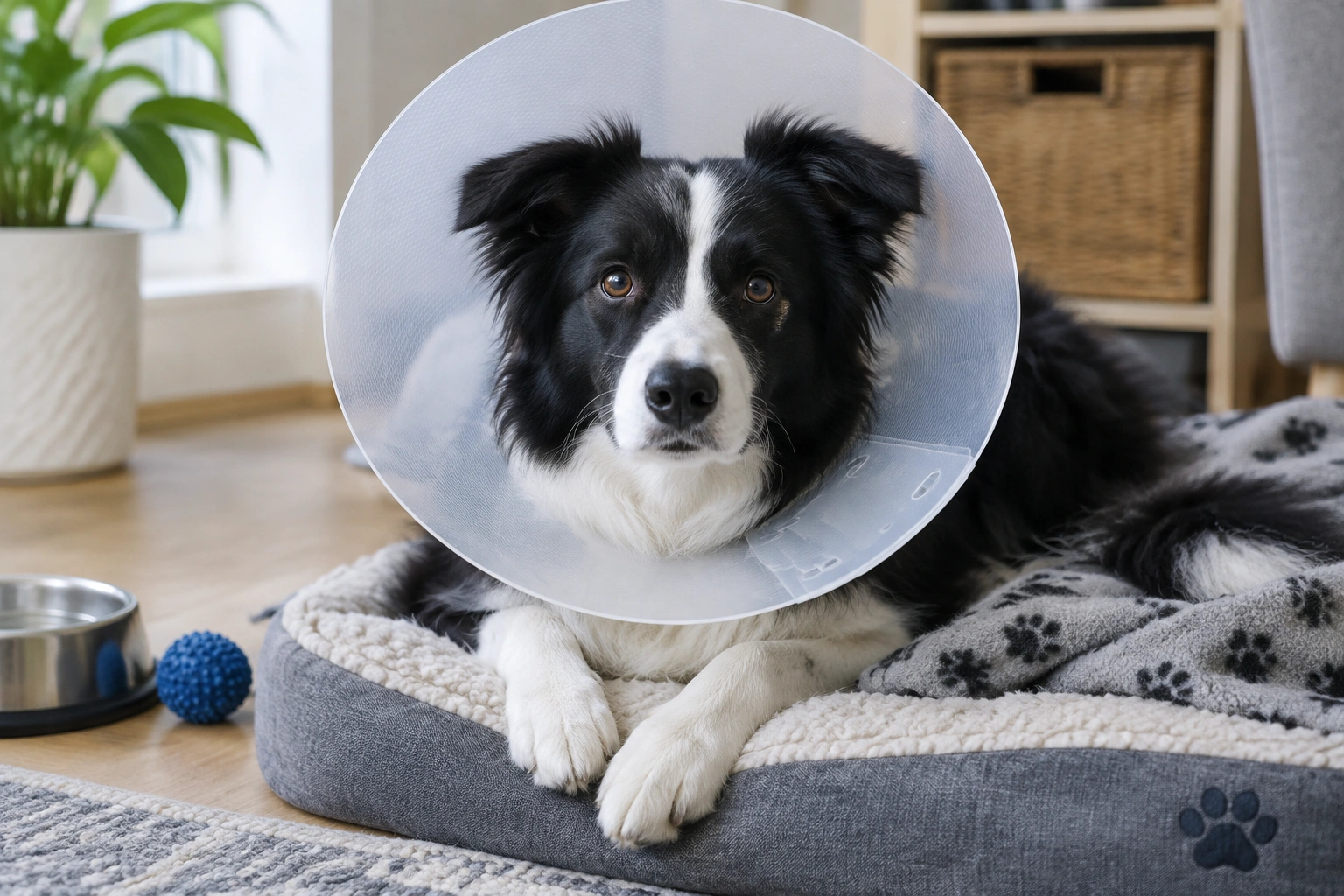
If your dog keeps pawing at the eye, use an Elizabethan collar. That cone is not a punishment; it is protection. A few hours of rubbing can deepen a scratch, worsen swelling, or turn irritation into a corneal ulcer.
Practical prevention steps:
- Put the cone on as soon as rubbing starts.
- Supervise closely if the cone is off for eating or resting.
- Keep nails trimmed so accidental scratches do less damage.
- Reduce rough play, brush, dust, and wind exposure for the day.
If your dog hates the cone, that discomfort is still usually less serious than an injured cornea. A dog that can’t reach the eye is less likely to keep traumatizing it.
What Not to Put in a Dog’s Eye
This part is simple: don’t guess with eye medication.
Avoid these common mistakes:
- Human eye drops
- Leftover antibiotic ointments from another pet or person
- Any product with steroids unless a veterinarian has examined the eye
- OTC redness-relief drops or anything labeled to “get the red out”
- Contact lens solution
- Herbal drops or homemade mixes
- Tweezers, cotton swabs, or tissue tips to “fish out” debris
The risk is not just irritation. Some products can worsen a corneal ulcer or hide the signs of a serious problem. Steroid-containing drops are especially risky when the cornea is scratched or infected.
Also, do not try to remove a stuck object yourself if you can see one. A small grass seed can be embedded in a way that is easy to worsen with the wrong touch.
If you are unsure whether something is safe, assume it is not.
How Long to Try Home Care Before You Stop
Home care should be brief and closely watched, not open-ended.
A sensible monitoring window is 12 to 24 hours for very mild symptoms that are already improving. You should see a clear trend toward less redness, less discharge, and less rubbing.
Stop home care and arrange a vet visit if:
- discharge becomes thicker or colored
- redness spreads or worsens
- the dog starts squinting more
- the eye becomes sensitive to light
- symptoms are unchanged after a short watch period
- only one eye is getting worse
The reason for the short window is practical: if the problem is a scratch, ulcer, foreign body, or dry-eye issue, waiting does not help. It can cost time that the eye does not have.
Red Flags That Need Same-Day or Emergency Vet Care
Treat these as non-negotiable warning signs:
- Cloudy eye
- Eye held shut
- Marked squinting or blinking
- Swelling around the eye
- Bleeding
- Obvious trauma
- A bulging eye
- Suddenly dilated pupil, unequal pupils, or obvious vision loss
- Sudden vision problems
- Severe pain or panic when the eye is touched
- Any eye problem after trauma, a cat scratch, or chemical exposure
These signs can point to a corneal ulcer, deep injury, or another urgent eye disease. A vet may need to do a fluorescein stain to check for a corneal scratch or ulcer. That test matters because an ulcer can look like “just redness” until it becomes a much bigger problem.
If your dog is rubbing hard and the eye is cloudy, do not wait for morning. That is the kind of situation where prompt care protects vision.
Why a Vet May Still Be Needed Even If the Eye Looks Mild
A mild-looking eye can still hide a problem that home care will not solve.
Common underlying causes include:
- bacterial infection
- viral irritation
- allergies
- a foreign body
- dry eye
- blocked tear ducts
- eyelid or eyelash abnormalities
Those last two are important because they often keep causing the same symptoms until the underlying issue is fixed. Dry eye, for example, may need medication to improve tear production. Eyelid or eyelash problems may keep rubbing the cornea no matter how clean the eye looks.
That is why a vet exam is often worth it when symptoms return, affect one eye repeatedly, or do not improve quickly. The goal is not just to calm the eye today; it is to stop the cycle from coming back.
How to Reduce the Chance It Comes Back
Once the eye is improving, focus on the environment.
Helpful prevention steps:
- Keep bedding, toys, and feeding areas clean
- Rinse off face fur if your dog has been in dust, pollen, or brush
- Trim hair that constantly brushes the eye, if appropriate
- Watch for recurring one-eye problems after walks
- Note whether both eyes are affected during allergy season
This is especially useful for active Border Collies that run through grass, hedges, and dirt. A small irritant can become a repeated problem if the dog keeps re-exposing the same eye.
If the same eye keeps flaring up, that usually suggests something more than a one-time infection. Recurrent symptoms deserve a vet exam even if the eye settles down in between episodes.
When to See a Veterinarian or Certified Trainer
For this topic, the professional you need is usually a veterinarian, not a trainer. A certified trainer can help if eye rubbing is part of a bigger behavior issue, but the eye itself needs medical evaluation.
See a veterinarian promptly if:
- symptoms are not clearly improving within a day
- the discharge is thick, yellow-green, or smelly
- your dog is in pain or keeping the eye closed
- there is cloudiness, swelling, or trauma
- the problem keeps returning
If your dog is otherwise struggling with anxiety, frustration, or impulse control around the cone or handling, a certified trainer can help you manage the behavior safely while the eye heals.
FAQs
Is saline okay for a dog eye infection?
Yes, sterile saline is one of the safest things you can use to gently rinse debris or discharge. It can help clean the eye, but it does not replace diagnosis or cure a true infection.
Can I use human eye drops on my dog?
No, not unless a veterinarian specifically tells you to. Human eye drops and leftover medications can irritate the eye or make certain problems worse.
Should I use a warm compress?
A warm compress can help loosen crust and soothe mild discharge if your dog tolerates it. Do not use it as a substitute for vet care when the eye is painful, cloudy, or swollen.
How do I know if it’s infection or irritation?
If both eyes are watery and itchy, irritation or allergies are more likely. If one eye is painful, squinty, or thickly discharged, think scratch, foreign body, or infection and watch closely.
Can I wait a few days?
Not if the eye is painful, cloudy, closed, or getting worse. Mild irritation that improves quickly may be watched briefly, but eye problems should not be ignored for long.
A calm, practical approach is usually the best one with eye problems: clean gently, stop rubbing, watch the trend, and escalate quickly when the eye stops behaving like a minor irritation.
