
How to Improve Border Collie Traction in the Bathtub

Quick Answer
Improve your Border Collie’s bathtub traction by using a securely fitted, textured non-slip mat, removing soap residue, checking nail length and paw-pad hair, and providing a dry, grippy exit surface. Introduce water gradually and reward calm standing. If your dog still struggles to stand securely, stop the bath and investigate possible pain or mobility problems.
A Border Collie can turn quickly on grass and move confidently over uneven ground but still struggle to stand in a bathtub. Smooth surfaces, water, soap residue, and unfamiliar sounds can make bathing uncomfortable, especially when the dog feels unable to control its footing.
The solution is to improve grip throughout the bathing process rather than simply holding your dog in place. A stable surface, careful preparation, and gradual handling can make bath time safer without forcing your dog to tolerate an uncomfortable position.
1. Choose a Non-Slip Mat That Stays Put When Wet
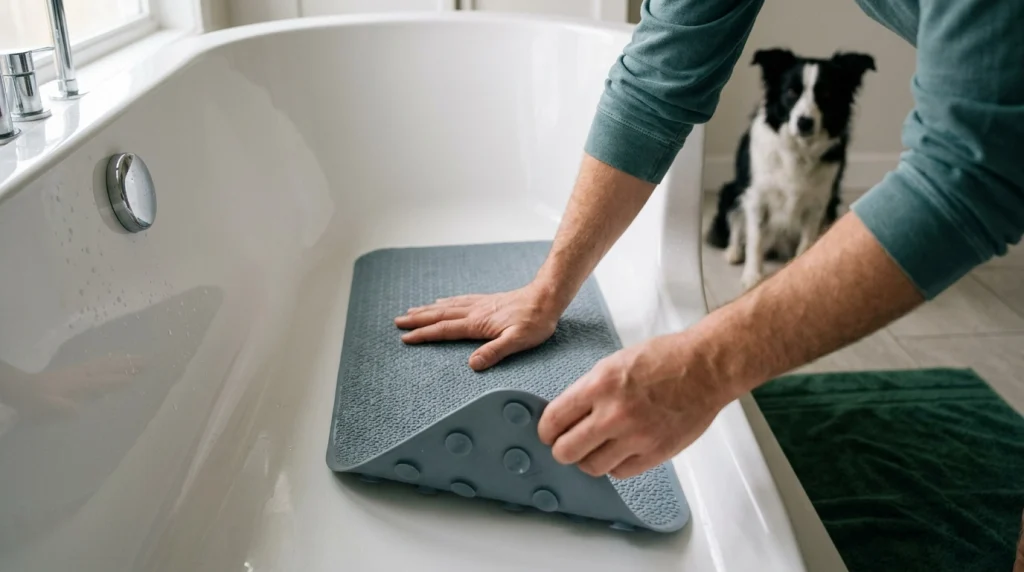
A properly secured non-slip mat is usually the most effective first change. It gives your Border Collie a textured surface to stand on instead of asking its paws to grip smooth bathtub enamel or acrylic.
Choose a mat that covers the area where your dog will stand and turn. A small mat may leave the front paws secure while the rear paws remain on the slippery tub floor.
Look for these practical features:
- Textured upper surface: Provides a more secure feel under wet paws.
- Stable underside: Helps prevent the mat from sliding as your dog shifts its weight.
- A suitable fit: Covers the main standing area without curling around the edges.
- Easy cleaning: Allows you to remove hair, shampoo, and residue between baths.
- Comfortable material: Avoids unnecessarily hard or abrasive surfaces that could irritate sensitive paws.
Suction cups can help secure a mat to a smooth tub, but they may not grip textured or uneven surfaces reliably. Check the mat manufacturer’s instructions and make sure it stays firmly in place before your dog steps onto it.
Press the mat down, test it with your hand, and check its stability again after wetting it. If it slides, bunches, or lifts at the edges, reposition it or use a more suitable alternative.
2. Clean the Bathtub Before Adding Water
Even a textured mat can become slippery when covered with soap, conditioner, loose hair, or cleaning-product residue. Cleaning the tub first helps the traction surface work as intended.
- Remove loose hair and debris from the tub.
- Wash away old shampoo, conditioner, and greasy residue using a suitable bathroom cleaner.
- Rinse thoroughly so cleaning products do not remain on the surface.
- Allow the tub to drain before placing the mat.
- Secure the mat and test it again before bringing your dog into the bathing area.
During the bath, avoid allowing thick shampoo or conditioner to accumulate around your dog’s feet. Rinse the paws and standing area as needed, keeping the mat secured throughout.
Do not add oils, waxes, or slippery conditioners to the tub to make the surface feel more comfortable. These can reduce grip instead of improving it.
3. Check Your Border Collie’s Nails and Paw Pads
Foot care can support better traction, although it cannot compensate for an unstable bathtub floor. Overgrown nails and excessive hair covering the paw pads may interfere with comfortable contact on a standing surface.
Keep the nails at a comfortable length
Nails that are too long can alter how a dog places its feet and may make stable standing more difficult. Inspect all four paws, including the dewclaws, for overgrowth, splitting, or damage.
Trim only what you can safely identify and avoid cutting into the quick, the sensitive tissue inside the nail. If your dog has dark nails, resists handling, or has unusually long nails, ask a veterinarian or qualified groomer for help.
Check for excess hair between the paw pads
Some Border Collies grow hair that extends beyond the paw pads. When this hair becomes long, it may interfere with direct contact between the pads and the floor.
Inspect the paws for hair covering the pad surfaces, packed dirt, small stones, irritation, or damaged skin. If trimming is appropriate, remove only hair that extends beyond the pads and use suitable grooming tools carefully. Do not dig into the spaces between the toes or cut close to the skin.
For a wider grooming routine, see our guide to grooming a Border Collie.
4. Make the Entire Bathing Route Non-Slip
Your dog needs reliable footing before entering the tub, while standing during the bath, and when stepping out. A secure mat inside the bathtub does not eliminate the risk of slipping on wet bathroom tiles.
Prepare the area around the tub before bringing your dog in.
- Place a non-slip mat or securely positioned traction surface where your dog will enter and exit.
- Keep towels and grooming supplies within easy reach.
- Wipe up puddles and shampoo spills promptly.
- Move bottles, cords, and other obstacles away from the dog’s path.
- Plan how your dog will leave the tub without jumping from a height.
A loose bath towel can sometimes provide useful traction, but it must remain flat and resist sliding when wet. A towel that folds beneath a paw can create another instability problem. Check its position throughout the bath and replace it if it becomes bunched or unreliable.
If your Border Collie struggles to climb into a raised bathtub, consider a safer bathing location with easier access, such as a suitable walk-in shower with a secured non-slip surface. Do not lift a heavy or frightened dog if you cannot support it safely.
5. Use Calm Handling and Gentle Water Pressure
Better traction helps your dog feel more secure, but it may not resolve fear of bathing. A Border Collie that anticipates slipping can stiffen its legs, spread its feet, scramble, or try to escape.
Keep the experience predictable and avoid rushing through the wash.
- Start with a dry tub. Let your dog investigate the area and reward it for approaching calmly.
- Introduce the mat. Encourage your dog to stand on the secured surface without immediately turning on the water.
- Reward relaxed behavior. Use small treats and calm praise when your dog stands comfortably.
- Introduce water gradually. Begin with gentle water flow, avoiding sudden sprays that could startle the dog.
- Keep the stance natural. Let your dog position its feet comfortably instead of pulling its legs apart or forcing it into an awkward posture.
- Pause when stress increases. If your dog scrambles, freezes, or repeatedly attempts to escape, stop and allow it to settle in a safe place.
A cup or low-pressure sprayer may be easier for a nervous dog to tolerate than a loud showerhead. Use comfortably lukewarm water and avoid directing it into the eyes or ear canals.
For additional guidance on preparing the washing area, read our Border Collie bathing essentials guide.
Practical Tip
Practice calm standing on the dry mat before bath day. Reward your Border Collie for stepping onto it, remaining relaxed, and stepping off when invited. This lets you build familiarity without combining every new experience with running water and shampoo.
6. Test the Setup Before Starting the Full Bath
Do not wait until your Border Collie’s coat is soaked to discover that the mat moves or the exit is slippery. A short safety check can identify problems while the dog is still dry.
- Confirm that the mat covers the intended standing area.
- Press and move it by hand to check for sliding or loose edges.
- Wet the surface lightly and repeat the stability check.
- Make sure the drain works and water does not pool deeply around the paws.
- Check that the exit surface remains secure and the route away from the tub is clear.
- Bring your dog in only when the setup is ready.
Once your dog is standing on the mat, watch how it distributes its weight. A relaxed stance with feet placed naturally is preferable to repeated scrambling, bracing against the tub, or trying to climb out.
If the dog cannot remain comfortable even on a secure surface, do not assume that a stronger grip or tighter restraint will solve the problem. Reassess the environment and the dog’s physical comfort before continuing.
7. Know When Slipping May Indicate a Health Problem
Occasional slipping on a smooth, wet bathtub is not necessarily a sign of illness. However, persistent instability despite reliable footing, particularly when it occurs outside bath time, deserves attention.
Watch for signs such as:
- Limping or reluctance to put weight on a paw.
- Stiffness, difficulty rising, or trouble climbing stairs.
- Repeated stumbling on ordinary dry floors.
- Dragging a paw or placing the feet unusually.
- Sudden weakness, loss of coordination, or visible pain.
- Swelling, broken nails, or irritated paw pads.
Stop the bath if your dog appears painful or cannot stand securely. Arrange a veterinary assessment if slipping persists, occurs on other surfaces, or accompanies changes in movement. Sudden inability to stand, collapse, or severe loss of coordination warrants urgent veterinary attention.
Do not try to correct suspected pain or weakness by forcing exercise, spreading the legs, or restraining the dog more tightly. A veterinarian can assess whether the problem involves the paws, joints, muscles, or nervous system.
8. Finish With a Safe Exit and Dry Paws
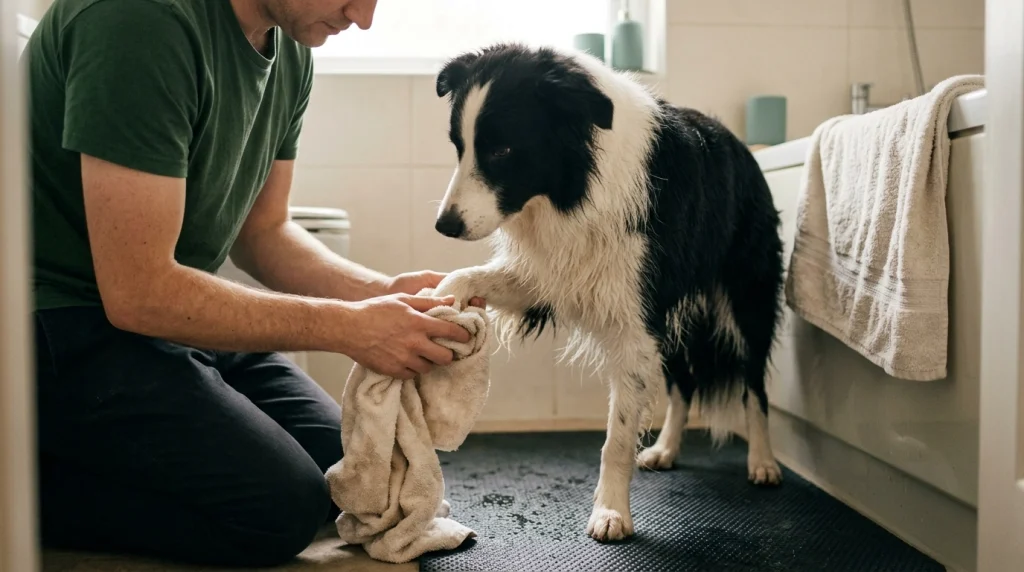
The risk of slipping does not end when the water is turned off. A wet Border Collie’s paws can lose grip on smooth flooring just as the dog steps out of the tub.
Turn off the water, clear the exit route, and guide your dog onto the prepared non-slip surface. Avoid encouraging a jump from a raised tub, especially if the dog is nervous, older, or physically uncomfortable.
Use absorbent towels to blot the coat and dry the paws gently. Keep the bathroom floor clear of water and shampoo, and check that the dog can walk comfortably before allowing it to move away.
Border Collies have a dense double coat, so thorough drying matters beyond the paws. Follow an appropriate grooming routine and use a pet-safe drying method your dog tolerates. If you use a dryer, avoid excessive heat and stop if the sound or sensation causes distress.
Related Product
Non-Slip Dog Bath Mat
A washable, textured dog bath mat with a secure underside can help provide more reliable footing during bathing. Check that it fits your tub and remains stable when wet.
As an Amazon Associate, we earn from qualifying purchases.
Frequently Asked Questions
Can I use a regular bath towel instead of a dog bath mat?
Yes, if the towel lies flat and stays securely in place when wet. Replace it if it bunches or slides. A properly fitted non-slip mat may provide more consistent traction.
Do paw grips or dog boots help in the bathtub?
They are not usually the first solution for bathing. A secure mat directly addresses the slippery tub surface. Boots or paw coverings may fit poorly or become slippery when wet, so do not rely on them without confirming that they are suitable for the situation.
Should I hold my Border Collie still while bathing?
Use calm guidance and gentle support when necessary, but do not force your dog into an unstable position. If it struggles to stand or repeatedly attempts to escape, pause the bath and improve the setup before trying again.
Why does my Border Collie slip only when the bathtub is wet?
A wet, smooth surface can provide less reliable paw traction than ordinary flooring. Soap residue, overgrown nails, excess paw-pad hair, and anxious movements can contribute. If slipping also occurs on dry surfaces, consider a veterinary assessment.
How can I help a Border Collie that is afraid of the bathtub?
Introduce the tub and mat while dry, reward calm exploration, and add water gradually over short sessions. Avoid forcing the dog to remain in the tub when it is frightened. Persistent or severe fear may require help from a qualified, reward-based trainer or veterinary behavior professional.
When should I contact a veterinarian about slipping?
Seek an assessment if your dog continues slipping despite secure footing, limps, shows pain, struggles to rise, or becomes unsteady outside the bathtub. Sudden inability to stand, collapse, or severe coordination problems require urgent veterinary attention.
Conclusion
Improving your Border Collie’s bathtub traction starts with a stable, textured mat and a clean surface. Check the fit of the mat, keep the exit route dry and secure, and inspect your dog’s nails and paw pads for issues that may affect footing.
Just as importantly, make bathing gradual and predictable. Reward relaxed standing, use gentle water pressure, and never force your dog to remain in an unstable or frightening position. If slipping continues despite good traction, or you notice pain, weakness, or coordination changes elsewhere, stop the bath and seek veterinary advice. A secure setup and patient handling can make bath time safer without turning it into a struggle.
