
Is My Female Dog Affected by My Period? What Owners Need to Know

If you’ve noticed your dog sniffing you more, following you into the bathroom, or acting unusually clingy during your period, the short answer is yes: she may be affected by the scent and routine changes that come with menstruation. She is not “understanding” your period the way a person would, but she can absolutely notice that something is different.
That difference is usually about smell, not mystery. Dogs live in a world of scent, and a menstrual cycle can change the odors coming from your body, your clothing, your bedding, and the products you use. Your mood, movement, and routine may also shift, and your dog may react to those changes too.
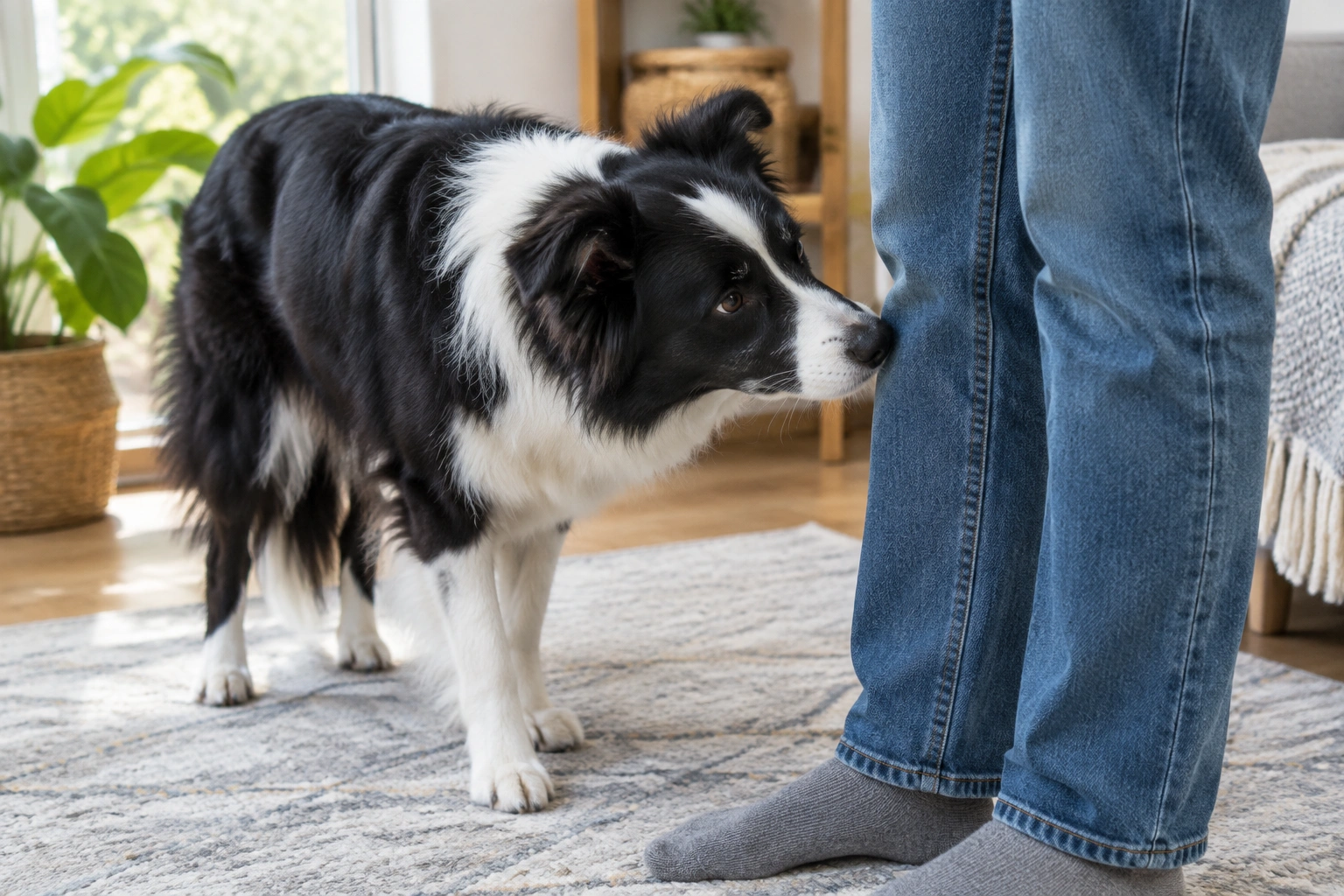
The key is to separate normal curiosity from a real behavior problem. A dog that sniffs, hovers, or becomes a little more attached is usually showing interest, not distress. A dog that becomes fixated, protective, pushy, or impossible to redirect may need management or professional help.
Can a Dog Tell You’re on Your Period?
Yes, a dog can likely tell that something has changed. But she is not detecting “a period” as a human concept. She is picking up on scent, body chemistry, and the small behavior changes that often happen around menstruation.
Dogs have an extraordinary sense of smell, and that matters here. Even if you feel the change is subtle, your dog may notice it immediately. Menstrual blood has a smell, and so do the hormonal shifts and hygiene products associated with it. Those cues can be enough to make a dog more interested in you than usual.
This is why the reaction often looks like sniffing, following, or lingering near the bathroom or bedroom. In most homes, the dog is responding to a cluster of clues, not a single one.
For a broader look at canine scent sensitivity, the American Kennel Club’s overview of dogs’ noses is a useful reference point. It helps explain why a dog may notice what people assume is invisible.
Why Dogs Notice Menstruation: Scent, Hormones, and Routine Changes
A dog’s reaction during your period usually comes from three overlapping sources.
1) Body scent changes
Menstruation changes the smell around your body, especially if there is blood present. That alone can make a dog investigate more closely. Some dogs are drawn to the scent out of simple curiosity; others seem to treat it like any other strong biological odor.
2) Hormonal shifts
Your body’s hormonal profile changes across the menstrual cycle, and dogs may be able to detect those changes through scent. The exact details of what they perceive are not fully pinned down in everyday pet terms, but the practical takeaway is simple: if your body chemistry changes, your dog may notice.
3) Routine and behavior changes
This part gets overlooked. If you move more slowly, rest more, stay in bed longer, or change your bathroom routine, your dog may react to the altered pattern rather than the period itself.
So when a dog becomes clingy during menstruation, the cause may be a mix of scent, body language, and routine disruption rather than one single trigger.
What Behavior Is Normal During a Period?
Most period-related behavior in dogs is mild and manageable. The following responses are usually normal:
- sniffing you more than usual
- following you from room to room
- waiting outside the bathroom
- resting closer to you than usual
- briefly licking your hand or clothing
- seeming curious about pads, tampons, or laundry
A dog can also seem a little more attentive because she senses that you are less energetic or less predictable than usual. That does not automatically mean anxiety or a behavioral issue.
A useful rule: if the behavior is mild, temporary, and easy to interrupt, it is usually not a problem. If you can redirect your dog with a cue, a chew, or a short separation, you are probably dealing with ordinary curiosity.
Male vs. Female Dogs: Do They React Differently?
Both male and female dogs can notice menstrual cues. Sex alone does not determine the reaction.
That said, intact males may sometimes show stronger interest in biological scents in general, especially if they are already scent-focused or have learned that certain smells predict attention. But female dogs can be just as observant, clingy, or intrusive. Temperament matters more than sex in many homes.
A confident, independent dog may barely react. A highly attached dog may shadow you all day. A dog with a strong guarding instinct may seem more watchful. A dog that has learned to seek attention when you are vulnerable or resting may amplify the behavior every month.
So if your female dog seems unusually interested during your period, that is not strange. It is often just a dog being a dog.
Is the Dog Reacting to Blood, Hormones, or Something Else?
Usually, it is not just one thing.
Menstrual blood
Blood can absolutely attract a dog’s attention because it has a strong biological scent. That said, blood is not the only trigger. If your dog is interested in you even when there is no visible blood, scent and hormone changes may be part of the reason.
Hormonal scent changes
This is likely a major factor, especially if your dog behaves differently before bleeding starts or after it tapers off. The dog may be responding to your body chemistry more than the blood itself.
Attention-seeking or learned behavior
If your dog gets extra petting, soothing, or access to you during your period, she may learn that hovering works. In that case, the period is not the root cause; it is the context in which the dog gets rewarded for being close.
Stress or anxiety
Some dogs become more attached when the household feels different. If you are quieter, less active, or emotionally worn down, your dog may respond to that shift. She may not be “worried about your period” so much as reacting to a change in your behavior.
Quick Comparison: Normal Curiosity vs. Concerning Behavior
| Behavior | Most likely explanation | What to do |
|---|---|---|
| Brief sniffing, following, or hovering | Normal scent interest | Redirect and continue as usual |
| Mild clinginess for a day or two | Scent plus routine change | Give structure, then resume normal boundaries |
| Fixation on pads, tampons, or bathroom trash | Strong scent interest or access problem | Block access and improve storage |
| Restlessness, whining, or guarding | Anxiety, learned behavior, or overarousal | Increase structure and monitor pattern |
| Sudden aggression or inability to settle | Not likely period-only behavior | Contact a veterinarian or behaviorist |
The decision point is not whether the dog notices your period. It is whether the behavior stays manageable.
When Period-Related Behavior Is a Problem
Behavior becomes worth addressing when it crosses from curiosity into persistence or stress.
Watch for these signs:
- your dog cannot be redirected
- the behavior escalates every cycle
- she guards you, the bed, or the bathroom
- she becomes frantic around menstrual products
- she whines, paces, or seems agitated for long periods
- she shows sudden aggression or resource guarding
If the behavior is new, intense, or not limited to menstruation, do not assume your period is the whole explanation. A separate anxiety issue, a training gap, or a medical problem may be involved.
This is where a calm, practical response matters more than trying to “teach her a lesson.”
How to Manage a Dog That Hovers, Sniffs, or Gets Clingy
The goal is not to punish interest. It is to make the behavior easy to ignore and easy to redirect.
Use simple barriers first
If your dog keeps following you into the bathroom or hovering near the bed, close the door when possible. A baby gate, crate, or another room can be helpful if your dog is comfortable with it. Barriers work because they reduce rehearsal: the dog cannot keep practicing the same unwanted behavior.
The trade-off is obvious. Barriers are effective, but only if your dog already knows how to settle alone without becoming distressed.
Redirect to a predictable task
A chew, food puzzle, mat cue, or short training session can shift your dog out of investigative mode. The trick is to offer the replacement behavior before she becomes fixated.
For example: if she starts sniffing and circling, ask for a place cue, then reward calm settling. If she follows you from room to room, give her a job that keeps her occupied for a few minutes.
A few more concrete options:
– send her to her bed or mat and reward her for staying there
– give her a stuffed Kong or other long-lasting chew
– place her in another room with a closed door or baby gate for a short reset
– use a leash indoors for a few minutes if she keeps shadowing you
Keep your response boring
Avoid turning the behavior into a big event. If you repeatedly push your dog away, scold her, or react strongly, you may accidentally make the situation more interesting. Calm, consistent boundaries usually work better than emotional corrections.
Maintain normal structure where possible
Dogs often relax when the household rhythm stays predictable. Feed, walk, and rest on a normal schedule if you can. If your own energy is lower, keep the dog’s routine steady so she has fewer reasons to hover.
Hygiene and Privacy Tips to Reduce Attention
A little management goes a long way.
Store menstrual products in a closed cabinet, bin, or drawer rather than leaving them accessible. Use a bathroom trash can with a lid if your dog likes to investigate. Keep used products out of reach immediately, especially if your dog is the type to steal tissues, socks, or other scented items.
If your dog is especially interested in laundry, do not leave soiled clothes where she can reach them. That is less about shame and more about controlling a strong scent cue.
If you want a practical comparison: closing the bathroom door helps with privacy, but storing products securely helps with prevention. The first blocks access in the moment; the second removes the temptation entirely.
For households with a dog who is already prone to mouthy curiosity, this kind of management is worth being strict about. It is much easier than trying to fix a habit after it starts.
Period Behavior vs. Pregnancy or Ovulation: Why the Reactions Can Look Similar
Dogs can react to different reproductive scent cues in similar ways. That is why owners sometimes overread the behavior.
A dog that becomes more attentive during menstruation may show a pattern that looks a little like what people describe during ovulation or pregnancy. But the dog is not diagnosing anything. She is responding to scent and body changes that may share overlapping features.
That means two important things:
- A dog’s interest during your period does not mean she “knows” what phase you are in.
- Similar behavior can happen for different reasons, so don’t build a theory around one month of sniffing or clinginess.
If the pattern only appears during menstruation, it is likely tied to those specific cues. If it shows up in other contexts too, the dog may simply be highly alert to body changes, stress, or attention patterns.
When to See a Veterinarian or Certified Trainer
Seek help if the behavior is extreme, sudden, or hard to interrupt.
A veterinarian can help rule out pain, anxiety, or other medical issues if the change is abrupt. A certified trainer or behavior professional can help if the dog is guarding, overaroused, or stuck in a monthly pattern that is becoming disruptive.
Professional input is especially useful if:
- the dog becomes aggressive around you or your belongings
- the behavior starts suddenly and continues outside your period
- she cannot relax even with barriers and redirection
- she fixates on menstrual products or bathroom access
- the behavior is getting worse from cycle to cycle
If the issue is mild, you probably do not need a formal intervention. If it is escalating, do not wait for it to “just pass.”
FAQ
Can a female dog smell your period?
Yes, she may be able to smell the scent changes linked to menstruation, including blood and hormonal shifts.
Why does my dog follow me more when I’m on my period?
She may be reacting to scent changes, your altered routine, or the fact that you are moving and behaving differently.
Is my dog being protective or just curious?
If she is simply sniffing or hovering, curiosity is more likely. Guarding, restlessness, or aggression suggests something more than curiosity.
Should I let my dog sniff menstrual blood?
A brief sniff is usually harmless, but you should still manage access to used products and keep hygiene boundaries in place.
Do male dogs react more strongly than female dogs?
Sometimes, but not always. Temperament, training, and learned behavior matter more than sex alone.
Why does my dog act clingy only during my period?
That pattern often points to scent changes plus routine changes. If the clinginess is intense, note whether it happens at other times too.
When should I worry?
Worry when the behavior is sudden, aggressive, obsessive, or impossible to redirect. That is when a veterinarian or certified trainer is the right next step.
The bottom line is simple: your dog is probably reacting to scent and routine cues, not “understanding” menstruation. Mild curiosity is normal. Escalating behavior is the part worth managing.
