

Keeping a Border Collie warm after a bath takes more than wiping the surface of the coat. Their dense double coat can feel dry on top while moisture remains close to the skin.
I’ve found that the few minutes after rinsing matter most. A good towel routine and patient drying make bath day much more comfortable for a Border Collie dog.
In This Guide
- Why Does a Border Collie Get Cold After a Bath?
- How Do I Keep My Border Collie Warm Right After a Bath?
- What Is the Safest Way to Dry a Border Collie’s Double Coat?
- Should I Use a Hair Dryer on a Border Collie?
- How Can I Keep a Border Collie Warm After a Winter Bath?
- What Signs Mean My Border Collie Is Too Cold?
- What Post-Bath Mistakes Can Make a Border Collie Colder?
- How Long Should a Border Collie Stay Inside After a Bath?
- Frequently Asked Questions
Why Does a Border Collie Get Cold After a Bath?
A Border Collie can feel cold after bathing because water remains trapped throughout the coat. Evaporation then removes heat while the wet hair stays against the body.
The effect becomes more noticeable in a cool room, near a fan, or when your dog goes outside before drying.
The double coat holds more water than it appears to
Most Border Collies have a double coat. This means they have protective outer hairs plus a softer, denser layer underneath.
Rough-coated Border Collies usually carry more feathering around the chest, legs, belly, and tail. Smooth-coated dogs have shorter hair, but moisture can still remain in the undercoat.
Definition: Post-bath warming means removing moisture while keeping your Border Collie in a comfortable environment until the coat and skin are dry. The goal isn’t to make the dog hot. It’s to prevent prolonged chilling from a wet coat.
Wet fur changes how well the coat insulates
A clean, dry coat helps trap insulating air. Once saturated, that same coat cannot perform the job in exactly the same way.
This is why I don’t judge dryness by looking at the back alone. I use my fingers to check underneath the coat around the chest, belly, and hindquarters.
How Do I Keep My Border Collie Warm Right After a Bath?
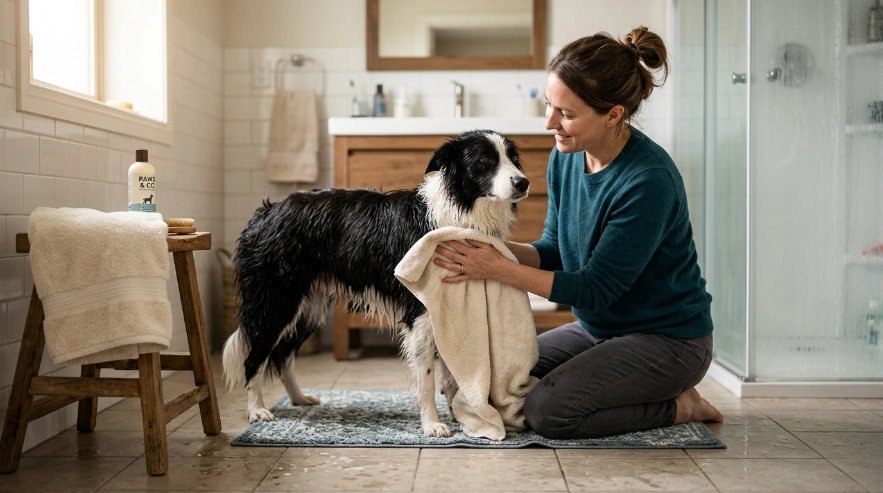
Start warming your Border Collie as soon as the final rinse ends. Your first goal is moisture removal, not adding intense heat.
The ASPCA’s dog grooming guidance recommends lukewarm bath water and thorough towel drying.
1. Let your dog shake first
Before reaching for a towel, give your Border Collie a moment to shake naturally. That first shake can remove a surprising amount of surface water.
I usually keep the bathroom door closed for this step. It saves the walls outside the room from getting sprayed.
2. Press water out with absorbent towels
Use one large towel first, then switch to a dry towel when the first becomes soaked. For a thick rough coat, having two or three towels ready makes the job easier.
- Back and sides: Press firmly without rough scrubbing.
- Chest: Blot through the thicker feathering.
- Belly: Dry gently because this area can stay damp.
- Legs and paws: Squeeze each section softly with the towel.
- Tail: Work from the base toward the end.
3. Move to a warm, draft-free room
Don’t leave a freshly bathed Border Collie beside an open door, air conditioner, or strong fan. Moving air speeds evaporation and can make a damp dog uncomfortable.
A normal indoor room where your dog can relax is usually better. Put a dry towel or washable dog bed underneath them.
4. Finish drying the undercoat
If towel drying leaves the coat damp, use controlled airflow. Keep the dryer moving so one patch of skin isn’t exposed continuously.
Stop periodically and check the skin with your hand. Comfortable airflow should never feel painfully hot.
What Is the Safest Way to Dry a Border Collie’s Double Coat?
The safest drying method depends on coat thickness, room conditions, and how comfortable your Border Collie is around a dryer. Towels followed by gentle airflow work well for many dogs.
Here’s how the main methods compare.
| Drying Method | Best Use | Key Safety Point | Main Limitation |
|---|---|---|---|
| Absorbent towels | Initial moisture removal | Press and blot instead of aggressive rubbing | May not fully dry a dense undercoat |
| Low/cool blow dryer | Finishing a damp coat | Keep moving and roughly 12 inches away | Noise can worry sensitive dogs |
| High-velocity dog dryer | Thick rough coats and heavy undercoat | Begin with lower airflow and avoid the face | Requires gradual noise training |
| Warm-room air drying | Final traces of moisture | Keep the dog indoors and away from drafts | Slowest option for a thick coat |
Work in layers instead of drying only the surface
Part the coat with your fingers while drying. Aim the airflow through the hair instead of holding it against one spot.
Pay special attention to areas where fur overlaps. Behind the ears, under the front legs, and around the tail can stay moist long after the back looks dry.
Brush after the coat is mostly dry
A gentle brush can separate the hairs and help you find damp patches. Don’t force a brush through wet knots or mats.
For my own routine, I do the final brush only when the coat feels close to dry. That keeps the process calmer and reduces tugging.
Should I Use a Hair Dryer on a Border Collie?
Yes, you can use a dryer if your Border Collie tolerates it. The important parts are low heat, safe distance, constant movement, and gradual introduction.
High heat isn’t necessary. More heat can increase the risk of skin discomfort or burns.
Use a low or cool setting
Start with the least intense setting that moves air through the coat. Keep a household dryer around a foot from your dog’s body and move it continuously.
- Never concentrate hot airflow on one patch of skin.
- Avoid blowing directly into the eyes, nose, or ears.
- Check the skin frequently with your hand.
- Stop if your dog becomes frightened or tries to escape.
- Use towels longer if dryer noise causes significant stress.
Introduce dryer noise gradually
Border Collies notice sounds and movement quickly. A powerful dryer switched on beside the dog can turn drying into a fight.
I prefer starting the dryer several feet away and rewarding calm behavior. Then I gradually bring the airflow closer over several short sessions.
How Can I Keep a Border Collie Warm After a Winter Bath?
Winter baths need more planning because cold air and a wet double coat are a poor combination. Bathe indoors, dry thoroughly, and delay outdoor time until the undercoat is dry.
The AVMA’s cold-weather pet safety guidance notes that dogs can be vulnerable to hypothermia and frostbite during cold conditions.
Prepare the room before starting
Close windows and remove strong drafts before your Border Collie gets wet. Have towels, dryer, brush, and treats within reach.
This sounds simple, but it prevents the awkward moment when your soaking-wet dog follows you through a cold house while you search for another towel.
Schedule winter baths strategically
If possible, bathe earlier in the day. That gives you more time to confirm complete drying before the evening temperature drops.
- Finish walks and outdoor play before the bath.
- Use lukewarm rather than hot water.
- Prepare at least two dry towels.
- Keep your dog indoors during drying.
- Do the final undercoat check before another outdoor trip.
Be more cautious with vulnerable dogs
Puppies, senior dogs, very lean dogs, and dogs with health problems may have less tolerance for cold conditions. Give these dogs extra attention after bathing.
Vet note: If your Border Collie has a medical condition that affects temperature regulation, mobility, circulation, or general health, ask your veterinarian about the safest bathing routine.
What Signs Mean My Border Collie Is Too Cold?
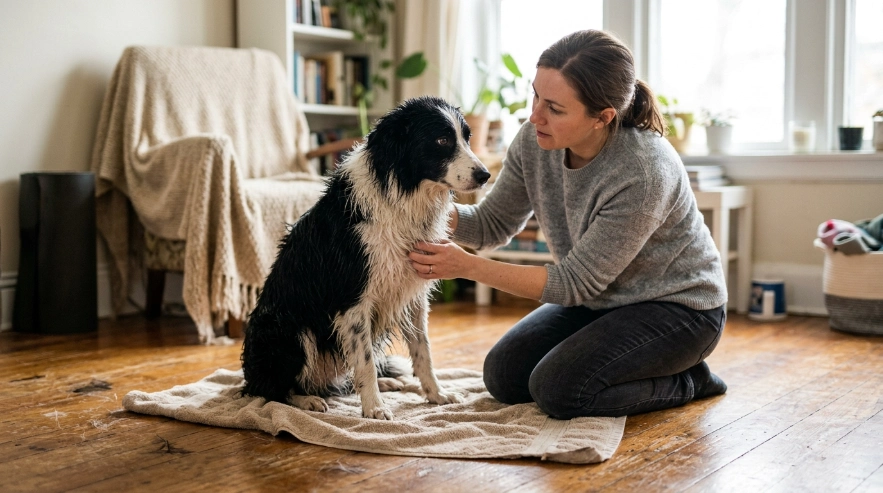
Shivering is an obvious sign that your Border Collie may be cold, but behavior changes can matter too. A dog that becomes unusually weak, stiff, confused, or unresponsive needs more attention.
Don’t assume a thick coat makes hypothermia impossible. A wet dog exposed to cold or wind can lose heat faster than a dry dog.
Watch for these warning signs
- Persistent shivering: Shaking continues even after your dog moves into a warmer environment.
- Lethargy: Your normally active Border Collie becomes unusually quiet or weak.
- Stiff movement: Walking looks slow, awkward, or unusually rigid.
- Confusion: Your dog seems dazed or has difficulty responding normally.
- Pale gums: Gum color looks noticeably paler than usual.
- Collapse: Your dog cannot stand or loses responsiveness.
PetMD’s veterinary overview of hypothermia in dogs lists shivering, lethargy, muscle stiffness, disorientation, pale gums, and collapse among possible signs as body temperature falls.
Vet note: Severe shivering, weakness, confusion, collapse, abnormal breathing, or poor responsiveness after cold exposure warrants prompt veterinary attention. Don’t rely on home warming alone when your dog appears seriously unwell.
What Post-Bath Mistakes Can Make a Border Collie Colder?
Most post-bath problems come from stopping the drying process too early. The outer coat can look fluffy while the undercoat remains damp.
Avoid these common mistakes.
- Going outside too soon: Wind and cold air can chill a coat that still holds water.
- Using one soaked towel: Once the towel is saturated, it removes far less moisture.
- Drying only the back: The belly, chest, armpits, legs, and tail often stay damp longer.
- Using maximum dryer heat: Hotter isn’t better and can make the skin uncomfortable.
- Leaving the dog beside a fan: Strong cool airflow can make a damp dog feel colder.
- Putting clothing over wet fur: A sweater can trap moisture instead of solving the problem.
- Rubbing rough-coated fur aggressively: Vigorous towel rubbing can encourage tangles.
Don’t use direct heating devices as a shortcut
A heating pad, space heater, or very hot dryer isn’t a substitute for proper drying. Direct heat can create burns before you realize the skin is getting too hot.
If your Border Collie seems cold, use dry towels and a comfortable indoor environment. Seek veterinary advice if concerning signs continue.
How Long Should a Border Collie Stay Inside After a Bath?
Keep your Border Collie inside until the skin and undercoat feel dry, rather than relying on a fixed number of minutes. Drying time varies with coat type, humidity, towel quality, and dryer use.
A rough-coated Border Collie usually takes more work than a smooth-coated dog because longer feathering can hold additional water.
Use a four-point dryness check
Before opening the door, run your fingers down through the coat to the skin. Don’t judge dryness only by touching the hair tips.
- Chest: Separate the thick front feathering and feel near the skin.
- Belly and armpits: Check underneath the body where airflow may be limited.
- Hindquarters: Feel around the dense fur on the rear legs.
- Tail base: Check where several layers of coat overlap.
If those areas still feel cool and damp, continue drying indoors. Give the process more time on cold or wet days.
Don’t confuse a cool coat with a cold dog
Fur can sometimes feel slightly cool during evaporation without your Border Collie being dangerously chilled. Look at the whole dog, including behavior, movement, and comfort.
A relaxed dog resting normally is different from one that is trembling, weak, or acting confused.
Frequently Asked Questions
Can a Border Collie get cold after a bath?
Yes. A Border Collie’s double coat can hold moisture close to the skin after bathing. Keep your dog indoors, remove water with absorbent towels, and dry the undercoat before exposure to cold air or wind.
Should I put a sweater on my Border Collie after a bath?
Not while the coat is still wet. Clothing can trap moisture against the fur. Dry your Border Collie first, then consider appropriate outdoor protection if weather conditions and your dog’s individual cold tolerance make it useful.
Can I let my Border Collie air dry?
You can finish drying in a warm indoor room, but air drying alone may take a long time with a thick rough coat. Towel drying first removes much of the water and reduces the amount left in the undercoat.
Can I use a human hair dryer on my Border Collie?
Yes, if it has a low or cool setting. Keep it moving, hold it roughly a foot away, and regularly check your dog’s skin. Stop if the airflow feels hot or your dog becomes distressed.
Why is my Border Collie shivering after a bath?
Shivering may mean your dog feels cold, particularly if the coat is still wet or the room is chilly. Move your dog somewhere warm and dry them thoroughly. Persistent shivering with weakness, confusion, or other abnormal behavior deserves veterinary attention.
Which parts of a Border Collie take longest to dry?
The chest, belly, armpits, hind-leg feathering, behind the ears, and tail base commonly hold hidden moisture. Run your fingers through these areas to the skin before deciding that your Border Collie is fully dry.
Is a Border Collie’s double coat enough to prevent getting cold?
A dry double coat provides useful insulation, but it doesn’t make a dog immune to cold. Wet fur, wind, temperature, age, health, and individual tolerance all affect how comfortable your Border Collie remains.
The main takeaway is simple: remove water quickly, avoid intense heat, and don’t let a damp Border Collie head straight into cold air.
As of 2026, that’s still the routine I prefer because it is simple and easy to repeat. Keep a few dry towels ready, check the undercoat with your fingers, and let your dog’s comfort determine when bath time is truly finished.
