
What Is the Most Difficult Age for a Border Collie?

Quick Answer
For many Border Collies, the most difficult age is adolescence, roughly 6 to 18 months. I often find the 8-to-14-month stretch feels hardest because energy, independence, herding drive, and distraction can all rise at once. The Border Collie’s working temperament makes consistent training especially important during this stage.
What owners often notice
- Selective hearing: A cue that seemed reliable at five months may suddenly lose against an exciting distraction.
- More independence: Young Border Collies become confident enough to explore farther and make their own choices.
- Intense energy: Physical stamina grows faster than self-control, creating a dog that can stay busy for hours.
- Herding behavior: Chasing, staring, circling, and controlling movement can become more obvious during adolescence.
- Boundary testing: Jumping, barking, pulling, chewing, or ignoring household rules may temporarily increase.
What helps most
- Keep training short, reward heavily, manage freedom carefully, and combine physical activity with daily mental work.
Living with a young Border Collie can feel like watching a brilliant student discover that rules are optional. One week your dog looks beautifully trained, and the next week every bird, bicycle, and blowing leaf seems more interesting than you.
That change is usually part of growing up. This guide explains when the difficult stage happens, why it feels so intense, and how to help your Border Collie reach adulthood without turning every walk into a negotiation.
In This Guide
- What age is hardest for a Border Collie?
- Why is Border Collie adolescence so difficult?
- Border Collie difficult stages by age
- What problems are common during the teenage stage?
- How do you handle an adolescent Border Collie?
- Does more exercise solve teenage behavior?
- When is difficult behavior more than adolescence?
- When do Border Collies become easier?
- Frequently asked questions
What Age Is Hardest for a Border Collie?
The adolescent period is usually the hardest stage. For most owners, challenges become noticeable somewhere between 6 and 18 months, although individual dogs mature at different speeds.
The American Kennel Club describes canine adolescence as a period that may begin around eight months and continue until roughly two years. Dogs can become more independent, exploratory, and difficult to manage during this stage.
Border Collies can make adolescence feel especially dramatic. They combine intelligence, speed, stamina, sensitivity, and generations of working instinct.
- 6-9 months: Independence starts increasing, while impulse control remains weak.
- 9-14 months: This is often the stage I find owners struggle with most.
- 14-18 months: Training often starts feeling more stable, although maturity is still developing.
- 18-24 months: Many dogs become more predictable if their earlier training has been consistent.
A young Border Collie isn’t necessarily becoming disobedient. The environment has simply become far more rewarding and interesting.
The practical rule I use is simple: when a young Border Collie suddenly looks stubborn, I lower the distraction before increasing the training pressure. That keeps learning productive instead of turning each session into a battle.
Why Is Border Collie Adolescence So Difficult?
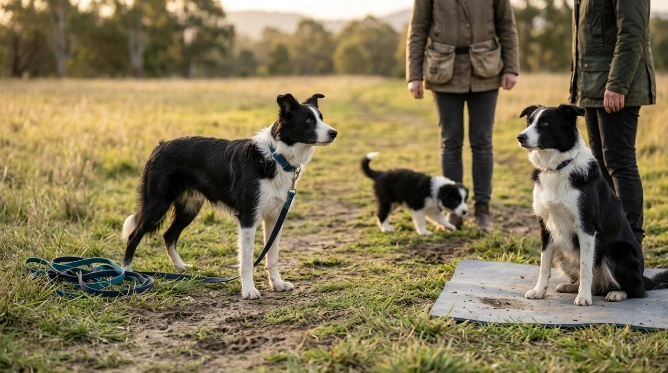
Adolescence combines a growing body with an unfinished ability to control impulses. Your Border Collie may be physically capable of much more than they are mentally prepared to manage.
Definition: A Border Collie’s adolescent stage is the developmental period between puppyhood and mature adulthood when independence, exploration, social behavior, and responses to distractions can change quickly.
Their working brain never switches off automatically
Border Collies were developed to notice movement and react to it. A teenage dog may lock onto runners, livestock, cars, children, shadows, or another dog’s movement before you have time to redirect them.
That attention can look obsessive to an unprepared owner. It makes more sense when you understand the breed’s herding background.
Confidence can arrive before self-control
A small puppy often stays close because the world feels unfamiliar. An adolescent dog starts believing they can investigate that world without your help.
This is one reason recall can suddenly look weaker. The AKC’s guidance on adolescent puppies also notes that growing dogs often explore beyond their previous comfort zone.
- Smells become harder to leave.
- Other dogs become more interesting.
- Movement triggers stronger attention.
- Previously easy environments become distracting.
Don’t assume your previous training was wasted. Your dog may simply need to relearn those skills around stronger distractions.
Border Collie Difficult Stages by Age
Not every Border Collie follows the same timetable. Still, knowing the common stages helps you separate normal development from a genuine behavior problem.
| Age | Common challenge | Training priority |
|---|---|---|
| 8-12 weeks | Toileting, mouthing, settling, nighttime waking | Routine, safe socialization, name response |
| 3-5 months | Chewing, excitement, short attention span | Recall, calmness, handling, basic cues |
| 6-9 months | Distraction, pulling, growing independence | Impulse control and managed freedom |
| 9-14 months | Peak teenage behavior for many owners | Consistency, recall, settling, structured outlets |
| 15-18 months | High stamina with improving control | Generalize training to harder environments |
| 18-24 months | Remaining adolescent habits | Maintain routines and advanced skills |
The puppy stage is demanding because everything is new. Adolescence often feels harder because owners naturally expect more from a dog that now looks almost adult.
Appearance can be misleading. A 12-month-old Border Collie may have an adult-sized body while still needing plenty of guidance.
What Problems Are Common During the Teenage Stage?
Adolescent Border Collies can develop several frustrating behaviors at once. Most become easier when you prevent repeated mistakes and reward the behavior you want.
Recall suddenly gets worse
A dog that raced back to you as a puppy may start weighing their options. Don’t keep testing unreliable recall in places where failure could become dangerous.
Use a long line where appropriate and reward generously. Build difficulty gradually instead of jumping from the garden to a wildlife-filled field.
Herding and chasing become stronger
Movement can trigger staring, stalking, circling, or chasing. Joggers, bicycles, children, and vehicles can therefore become powerful distractions.
- Interrupt fixation before the chase starts.
- Reward your dog for checking back with you.
- Use distance from difficult triggers.
- Provide safer outlets for controlled movement and problem-solving.
They struggle to settle
Some owners respond to restless behavior by adding more exercise. That can accidentally create an athlete who still hasn’t learned how to relax.
Settling is a skill. Reward calm behavior on a bed or mat instead of waiting for exhaustion to do the job.
Barking and frustration increase
A clever adolescent may bark when access to something is blocked. Others bark when bored, overstimulated, or expecting activity.
Look at what happens immediately before the barking. Changing that pattern is more useful than repeatedly telling your dog to stop.
How Do You Handle an Adolescent Border Collie?
The answer isn’t harsher discipline. Young Border Collies usually need clearer routines, better management, and more practice around realistic distractions.
1. Reduce freedom temporarily
Freedom should match reliability. If your dog starts rehearsing chasing, counter-surfing, destructive chewing, or ignoring recall, tighten management for a while.
- Use baby gates indoors.
- Keep tempting items out of reach.
- Use a lead or long line where needed.
- Supervise high-risk situations.
2. Keep training sessions short
Five focused minutes can beat 30 frustrating minutes. Stop while your dog is still engaged and successful.
Mix easy behaviors with newer ones. That keeps confidence high without making the session boring.
3. Pay well for difficult choices
Coming away from another dog is harder than sitting in your kitchen. Your rewards should reflect that difference.
Food, toys, permission to sniff, and access to play can all become useful rewards. Use what your individual dog values.
4. Continue calm social experiences
Socialization doesn’t mean forcing interaction. It means helping your Border Collie remain comfortable around normal people, animals, sounds, surfaces, and environments.
The ASPCA’s socialization guidance emphasizes allowing dogs to progress at a comfortable pace rather than forcing frightening encounters.
Section Takeaway: Adolescence gets easier when you manage the environment instead of repeatedly testing a young dog’s self-control. Reward the choices you want repeated.
Does More Exercise Solve Teenage Border Collie Behavior?
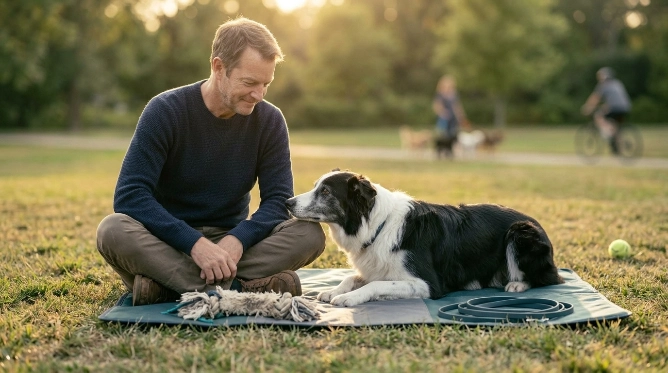
More exercise alone is not the solution. Border Collies need physical activity, but they also need mental work, recovery, sleep, and the ability to switch off.
Trying to physically exhaust a healthy adolescent every day can become a losing contest. As fitness improves, the dog may simply become capable of doing more.
Combine movement with thinking
A balanced day can include several different forms of activity. Rotate them instead of relying on nonstop running.
- Sniff walks: Let your dog investigate scents rather than marching constantly.
- Recall games: Practice short, rewarding repetitions in controlled areas.
- Food puzzles: Turn part of a meal into problem-solving work.
- Trick training: Use five-to-ten-minute sessions to challenge the brain.
- Structured play: Tug or fetch can include starts, stops, drops, and calm breaks.
- Rest practice: Teach your dog that nothing happening is also normal.
Avoid creating constant stimulation
A Border Collie doesn’t need entertainment every waking minute. Dogs that always expect action can struggle when family life becomes quiet.
I like alternating engagement with intentional downtime. A training game followed by a chew and a nap teaches a useful rhythm.
Growing dogs also need age-appropriate activity. Avoid turning an immature Border Collie into a long-distance endurance partner without veterinary guidance.
Vet note: Your veterinarian can help you choose exercise that suits your dog’s age, growth, health, and individual condition.
When Is Difficult Behavior More Than Adolescence?
Adolescence can explain distraction and boundary testing, but it shouldn’t become an excuse for every behavioral change. Sudden or severe changes deserve closer attention.
VCA’s guidance on the puppy teenage phase also recommends positive reinforcement and veterinary attention when changes suggest something more than ordinary development.
Get professional help if you notice:
- Sudden aggression that wasn’t previously present
- Repeated lunging or biting with increasing intensity
- Extreme fear that interferes with normal daily life
- Resource guarding that is becoming more serious
- Persistent pacing or inability to settle
- Major appetite or sleep changes
- Sudden house-training regression
- Pain, limping, sensitivity, or reluctance to move
Start with your veterinarian when a behavior change appears suddenly. Pain and other medical problems can affect how a dog behaves.
For training or behavior problems, look for a qualified professional who uses reward-based methods. Getting help early can prevent an adolescent habit from becoming a long-standing pattern.
Vet note: Behavioral changes can sometimes have medical causes, so speak with your veterinarian when a change is sudden, severe, or unusual for your dog.
When Do Border Collies Become Easier?
Many Border Collies become noticeably more manageable between 18 and 24 months, but maturity isn’t a switch that flips on a birthday. Training history, genetics, lifestyle, and individual temperament all matter.
PetMD also notes that dogs can remain socially immature during the 12-to-18-month period. That fits what many owners experience with energetic working breeds.
Calmer doesn’t mean low-energy
An adult Border Collie can still need substantial activity and mental engagement. Maturity usually improves judgment and emotional control rather than removing working drive.
A well-trained adult often becomes easier because they understand household routines. They’ve also had hundreds of repetitions of the behaviors you expect.
Look for progress, not perfection
Improvement may appear gradually. You might first notice that your dog recovers from excitement faster or checks in without being asked.
- Recall becomes more dependable.
- Settling takes less time.
- Distractions become easier to leave.
- Frustration produces less barking or grabbing.
- Training works in more locations.
Those small changes matter. They show that your Border Collie is learning emotional control, not simply collecting obedience cues.
Section Takeaway: Most Border Collies don’t lose their energy as they mature. What improves is their ability to focus, recover, settle, and make better choices.
Frequently Asked Questions
Are Border Collies difficult puppies?
Border Collie puppies can be demanding because they learn quickly, notice movement, and need consistent mental engagement. Puppy mouthing, toilet training, chewing, and excitement are normal challenges, but adolescence often feels harder because the dog becomes faster, stronger, and more independent.
Is 6 months a difficult age for a Border Collie?
Six months can mark the beginning of a more challenging stage. Many Border Collies become increasingly distracted and independent from this point, so recall practice, impulse control, calm routines, and sensible management become especially valuable.
Why is my 1-year-old Border Collie suddenly ignoring me?
A one-year-old Border Collie may be deep in adolescence. Environmental distractions can become more rewarding than familiar cues, so temporarily lower the difficulty, use stronger rewards, and practice the behavior in gradually more challenging places.
At what age does a Border Collie stop being a puppy?
Physical growth and behavioral maturity don’t finish at exactly the same time. A Border Collie may look adult around a year old while still showing adolescent behavior into the 18-to-24-month range.
Do Border Collies calm down after two years?
Many become more emotionally steady as they approach adulthood, especially with consistent training. However, Border Collies remain active working dogs, so “calm” usually means better self-control rather than suddenly becoming low-energy.
Is the teenage phase worse in male or female Border Collies?
There isn’t a reliable rule that one sex is always harder. Genetics, temperament, training, environment, maturity, and individual hormonal development can create larger differences than sex alone.
Should I exercise my difficult Border Collie more?
Exercise can help, but simply adding more running isn’t always useful. Combine age-appropriate movement with sniffing, problem-solving, training, structured play, sleep, and deliberate calm time so your dog learns both activity and relaxation.
The most difficult age for a Border Collie is usually adolescence, especially somewhere within the 6-to-18-month period. If the 8-to-14-month stretch feels harder than puppyhood, that doesn’t mean your training has failed.
Keep expectations realistic and protect the habits you’re building. Consistent reward-based training, sensible management, mental enrichment, and enough rest can turn that chaotic teenager into a remarkably capable adult.
