

Quick Answer
Over bathing a Border Collie can dry and irritate the skin, especially when strong shampoo or repeated washing removes too much natural oil. A healthy Border Collie usually needs a full shampoo bath when the coat is genuinely dirty, oily, or smelly rather than on an aggressive schedule; you can also review general AKC dog-care guidance when building a grooming routine.
Possible Signs of Over Bathing
- Dry skin: Flakes or a rough skin surface may appear after frequent shampooing.
- More itching: Your dog may scratch, lick, or nibble the coat more than usual.
- Dull coat: The outer coat may lose some of its normal smoothness and shine.
- Skin redness: Irritation may appear around sensitive areas such as the belly or armpits.
- Coat changes: Repeated harsh washing can leave the double coat feeling dry or difficult to manage.
What to Do
- Pause unnecessary shampoo baths, use a mild dog-specific product when bathing is needed, and contact your veterinarian if irritation continues.
If you’re worried about over bathing your Border Collie, you’re usually dealing with one of two problems. Either your dog is being shampooed too often, or the bathing method is irritating a naturally protective coat and skin barrier.
Border Collies are working sheepdogs with dense double coats built for outdoor conditions. In this guide, I’ll explain what over-bathing looks like, how often bathing may be reasonable, and what to do when the skin starts reacting.
In This Guide
- What Does Over Bathing a Border Collie Mean?
- What Are the Signs You Are Bathing a Border Collie Too Often?
- How Often Should You Bathe a Border Collie?
- Why Does Frequent Bathing Affect a Border Collie’s Double Coat?
- How Do You Bathe a Border Collie Without Drying the Skin?
- What Should You Do When Your Border Collie Gets Dirty Between Baths?
- When Does a Skin Problem Need a Veterinarian?
- A Practical Border Collie Bathing and Grooming Routine
- Frequently Asked Questions
What Does Over Bathing a Border Collie Mean?
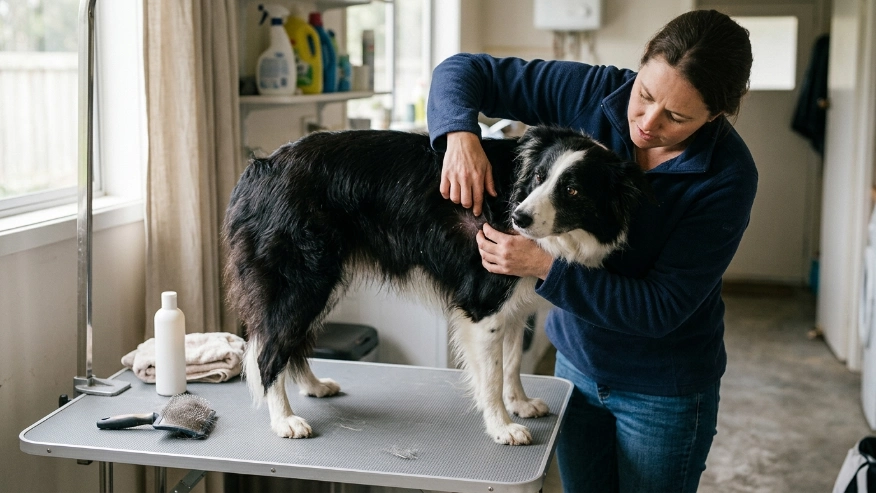
Over bathing means washing a dog often enough, or harshly enough, that bathing starts disturbing the skin and coat instead of helping them. The exact number of baths that causes trouble varies between dogs.
A Border Collie’s skin produces oils that help support the skin surface and condition the hair. Shampoo removes dirt and excess oil, but it can also remove more oil than necessary.
Definition: A Border Collie’s double coat consists of a softer insulating undercoat beneath protective outer guard hairs. Over-bathing is repeated washing that leaves the skin or this coat noticeably dry, irritated, or difficult to maintain.
Frequency isn’t the only issue
Two Border Collies can follow the same bathing calendar and react differently. Product strength, water temperature, rinsing, drying, allergies, and existing skin disease all matter.
For example, a gentle bath after a dog rolls in something filthy isn’t automatically harmful. Shampooing every few days because of normal outdoor dust can be a different story.
- Too much shampoo: Using more product doesn’t necessarily clean better.
- Harsh formulas: Strong degreasers or products made for people can irritate canine skin.
- Hot water: Excessively hot water may make dry or sensitive skin feel worse.
- Poor rinsing: Shampoo residue can remain against the skin and cause irritation.
- Incomplete drying: Moisture trapped deep in a thick coat can create skin problems of its own.
That’s why I judge the dog in front of me rather than relying only on a calendar. Coat condition and skin comfort matter more than chasing a perfect bathing number.
What Are the Signs You Are Bathing a Border Collie Too Often?
The most useful clue is a change after bathing. If itching, dryness, or coat problems repeatedly appear after shampoo days, your routine deserves a closer look.
Common warning signs
- Flaky skin: Small dry flakes may become visible when you part the coat.
- Frequent scratching: Your Border Collie scratches more after being washed.
- Licking or chewing: The dog repeatedly works at paws, legs, belly, or flanks.
- Red patches: Sensitive skin may look pinker or more inflamed than normal.
- Dry coat: Guard hairs may feel coarse instead of smooth.
- Static or tangling: A dry coat can become harder to brush comfortably.
Don’t assume bathing is always the cause. Fleas, environmental allergies, infections, parasites, and other skin conditions can produce similar signs.
*Vet note: Persistent itching, redness, hair loss, sores, or skin pain should be assessed by your veterinarian rather than treated only by changing bath frequency.*
Watch the timing
I pay attention to what happens during the first day or two after a bath. A pattern is more useful than a single scratching episode.
If your dog seems comfortable before bathing but repeatedly becomes itchy afterward, examine the shampoo, rinsing, drying, and frequency together.
How Often Should You Bathe a Border Collie?
There isn’t one medically required bathing interval for every healthy Border Collie. Many healthy adults can be bathed primarily when they’re dirty, oily, or developing a noticeable doggy odor.
For an average companion Border Collie, a rough starting range of about every 6–12 weeks can be practical. Treat that as a grooming guideline, not a veterinary rule.
| Situation | Practical Bathing Approach | What Matters Most |
|---|---|---|
| Mostly indoor healthy adult | Often around 6–12 weeks or as needed | Coat smell, dirt, skin condition |
| Active farm or trail dog | As needed after significant mud or contamination | Use spot cleaning when possible |
| Dog that swims often | Rinse when needed; shampoo only when necessary | Rinse debris and dry the undercoat |
| Puppy | Bathe only when needed using a puppy-appropriate product | Warmth, gentle handling, complete drying |
| Dog using medicated shampoo | Follow the veterinarian’s schedule | Treatment instructions override general grooming advice |
Bathing more often isn’t always over-bathing
A muddy working Border Collie may need cleaning sooner than a dog that spends most days indoors. Context matters.
A veterinarian may also prescribe medicated bathing several times within a short period. That doesn’t count as careless over-bathing when it’s part of a treatment plan.
*Vet note: If your Border Collie has a diagnosed skin condition, follow your veterinarian’s bathing frequency instead of a general schedule from the internet.*
Why Does Frequent Bathing Affect a Border Collie’s Double Coat?
Border Collies have a weather-resistant double coat, whether the dog has a rough or smoother coat. The soft undercoat and tougher outer hairs perform different jobs.
Frequent shampooing doesn’t permanently “destroy” a healthy double coat after one extra bath. Problems are more likely when repeated washing is combined with harsh products, poor rinsing, or excessive heat.
The coat needs careful rinsing and drying
A dense undercoat holds water much longer than short single-layer fur. That makes technique especially important.
- Wet thoroughly: Water needs to reach through the outer coat to the skin.
- Use less product: Dilute shampoo if the manufacturer’s instructions allow it.
- Rinse longer: Work through the coat until no slippery residue remains.
- Blot first: Press with absorbent towels rather than aggressively rubbing the hair.
- Dry the undercoat: Keep your Border Collie warm and make sure dense areas don’t remain damp.
Don’t confuse shedding with coat damage
Border Collies naturally shed, with heavier coat changes often occurring seasonally. A bath can loosen dead undercoat, making shedding look dramatic afterward.
That doesn’t automatically mean you’ve harmed the coat. Look for skin irritation, breakage, bald patches, or persistent discomfort before blaming normal loose hair on bathing.
How Do You Bathe a Border Collie Without Drying the Skin?
A good Border Collie bath should remove dirt without turning grooming into a skin-stripping scrub. Gentle products and thorough rinsing matter most.
- Brush before bathing. Remove loose undercoat, debris, and easy tangles before the fur gets wet.
- Use comfortably lukewarm water. Avoid water that feels hot against your own wrist.
- Choose dog-specific shampoo. Use a mild formula suited to your dog’s skin and coat unless your veterinarian prescribed something else.
- Apply only what you need. Work shampoo through dirty areas instead of repeatedly coating the dog.
- Keep product away from the eyes and inside the ears. Clean the face carefully with a damp cloth if needed.
- Rinse thoroughly. Continue rinsing after you think the shampoo is gone, especially around the chest, armpits, belly, and tail.
- Towel-blot the coat. Avoid rough rubbing that tangles long feathering.
- Finish drying safely. If you use a dryer, choose a comfortable setting and keep checking the skin temperature.
Human shampoo isn’t my default choice for routine dog bathing. Products designed for canine skin are the safer option unless a veterinarian tells you otherwise.
The ASPCA is also a useful starting point for broad pet-care and safety information.
Be cautious with fragrances
A Border Collie doesn’t need to smell like perfume after every grooming session. Heavy fragrance can also make it harder to notice when an unusual natural odor develops.
Clean and comfortable is the goal. Strong scent isn’t proof that the skin or coat is healthier.
What Should You Do When Your Border Collie Gets Dirty Between Baths?
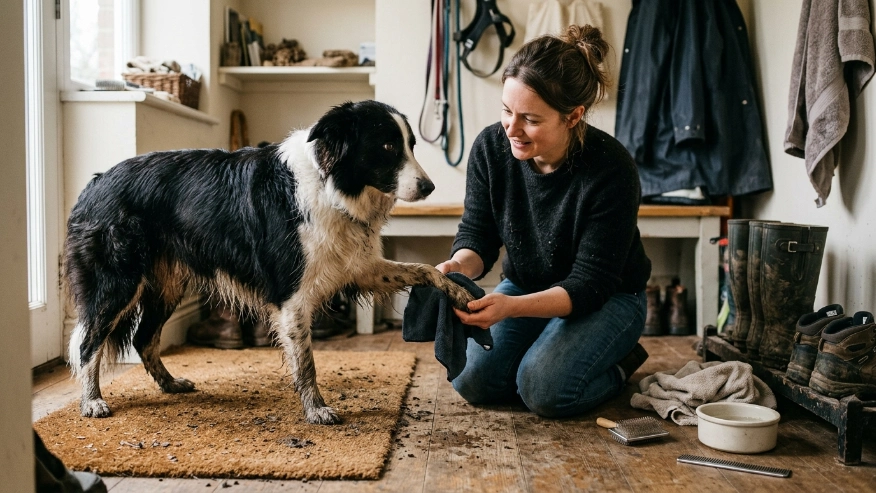
You don’t need a complete shampoo bath every time your Border Collie comes home dusty. Targeted cleaning is often enough for normal everyday mess.
Try the least intensive option first
- Dry dirt: Let ordinary mud dry, then brush it from the coat.
- Muddy paws: Rinse or wipe the feet and lower legs only.
- Dirty belly: Use a damp cloth or rinse the affected area.
- Light dust: Brush through the coat outdoors.
- Minor debris: Comb grass seeds and loose material out carefully.
This approach works well with the Border Collie’s active lifestyle. My preference is to clean the part that needs cleaning rather than shampooing the entire dog by default.
Some messes justify a full bath
Don’t avoid shampoo when your dog has rolled in feces, foul organic material, heavy grease, or another substance that shouldn’t remain on the coat. Safety takes priority over sticking to a bathing calendar.
If an unknown chemical gets onto your dog, seek professional advice about safe removal. The American Veterinary Medical Association provides reliable veterinary resources for pet owners.
*Vet note: Contact your veterinarian promptly when the substance on the coat may be toxic, corrosive, or unsafe for a dog to lick.*
When Does a Skin Problem Need a Veterinarian?
Dryness caused by an overly aggressive bathing routine may improve once the trigger is removed. Persistent or worsening symptoms need a veterinary assessment because many skin diseases look alike.
Arrange veterinary care when you notice:
- Persistent or intense scratching
- Repeated chewing or licking
- Raw, wet, bleeding, or painful skin
- Scabs, pustules, or unusual crusting
- Distinct bald patches or rapid hair loss
- A strong or unusual skin odor
- Redness that continues to spread
- Ear redness, discharge, odor, or repeated head shaking
An unpleasant odor soon after a bath deserves attention if it keeps returning. Yeast, bacteria, ear disease, and other conditions can cause smells that shampoo only hides temporarily.
The same applies to nonstop itching. More bathing may make an already irritated skin barrier less comfortable instead of solving the underlying problem.
*Vet note: A veterinarian can determine whether your dog’s signs are related to grooming, parasites, infection, allergy, or another medical problem.*
Don’t start medicated shampoo blindly
Medicated shampoos aren’t interchangeable. Different products may target bacteria, yeast, parasites, excessive scaling, or other specific problems.
Follow veterinary instructions for product choice, contact time, frequency, and treatment length. General information from resources such as PetMD can help you understand terms, but it can’t diagnose your dog.
A Practical Border Collie Bathing and Grooming Routine
As of 2026, I still favor a simple principle for healthy Border Collies: brush routinely and shampoo purposefully. A bath should solve a cleaning need rather than satisfy an arbitrary calendar.
Weekly routine
- Run your hands over the skin and coat for lumps, sore spots, or tangled areas.
- Brush through the outer coat and loose undercoat.
- Check behind the ears, under the front legs, around the trousers, and beneath the tail.
- Look at the paws after muddy walks or field work.
- Notice whether your dog is scratching more than usual.
When bath day arrives
I first ask whether brushing, a paw rinse, or spot cleaning would handle the problem. If the whole dog is dirty or smelly, that’s when a proper bath makes sense.
For many healthy companion Border Collies, that may work out to roughly every 6–12 weeks. Active dogs can fall outside that range without anything being wrong.
After every bath
- Check that shampoo has been fully rinsed away.
- Dry dense areas such as the chest, neck, belly, and hindquarters.
- Brush once the coat is ready for brushing.
- Watch for scratching, redness, flakes, or discomfort afterward.
- Adjust the next bath based on how the dog’s skin and coat respond.
The routine should remain flexible. Age, activity, swimming, weather, coat density, health, and veterinary treatment can all change what your Border Collie needs.
Frequently Asked Questions
Can I bathe my Border Collie every week?
A healthy Border Collie usually doesn’t need a shampoo bath every week simply for routine cleanliness. Weekly bathing may be appropriate in some situations, especially with veterinary treatment, but unnecessary frequent washing can contribute to dryness or irritation in sensitive dogs.
Is bathing a Border Collie once a month too much?
Not necessarily. Some Border Collies tolerate monthly bathing well, especially active dogs that get dirty often.
Watch the skin and coat rather than the calendar alone. Dryness, itching, redness, or repeated discomfort after baths suggests the routine needs adjustment.
Can I rinse my Border Collie with water without shampoo?
Yes, a plain-water rinse can be useful for muddy paws, light dirt, or residue after swimming. Dry the coat thoroughly afterward, particularly where the undercoat is dense.
Why is my Border Collie itchy after a bath?
Possible reasons include shampoo residue, an irritating grooming product, hot water, dryness, or an unrelated skin condition. If itching is persistent, intense, or accompanied by redness, sores, odor, or hair loss, contact your veterinarian.
Should I use conditioner on a Border Collie?
A dog-specific conditioner can help some dry or difficult coats, but every Border Collie doesn’t need one. Choose a canine product, rinse as directed, and stop using it if you notice irritation.
Can over bathing cause a Border Collie to lose hair?
Harsh or irritating grooming practices may contribute to coat breakage or skin inflammation, but noticeable hair loss has many possible causes. Bald patches, rapid thinning, or inflamed skin warrant a veterinary examination.
What if my Border Collie smells again right after a bath?
A strong odor that returns quickly may signal more than simple dirt. Skin or ear problems can produce persistent smells, so repeated shampooing isn’t a good substitute for identifying the cause.
Over bathing a Border Collie is less about crossing one exact number of baths and more about how your dog’s skin and coat respond. Keep routine cleaning gentle, use full baths when they’re useful, and let your dog’s condition guide the schedule.
If itching, redness, odor, sores, or hair loss continues despite changing the grooming routine, involve your veterinarian. A comfortable Border Collie with a clean, functional double coat is the goal—not the most frequently washed dog on the block.

1 Comment
Pingback: When Is It More Than Boredom