
How to Prevent Tangles During a Border Collie Bath

Quick Answer
To prevent tangles during a Border Collie bath, brush and comb the coat completely before it gets wet. Then wash in the direction the hair grows, avoid scrubbing the coat into circles, rinse thoroughly, and dry the double coat in sections. The Border Collie’s dense double coat makes careful pre-bath grooming especially important.
Quick Steps to Prevent Bath Tangles
- Brush first: Remove loose undercoat, burrs, knots, and small tangles while the coat is dry.
- Comb-check the coat: Make sure a metal comb can move through common trouble spots without catching.
- Wet gently: Saturate the coat instead of rubbing wet fur back and forth.
- Shampoo downward: Massage shampoo in the direction of hair growth rather than making circles.
- Rinse completely: Work through the coat in sections until no shampoo remains.
- Dry carefully: Blot, separate, and brush the coat as it dries instead of twisting it with a towel.
A wet Border Collie coat can turn a tiny knot into a frustrating tangle surprisingly fast. I find that most bath-time tangles are created before the shampoo bottle is even opened.
The trick is preparing the coat properly and handling it gently once wet. This guide covers the exact routine I use to keep rough-coated and smooth-coated Border Collies easier to brush after bathing.
In This Guide
- Why Does a Border Collie’s Coat Tangle During a Bath?
- What Should You Do Before Bathing a Border Collie?
- Which Grooming Tools Help Prevent Tangles?
- How Do You Wash a Border Collie Without Creating Knots?
- Does Rinsing and Conditioning Help Prevent Tangles?
- How Should You Dry a Border Collie Without Tangling the Coat?
- What Should You Do If You Find a Mat?
- How Can You Prevent Tangles Between Baths?
- Frequently Asked Questions
Why Does a Border Collie’s Coat Tangle During a Bath?
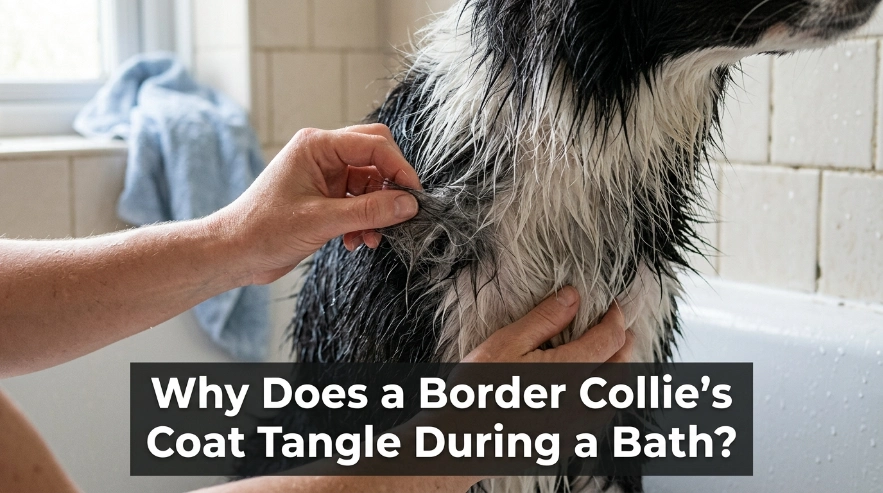
A Border Collie’s coat tangles during bathing when loose hair, existing knots, friction, and water combine. Wetting a poorly brushed double coat can tighten small knots that were easy to remove while dry.
Definition: A Border Collie tangle is a group of hairs that twist or catch together but can usually still be separated. A mat is a tighter, denser mass that may sit close to the skin.
Border Collies have a protective outer coat and a softer undercoat. Loose undercoat can remain hidden beneath hair that looks smooth from above.
That hidden hair causes trouble when water presses everything together. Friction from vigorous shampooing or towel rubbing can tighten it further.
Where do tangles usually form?
I pay extra attention to places where the coat moves, rubs, or stays damp. These areas can knot faster than the flatter coat across the back.
- Behind the ears: Fine hair here can knot quickly.
- Under the collar: Daily friction encourages small tangles.
- Front-leg armpits: Movement causes hair to rub together.
- Chest and feathering: Longer hair collects loose undercoat and debris.
- Rear legs: Feathering can twist when wet.
- Tail: Thick hair can hide small knots near the base.
Rough-coated Border Collies usually need more tangle checks because they have longer feathering. Smooth-coated dogs can still hold loose undercoat, so they should not skip pre-bath brushing.
The PetMD Border Collie care guide also describes the breed as double-coated and recommends regular brushing to help keep the coat free of mats.
What Should You Do Before Bathing a Border Collie?

Brush and comb your Border Collie completely before the bath. I don’t start wetting the coat until I can move a comb through the important areas without hitting a hidden knot.
This single habit makes the rest of the bath easier. It also gives me a chance to find burrs, twigs, dried mud, or skin problems before they disappear under wet hair.
My pre-bath detangling routine
- Start with a dry coat. Let mud dry first when practical, then brush loose dirt away.
- Divide thick hair into sections. Work from the lower coat upward rather than skimming only the surface.
- Brush gently. Hold longer hair near the skin so you don’t pull hard on the dog.
- Check common tangle zones. Inspect behind the ears, chest, armpits, rear feathering, and tail.
- Finish with a metal comb. The comb helps reveal knots a brush may have passed over.
Don’t rush this step because your dog looks clean on top. A brush can glide over the outer coat while loose hair remains packed underneath.
VCA’s dog grooming and coat-care guidance recommends removing burrs and tangles before bathing because wetting can make existing tangles much harder to remove.
Should you brush out every knot?
Small, loose tangles can often be separated gently with your fingers and then brushed. Stop if the knot pulls the skin, causes pain, or refuses to loosen.
A bath should never become a way to soften a severe mat. Water may tighten the mat instead of solving it.
Which Grooming Tools Help Prevent Tangles?
You don’t need a huge grooming kit. A few tools used correctly are better than aggressive tools used too often.
For my routine, the brush loosens coat and debris while the comb tells me whether I’ve reached the deeper layer. During heavy shedding, an appropriate undercoat tool can help remove loose hair before bathing.
| Tool | Best Use | When I Use It | Main Caution |
|---|---|---|---|
| Pin brush | Routine brushing and longer feathering | 1–2 routine sessions weekly, or as needed | Don’t brush only the surface |
| Slicker brush | Loose hair and light tangles | Tangle-prone areas and shedding periods | Use light pressure |
| Wide-tooth comb | Separating longer coat | Before and after bathing | Never force through a mat |
| Metal finishing comb | Finding hidden snags | Final pre-bath coat check | Stop if it catches firmly |
| Undercoat rake | Loose seasonal undercoat | Mostly during heavy shedding | Match pin length to coat depth |
The right tool depends on coat length and thickness. The AKC’s double-coat grooming guidance also stresses maintaining the protective coat rather than shaving it simply to manage shedding.
How Do You Wash a Border Collie Without Creating Knots?
Wash in the direction the coat naturally lies. The goal is to clean the hair without twisting separate strands into each other.
I learned to think of shampooing as gentle coat massage rather than scrubbing. Circular rubbing may feel thorough, but it creates unnecessary friction.
Use this low-friction bathing method
- Use lukewarm water. Wet the coat slowly from the shoulders toward the rear.
- Saturate the undercoat. Move the coat gently with your fingers so water reaches deeper layers.
- Apply dog shampoo. Spread it through the coat instead of dropping a large amount onto one spot.
- Massage downward. Keep your fingers moving with the direction of hair growth.
- Handle feathering carefully. Squeeze shampoo through longer hair instead of twisting it.
- Keep ears and face controlled. Use less water pressure around sensitive areas.
A wet double coat can feel surprisingly dense. Take your time rather than rubbing harder to make shampoo penetrate.
I also avoid piling the tail or rear feathering into a ball while washing. That simple mistake can turn several loose strands into one stubborn knot.
Does Rinsing and Conditioning Help Prevent Tangles?
Thorough rinsing matters because shampoo residue can leave the coat harder to manage and may irritate the skin. Keep rinsing until the water runs clear and the coat no longer feels soapy.
I separate thick areas with my fingers during rinsing. This lets water reach the undercoat without rough scrubbing.
What about dog conditioner?
A dog-safe conditioner may make longer feathering easier to separate, especially on a rough-coated Border Collie. Follow the product directions rather than using extra conditioner to fight a mat.
Conditioner is not a substitute for brushing. A tight knot should be handled before bathing or assessed by a groomer.
- Use canine products: Choose shampoo and conditioner made for dogs.
- Follow dilution directions: Concentrated products may need mixing before use.
- Rinse thoroughly: Don’t leave product trapped beneath the outer coat.
- Watch the skin: Stop using a product that appears to cause irritation.
The ASPCA’s dog grooming guidance similarly recommends brushing before bathing, using pet-formulated shampoo, and rinsing the coat carefully.
Vet note: If your Border Collie has persistent itching, sores, redness, unusual odor, or recurring skin problems, ask your veterinarian about the right bathing products and schedule.
How Should You Dry a Border Collie Without Tangling the Coat?
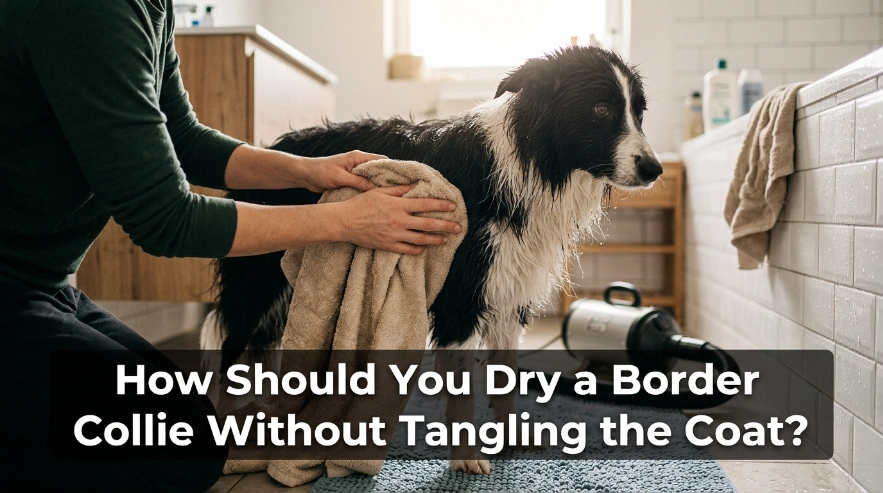
Drying can create almost as many tangles as washing. Blot and squeeze water from the coat instead of rubbing the dog vigorously with a towel.
I use the towel to absorb water, not to scrub. Then I separate longer feathering with my fingers before it dries into clumps.
A tangle-safe drying routine
- Let the dog shake. This removes a surprising amount of water naturally.
- Blot with towels. Press the towel against the coat without twisting it.
- Squeeze long feathering. Work from near the body toward the hair ends.
- Separate damp sections. Use your fingers to keep longer hair from sticking together.
- Use moving air if appropriate. Keep airflow comfortable and avoid concentrating heat on one area.
- Comb-check when nearly dry. Catch small snags before they tighten.
If I use a dryer, I keep the air moving and watch the dog’s comfort closely. High heat isn’t needed to separate a clean coat.
Make sure the dense undercoat dries as well as the visible surface. Trapped moisture around thick areas can cause odor and may contribute to skin irritation.
What Should You Do If You Find a Mat?
Don’t keep pulling at a tight mat just because the dog is already in the grooming area. Mats can pull painfully on the skin, and severe ones may need professional removal.
Start by deciding whether you’re dealing with a loose tangle or a firm mat. Your dog’s comfort matters more than finishing the groom at home.
For a small, loose tangle
- Hold the hair near the skin to reduce pulling.
- Separate the outer edges gently with your fingers.
- Work from the hair ends toward the base.
- Use a comb only after the knot begins to loosen.
- Stop if your dog shows pain or the skin pulls strongly.
For a tight or skin-level mat
Don’t slide household scissors underneath it. Dog skin can be pulled up inside the mat, making accidental cuts much easier than they appear.
Ask a professional groomer or veterinarian for help with severe, widespread, painful, or skin-level matting. ASPCA guidance also warns against cutting close mats with scissors because of the risk of injury.
Vet note: Contact your veterinarian if matting is accompanied by sores, bleeding, swelling, discharge, strong odor, or obvious pain.
How Can You Prevent Tangles Between Baths?
The easiest bath-time tangle is the one that never forms. Regular brushing keeps loose undercoat and small knots from building up between baths.
As of 2026, coat-care guidance still comes back to the same basic habit: routine brushing matched to the individual dog’s coat, lifestyle, and shedding level. Active Border Collies that collect grass, mud, and burrs may need more frequent checks.
A simple weekly routine
- Once or twice weekly: Give the entire coat a careful brush under normal conditions.
- After outdoor adventures: Check feathering, legs, belly, tail, and behind the ears for debris.
- During heavy shedding: Increase brushing frequency as loose undercoat builds.
- Before every shampoo bath: Brush and comb the coat completely.
- After every bath: Check the coat again once it is almost dry.
Some dogs need more brushing than this. Coat length, age, season, outdoor activity, and individual shedding all change the workload.
Don’t shave the double coat just to avoid tangles
A shorter-looking coat may seem easier, but shaving a healthy double coat is not the normal solution for routine tangles. Good brushing, sensible bathing, and careful drying preserve the coat while controlling loose hair.
For me, the biggest improvement came from spending more time before the bath. Ten careful minutes with a brush and comb can save much more time afterward.
Frequently Asked Questions
Should I brush my Border Collie before or after a bath?
Do both, but the pre-bath brush is the important one for preventing tangles. Remove loose hair and knots before wetting the coat, then do a gentle comb-through when the coat is nearly or completely dry.
Can water make Border Collie mats worse?
Yes. Water can tighten an existing knot as wet hairs cling together, especially when the coat is rubbed during shampooing or towel drying. Remove manageable tangles before bathing and get professional help with tight mats.
How often should I brush a Border Collie?
A practical starting point is once or twice each week, with more frequent grooming during heavy shedding or after messy outdoor activity. Rough-coated dogs and individuals prone to tangles may need extra attention around feathering and friction areas.
Can I brush my Border Collie while the coat is wet?
You can gently separate and comb an appropriately conditioned damp coat, but don’t use force on wet tangles. Hair and skin can be pulled painfully when you drag a brush through a stubborn knot.
What areas of a Border Collie tangle most easily?
Check behind the ears, beneath the collar, in the armpits, across the chest, along rear-leg feathering, and around the tail. These areas experience more movement, friction, moisture, or coat density.
Should I cut a tight mat out with scissors?
No. Skin can become pulled into a mat, making it easy to cut the dog accidentally. If a mat cannot be gently brushed or combed out, a professional groomer or veterinarian is the safer option.
Final takeaway: Preventing tangles during a Border Collie bath starts before the water turns on. Brush to the deeper coat, remove existing knots, wash with the hair instead of against it, and dry without vigorous rubbing.
Once that routine becomes normal, bath day gets much easier. Your final comb-through should feel like a quick check, not a second grooming battle.