

Quick Answer
Professional Border Collie bathing starts before the dog enters the tub. Brush out loose undercoat and tangles, wet the double coat to the skin, wash with a dog-safe shampoo, rinse completely, then dry the coat from the roots outward. The AKC Border Collie breed profile confirms that both rough and smooth Border Collies have dense, weather-resistant double coats that need regular grooming.
Professional Bathing Steps
- Brush first: Remove loose undercoat, debris, knots, and small mats before adding water.
- Wet deeply: Separate the coat and make sure water reaches the skin instead of wetting only the topcoat.
- Shampoo gently: Use a canine shampoo and massage it through the coat without aggressive scrubbing.
- Rinse completely: Keep rinsing until the water runs clear and no slippery shampoo remains.
- Dry thoroughly: Towel-blot first, then use controlled airflow if your dog accepts a dryer.
- Brush again: Finish by separating the coat and removing loosened undercoat.
The Professional Difference
- A professional-quality bath leaves the coat clean, fully rinsed, dry near the skin, and free from compacted undercoat.
Border Collies can make bath day look deceptively simple. Their outer coat may appear clean while the dense undercoat still holds dirt, moisture, and loose hair.
I’ve found that the biggest difference between a rushed bath and a professional Border Collie bath is preparation. Once you understand how the double coat behaves, the whole process becomes easier.
In This Guide
- What Does Professional Border Collie Bathing Mean?
- How Often Should a Border Collie Be Bathed?
- What Do You Need for a Professional-Quality Bath?
- How Should You Prepare a Border Collie Before Bathing?
- How Do You Bathe a Border Collie Step by Step?
- How Do Professional Groomers Dry a Border Collie?
- What Border Collie Bathing Mistakes Should You Avoid?
- Professional Groomer vs Home Bathing
- Frequently Asked Questions
What Does Professional Border Collie Bathing Mean?
Professional Border Collie bathing is a complete coat-care process, not simply putting shampoo on a wet dog. It includes coat inspection, pre-brushing, deep wetting, controlled washing, thorough rinsing, drying, and finishing.
A Border Collie has a double coat. That means a tougher outer layer of guard hairs sits above a softer, insulating undercoat.
The breed comes in rough and smooth coat varieties. Both still have dense, weather-resistant double coats, according to the American Kennel Club.
Why the double coat changes bath technique
Water can roll across the surface without reaching the skin. Shampoo can also remain trapped if the coat isn’t rinsed in sections.
That is why I work through the coat with my fingers while wetting and rinsing. I want water reaching the undercoat instead of simply flattening the outer hairs.
- Outer coat: Helps protect the dog from dirt, weather, and moisture.
- Undercoat: Provides insulation and sheds in varying amounts throughout the year.
- Feathering: Longer hair around the chest, legs, belly, and tail can tangle more easily.
- High-friction areas: Behind the ears, under the collar, and around the legs deserve extra checks.
A bath that ignores these layers may leave the dog looking clean for a day while dampness or loose hair remains underneath.
Professional technique targets the entire coat.
How Often Should a Border Collie Be Bathed?
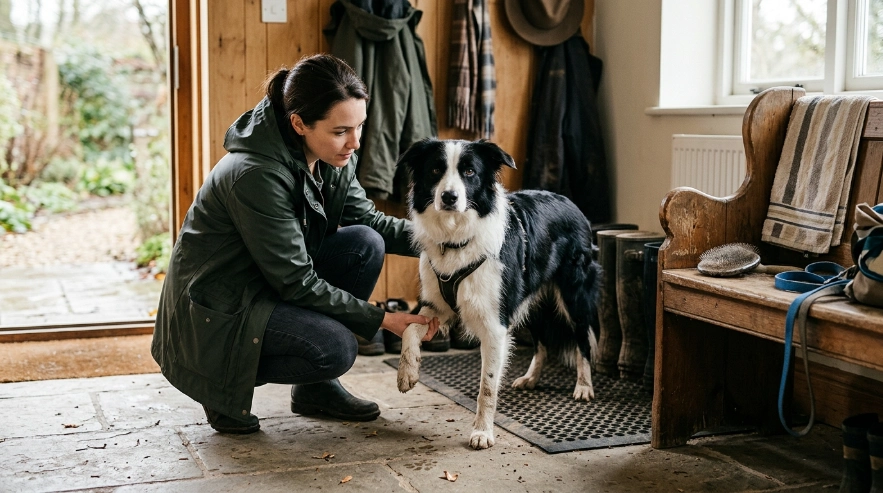
There is no universal calendar that fits every Border Collie. Bathing should reflect coat condition, lifestyle, skin health, and how dirty the dog becomes.
The ASPCA notes that many dogs don’t require frequent bathing, while the AKC warns that excessive bathing can strip natural oils from a double coat.
A practical bathing schedule
| Border Collie Lifestyle | When to Consider Bathing | Between Baths |
|---|---|---|
| Mostly indoor companion | When visibly dirty, oily, or noticeably smelly | Brush 1–2 times weekly |
| Active hiking dog | After substantial mud, dirt, or contaminated water exposure | Brush after outdoor trips and inspect paws |
| Working or farm dog | As coat condition requires | Frequent debris checks and brushing |
| Heavy seasonal shedder | A bath may help loosen dead undercoat when needed | Brush more frequently during coat blow |
| Dog with a skin condition | Follow veterinary instructions | Use only prescribed or approved products |
AKC guidance for Border Collies recommends going over the coat with a pin brush once or twice weekly. During heavier shedding, more frequent brushing may be necessary.
Bathing should not replace brushing. Those jobs solve different problems.
Vet note: If your Border Collie develops itching, recurring odor, sores, redness, dandruff, or sudden coat changes, ask your veterinarian before increasing bath frequency.
What Do You Need for a Professional-Quality Bath?
You don’t need a grooming salon in your house. You do need tools that let you control water, loose coat, shampoo, and drying.
I prefer organizing everything before bringing the dog into the bathing area. Border Collies notice hesitation quickly, and a smooth routine keeps the session calmer.
- Pin or slicker brush: Useful for loosening debris and separating coat.
- Wide-tooth comb: Helps check feathering and detect remaining tangles.
- Dog shampoo: Choose a product made specifically for canine skin and coat.
- Dog conditioner: Optional, but useful when the coat needs added manageability.
- Non-slip mat: Provides secure footing in a tub or shower.
- Several absorbent towels: Blotting works better than aggressive rubbing.
- Handheld sprayer: Makes deep wetting and section-by-section rinsing easier.
- Dryer: A pet dryer can speed drying if introduced safely and gradually.
- Treats: Small rewards help build positive bathing habits.
For shampoo selection, start with a mild canine formula rather than human shampoo. AKC grooming guidance recommends using quality dog shampoo and keeping it away from the eyes, nose, mouth, and ears.
Dogs with diagnosed skin disease may need something different.
Vet note: Medicated shampoos should be chosen with veterinary guidance because the correct ingredient and contact time depend on the skin problem.
How Should You Prepare a Border Collie Before Bathing?
Brush first. This single step prevents many bath-day problems.
Water tightens some tangles and makes compacted loose coat harder to manage. I would rather find those areas while the dog is dry.
1. Inspect the coat and skin
Run your hands from the neck toward the tail. Check behind the ears, under the collar, around the armpits, belly, tail, and rear legs.
- Look for mats or tight tangles.
- Check for burrs, grass seeds, and dried mud.
- Feel for lumps, sore areas, or crusty skin.
- Look for fleas or ticks after outdoor exposure.
2. Brush loose undercoat out
Work in small sections rather than repeatedly brushing only the top surface. The goal is to loosen dead hair without scraping the skin.
During shedding season, this can take longer than the bath itself. That’s normal.
3. Deal with mats before soaking
Don’t pull hard against the skin. Small loose tangles may separate with patient brushing and combing.
Tight or skin-level mats are different. A professional groomer may be the safer choice when removing them would cause discomfort.
4. Let your dog inspect the bathing area
A confident adult Border Collie may jump straight in. A young or bath-sensitive dog often benefits from a slower introduction.
I use the same sequence each time: enter, stand on the mat, reward, start gentle water, reward again. Predictability matters with observant dogs.
Section Takeaway: A professional bath begins on a dry coat. Removing loose hair, debris, and tangles first makes washing and drying safer and more effective.
How Do You Bathe a Border Collie Step by Step?
Use comfortable lukewarm water and work methodically from section to section. Avoid spraying forcefully around your dog’s face or ears.
Step 1: Wet the coat down to the skin
Start around the shoulders and work backward. Lift sections of coat with one hand while directing water underneath with the other.
Don’t assume a darkened topcoat means the undercoat is wet. Check with your fingers.
Step 2: Apply dog shampoo
Follow the product directions for dilution and amount. More shampoo does not automatically produce a cleaner dog.
Massage shampoo through the coat using your fingertips. Avoid aggressive circular scrubbing that creates tangles in longer feathering.
Step 3: Clean high-contact areas
- Neck: Dirt and oils collect under collars.
- Chest: Rough-coated dogs can hold substantial debris here.
- Belly: Mud and splash marks often collect underneath.
- Legs: Work shampoo gently through feathering.
- Paws: Clean between and around pads without forcing the toes apart.
- Rear area: Wash carefully and rinse completely.
Step 4: Treat the face separately
I don’t spray shampoo directly onto a Border Collie’s face. A damp cloth gives me much more control.
Keep shampoo and water away from the eyes and ear canals.
Step 5: Rinse longer than you think you need to
This is where professional results often separate from rushed home baths. Dense undercoat can hide product residue.
Start at the neck and rinse backward. Lift coat sections and keep checking with your fingers until the hair no longer feels slippery.
Step 6: Condition only when useful
A dog-safe conditioner can help manage longer coats or dry-feeling feathering. Follow the label and rinse as directed.
Don’t turn conditioner into a shortcut for poor brushing. Loose undercoat still needs physical removal.
Section Takeaway: Deep wetting and complete rinsing matter more than producing lots of foam. Every product you put into the double coat must come back out.
How Do Professional Groomers Dry a Border Collie?
Professional drying removes moisture from the undercoat instead of drying only the visible surface. A Border Collie can feel dry across the back while remaining damp close to the skin.
AKC guidance emphasizes proper drying after bathing, especially for dogs with substantial coats.
Start with towel blotting
Let your dog shake first if the space allows it. Then squeeze and blot water from the coat with absorbent towels.
Avoid vigorous rubbing on the feathering. That can create fresh tangles.
Use controlled airflow
A pet dryer can separate the double coat and push water outward. Start with low intensity if the dog is inexperienced.
- Keep airflow moving instead of concentrating on one spot.
- Use comfortable air rather than excessive heat.
- Avoid directing strong airflow into eyes or ears.
- Watch your dog’s body language throughout the process.
- Stop if the dog becomes distressed.
Brush once the coat is nearly dry
As the coat separates, loose undercoat becomes easier to see. Brush gently and work in sections.
On my own grooming sessions, the rear-leg feathering and area behind the ears are the last places I check. Those spots can stay damp after the back looks finished.
Check the skin before declaring the job finished
Part the coat with your fingers in several areas. Feel near the skin rather than touching only the hair tips.
This final check matters in cool weather or before the dog settles into a crate or bed.
What Border Collie Bathing Mistakes Should You Avoid?
The biggest bathing mistakes usually involve the double coat rather than shampoo technique. Small shortcuts can create more work later.
- Bathing a matted coat: Water can tighten existing tangles and make them harder to separate.
- Using human shampoo: Use a product designed for dogs unless your veterinarian directs otherwise.
- Rinsing only the surface: Dense undercoat can trap shampoo residue.
- Leaving the coat damp: Check moisture near the skin instead of judging by the surface.
- Scrubbing long feathering: Rough rubbing can create knots.
- Bathing too often: Excessive washing may remove protective natural oils.
- Shaving the double coat for convenience: Shaving is not a normal substitute for brushing and undercoat maintenance.
- Ignoring anxiety: Forcing a frightened dog through a noisy drying session can make future grooming harder.
The AKC specifically cautions against shaving double coats as a routine cooling or shedding solution. The coat provides protection and insulation, and shaving can alter how it regrows.
Regular brushing remains the safer maintenance strategy for most healthy Border Collies.
Vet note: Persistent redness, strong skin odor, hair loss, painful areas, sores, or repeated scratching deserve veterinary attention rather than another cosmetic bath.
Professional Groomer vs Home Bathing
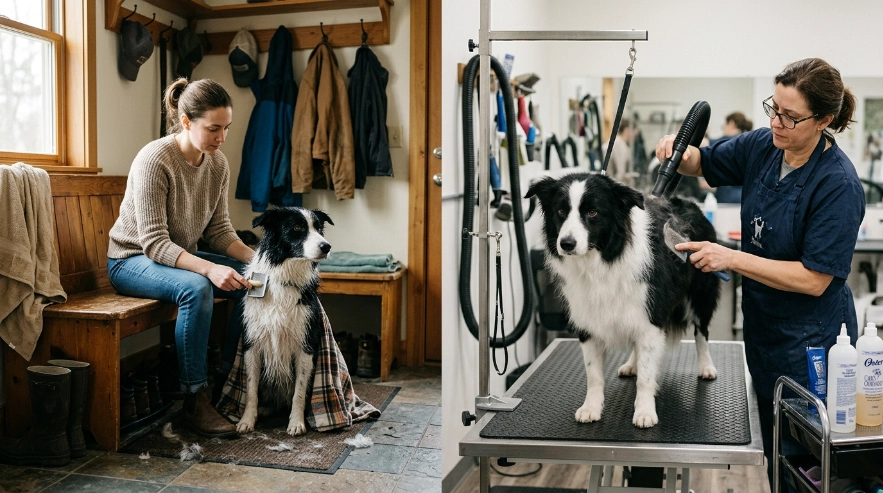
A healthy, cooperative Border Collie doesn’t automatically need a professional groomer for every bath. Many owners can maintain the coat successfully at home.
A professional becomes especially useful when coat condition, behavior, or equipment makes the job difficult.
| Situation | Home Bath | Professional Groomer |
|---|---|---|
| Light dirt and normal coat | Usually practical | Optional |
| Heavy seasonal shedding | Possible with time and tools | Useful for thorough coat removal |
| Dense compacted undercoat | Can be difficult | Often worthwhile |
| Tight matting | Risk of discomfort | Recommended for safer assessment |
| Dog fearful of dryers | Slow desensitization may help | Choose a groomer experienced with anxious dogs |
| Skin disease | Follow veterinary plan | Groomer should follow veterinary instructions |
What should you ask a professional groomer?
- Do you regularly work with double-coated breeds?
- How do you remove loose undercoat?
- What drying method do you use?
- Will you call before shaving or trimming anything unexpected?
- How do you handle dogs that become nervous around dryers?
A groomer should understand that a Border Collie isn’t a breed that needs routine body shaving. Grooming should preserve the functional double coat.
As of 2026, reputable breed guidance continues to emphasize brushing and coat maintenance rather than removing the protective coat.
Frequently Asked Questions About Professional Border Collie Bathing
How often should a professional groomer bathe a Border Collie?
There is no mandatory professional bathing interval for every Border Collie. Schedule grooming according to dirt, odor, shedding, coat condition, lifestyle, and skin needs rather than automatically bathing on a very short cycle.
Can I bathe my Border Collie once a week?
A healthy Border Collie usually doesn’t need weekly bathing simply because seven days have passed. Frequent bathing may dry the skin or coat in some dogs, so ask your veterinarian if a medical or lifestyle reason requires unusually frequent washing.
Should I brush my Border Collie before or after a bath?
Do both when needed. Brush before bathing to remove tangles, debris, and loose undercoat, then brush again after the coat is nearly or completely dry to separate hairs and remove additional shed coat.
What shampoo is best for a Border Collie?
For a healthy dog, choose a mild shampoo specifically formulated for dogs and suited to the coat’s condition. Dogs with recurring itching, infections, allergies, or other skin problems may need a veterinarian-recommended medicated product.
Can I let my Border Collie air-dry?
Air-drying may work in suitable conditions, but a dense undercoat can remain wet much longer than the surface suggests. Towel-blot thoroughly and check the coat near the skin before assuming your Border Collie is dry.
Should a Border Collie’s coat be shaved after bathing?
No. Routine body shaving isn’t part of normal Border Collie bathing. Border Collies have protective double coats, and regular brushing plus proper undercoat management is preferred unless a veterinarian identifies a medical reason for clipping.
Why does my Border Collie still smell after a bath?
First check whether shampoo was fully rinsed and the undercoat completely dried. Persistent or unusual odor can also accompany skin or ear problems, so contact your veterinarian if the smell quickly returns or appears with redness, itching, discharge, or soreness.
The Best Professional Bath Protects the Coat
A great Border Collie bath should not leave the coat merely fragrant. It should leave the skin comfortable, the undercoat clean and dry, and the outer coat naturally separated.
Start with brushing, wet all the way to the skin, use a dog-safe shampoo, rinse patiently, and dry the undercoat thoroughly. Those basic habits create most of the difference between an ordinary wash and professional-quality grooming.
Keep the routine calm and predictable. Border Collies learn patterns quickly, and good bath-day habits become much easier when your dog knows what comes next.
For broader preventive-care guidance between grooming sessions, the American Veterinary Medical Association pet-care resources and ASPCA general dog-care guidance are useful starting points.
